
 Ryan Delgado
Open-back headphones trade noise isolation for a wider, more natural soundstage—an easy trade worth making if you spend hours gaming, mixing audio, or just listening at your desk. If you’re comparing the best open back headsets right now, the real challenge isn’t finding “good” options; it’s matching driver quality, clamping comfort, and connectivity to how you actually plan to use them every day. Some open designs favor competitive gaming, others are built for studio-accurate mixing, and a few work well for both, and prices across this category swing from under $150 to well over $600 depending on driver quality and build. This guide breaks down exactly what to check before you buy, then ranks the strongest picks below.
Quick answer: For most people in 2026, our top pick among the best open back headsets is the Sennheiser HD 560S — our #1 rated choice for balanced, accurate sound without a high price tag. See the full ranked comparison, alternatives, and buying advice below.

Cons
- Verifying dimensional clearance for Open Ear Headphones wi prior to setup is recommended
- Routine care preserves surface finish appearance for Open Ear Headphones wi over time

Pros
- Uncolored frequency response spans 5 Hz to 36,000 Hz for full-spectrum studio reference listening
- Ships with 2 interchangeable ear pad sets, one tuned for mixing and one for producing, each with a distinct sound signature
- Detachable cable design with jacks at both ear cups, plus a patented cable coil structure that blocks cable-borne noise
- Washable, replaceable ear pads extend the usable life of the headphone beyond a fixed, non-serviceable pad
- Includes the dearVR MIX-SE plugin, simulating studio mixing room acoustics for translation checks across systems
Cons
- Open-back design leaks sound outward and lets in ambient room noise, so it is not suited to quiet offices or shared spaces
- Studio reference tuning favors accuracy over bass emphasis, which some listeners used to consumer headphones may find lean
- Detachable 1.8m cable is the only cable included, with no shorter or wireless option in the box
An open-back design paired with an uncolored 5 Hz to 36,000 Hz frequency response targets honest, dynamic sound reproduction for critical mixing decisions rather than an emphasized consumer sound profile. A low-frequency cylinder system aims for full, accurate low-end without muddying the rest of the spectrum, while the open-frame architecture works to reduce total harmonic distortion.
- 5 Hz to 36,000 Hz frequency response covers the full audible range and beyond
- Open-back construction widens the soundstage compared to closed-back designs
- Open-frame architecture targets lower distortion and resonance
Because the open-back design lets sound pass freely in both directions, it suits treated studio spaces more than shared offices or noisy environments.
Cons
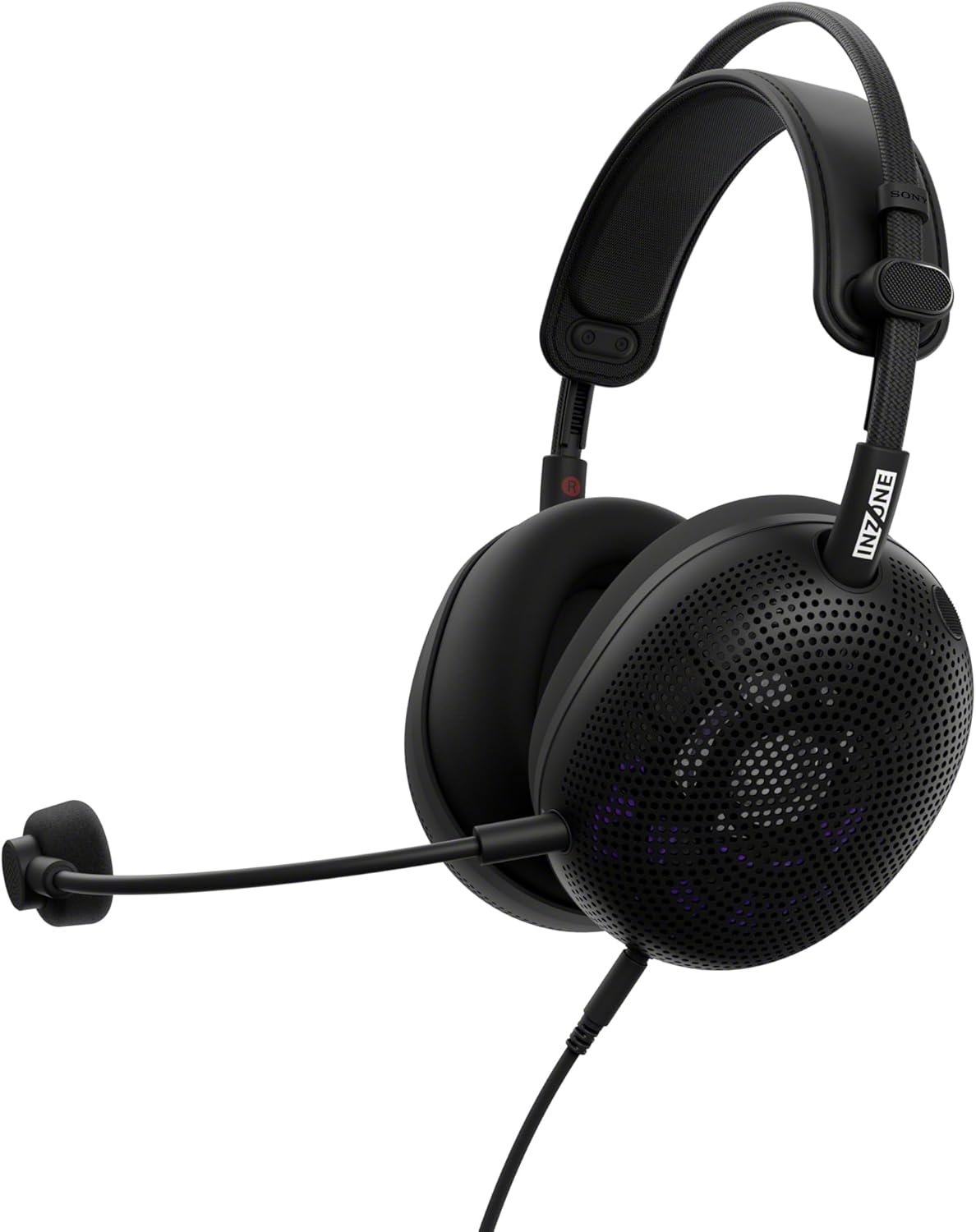
- Acoustic positioning away from wall corners impacts Sony INZONE H6 Air Ope bass response
- Proper audio cabling required for Sony INZONE H6 Air Ope signal line clarity

Pros
- 80 Ohm impedance closed-back design with a bass reflex system for detailed, spacious sound despite being fully enclosed
- Replaceable velour ear pads allow swapping in fresh pads instead of replacing the whole headphone when pads wear out
- Single-sided 3.0m cable and an adjustable padded headband built for extended studio or stage sessions
- Manufactured in Germany with a rugged, adjustable headband construction aimed at long-term studio use
Cons
- 80 Ohm impedance benefits from a dedicated headphone amp or audio interface output, as a phone or basic device may not drive it to full output
- Wired-only with a fixed 3.0m cable, no wireless or Bluetooth connectivity
- Closed dynamic design trades some open-back spaciousness for isolation, a tradeoff studio monitoring headphones make deliberately

Pros
- 50mm neodymium drivers with an LMC diaphragm are Hi-Res Audio Certified, covering a frequency range of 5 Hz to 40,000 Hz
- Detachable 3.5mm cable runs 3 meters with a bundled 6.3mm adapter, so a damaged cable does not retire the whole headphone
- Replaceable memory foam ear-pads with a velour finish can be swapped out as they wear rather than replacing the entire headphone
- Self-adjustable 3D mesh hammock headband with a genuine leather outer spreads weight across the head instead of pressing down at one point
- Open-back architecture is engineered with pre-tilted speaker plates inside double-layered ear-shells for a wider soundstage
Cons
- Open-back design leaks sound outward, so nearby people will hear the audio and outside noise bleeds in too
- Wired-only connection with no Bluetooth option, so it will not pair with phones or tablets without a cable
- 100 dB sensitivity is on the lower side, meaning a dedicated headphone amp may be needed to drive them to full volume from weaker sources
The X2HR is built around 50mm neodymium drivers with an LMC diaphragm, carrying Hi-Res Audio Certification and a frequency range of 5 Hz to 40,000 Hz. The open-back architecture, combined with pre-tilted speaker plates inside double-layered ear-shells, is engineered to produce a wider, more open soundstage than a sealed, closed-back design.
- Driver size: 50mm with LMC diaphragm
- Frequency range: 5 Hz - 40,000 Hz
- Sensitivity: 100 dB
Hi-Res Audio Certification requires headphones to reproduce a bandwidth of at least 40 kHz under the Japan Audio Society's standard, which places these drivers at the upper edge of what the certification requires.
The headphone connects via a detachable 3.5mm oxygen-free cable measuring 3 meters, with a bundled 3.5mm-to-6.3mm adapter and a cable management clip included in the box. Because the cable detaches, a fraying or damaged cord can be replaced on its own rather than retiring the whole headphone.
- Detachable 3.5mm cable, 3 meter length
- Includes 6.3mm adapter and cable management clip
- Replaceable ear-pads extend usable life as foam compresses over time
There is no wireless mode in this model, so it depends entirely on a wired connection to a source with a 3.5mm or, via the adapter, a 6.3mm headphone jack.
Pros
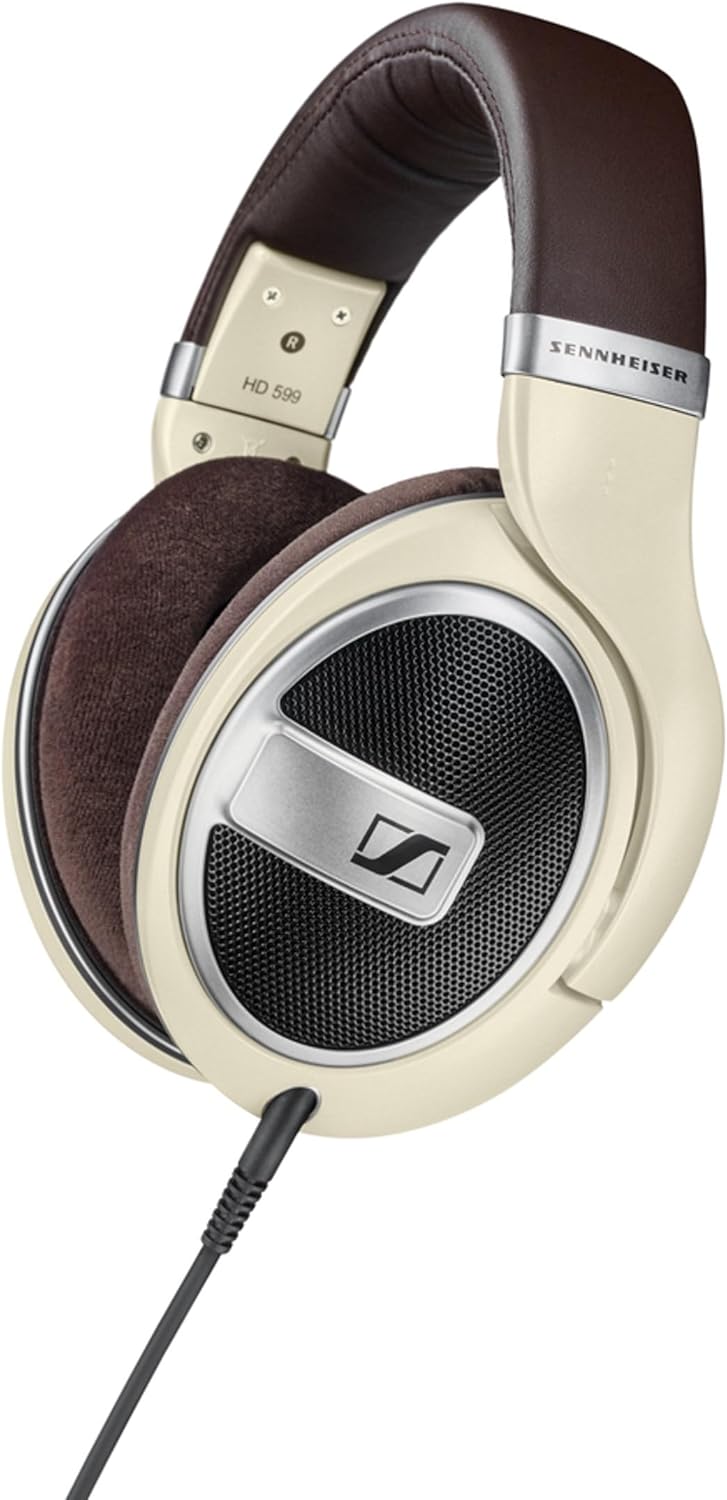
- Detachable cables include a 3-meter 6.3mm jack cable for home setups and a 1.2-meter 3.5mm cable for portable use
- Velour-covered ear pads and a padded headband reduce pressure during long listening sessions
- Open-back design delivers a wider, more natural soundstage than closed-back headphones
- Aluminum voice coils in the transducers help keep distortion low at higher volumes
- Large ear cups fully surround the ear rather than resting on top of it
Cons
- Open-back design leaks sound outward, so it is not suited to shared or quiet office spaces
- Wired-only connection means no Bluetooth or wireless listening option
- Ivory matte finish is the only color offered in this listing

Pros
- E.A.R. angled driver alignment recreates a hi-fi speaker listening triangle inside the headphones
- Velour ear pads and ventilated earcups are built to reduce heat during long listening sessions
- Detachable cable ships with both a 6.35mm plug and a 3.5mm adapter for different sources
- Precision-tuned transducers are aimed at revealing fine detail across the frequency range
Cons
- Open-back design leaks sound outward and lets ambient room noise in, making it a poor fit for shared or noisy spaces
- Wired-only connection with no Bluetooth or wireless option ties it to a source device
- No in-line microphone or remote on the included cable, so calls need a separate microphone
The headphones connect over a detachable wired cable rather than Bluetooth, with a 6.35mm plug included plus a 3.5mm adapter for laptops, PCs, DACs, home stereos and record players. That detachable design means a damaged cable can be replaced without discarding the whole headphone.
- Detachable cable, 6.35mm plug with 3.5mm adapter
- Compatible with PCs, DACs and home audio gear
- No wireless or Bluetooth mode
Because there is no in-line remote or microphone, they are better suited to dedicated listening than to voice calls or on-the-go use with a phone.
Pros
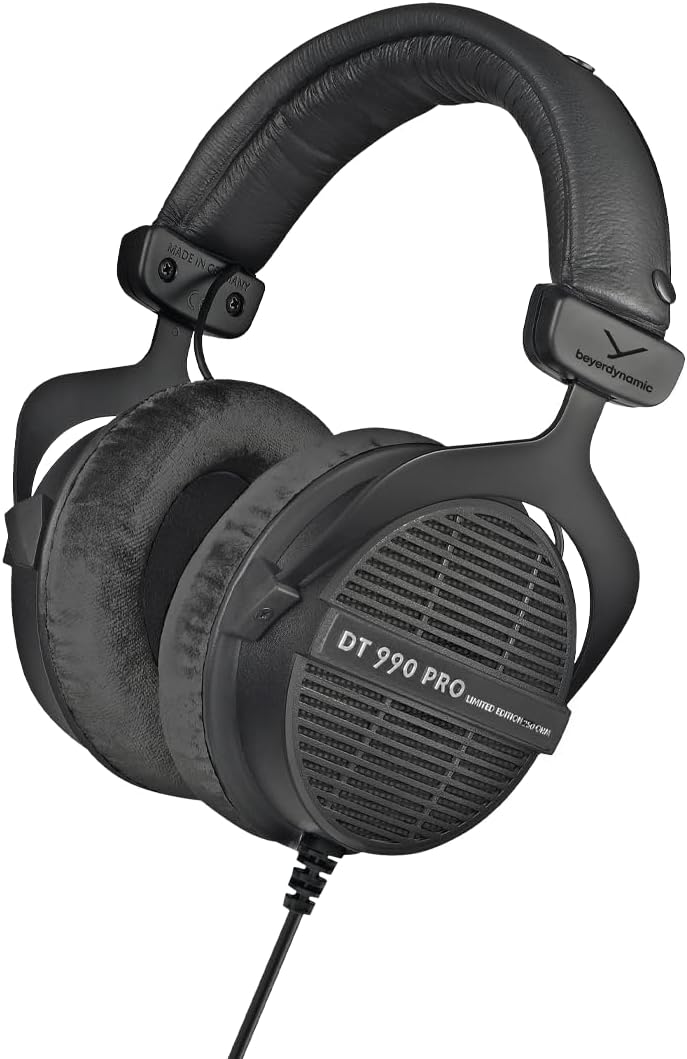
- 250 ohm impedance tuned for professional studio interfaces, dedicated headphone amps, and home hi-fi systems
- Frequency response spans 5 Hz to 35,000 Hz with a nominal sound pressure level of 96 dB
- Open-back circumaural design with soft, replaceable velour ear pads
- Steel headband construction for a secure fit during long sessions
- One-sided cable attachment reduces tangling during frequent removal and adjustment
Cons
- 250 ohm impedance needs a dedicated headphone amp or audio interface output to reach full volume and detail; phone or laptop jacks alone will underdrive them
- Open-back design leaks sound outward and lets in ambient noise, so it is unsuited to quiet offices or shared spaces
- Cable is fixed on one side rather than fully detachable, so a damaged cable is not swapped as easily as on a modular headset
The DT 990 PRO in this 250 ohm configuration is built for driving from studio interfaces, dedicated headphone amps, and home hi-fi equipment rather than low-power portable sources. Frequency response is rated at 5 Hz to 35,000 Hz with a 96 dB nominal sound pressure level.
- 250 ohm impedance for studio and hi-fi amp sources
- 5 Hz-35,000 Hz frequency response
- 96 dB nominal sound pressure level
The open-back design lets the transducers move air more freely than a sealed enclosure, producing a wider stereo image with controlled bass and present, detailed treble that beyerdynamic positions for mixing and mastering reference work.
The cable connects on one side of the headphones only, which beyerdynamic designed specifically to reduce tangling during frequent adjustment or removal compared to a cable running from both ear cups. It terminates in a 3.5mm mini-jack with a 1/4-inch (6.35mm) adapter included.
- One-sided cable attachment to reduce tangling
- 3.5mm mini-jack cable with a bundled 6.35mm adapter
- Wired-only connection, with no Bluetooth or wireless option
Because the cable is not a detachable, locking connector like beyerdynamic's newer PRO X line, a worn or damaged cable on this model is a fixed part of the headphone rather than a swappable accessory.

Pros
- Open-back design gives soundwaves room to expand for a wide, natural soundstage
- Hand-selected, matched driver elements aim for consistent left and right channel balance
- Frequency response extends from 10 Hz to 39,500 Hz (plus or minus 10 dB), covering a wide audible range
- Acoustic silk damping helps hold total harmonic distortion down to about 0.05 percent
- Standard 3.5mm jack plug works with a wide range of amps and audio sources
Cons
- Open-back design leaks sound outward and lets in ambient noise, so it is not suited to quiet offices or shared spaces
- Sold as a Renewed unit, meaning it is a professionally inspected used item rather than new factory packaging
- Open-back headphones generally benefit from a dedicated headphone amp to reach their best output
An open-back design lets soundwaves expand outward as they would in open air, which is part of why this headphone is known for a wide, natural soundstage rather than a tight, closed-in feel. Frequency response spans 10 Hz to 39,500 Hz (plus or minus 10 dB), backed by hand-selected and matched driver elements for consistent channel balance.
- Open-back design for a wide soundstage
- Frequency response: 10 Hz-39,500 Hz (plus or minus 10 dB)
- Hand-selected, matched driver elements
Acoustic silk damping across the driver helps keep total harmonic distortion down to about 0.05 percent, aiming for a clean signal with minimal added coloration across the frequency range.

Pros
- TESLA.45 drivers at 30 ohms deliver low distortion and drive easily from both portable devices and studio interfaces without needing a heavy-duty amp
- Two interchangeable velour ear pad sets let you switch between a fuller bass profile and a more analytical, mix-focused sound
- Detachable mini-XLR cables include both a 3m straight cable and a 5m coiled cable, covering desk and larger studio setups
- Spring steel headband construction combined with a memory foam band is built for long mixing or mastering sessions without added clamp fatigue
- Ships with a hard carrying case, keeping the headphones protected between studio and travel use
Cons
- Open-back design leaks sound outward and lets in outside noise, so it isn't suited to noisy shared spaces or on-the-go listening
- 30 ohm impedance drives easily but the open-back design still benefits from a dedicated headphone amp for full detail from quieter sources
- No built-in microphone or inline remote, so it is built purely for listening and mixing rather than calls or gaming chat
Below are the 10 models we recommend, chosen for how they handle real listening scenarios rather than lab numbers alone. Keep reading for the details behind each pick and the features that actually matter when you shop.
Why Open Back Headsets Sound Different From Closed Models
An open-back headset uses a perforated or vented ear cup shell instead of a sealed one. Air and sound pass through the back of the driver instead of bouncing around inside a closed chamber. That’s why open designs tend to sound roomier, with instruments and footsteps placed more precisely around you.
The trade-off is simple: nothing is blocking outside noise, and your audio leaks out too. Open-back headphones aren’t a great fit for open offices, shared apartments, or commuting, since anyone nearby can hear what you’re playing at moderate volume. They shine at a quiet desk where isolation isn’t the priority and soundstage is.
Key Features to Check Before You Buy
Not every open-back pair is built for the same job. Before you pick a model, weigh these four factors against how and where you’ll actually use it.
Driver Size, Impedance, and Amp Needs
Higher-impedance drivers, like the 250-ohm design in the beyerdynamic DT 1990 PRO or the 300-ohm Sennheiser HD 650, need real power to reach their full dynamic range. A phone or laptop headphone jack often can’t drive them properly. If you don’t already own a dedicated headphone amp or DAC, check the ohm rating before you buy.
Comfort and Clamping Force for Long Sessions
You’ll likely wear these for hours, so velour or fabric pads that breathe matter more than they seem to at first. A tight clamping force can cause headaches during long sessions, while a loose fit lets bass response drop off. Look for adjustable headbands and swappable pads if you plan to use the headset daily.
Wired vs Wireless Connectivity
Almost every open-back option worth buying is wired, since the vented design and low-latency demands of accurate audio don’t pair well with Bluetooth compression. If cable-free freedom matters more to you than soundstage, it’s worth comparing our guide to the best wired headsets against wireless alternatives first.
Microphone Needs for Calls and Streaming
Most open-back headphones ship without a built-in mic, since they’re designed primarily for listening and mixing rather than calls. If you need reliable voice pickup for meetings or streaming, check our roundup of the best headsets with microphone before committing to a mic-less pair.
Best Open Back Headsets for Different Use Cases
The right pick depends heavily on what you’ll actually be doing with it. Here’s how the top options in this list line up against common needs.
For Competitive Gaming and Esports
The Sony INZONE H6 Air is worth checking the current price on Amazon if positional audio is your priority. Its open-back design makes footsteps and directional cues easier to place than most closed gaming headsets can manage, and the detachable mic keeps it flexible for squad calls. If ranked play is the main use case, it’s also worth comparing against our picks for the best headsets for gaming to see closed-back alternatives with more isolation.
For Studio Mixing and Mastering
Producers and audio engineers who need a flat, revealing response should look at the beyerdynamic DT 1990 PRO. Its detailed high end helps you catch harshness and sibilance that a consumer-tuned headset would smooth over, which matters if your mixes need to translate across other systems. It does require a proper headphone amp given its impedance, so budget for that separately.
For Long Work Sessions and Everyday Listening
For general desk use — music, podcasts, the occasional video call — the Sennheiser HD 560S hits a comfortable middle ground of neutral tuning, low clamping force, and a price that doesn’t require an amp upgrade. It’s the pick we’d recommend if you only want one pair and don’t have a specific pro-audio or esports need.
For Audiophile Listening on a Tighter Budget
If you want a wide soundstage without spending near $300, the Philips Fidelio X2HR consistently punches above its price with warm, detailed mids and a genuinely spacious feel. It won’t out-resolve the pricier beyerdynamic models, but for casual listening it’s a strong value pick worth comparing on specs and availability.
How Much Should You Budget for an Open-Back Headset?
Pricing in this category tends to fall into three rough tiers, and knowing where you sit helps narrow the list fast.
Entry and mid-range options, generally under $250, include the Philips Fidelio X2HR and the beyerdynamic DT 990 PRO — both deliver a genuinely wide soundstage without demanding a separate amp, making them a sensible starting point if this is your first open-back pair. In the $250-$350 range, the Sennheiser HD 650 adds a warmer, more refined tuning that many long-time listeners consider a reference point, though it does ask for more driving power. At the top end, above $400, models like the beyerdynamic DT 1990 PRO MKII and the HD 490 PRO target working audio professionals who need studio-grade resolution and are willing to pay for it. Spending more doesn’t automatically mean a better fit for you — a $180 pair matched to the right use case will usually beat a $400 pair used for the wrong one.
Common Mistakes to Avoid When Buying Open-Back Headphones
A few avoidable mistakes account for most of the buyer’s remorse we see with this category.
- Buying an open-back pair for a shared office, dorm, or commute, where sound leakage becomes a real problem for people around you and privacy is essentially impossible.
- Ignoring impedance and assuming any laptop or phone can drive a high-ohm studio model at full volume and clarity — the result is usually thin, underpowered sound.
- Skipping the comfort details, then dealing with hot spots or headaches after a two-hour session because the clamping force or pad material wasn’t checked first.
- Expecting deep, boomy bass — open designs naturally trade some low-end punch for clarity and space, which isn’t right for every listener, especially bass-forward genres.
- Overspending on a flagship studio model when a $150-$200 pair would have covered the actual use case just as well.
Open-Back vs Closed-Back: Which Should You Choose?
Open-back headsets win on realism and soundstage but lose on privacy and bass impact. Closed-back models seal in sound, isolate outside noise, and generally hit harder in the low end, which makes them the better call for shared spaces or noisy environments. If isolation matters more than imaging for your setup, our guide to the best closed back headsets covers the sealed alternatives worth comparing before you decide.
Some listeners end up owning both: an open-back pair for quiet solo sessions and a closed-back pair for anywhere isolation matters more, like a busy household or a call-heavy workday.
Frequently Asked Questions
What’s the difference between open-back and closed-back headphones?
Open-back designs let air and sound pass through vented ear cups, creating a wider soundstage but no noise isolation. Closed-back designs seal the ear cup, blocking outside noise and containing your audio, which better suits shared or noisy spaces.
Can you use open-back headphones for gaming?
Yes, and many competitive players prefer them for the wider soundstage, which makes it easier to place footsteps and directional audio cues. Just keep in mind that sound will leak out, so they’re best used in a quiet room rather than a shared space.
Do you need an amplifier for open-back headphones?
It depends on the impedance. Higher-ohm models like the DT 1990 PRO or HD 650 benefit significantly from a dedicated amp or DAC, while lower-impedance options like the HD 560S can run reasonably well straight from a laptop.
Are open-back headphones good for mixing and music production?
Many engineers prefer them for mixing because the open design reduces the resonance and bass buildup you get from a sealed chamber, giving a more accurate picture of the mix. They’re less useful for tracking vocals or instruments, since nearby microphones can pick up the leaking sound during a recording session.
Will open-back headphones work well in a home office?
They work best in a quiet, private room where sound leakage won’t bother anyone else. If you share a workspace or take frequent calls near other people, a closed-back model will generally be the more practical choice.
The right open-back headset comes down to matching the design to your listening environment rather than chasing the highest spec sheet. Get the impedance, comfort, and use case right, and any of the picks above will hold up for years of daily listening.



Comments are closed.
No reviews yet. Be the first to share your experience!