Owen Bradley
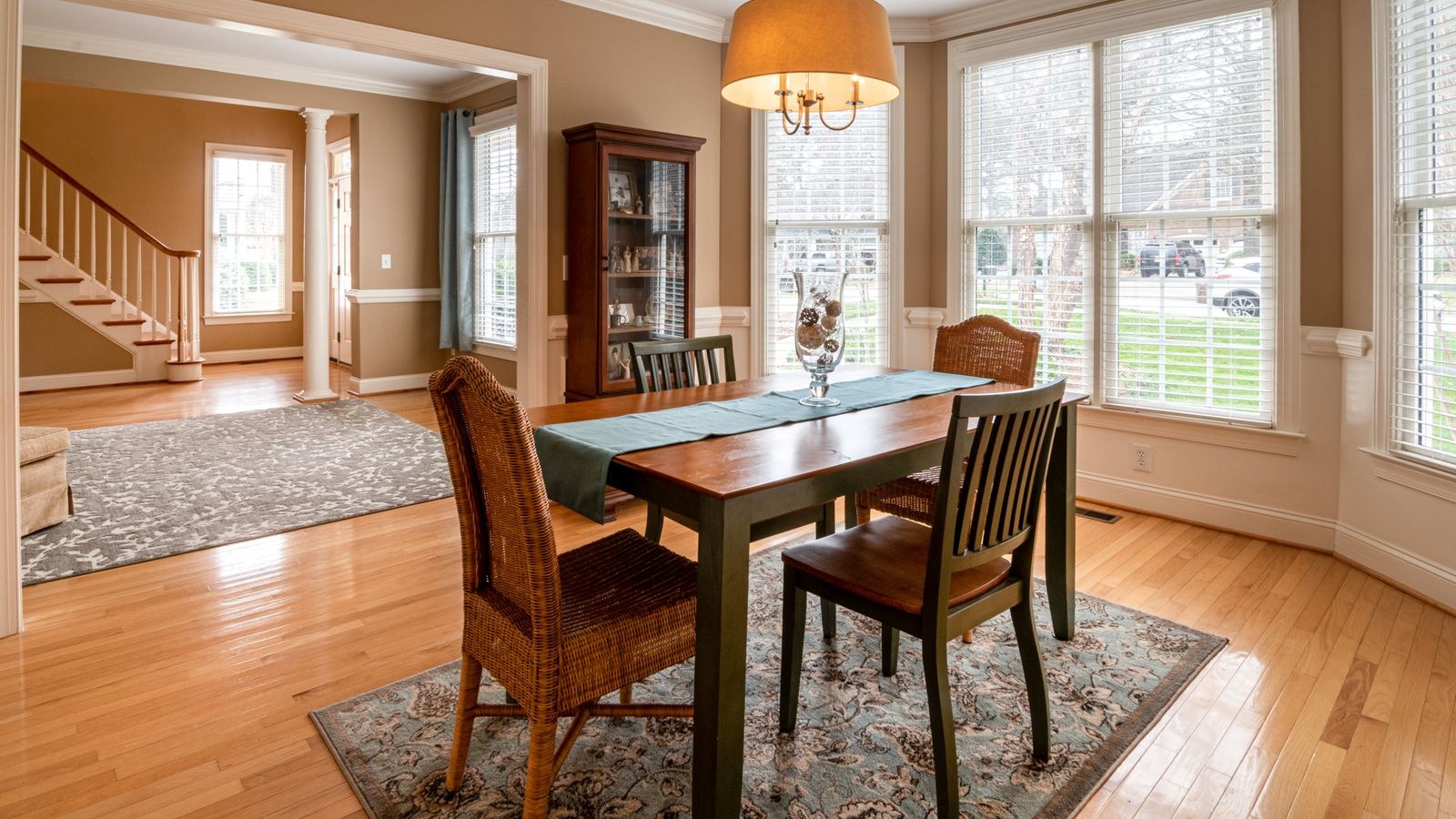
 Dining rooms are lit for people, not for tasks. Nobody needs 750 lux to eat a bowl of pasta, and the brightest dining room in the neighborhood is usually the least pleasant one to sit in. What a dining space actually needs is a fixture scaled correctly to the table, hung at the right height, throwing warm light that makes food look appetizing and faces look healthy, and dimming smoothly from homework brightness at 5 p.m. to candle-adjacent glow at 9. Get those four things right and an inexpensive fixture will outperform a chandelier that costs four figures. This dining room lighting guide covers fixture sizing formulas, hanging heights, layering with sconces and lamps, bulb selection, and the dimming setup that ties it all together. Whether you are furnishing a first dining room or replacing a fixture that has annoyed you for years, the decisions below are the ones that determine how the room feels in 2026 and every year after.
Sizing the Fixture to the Table
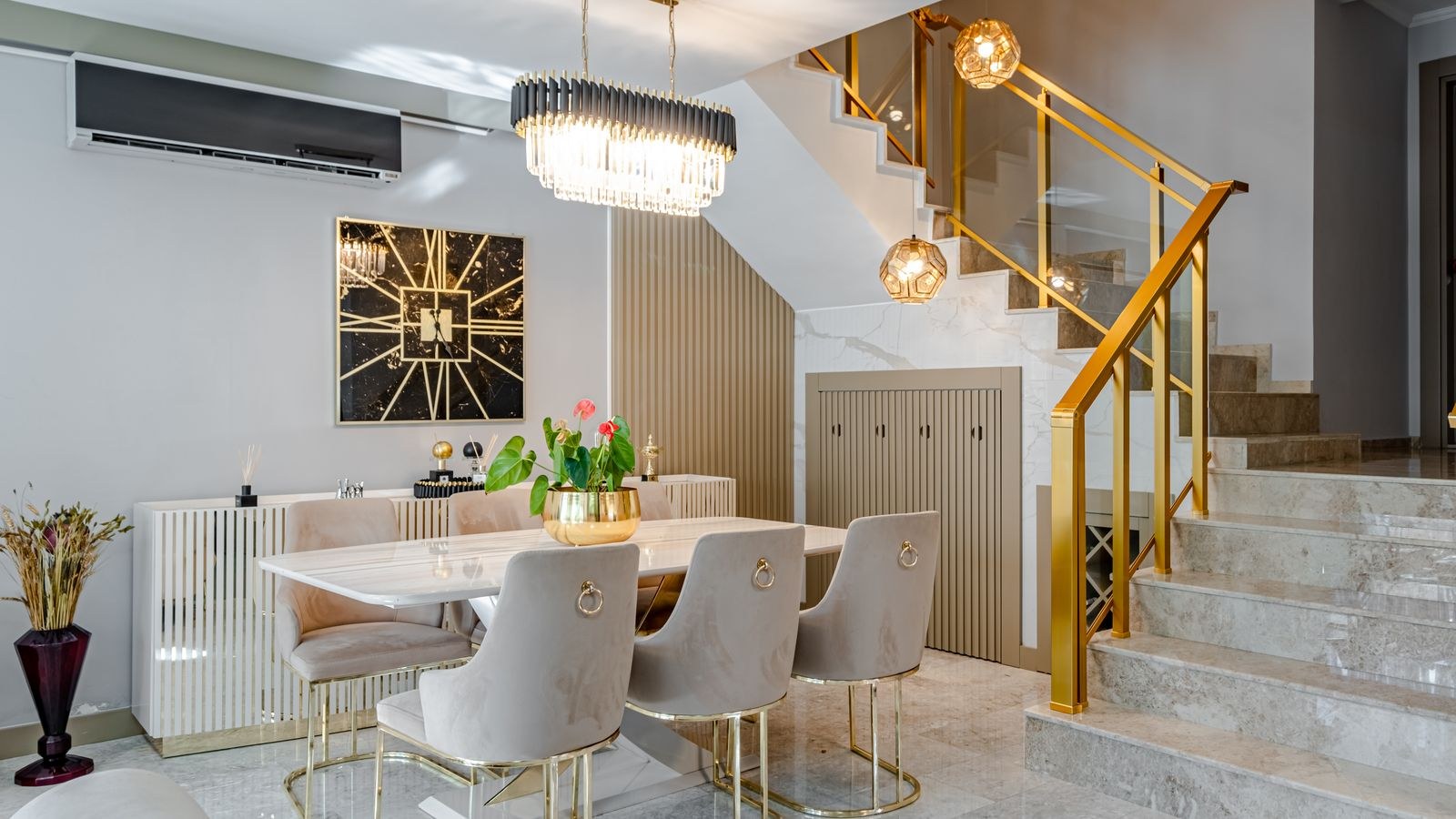
The most common dining room lighting error is a fixture that is too small. A modest chandelier that looked substantial in a showroom shrinks the moment it hangs over a 7-foot table, and the room reads as unfinished.
Two formulas cover most situations. For a round or square table, the fixture diameter should be roughly half to two-thirds of the table’s width. A 48-inch round table therefore wants a fixture between 24 and 32 inches across. For a rectangular or oval table, a linear fixture should span about half to three-quarters of the table length, so an 84-inch table suits a 42- to 60-inch linear suspension.
There is also a room-based check worth running. Add the room’s length and width in feet, and the sum in inches is a reasonable maximum fixture diameter. A 12-by-14-foot dining room gives 26, so a fixture up to about 26 inches across will not overwhelm the space. Where the two methods disagree, favor the table formula, because the fixture belongs to the table visually.
Whatever the width, keep at least 6 inches of clearance from the fixture edge to the table edge on every side. Diners should never risk knocking a shade while reaching for a serving dish.
Hanging Height: The Number Everyone Gets Wrong
Hang the bottom of a dining fixture 30 to 36 inches above the tabletop. Thirty-two to 34 inches is the safest default in a room with a standard 8-foot ceiling.
Adjust for ceiling height by adding roughly 3 inches for every foot of ceiling above 8 feet. A 10-foot ceiling therefore suggests around 36 to 40 inches above the table. The reason for the range is sightline: hang too low and the fixture blocks the face of the person opposite you, which quietly kills conversation; hang too high and the light spreads thin, losing the intimate pool that makes a dining table feel like a destination.
Two practical tests before you commit. Sit at the table and check that you can see everyone’s face without the fixture intruding. Then stand up as if leaving, and confirm nobody at the head of the table will hit the shade. If the fixture has a large or opaque shade, err toward the higher end of the range; if it is small and open, go lower to keep light on the table rather than the ceiling.
Choosing a Fixture Type
- Chandeliers are the traditional answer and remain the most flexible, ranging from crystal to rustic wood to minimalist metal. Multi-arm designs spread light in all directions, which flatters faces but needs dimming to avoid harshness.
- Drum and lantern pendants use a single shade to deliver diffuse downlight with a soft glow. Excellent over round tables and in rooms where a busy fixture would compete with other decor.
- Linear suspensions stretch along a rectangular table and light its full length evenly. The best choice for tables over 7 feet.
- Multiple pendants, typically two or three in a row, offer rhythm and a more contemporary look. Space them evenly and keep the outer ones at least 12 inches in from the table ends.
- Semi-flush fixtures are the answer for ceilings under about 8 feet where a hanging fixture would sit in your line of sight. Look for a design that throws light downward rather than only sideways.
Whichever form you choose, consider how the fixture looks unlit during the day. A dining room fixture is on for perhaps three hours an evening and visible for all sixteen waking ones, so its daytime presence as an object matters more than in most rooms.
Layering: Why One Fixture Is Never Enough
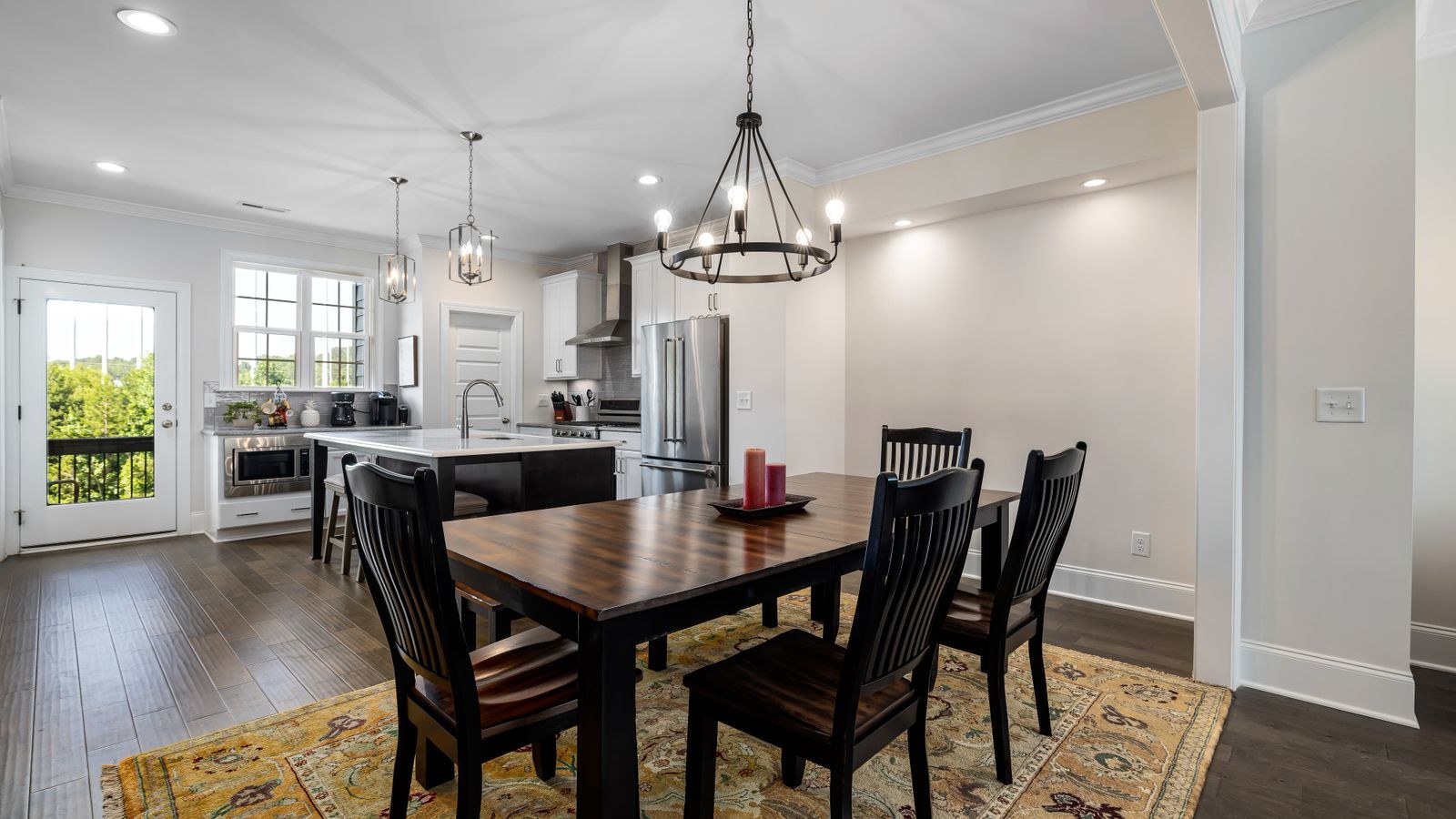
A single overhead fixture, however lovely, produces a cone of light over the table and leaves the rest of the room in shadow. That reads as dramatic for one dinner party and gloomy by the fourth. Layering fixes it.
Add wall sconces flanking a sideboard or a piece of art, mounted around 60 to 66 inches from the floor. They lift the perimeter of the room and stop the walls from disappearing after dark. A pair of small table lamps on a buffet does the same job with no wiring at all and adds a second warm glow at a lower height, which is exactly what makes a room feel calm.
A floor lamp in a corner is the most underrated dining room addition. It fills the darkest part of the room, gives you a light source you can leave on when the table is not in use, and reads as furniture rather than fixture. Our roundup of the best floor lamps for dining rooms covers shapes and heights that work alongside a hanging fixture without competing with it.
Accent lighting deserves a mention too. A picture light over artwork, or a strip inside a glass-front cabinet, adds depth that no overhead fixture can supply. These layers draw very little power and transform how finished a room looks.
Bulbs: Brightness, Warmth and Color Rendering
Total output for a dining room should land in the 1500 to 3000 lumen range, which is deliberately lower than a kitchen. The exact number depends on room size and how much you rely on the overhead fixture versus layered sources. A useful benchmark is 30 to 40 lumens per square foot for the dining room as a whole.
Divide that across the number of sockets in your fixture. A six-arm chandelier at 2400 total lumens wants roughly 400 lumens per bulb, comfortably in the range of a 40-watt-equivalent LED. Resist the urge to fill every socket with the brightest lamp that fits; a chandelier running six 800-lumen bulbs at full output is uncomfortable to sit beneath.
Color temperature should stay warm. Use 2700K as the standard, and consider 2200K for a deliberately candlelit feel in a formal dining room. Warm light shifts skin tones toward healthy and makes browned, roasted and grilled food look better, while cool white light drains color from both. Never go above 3000K in a dining space.
CRI matters here more than people expect, because you are looking at food and faces. Aim for 90 or above so that reds and warm tones render properly. Our guide to the best light bulbs for dining room fixtures compares output and color quality, and for multi-socket fixtures with visible lamps specifically, the best light bulbs for dining room chandeliers guide covers candelabra bases and decorative shapes.
Bulb Shape and Base for Visible Lamps
In chandeliers and open fixtures the bulb is part of the design, so shape and finish are aesthetic decisions. Candelabra-style flame-tip lamps suit traditional arms. Globe and teardrop shapes read modern. Vintage-style filament lamps look striking but often deliver low output and mediocre color rendering, so use them where you want atmosphere rather than illumination.
Check the base before ordering. E12 candelabra bases dominate chandeliers, E26 standard bases are typical in pendants and semi-flush fixtures, and G9 or GU10 appear in contemporary designs. A frosted or opal finish is almost always kinder than clear glass at eye level, unless the fixture is hung high enough that the emitter never enters your sightline.
Dimming Is Not Optional
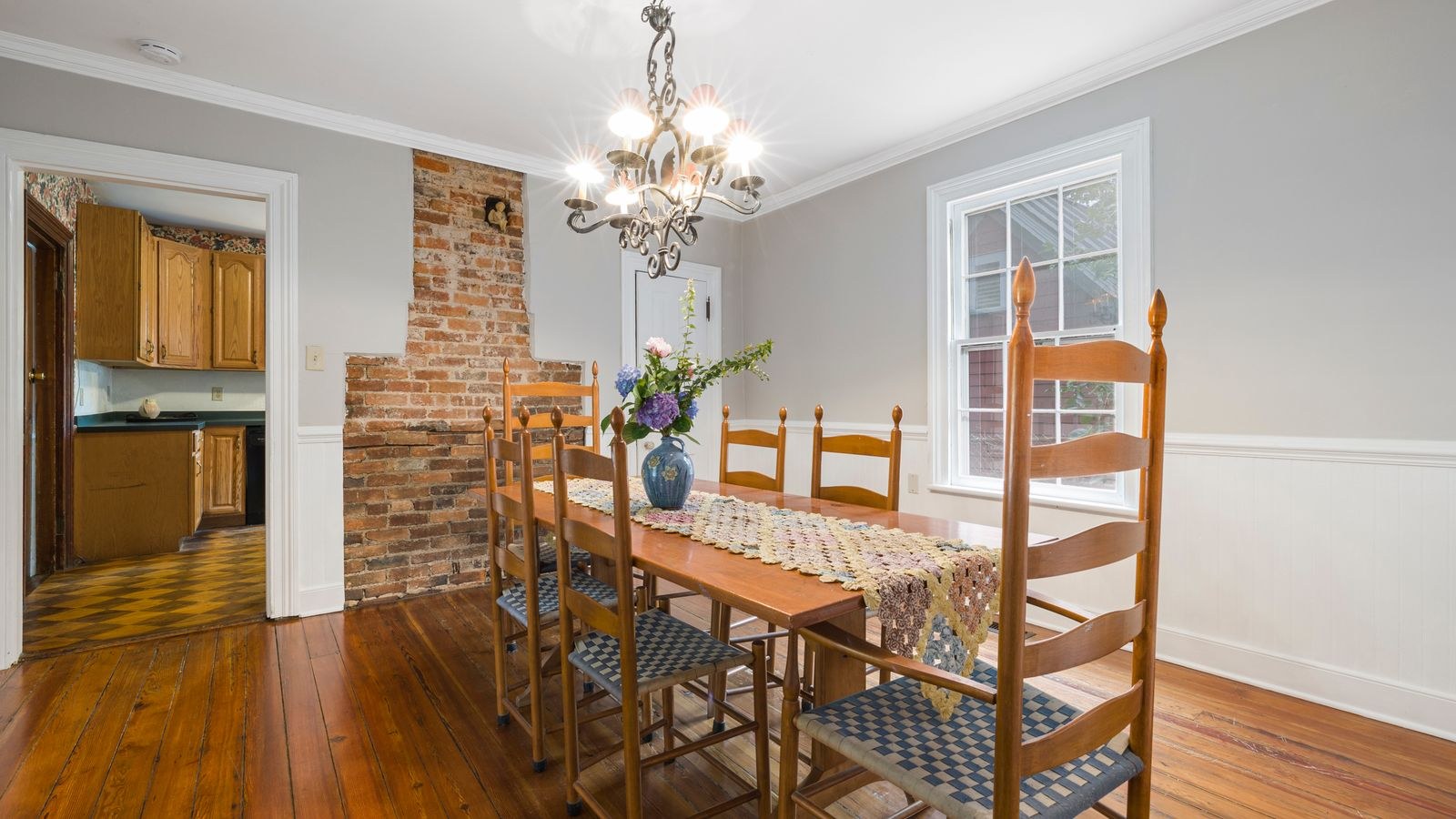
A dining room without a dimmer is a dining room with one mood. The same table hosts homework, morning coffee, board games and a long dinner with friends, and each wants a different level. A dimmer is the cheapest upgrade available and the one guests notice most.
Three points to get right. First, use dimmable bulbs; many inexpensive LEDs are not, and installing them on a dimmer causes flicker, buzzing or premature failure. Second, match the dimmer to the load: legacy incandescent dimmers often misbehave with low-wattage LED fixtures, and a trailing-edge or LED-rated dimmer solves the flicker and dropout problems. Third, check the minimum load rating, because a chandelier with six 5-watt LEDs may fall below what an older dimmer needs to operate.
Smart bulbs and smart switches add scheduling and scene control, letting the room shift from bright to dim automatically as the evening progresses. If you go that route, prefer a smart switch over smart bulbs for a multi-socket fixture, since controlling six bulbs individually is more complexity than benefit. Our comparison of the best dimmable light bulbs covers which lamps dim to a genuine low without stepping or color shift.
Centering, Wiring and Common Mistakes
The fixture must be centered on the table, not the room. If your table sits off-center, either move the table or relocate the electrical box. A ceiling medallion or a swag hook with a decorative chain can rescue a modest offset, but a fixture visibly misaligned with the table it hangs over is a permanent irritation.
Other mistakes worth avoiding:
- Undersizing the fixture. When in doubt, go one size up. Small fixtures almost never look intentional.
- Hanging too low over a table people walk around. Check the 30 to 36 inch rule against your actual chair pull-out path.
- Using cool white bulbs. Anything above 3000K makes food look grey and the room feel like a cafeteria.
- Filling every socket at maximum brightness. Fewer lumens per bulb across more sockets always looks better.
- Forgetting the ceiling box weight rating. Heavy chandeliers require a fixture-rated brace box, not a standard ceiling box.
- Relying on the overhead alone. Two extra layers cost little and change the room entirely.
Frequently Asked Questions
How big should a dining room chandelier be?
Roughly half to two-thirds the width of a round table, or half to three-quarters the length of a rectangular one. Keep at least 6 inches of clearance from the table edge on all sides.
How high should a light hang over a dining table?
Thirty to 36 inches from the tabletop to the bottom of the fixture, with 32 to 34 inches ideal on an 8-foot ceiling. Add about 3 inches for each additional foot of ceiling height.
What color temperature is best for a dining room?
2700K for most rooms, or 2200K if you want a candlelit atmosphere. Stay at or below 3000K so food and skin tones look natural.
How many lumens should a dining room have?
Between 1500 and 3000 lumens total, or about 30 to 40 lumens per square foot. Spread that across the chandelier plus sconces or lamps rather than loading it all into one fixture.
Do I need a dimmer for my dining room?
Effectively yes. A dining room serves several different activities at different times of day, and a dimmer is the only way one fixture can serve them all. Use dimmable LED bulbs and an LED-rated dimmer to avoid flicker.
Final Thoughts
Dining room lighting rewards restraint. Size the fixture generously to the table, hang it about 32 inches above the surface, keep total output modest and warm at 2700K with CRI 90 or better, and put everything on a dimmer that reaches a genuinely low setting. Then add two secondary layers, sconces on a wall and a lamp in a corner, so the room does not collapse into a single bright cone. That combination costs a fraction of a statement chandelier and produces the thing people actually remember about a dining room, which is not the fixture at all but how comfortable they felt sitting under it.