Owen Bradley
 A bathroom is the smallest room in most homes and the harshest environment in all of them. Temperature swings, constant humidity and daily splashing punish anything that is not chosen for the job, which is why so many bathroom purchases look wonderful for a month and then sag, warp, mildew or fray. This bathroom decor guide focuses on the four categories that carry the most visual weight and take the most abuse: towels, mats, mirrors and storage. Rather than chasing trends, it explains the specifications that separate items that survive years of daily use from those that do not, so the room you put together in 2026 still looks good long after the styling photos are forgotten.
Start With a Palette and a Plan for Humidity
Before buying anything, decide on two or three colours and stick to them. Bathrooms are small, so every extra hue reads as clutter. A common approach is a neutral base for the large surfaces, a single accent colour carried through towels and a mat, and one natural material such as wood, rattan or stone to warm the space. Because textiles fade unevenly, buying towels and mats in the same dye lot or at least the same brand keeps the whites and greys consistent.
Humidity governs the material choices. Solid hardwood cups and splits, untreated metal spots with rust, particleboard swells at the edges, and paper-backed art buckles. Look instead for sealed or engineered wood, powder-coated or stainless steel, bamboo, ceramic, glass and acrylic. Good ventilation is the other half of the equation: an extractor fan that actually runs for several minutes after a shower does more for the lifespan of your decor than any product feature.
Towels: What GSM Actually Tells You
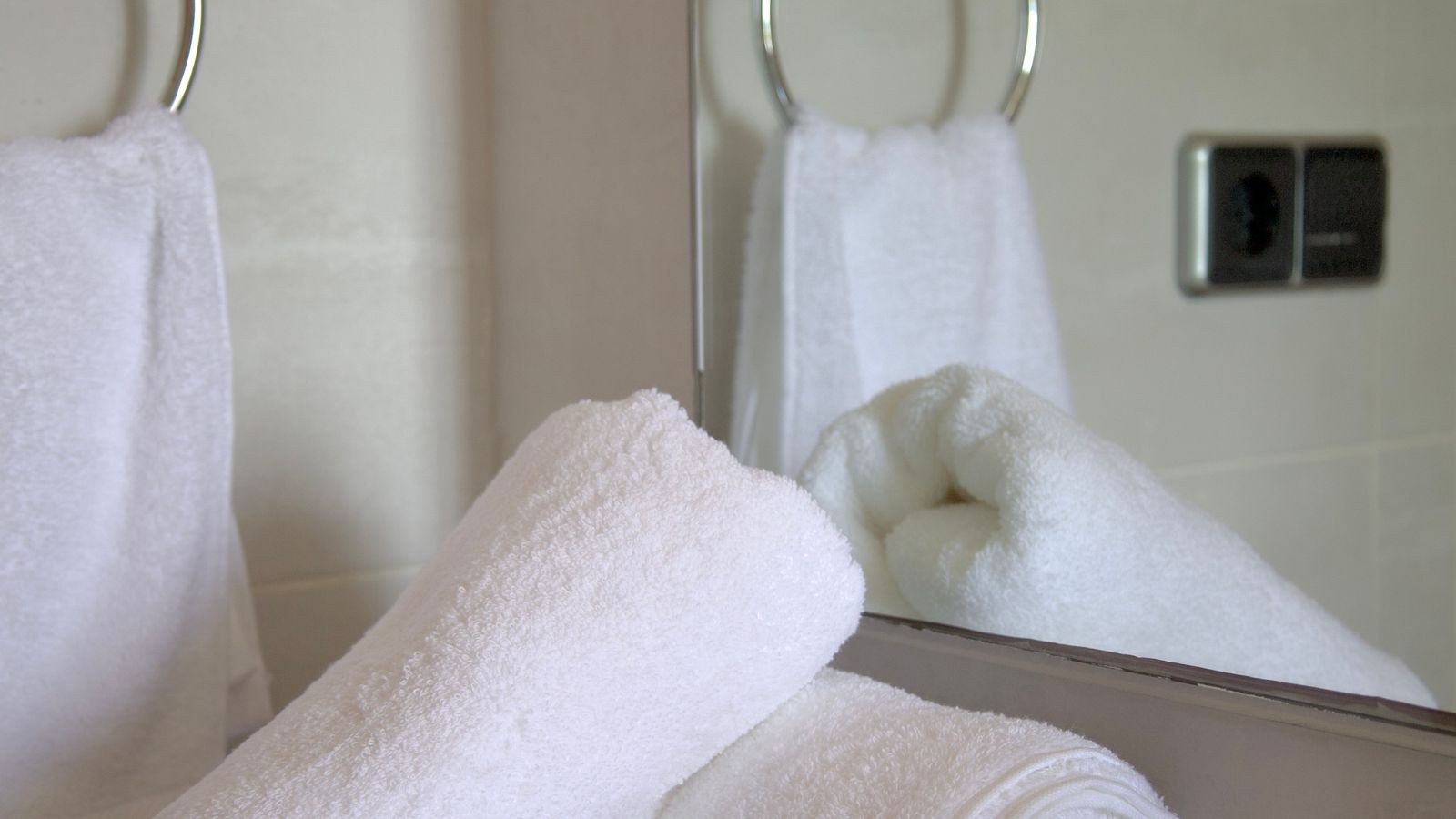
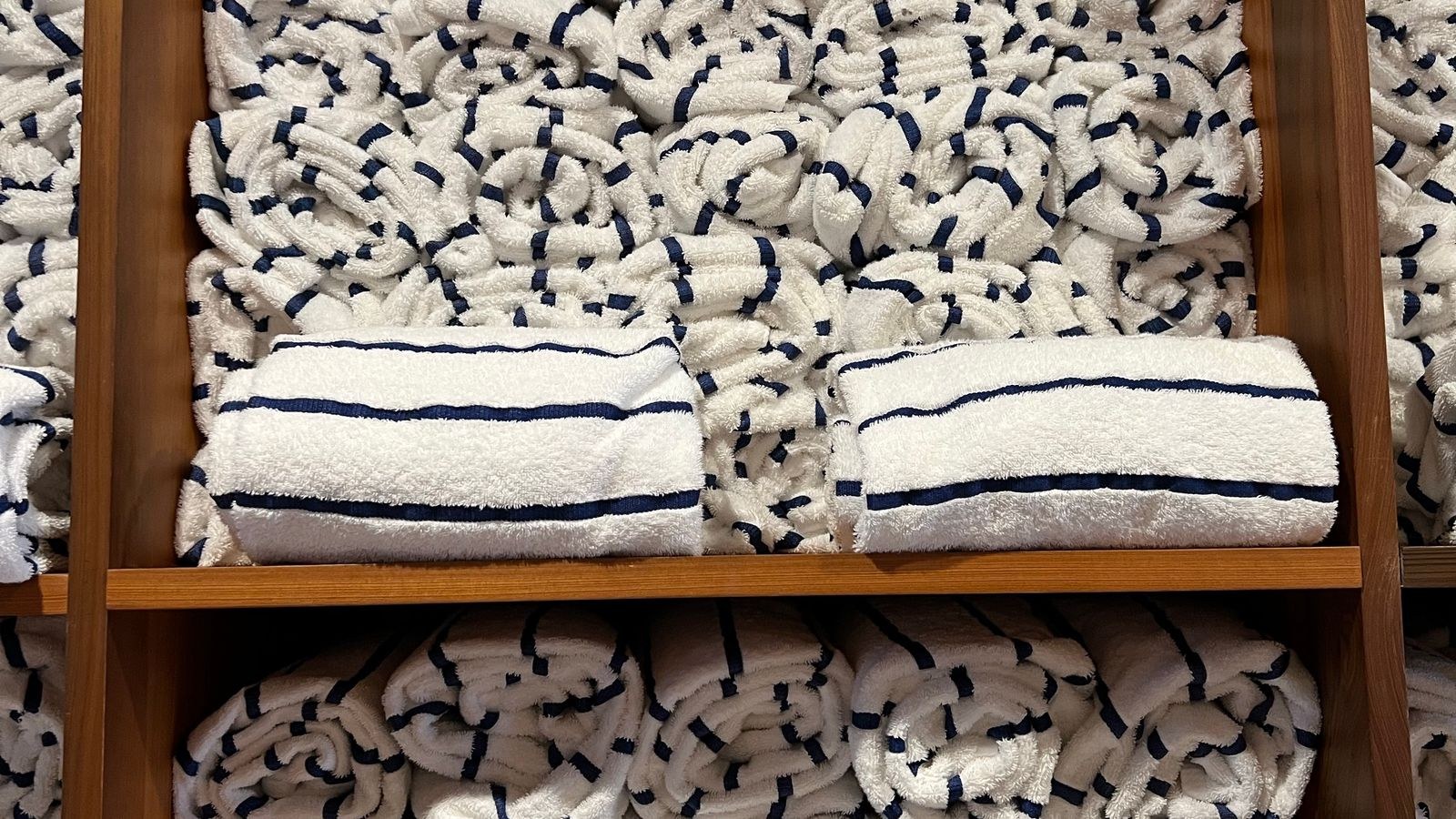
Towel quality is usually quoted in GSM, grams per square metre, which measures density rather than quality outright. Lower density around 300 to 400 GSM produces a thin, fast-drying towel that suits a gym bag, a beach trip or a guest bathroom with poor airflow. The middle range of 400 to 600 GSM is the everyday sweet spot, absorbent enough for a full-size bath sheet while still drying between uses. Above 600 GSM you get plush, hotel-style weight that feels luxurious but takes considerably longer to dry and needs a warm, ventilated room to avoid smelling musty.
Fibre matters as much as weight. Long-staple cottons produce fewer loose ends, so the towel sheds less lint and stays smoother over time. Ring-spun yarns feel softer than open-end yarns at the same density. Zero-twist constructions maximise softness and absorbency but wear faster with heavy laundering. Cotton blended with a small amount of synthetic dries faster but absorbs less, which is a fair trade only if drying speed is your main problem.
Check the finishing details too. Double-stitched hems resist unravelling, a bound edge holds shape after dozens of washes, and a hanging loop keeps the towel spread out rather than bunched. Buying a matched set in one purchase avoids the mismatched-white problem that appears when you top up a collection years later. If you want a shortlist that separates genuinely dense towels from those that only feel thick when new, our guide to the best quality bath towels compares weights, fibres and how they hold up after repeated washing.
How Many Towels a Household Really Needs
A practical rule is three bath towels per person: one in use, one in the wash and one in the cupboard. Add two hand towels per sink and a couple of washcloths per person. Keep a separate small stack in a different colour for guests, which stops the everyday towels from being worn through. Wash bath towels every three or four uses, hand towels weekly, and skip fabric softener entirely, because it coats the fibres and destroys absorbency.
Bath Mats and Floor Safety
A bath mat has two jobs that pull in opposite directions: it must feel soft underfoot and it must not move. Plush cotton mats win on comfort, dry slowly and rely on a rubber or latex backing to stay put. Memory foam mats cushion beautifully but can hold moisture inside the foam if the room does not ventilate. Diatomaceous earth mats are a rigid stone-like slab that absorbs water instantly and dries in minutes, though they are cold underfoot and can crack if dropped.
Backing quality is the detail most buyers overlook. A latex grid backing grips well but hardens and crumbles after a couple of years of hot washing, leaving grey flakes on the floor. PVC-dot backings last longer and tolerate machine washing better. On textured tile or vinyl, no backing grips perfectly, so a mat with a wide, flat footprint and a low profile is safer than a thick one that can roll at the edges.
Safety is not a cosmetic issue for anyone with balance or mobility concerns. Look for a mat that lies completely flat with no curling corners, sits low enough not to be a trip hazard, and covers the full step-out zone from the tub or shower. Our roundup of the best bath mats for seniors focuses on grip, edge profile and washability, and for inside the shower enclosure the best non-slip shower mats for elderly covers suction-cup mats and textured treads that hold on wet acrylic and tile.
Shower Curtains, Liners and the Mildew Problem
A shower curtain is really two products: a decorative outer curtain and a waterproof liner. Treating them as one thing is why so many curtains go mouldy. The liner takes the direct spray and should be cheap enough to replace annually, while the outer curtain stays largely dry and can be fabric, patterned and washed occasionally.
Standard curtains are around 72 inches wide and 72 inches long, but tubs with a curved rod, extra-tall ceilings or walk-in enclosures need different drops. Measure from the rod to two inches above the floor, and buy the hem length closest without going over, because a curtain pooling on the floor wicks water outward. Weighted hems and magnetic strips keep the liner clinging to the tub instead of billowing inward.
Materials divide roughly into PEVA and EVA plastics, which are inexpensive and fully waterproof; polyester fabric, which drapes better, machine washes and dries faster than plastic; and cotton or linen blends, which look best but need a liner behind them without exception. Whatever you choose, spread the curtain out rather than bunching it after every shower, since mildew grows in the folds that stay wet.
Small bathrooms have an extra constraint, because a dark or heavily patterned curtain visually chops the room in half. Lighter colours, vertical stripes or a partly sheer top panel keep the space feeling open. Our overview of the best shower curtains compares materials and hem constructions, the shower curtain buying guide walks through sizing and rod options, and for tight layouts the best shower curtains for small bathrooms highlights designs that avoid crowding the space.
Mirrors: Sizing, Placement and Lighting
The most common mirror mistake is buying one too small for the vanity beneath it. A good starting point is a mirror roughly seventy to eighty percent of the vanity width, centred on the sink rather than on the wall if the two do not align. For a double vanity, either one wide mirror spanning both sinks or two matching mirrors each centred on its own basin will look deliberate, while a single narrow mirror in the middle will not.
Height is simpler than it looks. Aim to have the centre of the mirror at roughly eye level for the average user of the room, which usually puts the bottom edge a few inches above the backsplash. Leave that gap so splashes do not run behind the frame and lift it off the wall.
Frames must handle steam. Sealed hardwood, metal, resin and frameless polished-edge glass all work; unsealed MDF and paper-faced composites do not. Look for a mirror with a moisture-resistant backing, because cheap silvering develops black spots along the edges within a couple of years in a wet room.
Lighting makes or breaks a mirror. Overhead downlights cast shadows straight down the face, which is unflattering and unhelpful for shaving or makeup. Light from either side at roughly face height gives even illumination. Aim for a colour temperature in the neutral range and a high colour rendering figure so skin tones and cosmetics read accurately.
Storage That Survives a Wet Room
Bathroom storage fails when it ignores moisture or ignores reach. Start by separating daily items, which need to be within arm’s reach of the sink or shower, from bulk stock such as spare towels and refills, which can live higher up or outside the room entirely.
Vertical space is the most underused resource in a small bathroom. A tall narrow shelving unit, an over-toilet étagère or a set of floating shelves adds capacity without eating floor area. Behind the door, a slim hook rail handles robes and damp towels. Inside the vanity, stacking bins and a tiered organiser stop the cavern under the sink from becoming a graveyard of half-used bottles.
Choose materials that shrug off humidity: powder-coated steel, stainless fittings, bamboo, sealed teak, glass jars and woven baskets with washable liners. Avoid cardboard-backed drawer units and untreated softwood crates. Anchor anything tall to the wall, especially in a home with children, and check that adhesive hooks are rated for wet environments before hanging a wet towel on one.
A Ten-Minute Bathroom Refresh Checklist
- Retire the tired textiles. Replace any towel that has gone thin, stiff or grey and any mat with crumbling backing.
- Swap the liner. A fresh liner behind the same outer curtain instantly resets the look.
- Unify the containers. Decant into matching pumps and jars so the counter reads calm instead of cluttered.
- Add one plant. Ferns, pothos and snake plants tolerate low light and high humidity.
- Fix the lighting. A warmer, higher-rendering bulb beside the mirror changes the room more than new tiles.
- Clear one surface completely. Empty space is what makes a small bathroom feel designed.
Common Mistakes to Avoid
The first is buying decor made for dry rooms. Paper-backed prints, untreated wood and mild-steel fittings all fail predictably in a bathroom, and no amount of styling saves them. The second is choosing the highest towel density available without considering airflow, which leaves you with heavy towels that never quite dry and start to smell after a few days. The third is undersizing the mirror or hanging it off centre, which makes an otherwise tidy vanity look unfinished.
Two more are worth naming. Overfilling a small bathroom with matching accessory sets creates visual noise in the exact place you want calm, so edit ruthlessly. And skipping the extractor fan, or running it for only the length of the shower, guarantees mildew on curtains, grout and mat backings regardless of what you spent on them.
Frequently Asked Questions
What GSM should I buy for everyday bath towels?
Between 400 and 600 GSM suits most households. It is absorbent enough for a full bath sheet yet still dries between uses in a normally ventilated bathroom.
Do I need a liner behind a fabric shower curtain?
Yes. Fabric alone will wick water onto the floor and stay damp. Use a waterproof liner inside the tub and keep the decorative curtain outside it.
How big should a mirror be above a vanity?
Roughly seventy to eighty percent of the vanity width, centred on the sink, with the bottom edge a few inches above the backsplash. Wider looks generous; much narrower looks like an afterthought.
What stops bathroom storage from going mouldy?
Ventilation first, then materials. Run the fan for at least ten minutes after showering, and choose sealed wood, coated metal, bamboo or plastic rather than particleboard and cardboard.
Final Thoughts
Good bathroom decor is mostly good specification. Pick towels in the middle density range from long-staple cotton, choose a mat with a backing that grips and a profile that lies flat, hang a properly sized mirror with light coming from the sides, and build storage from materials that do not mind steam. Add a liner you are willing to replace once a year and a fan you actually run, and the room stays fresh with almost no effort. Get those fundamentals right and the styling, the colour palette and the finishing touches become the easy part rather than a way of covering up choices that were never going to last.