
 Priya Raghavan
 If you subscribe to Comcast Xfinity, you already know that the equipment you connect matters just as much as the plan you pay for. Renting the gateway from your provider is convenient, but it rarely delivers the speed, coverage, or control that a dedicated device can. That is why so many subscribers start hunting for the best routers for Xfinity to unlock the full potential of their internet plan and stop paying a monthly rental fee. This guide walks you through everything that actually matters, so you can match the right hardware to your home instead of guessing.
Below you will find the current standout options, followed by a practical framework for choosing. We are not ranking these products one by one – instead, we will explain the categories, the features that count, and how to think about compatibility so the decision feels obvious by the time you reach the end.
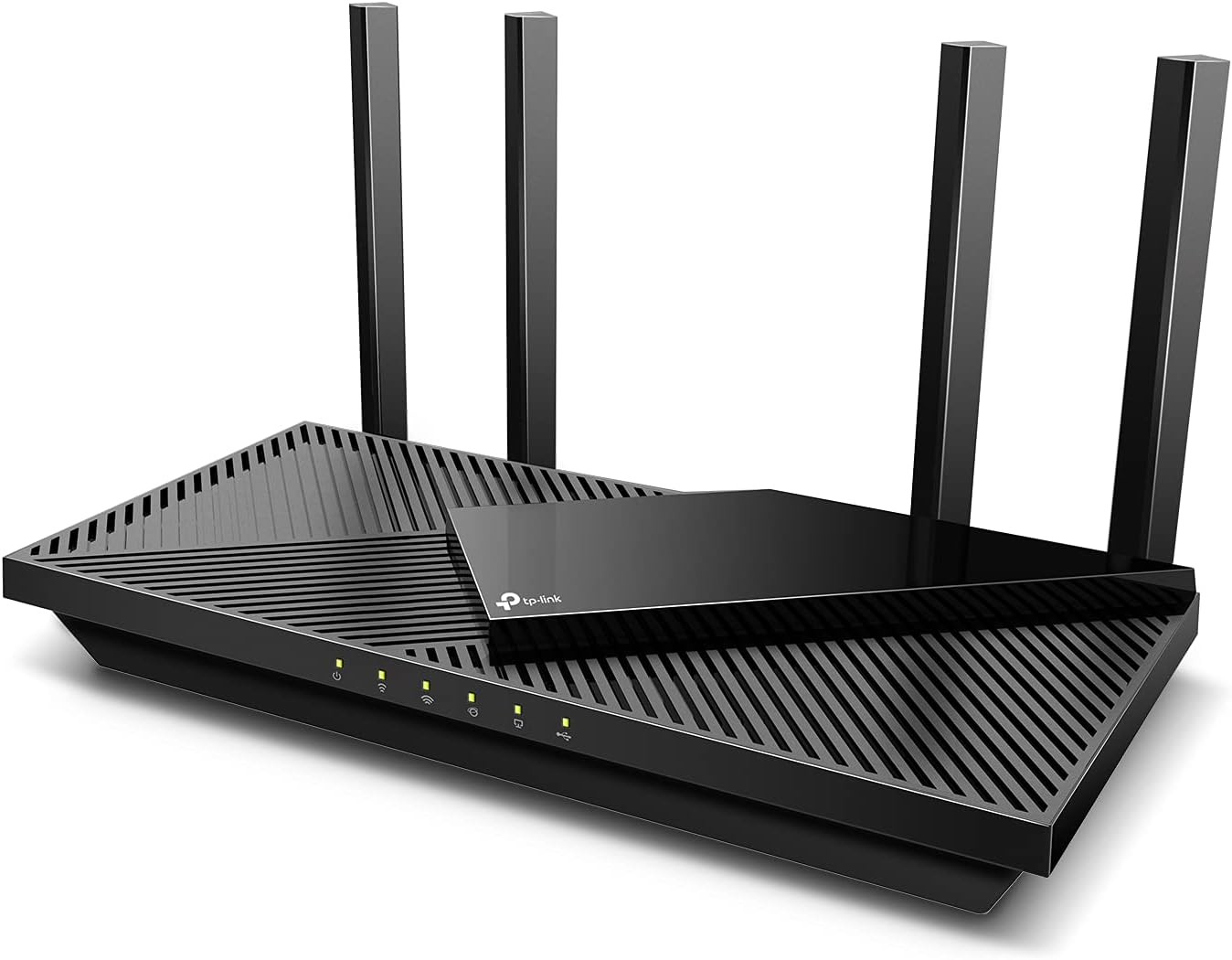
Pros
- AX3000 splits 2402 Mbps on 5 GHz and 574 Mbps on 2.4 GHz, with OFDMA and MU-MIMO dividing airtime between clients
- Four high-gain external antennas plus beamforming steer signal towards devices in back bedrooms
- USB 3.0 port shares a drive or printer across the whole network
- Built-in VPN server and VPN client, so you can reach home files remotely or route outbound traffic through a provider
- An enlarged heatsink and reworked case shed heat, which matters in a cupboard or an unventilated shelf
Cons
- Dual-band only, so mesh traffic shares the same 5 GHz band as your devices instead of a dedicated backhaul
- Gigabit WAN and LAN ports cap it below multi-gigabit internet plans
- Only the basic HomeShield tier is included, and the deeper network protections need a separate plan
The headline split is 2402 Mbps on 5 GHz and 574 Mbps on 2.4 GHz, a sensible balance for a three or four bedroom home.
- OFDMA lets several devices share a single transmission slot rather than queueing, which is what trims latency and jitter when a household streams, calls and games at once
- MU-MIMO serves multiple clients in parallel instead of round-robin
- Four high-gain antennas with beamforming concentrate signal towards each device rather than radiating evenly into the garden
- Target Wake Time lets phones and sensors sleep between transmissions, which shows up as longer battery life on those devices
The 2.4 GHz band remains the one that reaches through brick and up a floor, so keep smart plugs and doorbells there and reserve 5 GHz for laptops and TVs.
Setup runs through the Tether app rather than a browser page, and it takes minutes rather than an evening.
- Power the router, connect the WAN port to your modem, then let the app detect the connection type
- Name the network, set a passphrase and enable WPA3, which is the current security protocol and should be left on unless an old device refuses to join
- Basic parental controls and Quality of Service are configured from the same screens, so you can prioritise a work laptop over a games console
- Alexa voice commands can toggle guest Wi-Fi and similar routine tasks
The router accepts 100 to 240V input, so it survives a move between regions with only a plug adapter. Firmware updates are prompted in the app and are worth applying on arrival.
Wired connectivity is standard gigabit, with a USB 3.0 socket as the useful extra.
- The USB 3.0 port turns a spare external drive into shared network storage or puts an old printer on the network
- A built-in VPN server lets you dial into your home network from a hotel, while the VPN client pushes household traffic out through a provider without configuring every device
- EasyMesh and OneMesh support means a compatible extender joins as one roaming network rather than a second network name
It works with the major internet providers as a straight router, but there is no modem inside, so cable subscribers keep their existing modem in front of it. Gigabit ports also mean plans above 1 Gbps will not be fully realised on a wired connection.

Pros
- A Trusted Name in Home Connectivity: Get high speeds, better
- Save Money: Own your modem and save. Reduce your cable bill up to
- Modem Technology: DOCSIS 3.0 is a reliable, broadly available, and
- Simple and Secure Set-up: Just plug-in, download the SURFboard
Cons
- Periodic visual inspection recommended to ensure component tightness
- Best placed in well ventilated indoor spaces away from excess moisture
Crafted with attention to functional details, the ARRIS ARRIS - Modem Router Combo - Fast DOCSIS 3.0 AC2350 WiFi brings efficient performance to your Modem Router Combos. Daily usage reveals robust utility supported by A Trusted Name in Home Connectivity: Get high speeds, better coverage, and a two-in-one product. With the ARRIS SURFboard Wi-Fi Cable Modem, you will increase your network capability and get faster streaming and downloading throughout your home. From a trusted brand with over 260 million modems sold and growing.. Complementing its primary framework, the design also incorporates Save Money: Own your modem and save. Reduce your cable bill up to 168 quality features per year in cable modem rental fees (Savings vary by cable service provider). Certified for use with most U.S. cable internet service providers. For a complete list see additional details below. to optimize routine handling.
Focusing on material selection, this hardware is constructed to resist ongoing physical fatigue. Reinforced internal elements like Modem Technology: DOCSIS 3.0 is a reliable, broadly available, and quality feature technology that delivers high speed internet to your home devices. maintain steady operational balance under continuous use. Solid structural engineering allows the unit to maintain physical stability under load. User centered design choices streamline routine interactions and enhance practical convenience. Robust physical construction provides verified peace of mind during heavy daily usage. Thoughtful spatial layout allows versatile placement across modern living environments. Dependable hardware performance ensures consistent operational output throughout the year.
Maintaining optimal hardware conditions involves simple periodic inspection and spatial planning. Featuring Simple and Secure Set-up: Just plug-in, download the SURFboard Central App, and follow the step-by-step instructions to activate the modem, set up and customize your Wi-Fi network, and add devices to your home network. Once setup is complete, the app provides real-time monitoring of the devices on your network, enhanced parental controls like setting time limits and pausing internet, and much more., ongoing operation remains intuitive across varied household routines. Wiping surfaces periodically with a soft cloth prevents dust accumulation in functional crevices.

Pros
- AX3000 splits as 2402 Mbps on 5 GHz with HE160 channel width and 574 Mbps on 2.4 GHz
- One unit is specified to cover about 2,500 sq ft, with more units addable to the same mesh
- Three Gigabit Ethernet ports per unit, and any of them can serve as the WAN input
- Wired Ethernet backhaul is supported, so a Cat 5e run frees the radios entirely for clients
- Two-year warranty with 24/7 technical support, a year longer than many networking brands offer
Cons
- Ethernet ports are Gigabit only, so an internet plan above 1 Gbps will be capped by the wired interface
- No USB port, so shared drives and printers must hang off a computer instead
- This is a 1-pack and replaces the router only — most connections still need the provider modem in front of it
A single unit is specified to cover roughly 2,500 sq ft, which in practice means a typical two-storey home with the unit placed centrally and high rather than in a ground-floor corner.
- AX3000 breaks down as 2402 Mbps on 5 GHz (2x2 with HE160 channel width) and 574 Mbps on 2.4 GHz.
- Wi-Fi 6 brings OFDMA and MU-MIMO, which matter most when many devices are awake at once — support is quoted for over 150 connections.
- Real throughput to any one client sits below the radio figures, and HE160 needs a client that supports 160 MHz channels to approach the headline number.
- Adding a second unit extends coverage under one network name, with devices handed between units as you move.
Thick masonry walls, a converted loft or a detached garage all argue for two units rather than expecting one to reach.
Setup runs through the Deco app rather than a browser page. You connect the unit to the modem with Ethernet, power it up and follow the guided steps on a phone.
- The app handles naming the network, setting the password and checking the internet link, and takes about ten minutes for a first unit.
- Three Gigabit Ethernet ports sit on each unit and any one can act as the WAN input, so you are not tied to a fixed socket.
- Wired Ethernet backhaul is supported: run Cat 5e or better between units and the mesh link stops consuming wireless airtime.
- HomeShield adds network security features and parental controls from inside the same app.
Keep the app installed afterwards. Firmware updates, device lists and guest network toggles all live there rather than on a local web page.
This replaces your router, not your modem. Most connections still need the provider modem or ONT in front of it, with the Deco taking an Ethernet feed from that box.
- If your provider supplied a combined modem-router, switch it to bridge or modem mode before adding this unit, or you end up with two layers of network address translation.
- Ports are Gigabit, so a plan faster than 1 Gbps is limited by the wired interface no matter what the radios can do.
- It joins the same mesh as other Deco models, so an existing X20 or similar can stay in service alongside it.
- The manufacturer lists a two-year warranty and 24/7 technical support for most home products.
There is no USB socket, so network storage or a shared printer needs a computer or a separate NAS.

Pros
- Combined throughput up to 2882 Mbps on 5GHz plus 688 Mbps on 2.4GHz across dual bands using Wi-Fi 7's Multi-Link Operation
- Two 2.5 Gbps ports (one WAN/LAN switchable) plus three 1 Gbps LAN ports break past the single-gigabit bottleneck of older routers
- 2.0GHz quad-core processor and 4 internal antennas with beamforming target coverage up to 2,000 sq. ft. for up to 60 connected devices
- EasyMesh compatibility lets it pair with additional routers or extenders to expand coverage without replacing the whole system
- USB 3.0 port adds local network storage or printer sharing that many entry routers skip entirely
Cons
- Dual-band only, so it does not include the 6GHz band found on tri-band Wi-Fi 7 routers, reducing available spectrum in congested networks
- 2,000 sq. ft. coverage figure is on the smaller end for whole-home Wi-Fi 7 systems, so larger homes may need an EasyMesh extender
- HomeShield's advanced security and parental control features typically require an ongoing subscription beyond the basic free tier
The Archer BE230 is a dual-band BE3600-class Wi-Fi 7 router with combined speeds up to 2882 Mbps on 5GHz and 688 Mbps on 2.4GHz, using 4-stream Multi-Link Operation to keep connections stable as devices roam between bands. Four internal antennas with beamforming push signal toward hard-to-reach corners, with coverage figures up to 2,000 sq. ft. and support for up to 60 connected devices at once.
- Combined throughput up to 2882 Mbps (5GHz) and 688 Mbps (2.4GHz)
- 4-stream Multi-Link Operation for Wi-Fi 7 devices
- Coverage figures up to 2,000 sq. ft. for up to 60 devices
- 4K-QAM modulation for added data capacity per stream
Because this is a dual-band model, it skips the 6GHz band found on tri-band Wi-Fi 7 routers, which matters most in dense apartment buildings with heavy 5GHz interference from neighboring networks.
Physical connectivity runs through one 2.5G WAN/LAN switchable port, a second dedicated 2.5 Gbps LAN port, and three additional 1 Gbps LAN ports, so multi-gig internet plans and wired devices are not bottlenecked by a single gigabit port the way many entry-tier routers are. A USB 3.0 port adds local file sharing or printer connectivity without extra hardware.
- One 2.5G WAN/LAN switchable port plus a second 2.5 Gbps LAN port
- Three additional 1 Gbps LAN ports
- USB 3.0 port for shared storage or printers
- EasyMesh support to add extenders or additional routers later
The 2.0GHz quad-core processor is built to manage this port and antenna load without introducing lag, and EasyMesh compatibility means the network can grow into a mesh system later instead of requiring a full router swap.
The Archer BE230 works with any cable or fiber internet service since it is a standalone router rather than a modem-router combo, so it slots in behind whatever modem your provider supplies. It includes built-in VPN client and server support alongside HomeShield network security tools and Private IoT network separation for keeping smart home devices off the main network.
- Works with any standard cable or fiber modem, ISP-agnostic
- Built-in VPN client and server functionality
- Private IoT network separates smart home devices from primary devices
Advanced HomeShield features such as extended parental controls and deeper security scanning commonly sit behind an ongoing subscription, so check which protections are included at no extra cost versus which require a paid tier before relying on them.

Pros
- Total bandwidth of 6.5 Gbps across 2.4GHz and 5GHz bands with 6 spatial streams
- Two 2.5 Gbps ports (WAN/LAN and LAN) plus three 1 Gbps LAN ports
- Rated coverage up to 2,400 sq ft and 90 simultaneously connected devices
- USB 3.0 port for network-attached storage or printer sharing
- WPA3 encryption plus a separate managed network for IoT devices
Cons
- Dual-band design only, with no dedicated 6GHz band despite the Wi-Fi 7 label
- Full 5764 Mbps and 6.5 Gbps figures are only reached with Wi-Fi 7 client devices; older phones and laptops connect at lower legacy speeds
- Deeper security scanning and remote management run through the cloud-connected Tether app rather than working fully offline
This dual-band Wi-Fi 7 router combines a 5764 Mbps 5GHz band with a 688 Mbps 2.4GHz band for 6.5 Gbps of combined bandwidth across 6 spatial streams.
- Rated coverage of up to 2,400 sq ft with 6 external antennas and beamforming
- Supports up to 90 simultaneously connected devices
- Multi-Link Operation combines both bands for lower latency on supported clients
Because this is a dual-band design rather than tri-band, there is no dedicated 6GHz lane; devices without Wi-Fi 7 support fall back to standard 5GHz or 2.4GHz speeds rather than the peak combined figure. For a typical single-floor or small two-floor home, the antenna layout and beamforming keep signal consistent across rooms, though a very large multi-floor house may still benefit from a mesh add-on at the edges of the stated coverage area.
Setup runs through the Tether app, which walks through connecting the WAN port to a modem and configuring the wireless network name and password in a few steps.
- 1x 2.5 Gbps WAN/LAN port, 1x 2.5 Gbps LAN port, and 3x 1 Gbps LAN ports
- 1x USB 3.0 port for a shared drive or printer
- Powered by an included 12V 2.5A adapter
The unit measures 10.6 x 6 x 1.9 inches and stands vertically, so placement needs a bit of clearance around the antennas rather than lying flat under other equipment. Guest networks, port forwarding, and a separate IoT network are all configurable from the same app, and firmware updates are pushed automatically once cloud services are enabled during setup.
The 2.5 Gbps WAN port supports multi-gig internet plans when paired with a compatible modem, while standard gigabit or slower ISP connections still work through the same port without any adapter needed.
- Supports IPv4 and IPv6, PPPoE, and dynamic or static IP connection types common across ISPs
- WPA3 encryption plus a separate network for IoT devices through HomeShield
- Compatible with Alexa and Google Assistant for voice-based network commands
Because the 2.5 Gbps WAN port only reaches its full speed with a matching multi-gig plan, anyone on a standard gigabit or lower connection will see their own connection's ceiling rather than the port's ceiling. HomeShield's deeper security scanning and parental controls are managed through the cloud-connected Tether app rather than a fully local dashboard.

Pros
- Covers up to 2,500 square feet and supports up to 80 connected devices simultaneously per the maker's figures
- WiFi 7 dual-band radios reach combined speeds up to 6.5Gbps (BE6500 class), about 2.4 times faster than a WiFi 6 router by the same spec sheet
- 2.5 Gig WAN port supports multi-gig internet plans beyond what a standard 1 Gig port allows
- LAN side includes 1x 2.5 Gig port plus 3x 1 Gig ports for wired devices needing higher throughput
- NETGEAR Armor adds an automatic security shield across all connected devices on the network
Cons
- This is a router only, with no built-in modem, so a separate cable or fiber modem is required to actually reach the internet
- Reaching the full 2.5Gbps WAN speed requires an internet plan and modem that also support 2.5Gbps, so a slower plan or older modem caps throughput well below the router's ceiling
- Coverage of 2,500 sq ft and 80 devices is the entry point in NETGEAR's WiFi 7 Nighthawk line, with larger homes needing a higher model in the same series for more coverage or device capacity
The RS200 is a dual-band WiFi 7 router figured in the BE6500 class, reaching combined wireless speeds of up to 6.5Gbps across its bands, a figure the maker positions as roughly 2.4 times faster than a comparable WiFi 6 router. Coverage is specified at up to 2,500 square feet with support for as many as 80 connected devices at once, figures that sit at the entry point of NETGEAR's current WiFi 7 Nighthawk lineup.
Wired connectivity includes a 2.5 Gig internet (WAN) port for multi-gig internet plans, plus 1x 2.5 Gig and 3x 1 Gig LAN ports for wired devices such as a desktop PC, a NAS or a games console needing a stable, high-throughput connection.
- WiFi class: WiFi 7, BE6500 (up to 6.5Gbps)
- Coverage: up to 2,500 sq. ft.
- Device capacity: up to 80
- WAN port: 2.5 Gig
This listing is for the router only; it does not include a built-in cable modem, so a separate modem with coax input is required to connect to a cable internet service, or an ONT for fiber service. It is compatible with any internet service provider, since the router itself just needs a wired connection from a modem into its WAN port.
To reach the router's full 2.5Gbps WAN speed, both the internet plan and the modem feeding it need to support that same 2.5Gbps figure; a standard 1 Gig plan or an older modem will cap throughput at that lower ceiling regardless of the router's own capability. NETGEAR Armor runs in the background once set up, adding automatic monitoring across every device connected to the network.
- Modem: not included, required separately
- WAN speed ceiling depends on modem and ISP plan
- Security: NETGEAR Armor included
This router suits households in roughly a 2,500 square foot home running up to about 80 devices between phones, laptops, smart home gadgets, and streaming devices, wanting a step into WiFi 7 without the coverage of a larger mesh system. Gamers and anyone doing frequent 4K streaming or video conferencing benefit from the added bandwidth WiFi 7 provides across multiple devices at once.
Larger homes beyond 2,500 square feet, or households needing to connect more than 80 devices, are better matched to a higher model in the same Nighthawk WiFi 7 range built for greater coverage and device capacity. Anyone without a modem already in place will need to plan for that as a separate purchase alongside this router.

Pros
- Works as a standalone tri-band router first, so a single unit replaces an existing router and extender without committing to a full mesh
- Tri-band total of 5,400 Mbps split as 2402 Mbps on 6GHz, 2402 Mbps on 5GHz and 574 Mbps on 2.4GHz
- Rated for 200 connected devices, ample headroom for a smart home on one node
- Cross-compatible with every other Deco model, so a second unit added later can be a different model rather than an identical one
- Two-year warranty with 24/7 technical support, a year longer than most networking brands offer
Cons
- 2,900 sq ft is a single-node open-space figure - internal walls and floors reduce it sharply, and one unit cannot fill a multi-storey house
- With only one node there is no mesh backhaul to run, so the dedicated 6GHz band sits underused until you buy a second Deco
- The listing states no Ethernet port count or speed for this model; the 2.5 Gbps port belongs to the Pro version and is absent here
The quoted 2,900 sq ft applies to this single unit in open conditions. Real homes reduce that: plaster and brick internal walls, foil-backed insulation and concrete floors all cut range, and a single node cannot serve two storeys well from a ground-floor position.
To get the most from one unit:
- Place it centrally in the home rather than in the corner where the broadband line enters, if the cable run allows
- Keep it at waist height or above, in open air rather than inside a media cabinet
- Position it away from microwaves, cordless phone bases and large metal appliances
If coverage still falls short, the fix is a second Deco rather than a repositioning exercise. Any Deco model works alongside this one, so you are not locked into buying another XE75.
Everything runs through the Deco app, and the order matters:
- Power down your modem completely, then connect it to the Deco's WAN port
- Power the modem back up first and let it settle before the Deco
- Create a TP-Link account in the app - there is no local-only setup path for Deco hardware
- Name your network, set a password, then let the firmware update run before you connect any devices
If an existing router stays in the chain, put it into bridge or modem-only mode. Two devices performing NAT is the classic cause of a network that appears to work but breaks consoles, video calls and remote access.
Once running, AI-Driven Mesh handles band steering automatically, so there is no manual channel selection or band splitting - which is convenient, but also means less control than a traditional router.
TP-Link lists this as working with all major providers - Comcast, Charter, AT&T, Verizon, Xfinity, Spectrum, RCN, Cox, CenturyLink and Frontier among them - with the standard caveat that most require a separate modem. This is a router replacement, not a modem replacement.
The 6GHz band deserves thought before you buy. By default it is reserved as the mesh backhaul between nodes - but with a single unit there are no nodes to link, so that capacity does nothing until you switch it into WiFi network mode in the app. Do that and your 6E-capable phones and laptops can use 2402 Mbps of clean spectrum with no legacy device interference.
The catch: 6GHz has shorter range than 5GHz, so it works within a room or two of the unit rather than across the house.
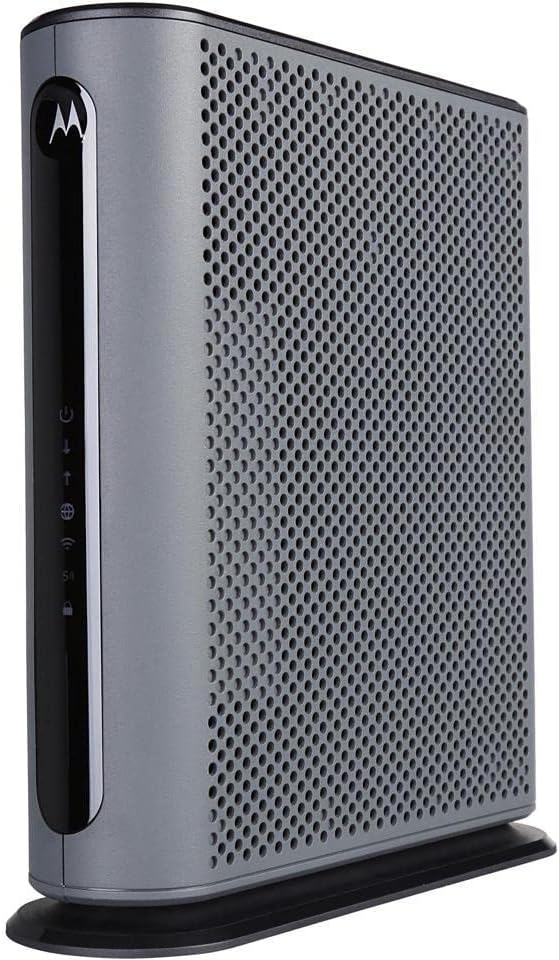
Pros
- 16x4 DOCSIS 3.0 channel bonding supports actual cable service speeds up to 375 Mbps
- AC1900 dual-band Wi-Fi runs 2.4GHz and 5GHz simultaneously alongside 4 Gigabit Ethernet ports
- Built-in DFS support opens extra 5GHz channels that most routers cannot access, cutting neighbor interference
- Broadcom modem chipset adds denial-of-service attack protection at the hardware level
- Combines modem and router into one unit, removing a second power cable and box from the desk
Cons
- No phone jack, so it cannot be used for any landline or VoIP calling service
- Only compatible with cable internet; fiber, DSL and satellite services such as Verizon, AT&T or CenturyLink will not work with it
- AC1900 Wi-Fi standard predates Wi-Fi 6, a ceiling for the newest high-throughput client devices
The modem side uses 16x4 DOCSIS 3.0 channel bonding, rated for actual cable internet service speeds up to 375 Mbps. The router side runs AC1900 dual-band Wi-Fi across 2.4GHz and 5GHz simultaneously, with Power Boost amplifying the wireless signal to the FCC-allowed limit for extended range.
- Four Gigabit Ethernet LAN ports handle wired connections to PCs, game consoles or streaming boxes
- DFS channel support opens additional 5GHz spectrum that standard routers cannot use, reducing crowding from neighboring Wi-Fi networks
- AnyBeam beamforming focuses the wireless signal toward connected devices instead of broadcasting evenly in all directions
Larger homes with multiple floors may still see weaker signal at the far edges, since this is a single-unit router rather than a mesh system.
Because the modem and router are combined into one unit, setup involves connecting a single coax cable from the wall and a single power cord, rather than pairing two separate boxes. Activation is completed with the cable provider using the device's serial number and MAC address.
- Four Gigabit Ethernet ports are ready for immediate wired connections out of the box
- A built-in firewall and Broadcom chipset add protection against denial-of-service attacks by default
- No phone jack is present, so this model cannot support telephone or VoIP service
Since it is not a mesh unit, homes with dead zones will need a separate access point added to the network.
This modem is approved for use with Comcast Xfinity (including X1), Cox, Charter Spectrum, Time Warner Cable, Suddenlink, WOW!, CableOne and several other cable internet providers. Buyers should confirm their specific provider's approved device list before ordering, since approval can vary by region.
- Not compatible with fiber, DSL or satellite services from Verizon, AT&T, CenturyLink, Frontier and similar providers
- Requires an active cable internet subscription; it does not work as a standalone Wi-Fi router without one
- Replaces a rented modem/router combo from the provider, removing that unit from the account once activated
Anyone switching providers in the future should re-check the approved device list, since not every cable company accepts every third-party modem model.

Pros
- Combines a DOCSIS 3.0 cable modem and an AC1900 dual-band router in one chassis, removing a second power lead
- Certified for Xfinity by Comcast and Cox cable service on plans up to 800 Mbps
- Gigabit Ethernet ports on the rear for a console or desktop that needs a stable wired link
- Sold through the Amazon Renewed programme, inspected and reset to factory defaults before dispatch
Cons
- Not compatible with Verizon, Spectrum, AT&T, CenturyLink, DSL providers, DirecTV or DISH
- No support for bundled cable voice service, so a phone line needs a separate eMTA modem
- Wi-Fi 5 radios only, so Wi-Fi 6 and 6E clients connect at Wi-Fi 5 rates with no 6GHz band
This is the first thing to check and the reason most returns happen. The unit is certified for Xfinity by Comcast and Cox cable networks, and it is explicitly not compatible with Verizon, Spectrum, AT&T, CenturyLink, any DSL provider, DirecTV or DISH.
It also does not support bundled cable voice service. If your account includes a home phone line through the cable provider, this cannot carry it, and you will need an eMTA modem with telephony ports instead.
Provisioning follows the usual route: register the device MAC address with the provider through their app or by phone, then wait for the downstream and upstream lights to lock before testing anything. Keep the account details to hand, because activation is the step where a self-installed modem most often stalls for an evening.
The unit combines a DOCSIS 3.0 cable modem and an AC1900 dual-band router in a single chassis, so one power lead and one coax feed replace two boxes plus the Ethernet cable between them, and there is one fewer thing to reboot.
It is specified for cable plans up to 800 Mbps. Treat that as the practical ceiling: a plan above that figure will be constrained by the modem rather than by the line, so households on multi-gig service should be looking at a DOCSIS 3.1 unit instead.
Wired devices connect over Gigabit Ethernet on the rear, which is the connection to use for a desktop, a games console or a heavy-streaming TV, since a wired link sidesteps Wi-Fi congestion completely. The wireless side is dual-band Wi-Fi 5.
This unit is sold through the Amazon Renewed programme rather than as new stock. In practice that means it has been inspected and tested by a qualified supplier, cleaned, and reset to factory defaults so that no previous owner's settings or credentials remain on it.
Two things follow. Packaging and accessories are not guaranteed to match a new retail box, so a coax lead or an Ethernet patch cable may or may not be in the carton; check before assuming. And light cosmetic marks are possible, because the standard applied is functional rather than visually pristine.
Before activation, run a factory reset yourself with the recessed rear button, then set a new admin password and a new Wi-Fi passphrase. After that, check for a firmware update, because a unit that has been sitting in stock will be behind on security patches.

Pros
- Tri-band radios at 2402 Mbps on 6GHz, 2402 Mbps on 5GHz and 574 Mbps on 2.4GHz
- 2.5 Gbps port usable as either WAN or LAN, for multi-gig service or a wired NAS
- 1.0 GHz dual-core CPU with 512 MB of memory and six high-gain antennas with beamforming
- 160MHz channels on the 6GHz band, clear of legacy device traffic and neighbouring overlap
- Runs OpenVPN, PPTP and L2TP as both server and client, with WPA3 and a 2-year warranty
Cons
- Only Wi-Fi 6E clients can use the 6GHz band, and 6GHz signal attenuates faster through walls than 5GHz
- A separate modem is still required for most cable and DSL services
- Just one 2.5 Gbps port, so a second multi-gig wired device drops back to Gigabit
Three radios rather than two: 2402 Mbps on 6GHz, 2402 Mbps on 5GHz and 574 Mbps on 2.4GHz, making up the 5400 Mbps combined headline. The 6GHz band is the reason to buy a 6E unit at all, because it carries no legacy traffic from older devices and has room for 160MHz channels without overlapping the neighbours.
Six high-gain antennas with beamforming shape signal toward connected devices, and OFDMA plus true tri-band working raises capacity roughly fourfold against a comparable dual-band unit when many devices are active at the same time.
Behind the radios sit a 1.0 GHz dual-core CPU and 512 MB of memory, which is what stops throughput collapsing when dozens of clients, QoS rules and a VPN tunnel are all live at once. The housing is shaped for heat dissipation rather than stacking.
The standout wired feature is the 2.5 Gbps port, which can face either direction. Used as WAN it lets a multi-gig cable or fibre service exceed the old Gigabit ceiling; used as LAN it gives one machine, typically a NAS or a workstation, a 2.5 Gbps link to the rest of the network.
Setup runs through the Tether app, which handles connection type, network naming and firmware. Do the firmware update first, before anything else gets configured.
VPN support is unusually complete for a home unit. It runs as both a server and a client, covering OpenVPN, PPTP and L2TP, so you can either reach your home network from outside or push household traffic out through a provider. Security is WPA3, and the unit carries a 2-year warranty.
It works with any provider that hands off an Ethernet connection, including AT&T, Verizon, Xfinity, Spectrum, RCN, Cox, CenturyLink and Frontier. As with any standalone router, a separate modem is still needed for most cable and DSL services, so this replaces the router half of an existing gateway rather than the whole box.
On the client side, only Wi-Fi 6E devices can use the 6GHz band. Recent flagship phones, current laptops and newer 6E adapters qualify; anything older sits on 5GHz or 2.4GHz and sees no benefit from the third radio at all. Worth knowing too: 6GHz attenuates faster through walls than 5GHz, so the fastest band is also the shortest ranged.
OneMesh support lets a compatible extender join as a single roaming network name rather than appearing as a second SSID.
Router-Only vs. Modem-Router Combo: Pick Your Setup First
The very first decision is structural. Xfinity delivers internet over a coaxial cable line, so you always need a cable modem somewhere in the chain. You have two ways to handle this, and the path you choose narrows the field dramatically.
The Combo Approach (One Box Does It All)
A modem-router combo bundles the cable modem and the Wi-Fi router into a single unit. This is the simplest way to replace a rented Xfinity gateway because it plugs directly into your coax line and broadcasts Wi-Fi on its own. Devices like the Motorola MG7550 and the Netgear Nighthawk C7000 are built exactly for this, and both are explicitly listed as approved for Comcast Xfinity. The ARRIS SBG7400AC2 is another combo option with fast DOCSIS 3.0 and AC2350 Wi-Fi. The trade-off is that you replace the whole box when you want to upgrade either half.
The Separate-Modem Approach (Router of Your Choice)
The alternative is to keep a standalone cable modem and pair it with a dedicated router. This is the route most enthusiasts prefer because you can swap the router whenever new Wi-Fi standards arrive, without touching the modem. If you go this way, a router like the TP-Link Archer AX55 or a mesh unit such as the TP-Link Deco X55 handles all the wireless duties while your modem quietly moves data. This flexibility is the main reason a router-only build tends to age better.
Confirm Xfinity Compatibility Before Anything Else
Compatibility is non-negotiable with cable internet. Xfinity maintains an approved-device list, and only modems or combos on that list will activate on the network. This matters for combos and standalone modems, not for router-only devices – a router that sits behind an approved modem simply does not need provider approval because it never touches the coax line.
- For combos and modems: Check that the exact model is approved for your Xfinity tier. The Motorola MG7550 lists Comcast Xfinity approval directly, which removes a lot of guesswork.
- Match the DOCSIS standard to your speed: Older DOCSIS 3.0 combos are perfect for plans up to a few hundred megabits, but if you pay for gigabit or plan to upgrade, confirm the modem can actually sustain that rate.
- For routers: Any modern router works behind an approved modem, so you are free to choose based on Wi-Fi features rather than a compatibility chart.
Skipping this step is the number one reason people return equipment, so verify the model on your provider’s list before you buy.
Wi-Fi Standards Explained: 6, 6E, and 7
Wi-Fi generations shape how fast, how far, and how many devices your network can handle. Here is what each tier means in plain terms.
Wi-Fi 6 (AX): The Reliable Baseline
Wi-Fi 6 is the sweet spot for most Xfinity homes today. It brings OFDMA and MU-MIMO, which let the router talk to many devices at once without the slowdowns older routers suffered. The TP-Link Archer AX55 is a strong example of an affordable AX3000 router that covers a typical home, supports EasyMesh, and includes a USB 3.0 port for shared storage. If your plan sits below gigabit and you have a normal load of phones, laptops, and smart devices, Wi-Fi 6 is usually all you need.
Wi-Fi 6E: Adding the 6 GHz Band
Wi-Fi 6E adds a brand-new 6 GHz band on top of the usual 2.4 and 5 GHz frequencies. That extra lane is clean and uncrowded, which is ideal for gaming, high-resolution streaming, and busy neighborhoods where everyone’s signals overlap. The TP-Link Archer AXE75 is a tri-band 6E router with a 2.5 Gbps WAN port, and for whole-home coverage the TP-Link Deco XE75 mesh spreads that 6 GHz band across a larger footprint.
Wi-Fi 7 (BE): Future-Proofing Your Network
Wi-Fi 7 is the newest standard, and it introduces Multi-Link Operation (MLO), which lets a device use several bands simultaneously for lower latency and steadier throughput. If you want your router to stay current for years, this is where to look. The TP-Link Archer BE230 is an approachable entry point with dual 2.5G and standard gigabit ports, while the TP-Link BE400 steps up with dual 2.5 Gbps ports and coverage for around 90 devices. For a premium build, the NETGEAR Nighthawk RS200 pushes BE6500 speeds with a 2.5 Gig internet port.
Single Router or Mesh System? Match It to Your Home
Coverage style is the next big fork. A single powerful router broadcasts from one location, while a mesh system uses multiple nodes that hand your devices off seamlessly as you move around.
- Choose a single router when you live in an apartment, a small house, or a space where one central spot can reach every room. A unit like the TP-Link Archer BE230 or the TP-Link Archer AXE75 handles these layouts easily and costs less than a full mesh kit.
- Choose a mesh system when you have multiple floors, thick walls, or dead zones that a single router cannot fix. The TP-Link Deco X55 covers up to 2,500 square feet and supports Ethernet backhaul, and the TP-Link Deco XE75 stretches to roughly 2,900 square feet with an AI-driven mesh.
A helpful rule: if you can point to a specific room where Wi-Fi drops today, mesh is likely worth the extra cost. If your whole space is served well from one corner, a single router keeps things simpler and cheaper.
Ports, Speed, and Real-World Throughput
Marketing numbers describe theoretical maximums you will rarely see. What actually determines your experience is the combination of your Xfinity plan, your wired ports, and how many devices are competing at once.
The 2.5 Gbps Port Question
If you pay for a gigabit or faster Xfinity plan, a 2.5 Gbps WAN or LAN port prevents the router from becoming a bottleneck. Several newer models include these faster ports – the TP-Link BE400 and the NETGEAR Nighthawk RS200 both feature 2.5 Gig connectivity, which pairs nicely with high-tier plans. On slower plans, standard gigabit ports are perfectly adequate and can save you money.
Wired Backhaul and USB Extras
If you can run an Ethernet cable between mesh nodes, wired backhaul keeps your wireless bandwidth reserved for devices instead of node-to-node chatter. Both the Deco X55 and many single routers here support this. A USB 3.0 port, found on the Archer AX55 and the Archer BE230, lets you share a drive or printer across the network – a small convenience that adds up.
Security, Software, and Ongoing Value
A router runs your entire home network, so its software matters as much as its radios. Look for these features when comparing.
- Built-in security suites: TP-Link’s HomeShield, included on the TP-Link Archer AX55 and the Wi-Fi 7 models, adds network protection and parental controls without extra hardware.
- VPN support: Several picks act as a VPN client and server, letting you tunnel securely or reach your home network while traveling.
- WPA3 encryption: The latest security standard is now common across newer routers like the TP-Link Archer AXE75, and it is worth prioritizing.
- Guest and IoT isolation: Private IoT networks keep smart devices separated from your main traffic, a feature highlighted on the TP-Link BE400.
Also weigh the long-term math. Buying your own equipment eliminates the Xfinity rental fee, which typically pays for the device within a year or so. A combo like the ARRIS SBG7400AC2 replaces the rented gateway entirely, while a router paired with your own modem does the same in two boxes.
How to Choose the Best Router for Your Xfinity Plan
Bring it all together with a short decision path:
- Want the simplest single-box replacement? Pick an approved modem-router combo such as the Motorola MG7550 or Netgear Nighthawk C7000.
- On a budget with a mid-tier plan? A Wi-Fi 6 router like the TP-Link Archer AX55 delivers excellent value.
- Fighting dead zones in a large home? Go mesh with the TP-Link Deco X55 or TP-Link Deco XE75.
- Gaming or streaming heavily? A 6E router like the TP-Link Archer AXE75 gives you a clean high-speed band.
- Buying for the long haul? Step into Wi-Fi 7 with the TP-Link Archer BE230, TP-Link BE400, or NETGEAR Nighthawk RS200.
Final Thoughts
Finding the best routers for Xfinity comes down to three honest questions: do you want one box or two, how big is the area you need to cover, and how future-proof do you want to be. Answer those, confirm compatibility for any modem or combo, and match the Wi-Fi standard to how you actually use the internet. Whether you choose a simple approved combo, a value-focused Wi-Fi 6 router, or a cutting-edge Wi-Fi 7 system, owning your own gear means faster speeds, better control, and no more monthly rental fee. Take the framework above, look at your plan and floor plan, and the right choice will stand out clearly.






