 Marcus Bell
 Shopping for the best RAM under $150 means balancing speed, capacity, and brand reliability without paying extra for RGB lighting or marketing hype. At this price point you can land a full 16GB DDR4 kit with fast timings, so this guide breaks down which kits are worth your money and how to match one to your build.
Quick answer: For most builds in 2026, the best RAM under $150 is the Corsair Vengeance LPX 16GB — our #1 rated choice thanks to its dependable 3200MHz speed and huge track record of positive reviews. See the full ranked comparison, alternatives, and buying advice below.

Pros
- 16GB as a matched 2x8GB pair, so both memory channels populate on a dual-channel board
- Reaches 3200MHz at CL16-20-20-38 timings on 1.35V
- 34 mm tall heatspreader clears tower coolers and fits small-form-factor cases
- Solid aluminium spreader draws heat off the chips during long compile or render runs
- Hand-sorted chips with compatibility testing across Intel and AMD DDR4 platforms
Cons
- 3200MHz needs a stored profile enabled in firmware; left at JEDEC defaults the kit boots slower
- Desktop DIMM format only, so it will not fit laptops, mini PCs with SODIMM slots, or DDR5 boards
- CL16 at 3200MHz sits behind the CL14 kits enthusiasts chase for latency-sensitive work
The kit is specified for 3200MHz at CL16-20-20-38 on 1.35V, supplied as a matched pair of 8GB modules so both memory channels populate on a standard board.
- Dual-channel mode roughly doubles usable memory bandwidth over a single module
- CL16 at 3200MHz works out to a real latency of 10 nanoseconds
- Chips are hand-sorted, which is where the overclocking headroom comes from
These are the tuned figures rather than the defaults. Out of the box the modules present a JEDEC profile at a lower clock so that any machine will boot, and the full speed is applied by enabling the stored profile in firmware. On AMD systems in particular, 3200MHz is the point where the memory clock and the fabric clock stay in step.
Height is the practical specification here. The heatspreader tops out at 34 mm, low enough to slide under the fan of most large tower air coolers instead of forcing the fan to be raised or a slot to be left empty.
- Fits small-form-factor and mini-ITX builds where tall lit modules foul the side panel
- Clears the fins on common 120 mm and 140 mm tower coolers
- Solid aluminium spreader carries heat off the chips during long render or compile runs
The finish is plain black with no lighting at all, which is a genuine consideration in a glass-panel build where every other component is lit. In a closed case or a small workstation it is simply one less thing drawing power and needing software to control it.
Fitting the modules is only half the job. Installed and left alone, the kit runs at the JEDEC default clock, and plenty of people never notice they are missing the speed printed on the label.
- Enter firmware setup at boot, usually with Delete or F2
- Find the memory profile setting, listed as XMP on Intel boards and often as DOCP or a similar name on AMD boards
- Select profile 1, then save and reboot
- Confirm the resulting clock afterwards in a system information tool
If the machine fails to post, clear CMOS and try again at a slightly lower clock. Populate the slots the motherboard manual specifies for two modules, usually the second and fourth from the CPU, or dual-channel mode will not engage at all.

Pros
- G.SKILL RipjawsV Series DDR4 U-DIMM Memory Kit, Model F4-3200C16D-16GVKB
- 16GB total capacity kit containing 2x8GB modules, rated for up to
- Non-ECC, DDR4 U-DIMM, 288-pin, for Desktop PC Gaming
- Includes JEDEC default profile, and Intel XMP memory overclock profile
- Do not mix memory kits. Memory kits are sold in matched kits that are
Cons
- Requires checking placement surface dimensions before setup
- Requires routine care to keep exterior housing dust-free
- Initial setup requires checking operating instructions carefully
The G.SKILL RipjawsV Series DDR4 RAM 16GB 3200MT s offers reliable functional utility tailored for modern home and workplace environments. Designed to enhance daily productivity, this unit integrates G.SKILL RipjawsV Series DDR4 U-DIMM Memory Kit, Model F4-3200C16D-16GVKB alongside 16GB total capacity kit containing 2x8GB modules, rated for up to. Users will find the intuitive design straightforward to operate across various room configurations and daily routines. The versatile construction adapts easily to personal workspaces, providing consistent practical value and streamlined usability. Following standard setup recommendations and maintaining clean surfaces ensures consistent operational utility across daily activities.
Built using resilient structural components, this unit features a sturdy outer housing engineered to resist operational wear. Precision manufacturing ensures that all joints and surface connections remain firmly aligned during regular daily activity. Non-ECC, DDR4 U-DIMM, 288-pin, for Desktop PC Gaming reinforces overall physical stability over extended service periods. Structural integrity remains firm throughout regular usage, giving owners peace of mind. Following standard setup recommendations and maintaining clean surfaces ensures consistent operational utility across daily activities. This functional equipment provides steady performance and practical convenience when properly integrated into your workspace.
Initial setup requires placing the unit on a flat, stable surface with adequate clearance around all sides for proper operation. Ensure all power or connection cables are routed neatly without sharp bends to prevent wire strain. Regular care involves wiping exterior housing surfaces with a soft cloth to remove dust buildup. Inspecting mechanical connections periodically preserves operational efficiency and maintains cosmetic appearance over time. Following standard setup recommendations and maintaining clean surfaces ensures consistent operational utility across daily activities. This functional equipment provides steady performance and practical convenience when properly integrated into your workspace.
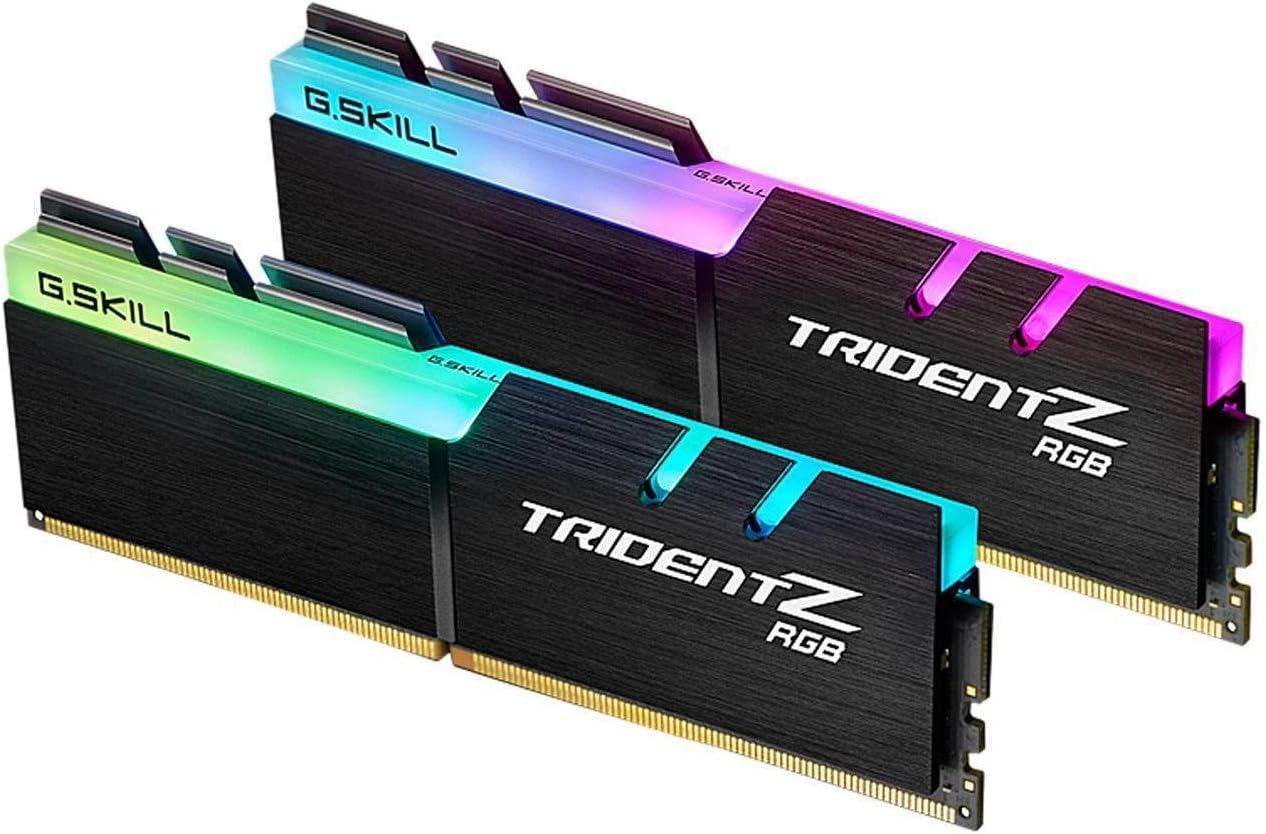
Pros
- 16GB kit split across two 8GB modules for dual-channel performance on supporting motherboards
- Rated up to DDR4-3600 with CL18-22-22-42 timings at 1.35V under Intel XMP profile
- Includes both a JEDEC default profile and an XMP overclock profile for flexible BIOS setup
- Hairline-finished aluminum heatspreaders with RGB lighting for thermal dissipation and visual customization
- 288-pin U-DIMM form factor fits standard DDR4 desktop motherboards
Cons
- Rated 3600MT/s speed only applies once XMP is manually enabled in BIOS, since it boots at slower JEDEC defaults otherwise
- 1.35V operating voltage exceeds stock JEDEC voltage, which some strict low-power builds may want to avoid
- Kit is sold matched as a pair, so individual 8GB modules cannot be purchased separately to expand this specific kit
This kit provides 16GB total capacity across two 8GB modules, rated for speeds up to DDR4-3600 with CL18-22-22-42 timings at 1.35V under an Intel XMP profile. The 288-pin U-DIMM form factor is standard for desktop motherboards, and the kit includes a JEDEC default profile alongside the XMP overclock profile.
- 16GB (2x8GB) dual-channel kit
- Up to DDR4-3600, CL18-22-22-42, 1.35V
- 288-pin U-DIMM, non-ECC
Reaching the rated 3600MT/s speed requires enabling the XMP profile manually in the motherboard BIOS; without doing so, the modules run at slower JEDEC default speeds instead.
This is a DDR4 memory kit built for Intel and AMD desktop motherboards with DDR4 memory slots; it is not compatible with DDR5 or DDR3 boards, which use different pin layouts entirely. G.SKILL recommends checking its memory QVL or RAM Configurator tool for a specific motherboard before buying to confirm validated support at the rated speed.
- Compatible with Intel and AMD DDR4 platforms
- Not compatible with DDR5 or DDR3 motherboards
- XMP profile requires BIOS support for automatic timing configuration
Running the kit outside its rated specifications, or mixing it with other memory kits, can lead to system instability, so G.SKILL recommends using the two modules only as the matched pair they were sold in.
At 16GB total, this kit suits general desktop use, light multitasking and most current games, but users planning heavier workloads like video editing or virtual machines may eventually want to add capacity. Because G.SKILL kits are sold and validated as matched pairs, expanding this exact kit means adding another matched 16GB (2x8GB) kit of the same speed and timings rather than mixing in a single extra module.
- Current capacity: 16GB (2x8GB)
- Expansion requires a second matched kit at the same speed and timings
- Mixing unmatched kits risks stability issues
Before adding a second kit, checking the motherboard's total supported memory and slot count avoids running into a ceiling the board itself can't support.
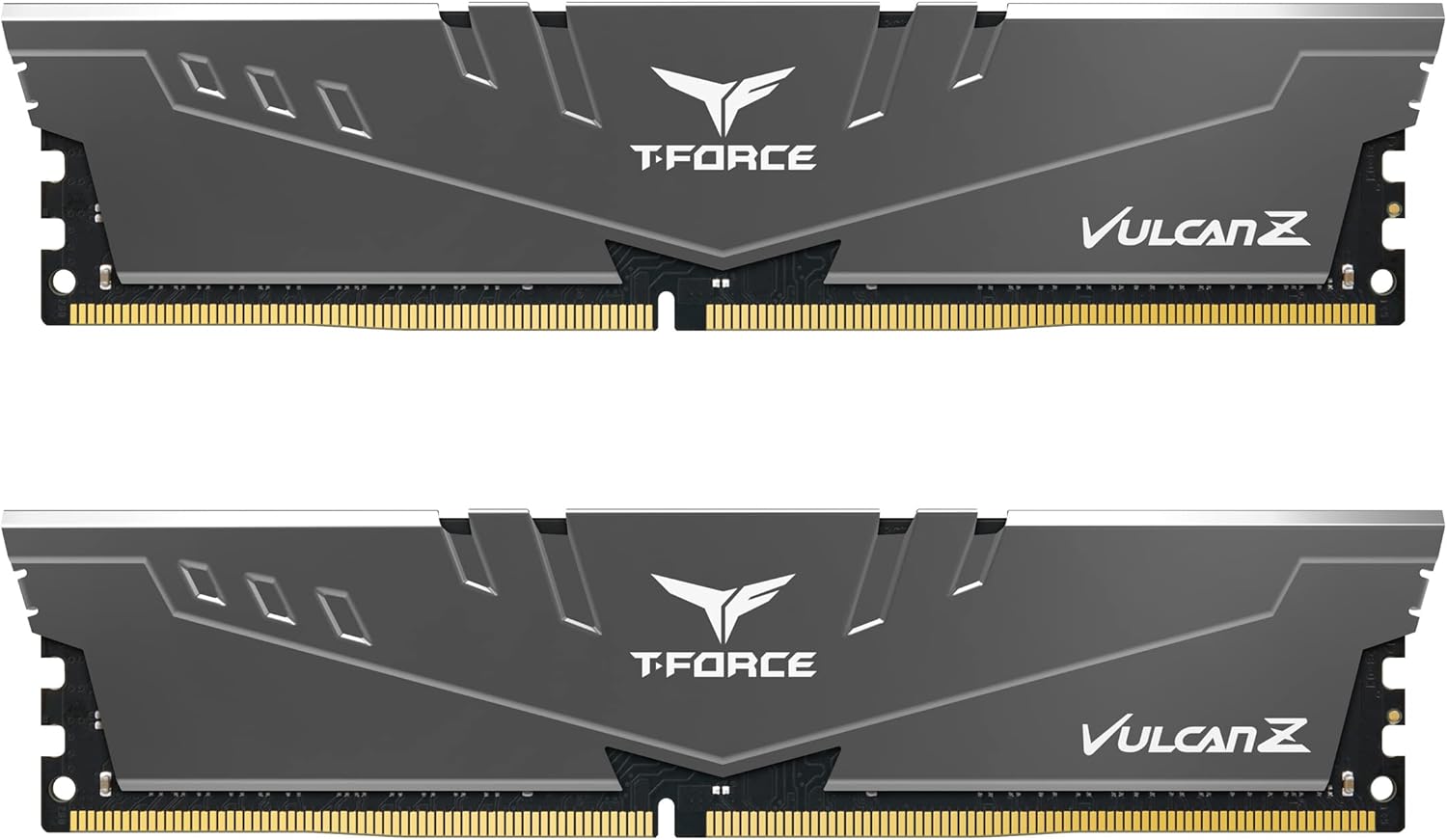
Pros
- 16GB kit (2x8GB) runs at 3200MHz with CL16 timings for dual-channel bandwidth out of the box
- Supports XMP 2.0, so the rated speed loads with a single BIOS profile instead of manual timing entry
- Reinforced aluminum heat spreader paired with thermal adhesive helps dissipate heat under sustained load
- Runs at reduced working voltage compared to older DDR4 generations, easing power draw on the memory controller
- Compatible with both Intel and AMD desktop platforms without needing separate SKUs
Cons
- 8GB per module caps a 2-slot build at 16GB total unless a second identical kit is added later
- No RGB lighting, which some builders may want for a visible gaming rig
- Gray heat spreader color is fixed, with no black or white finish option
This kit pairs two 8GB modules for 16GB total, clocked at 3200MHz with CL16 timings (PC4-25600). Every IC on the module goes through a testing process before shipping, which the manufacturer positions as the basis for stable dual-channel performance rather than a hand-picked bin.
- 16GB total (2x8GB modules)
- 3200MHz, CL16, PC4-25600
- Reinforced aluminum heat spreader
The reduced working voltage versus earlier DDR4 generations trims power draw slightly, which matters more in dense multi-DIMM builds than in a simple 2-slot setup, but adds up over long uptime either way.
Both Intel and AMD desktop platforms are supported without needing a different SKU for each — the same module works across either ecosystem's DDR4 socket. XMP 2.0 support means the 3200MHz speed is available with one BIOS toggle rather than manually setting timings and voltage.
- Works with Intel and AMD DDR4 motherboards
- XMP 2.0 profile for one-click overclocking
- Standard 288-pin DIMM form factor
As with any XMP kit, actual sustained clock speed still depends on the motherboard's memory controller and how many slots are populated, so checking the board's QVL list is worth doing before assuming full clocked speed on a 4-DIMM board.
At 16GB, this kit covers general desktop and light gaming use, but heavier multitasking, video editing, or modern AAA titles increasingly benefit from more headroom. Adding a second identical kit is the straightforward way to reach 32GB, assuming the motherboard has 4 DIMM slots available.
- 16GB total, expandable with a matching second kit
- 288-pin DIMM slots support future capacity growth
- No RGB, keeping the module low-profile for tight cases
Because module bins can vary between production runs, pairing this kit with a second identical purchase — rather than a different DDR4-3200 CL16 kit from elsewhere — gives the best odds of stable timings when running all 4 slots populated.
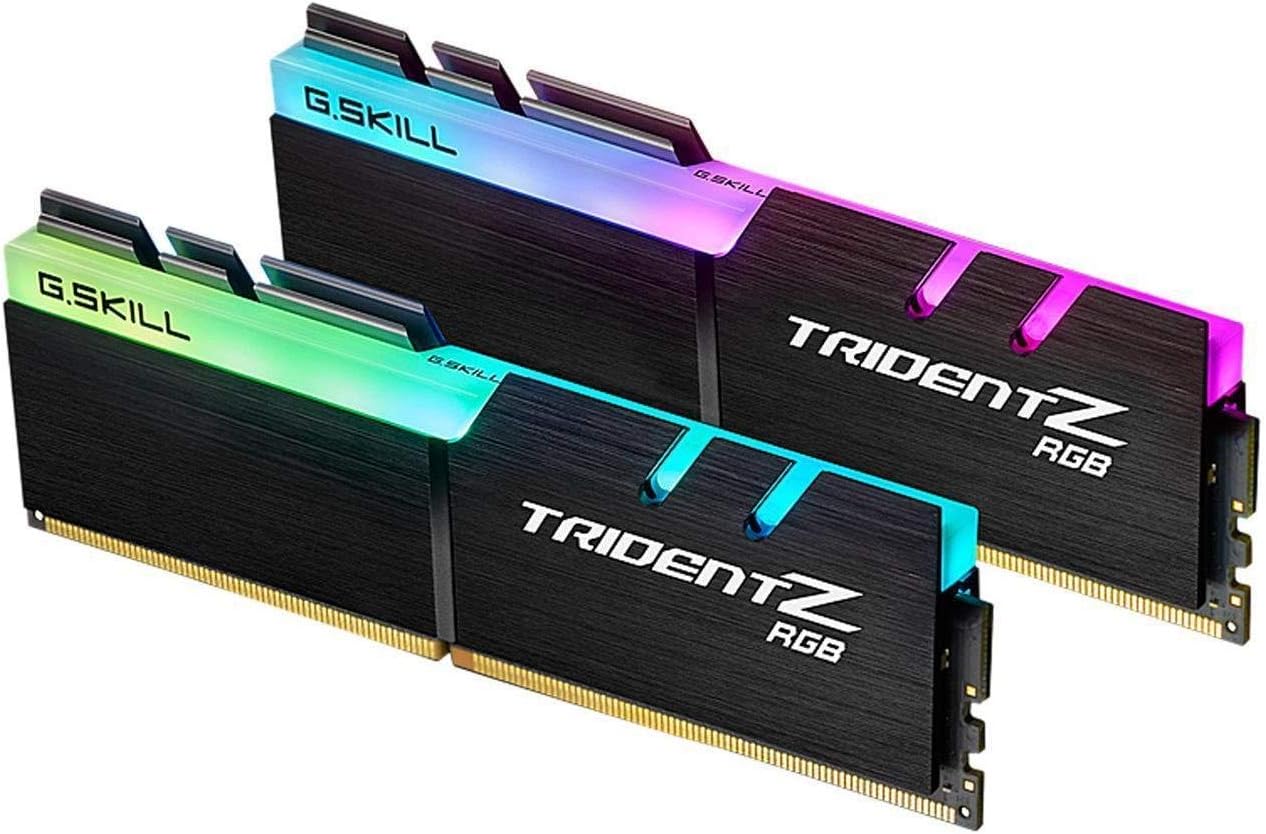
Pros
- 16GB kit (2x8GB) runs at DDR4-3000 CL16-18-18-38 with Intel XMP profile support for one-step overclocking in BIOS
- Hairline-finished aluminum heat spreaders with a wide RGB diffuser cover the full module top for even lighting
- Runs at 1.35V, within standard DDR4 voltage range for broad motherboard compatibility
- JEDEC default profile lets the kit boot at rated speed even without enabling XMP
- Software support lets users set custom RGB colors and lighting effects per module
Cons
- Manufacturer explicitly warns against mixing kits, so adding capacity later means buying the identical matched kit rather than any DDR4-3000 stick
- Reaching the rated XMP overclock speed depends on motherboard and CPU compatibility, so results vary by build
- 288-pin DDR4 form factor will not work in newer DDR5-only motherboards, capping its use to older or current DDR4 platforms
This kit ships as two 8GB modules, 288-pin non-ECC DDR4 U-DIMMs, rated for up to DDR4-3000 at CL16-18-18-38 timings and 1.35V under Intel's XMP overclock profile.
- 16GB total capacity across two matched 8GB modules
- JEDEC default profile allows the kit to boot at rated speed without any BIOS changes
- Intel XMP 2.0 profile support enables the rated 3000MT/s speed once enabled in BIOS
Enabling XMP is an act of overclocking, so reaching the full rated speed depends on the compatibility of the motherboard and CPU used.
To reach the rated 3000MT/s speed, XMP (or the equivalent DOCP/A-XMP setting on non-Intel boards) needs to be enabled manually in the motherboard's BIOS after installation.
- Without enabling XMP, the kit runs at its JEDEC default SPD speed
- G.SKILL's memory QVL or RAM Configurator tool can confirm validated motherboard compatibility before building
- RGB lighting and color effects are set through supported third-party software after the memory is installed
Because both modules are sold as one matched kit, installing them into the correct DIMM slots per the motherboard manual helps ensure stable dual-channel operation.
This kit uses the DDR4 standard, which only fits DDR4 motherboard slots; it will not physically install in newer DDR5-only boards regardless of timing or voltage.
- G.SKILL states that mixing memory kits can result in stability issues or system failure
- Future capacity upgrades should use an identical matched kit rather than a different DDR4-3000 module
- Use inconsistent with the manufacturer's specifications can affect speed, stability, or the memory itself
Builders planning a later DDR5 upgrade should treat this kit as tied to their current DDR4 platform.

Pros
- Single 16GB DDR4 module runs at 3200MHz with CL16-20-40 timings
- Aluminum heat spreader adds surface area to help dissipate heat under sustained load
- XMP 2.0 profile support enables automatic overclocking on compatible boards without manual timing entry
- Tested across current Intel and AMD platforms for validated compatibility
Cons
- Sold as a single 16GB stick, so dual-channel setups require buying a second matching module separately
- 1.35V operation and CL16 timings sit in the mid-range rather than the tightest latency available in DDR4
- No RGB lighting is included, so builds wanting synced lighting will need a different Viper line
This module is a single 16GB DDR4 stick rated to run at 3200MHz with CL16-20-40 timings at 1.35V. An aluminum heat spreader wraps the module with a design meant to increase surface area for heat dissipation during sustained workloads such as long gaming sessions or rendering jobs.
- 16GB capacity in a single UDIMM module, non-ECC
- Rated speed of 3200MHz with 16-20-40 primary timings
- Aluminum heat spreader with a Viper Steel design element rather than a bare PCB
Because this is a single module rather than a kit, reaching dual-channel bandwidth on a desktop board means pairing it with a second, identical 16GB Viper Steel module rather than mixing brands or speeds.
Patriot lists this module as tested across current Intel and AMD desktop platforms, aiming for broad compatibility rather than a narrow chipset list. XMP 2.0 support means the rated 3200MHz speed and CL16 timings can be applied automatically once the profile is enabled in BIOS, rather than requiring the timings to be entered by hand.
- XMP 2.0 profile support works with most modern Intel boards, and many AMD boards read XMP profiles as well
- Standard 288-pin DDR4 UDIMM form factor fits standard desktop motherboards
As with any DDR4 module, checking the motherboard's supported memory speed list is worth doing before buying, since some boards cap out lower than 3200MHz depending on how many DIMM slots are populated.
Bought alone, this stick runs in single-channel mode, which leaves bandwidth on the table compared to a matched two-module kit running dual-channel. Adding a second, identical Viper Steel 16GB module later brings the system to 32GB running in dual-channel, assuming the board has open DIMM slots.
- Single-channel operation is the default until a second matching module is installed
- 32GB total capacity is reachable by pairing two of these modules on a board with at least two DIMM slots
Because timings and revisions can shift between production runs, pairing this module with an identical one bought at the same time, rather than a separately purchased unit months later, gives the best chance of stable dual-channel operation without mismatched timings.

Pros
- Total capacity 16 GB
- Form Factor DIMM 288pin
- Specifications DDR4 PC4-21300, cl 19, unbuffered, non-ECC, DDR4-2666,
- Speed 2666 MHz
- Lifetime Warranty
Cons
- Requires checking placement surface dimensions before setup
- Requires routine care to keep exterior housing dust-free
- Initial setup requires checking operating instructions carefully
The Samsung 16GB DDR4 PC4-21300 2666MHz 288 Pin DIMM 1.2V CL offers reliable functional utility tailored for modern home and workplace environments. Designed to enhance daily productivity, this unit integrates Total capacity 16 GB alongside Form Factor DIMM 288pin. Users will find the intuitive design straightforward to operate across various room configurations and daily routines. The versatile construction adapts easily to personal workspaces, providing consistent practical value and streamlined usability. Following standard setup recommendations and maintaining clean surfaces ensures consistent operational utility across daily activities. This functional equipment provides steady performance and practical convenience when properly integrated into your workspace.
Built using resilient structural components, this unit features a sturdy outer housing engineered to resist operational wear. Precision manufacturing ensures that all joints and surface connections remain firmly aligned during regular daily activity. Specifications DDR4 PC4-21300, cl 19, unbuffered, non-ECC, DDR4-2666, reinforces overall physical stability over extended service periods. Structural integrity remains firm throughout regular usage, giving owners peace of mind. Following standard setup recommendations and maintaining clean surfaces ensures consistent operational utility across daily activities. This functional equipment provides steady performance and practical convenience when properly integrated into your workspace.
Initial setup requires placing the unit on a flat, stable surface with adequate clearance around all sides for proper operation. Ensure all power or connection cables are routed neatly without sharp bends to prevent wire strain. Regular care involves wiping exterior housing surfaces with a soft cloth to remove dust buildup. Inspecting mechanical connections periodically preserves operational efficiency and maintains cosmetic appearance over time. Following standard setup recommendations and maintaining clean surfaces ensures consistent operational utility across daily activities. This functional equipment provides steady performance and practical convenience when properly integrated into your workspace.

Pros
- 16GB kit split across two 8GB modules, so the dual-channel pair populates two DIMM slots and leaves room for a same-kit capacity upgrade later
- Rated for up to DDR4-3000 at CL16-18-18-38 timings, tighter latency than typical CL18-22 DDR4-3000 kits
- Runs at 1.35V, matching standard DDR4 voltage so it will not demand a non-standard motherboard voltage profile
- 288-pin unbuffered non-ECC U-DIMM format built specifically for desktop boards, not the SO-DIMM format used in laptops
- Ships with both a JEDEC default profile and an Intel XMP profile, so it boots at stock speed even without BIOS tuning
Cons
- No RGB lighting or heat spreader styling beyond the plain aluminum-look casing, so it will not match RGB-themed builds
- XMP profile requires manual enabling in BIOS to reach the rated 3000MT/s speed; at default settings it runs at JEDEC's lower stock speed
- Kit is sold matched as a pair only - mixing modules from separate kits risks stability issues, so a future capacity increase means buying a second identical kit rather than a single stick
This kit pairs two 8GB modules for 16GB of total DDR4 capacity, rated for speeds up to DDR4-3000 with CL16-18-18-38 timings at 1.35V. The tighter CL16 first-timing figure gives lower latency than many CL18-22 kits running at the same 3000MT/s transfer rate, which shows up in workloads sensitive to memory response time rather than raw bandwidth alone.
- 16GB total across 2x8GB modules
- Up to DDR4-3000 at CL16-18-18-38
- 1.35V standard DDR4 operating voltage
At default BIOS settings, the kit boots at JEDEC's baseline SPD speed; reaching the full 3000MT/s rated speed requires enabling the included XMP profile manually.
Built as a 288-pin unbuffered, non-ECC U-DIMM, this kit fits standard desktop motherboard DIMM slots for Intel and AMD platforms alike - it is not compatible with laptop SO-DIMM slots. The included Intel XMP 2.0 profile is read automatically by Intel boards that support it, while AMD boards typically apply the same profile through DOCP or A-XMP naming without issue.
- 288-pin U-DIMM for desktop Intel and AMD boards
- Intel XMP profile plus a fallback JEDEC default
- Not compatible with SO-DIMM laptop slots
Because reaching the rated speed depends on motherboard and CPU memory controller support, checking a board's QVL list before buying avoids landing at a lower boot speed than expected.
Because memory kits are validated and sold as matched pairs, adding capacity later means installing a second identical 2x8GB kit rather than mixing in a single loose module. Running two separate but identical kits together is generally more stable than pairing this kit with a different speed or timing spec from another brand.
- Add a second identical kit to reach 32GB across four slots
- Avoid mixing modules from different kits or timings
- Confirm the motherboard supports four-DIMM dual-channel operation before buying a second kit
Anyone planning to eventually run 32GB or more should check that their board has four DIMM slots free and rated for four-module operation at the same 3000MT/s speed before committing to a second kit down the line.

Pros
- Kit includes two matched 8GB modules (16GB total) rated for up to DDR4-3200 at CL16-18-18-38 timings
- Runs at 1.35V, in line with standard DDR4 power requirements rather than needing a higher-voltage setup
- Includes both a JEDEC default profile and an Intel XMP 2.0 profile for straightforward overclocking in BIOS
- 42mm module height clears most CPU air coolers without needing low-profile RAM
Cons
- Rated speed and timings are only guaranteed when both modules are used together as the matched kit; mixing with other memory kits risks instability
- Reaching the rated XMP speed depends on motherboard and CPU compatibility, so actual performance can fall short on unsupported boards
- Sold in Red only for this SKU, so it won't match every build's color scheme
This kit pairs two 8GB DDR4 U-DIMMs for 16GB total, rated at up to DDR4-3200 with CL16-18-18-38 timings at 1.35V. It's a non-ECC, 288-pin module built for desktop systems, with a 42mm module height that fits under most CPU air coolers.
- Capacity: 16GB (2x8GB)
- Speed: up to DDR4-3200
- Timings: CL16-18-18-38
- Voltage: 1.35V
- Module height: 42mm
Because it ships as a matched kit, both modules are tested together to run at the rated speed and timings - pairing just one module with memory from a different kit isn't recommended.
The kit includes a JEDEC default profile that any DDR4 system will run at automatically, plus an Intel XMP 2.0 profile for reaching the rated 3200MT/s speed. Enabling XMP requires going into BIOS and turning on the XMP/DOCP/A-XMP profile manually.
- Default: JEDEC SPD speed at stock BIOS settings
- Overclock profile: Intel XMP 2.0
- Works with Intel and AMD platforms supporting DDR4
Actual XMP performance depends on the motherboard and CPU's memory controller, so it's worth checking the board's supported memory kit list before assuming the full rated speed will be reached.
At 16GB total, this kit covers general desktop and gaming use, but builders planning heavier multitasking or content creation workloads may want to pair it with a second identical kit for 32GB, since G.SKILL recommends not mixing different memory kits together.
- Current capacity: 16GB (2x8GB)
- Recommended expansion: match with an identical kit rather than mixing brands
- Compatible profile: DDR4 U-DIMM, 288-pin desktop platforms
Sticking with matched G.SKILL kits when expanding capacity later reduces the risk of the stability issues that can come from mixing memory kits with different specifications.

Pros
- 16GB kit split as 2x8GB modules enables dual-channel bandwidth on compatible boards
- Rated at DDR4-3200MHz (PC4-25600) with CL16-18-18-38 timings out of the box
- XMP 2.0 profile applies overclock settings with a single BIOS toggle
- White aluminum heat spreader helps dissipate heat during sustained gaming sessions
- 1.35V operating voltage matches standard DDR4 motherboard power delivery
Cons
- Single Rank 1Rx8 design may cap out at lower capacities on some four-slot boards
- White heat spreader limits color-matching options versus RGB or black-finish kits
- XMP overclocking support depends on motherboard BIOS compatibility, not guaranteed on all boards
This kit provides 16GB total capacity as two 8GB modules, rated at DDR4 3200MHz (PC4-25600) with CL16-18-18-38 timings at 1.35V. Each module uses a 288-pin unbuffered, non-ECC design built around Single Rank 1Rx8 chips.
- Data transfer bandwidth: up to 25,600MB/s per the PC4-25600 spec
- Latency: tested at CL16-18-18-38 / 16-20-20-40
- Voltage: 1.35V, standard for DDR4 platforms
- Heat spreader: white aluminum for passive cooling under load
Running both modules together enables dual-channel operation on boards with matched DIMM slots.
The kit supports XMP 2.0, so enabling the profile in BIOS applies the rated 3200MHz timings automatically instead of requiring manual memory tuning. It's built for both AMD and Intel DDR4 motherboards.
- XMP 2.0: one BIOS setting activates the rated overclock profile
- Platform support: works across AMD and Intel DDR4 chipsets
- Slot requirement: needs two available DDR4 DIMM slots for the full kit
- BIOS updates may be needed on older motherboards to recognize the full rated speed
Actual achieved speed still depends on the motherboard's memory controller and BIOS support for 3200MHz.
This 16GB kit suits gaming and general desktop builds looking to move up from 8GB or mixed-brand memory configurations. The Single Rank design and DDR4-3200 speed target mainstream builds rather than extreme overclocking rigs.
- Good fit: gaming PCs needing a straightforward dual-channel 16GB upgrade
- Good fit: builders wanting plug-and-play XMP support without manual tuning
- Less suited: workstations needing ECC memory for error correction
- Less suited: builds targeting 32GB+ where higher-capacity dual-rank kits may suit better
Because it's sold as an 8GB-per-module kit, users can pair a second identical kit later for a 32GB total, provided the motherboard has four slots.
What to Look for in the Best RAM Under $150
Every kit on this list is DDR4, since that’s still the sweet spot for value at this price — DDR5 kits with similar capacity tend to cost noticeably more. Before you compare specific models, it helps to know which numbers actually affect real-world performance.
- Speed (MHz): Higher numbers like 3200MHz or 3600MHz move data faster between your RAM and CPU, which matters most for gaming and content creation.
- CAS latency (CL): This is the delay before your RAM responds to a request. Lower CL at the same speed is technically faster, but the difference is small in daily use.
- Capacity and kit configuration: A 2x8GB kit runs in dual-channel mode, which is noticeably faster than a single 16GB stick — worth checking before you buy.
- Voltage and XMP support: Most budget kits run at 1.35V and support XMP profiles, letting you hit the advertised speed with one click in your BIOS.
- Compatibility: Always check your motherboard’s supported memory speed and existing RAM before adding or replacing modules.
For a wider comparison of DDR4 kits across different price tiers, see our best DDR4 RAM roundup.
Top RAM Picks for Every Use Case
Not every build has the same priorities. Here’s how these kits stack up depending on what you actually need from your memory upgrade.
Best Overall: Corsair Vengeance LPX
The Corsair Vengeance LPX earns the top spot because it pairs a proven low-profile heatsink with 3200MHz speed and CL16 timings — a combination that plays nicely with nearly every case and cooler. At $144.99 with a 4.8-star average across nearly 6,000 reviews, it’s the safest pick if you want reliable performance without second-guessing compatibility.
It’s a great fit for general desktop use, light gaming, and everyday productivity where you want a kit you can install and forget about.
Best Value: G.Skill Ripjaws V
If you want nearly identical specs for less money, the G.Skill Ripjaws V matches the Vengeance LPX on speed and CL16 timings but costs about $25 less. With over 5,800 reviews holding a 4.8-star average, it’s proof that you don’t have to pay a premium for a dependable kit.
Choose this one if your budget is tight and you’d rather put the savings toward a better SSD or GPU.
Best for RGB Builds: G.Skill Trident Z RGB
Want your memory to match your lighting theme? The G.Skill Trident Z RGB runs at a faster 3600MHz and adds addressable lighting bars, all while staying under $150. It’s slightly pricier than the non-RGB kits here, but if you’ve already invested in a windowed case and RGB fans, it completes the look.
Just confirm your motherboard supports the higher 3600MHz speed before you count on hitting it out of the box. If lighting is a priority, browse more options in our best RGB RAM guide.
Best for Single-Stick Upgrades: Patriot Viper Steel
Adding memory to a system that already has one stick installed? The Patriot Viper Steel comes as a single 16GB module instead of a matched pair, which makes it easier to pair with existing RAM or build up capacity gradually.
At $101.99, it’s also the least expensive kit here, though buying two sticks together for dual-channel mode is still the better move if you’re starting from scratch.
Best for Multitasking: TeamGroup T-Force Vulcan Z
Running several browser tabs, a Discord call, and a game at once? The TeamGroup T-Force Vulcan Z delivers the same 3200MHz/CL16 formula as the category leaders at a competitive $129.99, with a low-profile heatsink that clears most air coolers.
It’s a solid middle-ground pick when you want dependable multitasking headroom without paying Corsair or G.Skill pricing.
Best Ultra-Budget Pick: G.Skill Aegis
If price is your main concern, the G.Skill Aegis drops to $109.99 while still offering 3000MHz speed and CL16 timings — a fair trade-off for a slightly plainer heatsink design.
It’s best suited for budget builds where the CPU and GPU matter more to your performance than shaving a few extra frames from RAM speed.
Understanding RAM Speed, Timings, and Compatibility
DDR4 speed is measured in megatransfers per second (MHz), and most budget kits fall between 2666MHz and 3600MHz. For gaming and everyday use, anything from 3000MHz to 3200MHz hits the point of diminishing returns — going faster rarely translates into a difference you’d notice.
CAS latency (CL) works alongside speed to determine real-world responsiveness. A CL16 kit at 3200MHz generally feels snappier than a CL19 kit at the same speed, since it takes fewer clock cycles to respond to each request. That’s part of why several kits here, like the Ripjaws V and Vulcan Z, use CL16 timings even at a modest price.
Compatibility matters more than raw specs. Your motherboard’s manual lists a maximum supported speed, and running RAM faster than that ceiling means it will simply downclock to a supported speed. Before you buy, check whether your board supports XMP (Intel) or DOCP/EXPO (AMD) profiles, since that’s what lets a kit reach its advertised speed automatically instead of running at a default 2133MHz.
Common Mistakes to Avoid When Buying Budget RAM
A budget RAM upgrade is usually simple, but a few small mistakes can cost you performance or compatibility headaches.
- Mixing speeds or brands carelessly: RAM can technically work together even if it doesn’t match, but it usually runs at the speed of the slowest stick — and mismatched voltage can prevent it from booting reliably.
- Buying a single stick when dual-channel is available: Two matched sticks in dual-channel mode outperform one larger stick in most tasks, including gaming.
- Ignoring your motherboard’s memory limit: Some budget boards only support up to 3200MHz or a maximum total capacity — check before buying a faster kit that won’t run at full speed.
- Overpaying for RGB you won’t see: If your case doesn’t have a window or you don’t care about lighting, a non-RGB kit like the Ripjaws V saves you money with no performance difference.
- Forgetting clearance for large heatsinks: Tall RAM heatsinks can bump into oversized air coolers — check clearance specs if you’re running a large tower cooler.
Who Should (and Shouldn’t) Buy RAM Under $150
This price range makes sense if you’re running a DDR4 platform and want to move from 8GB to 16GB, or from a single stick to a matched dual-channel pair. It’s also a smart pick for budget and mid-range gaming builds where the CPU and GPU are doing most of the heavy lifting.
It’s not the right call for everyone, though. If you’re building a brand-new system on a current-generation platform, you’ll likely need DDR5 instead, since DDR4 and DDR5 modules aren’t interchangeable. And if you regularly run video editing, 3D rendering, or virtual machines, a 32GB kit — even if it costs more than $150 — will serve you better long term than squeezing by on 16GB.
For a closer look at gaming-specific kits, our best RAM for gaming guide breaks down picks tuned for frame rates rather than pure value. Pairing new memory with a fast drive also helps — see our best SSDs under $150 picks if storage is next on your upgrade list.
Frequently Asked Questions
Is DDR4 RAM still worth buying in 2026?
Yes, if your motherboard uses DDR4. It remains widely available, well-priced, and more than capable for gaming and everyday use. DDR5 only makes sense if you’re building a new system that requires it.
How much RAM do I need for gaming?
16GB is the current sweet spot for most games and will stay comfortable for the next few years. 8GB can create bottlenecks in newer titles, while 32GB is mainly useful if you multitask heavily while gaming.
Does RAM speed really matter for gaming performance?
It matters, but with diminishing returns. Moving from 2666MHz to 3200MHz gives a noticeable boost in some games, while going from 3200MHz to 3600MHz usually adds only a small, harder-to-notice difference.
Can I mix two different RAM kits in the same PC?
You can, but it’s not ideal. Different kits may use different chips, timings, or voltages, which can lead to instability. Buying a single matched kit sized for your needs is the more reliable option.
Do I need RGB RAM, or is it just for looks?
RGB lighting has no effect on performance — it’s purely cosmetic. If you don’t have a windowed case or don’t care about lighting, a non-RGB kit like the Aegis or Ripjaws V gets you the same speed for less money.
Picking the best RAM under $150 really comes down to matching a kit to how you’ll use your PC rather than chasing the highest number on the box. Whether you land on the dependable Corsair Vengeance LPX, stretch your budget further with the G.Skill Aegis, or go all-in on RGB with the Trident Z, every option above gives you a full 16GB dual-channel upgrade without breaking your budget. Before checking out, take a minute to confirm your motherboard’s supported speed so your new memory runs at its full potential from the first boot.