 Daniel Okafor
 Finding the best modems for Cox can feel overwhelming when you are staring at a wall of model numbers, DOCSIS versions, and speed ratings that all promise to make your internet faster. The truth is that the right modem depends far more on your specific Cox plan and household needs than on picking whatever device happens to be trending. This guide walks you through how to choose a Cox-compatible cable modem the smart way, so you can stop renting equipment, cut your monthly bill, and get the reliable connection you are paying for.
Instead of grading each device one by one, we will focus on the decisions that actually matter: matching DOCSIS standards to your plan speed, deciding between a standalone modem and a modem-router combo, and understanding which features are worth paying extra for. By the end, you will know exactly what to look for and which Cox-approved options fit your situation.

Pros
- Handles cable plans up to 900 Mbps, with a Full-Band Capture tuner that locks onto channels faster than older tuner designs
- Single Gigabit Ethernet port pairs with any router you like, including mesh kits and gaming routers
- Upright 7.25 by 2.25 by 7.88 inch body takes almost no shelf depth beside a router
- Certified with Comcast Xfinity, Cox and Charter Spectrum, so activation follows a documented path
- Three connections total, power, coax and Ethernet, which keeps fault-finding down to a short list
Cons
- No Wi-Fi inside, so a separate router is mandatory for any wireless device in the house
- No telephone ports, which rules it out for bundled cable voice service
- Not compatible with Verizon Fios, AT&T, CenturyLink or any fibre, DSL or satellite connection
This is a modem and nothing more, which is exactly why it holds its speed ceiling well.
- Sized for actual cable service speeds up to 900 Mbps, so it comfortably covers the 400 to 800 Mbps tiers most households sit on
- A Full-Band Capture digital tuner scans the whole spectrum at once rather than hunting channel by channel, which shortens lock times after a reboot
- The Gigabit Ethernet port is the single outlet for all traffic, so the router you attach becomes the real determinant of Wi-Fi performance
If the Ethernet port is not feeding a router, it will drive a computer, smart TV or games console directly. That makes it a reasonable choice for a single-desk setup where wireless is not needed at all.
Installation comes down to three leads and one registration step with your provider.
- Coax from the wall plate to the modem, hand-tightened until snug rather than wrenched
- Power from the supplied adapter
- Ethernet out to the WAN port of your router
After that, the provider has to register the modem MAC address and serial number, both printed on the label. Photograph them before the unit goes behind furniture, because reading a label in a cupboard later is a chore. Give the modem several minutes on first power-up while it downloads its configuration file. The upright body has a small footprint but wants airflow around it, so avoid stacking a router directly on top of the case.
Compatibility is the single thing to confirm before ordering, because a cable modem is useless on the wrong network type.
- Certified with Comcast Xfinity, Cox, Charter Spectrum and a number of other cable operators
- Not compatible with Verizon Fios, AT&T, CenturyLink and any other fibre optic, DSL or satellite service
- No voice capability, so households on a cable telephone bundle need the provider supplied eMTA and cannot swap this in
One more check worth making is the plan tier. DOCSIS 3.0 here is matched to plans up to 900 Mbps, so a multi-gigabit service would need a DOCSIS 3.1 unit instead. Because there is no router inside, you also need a working router or mesh system ready before the changeover.

Pros
- DOCSIS 3.1 with wide OFDM channels, supporting cable plans advertised up to 2 Gbps downstream
- Two 1 Gigabit Ethernet ports, with the second able to carry a separate IP where the provider supports it
- CableLabs certified and qualified for Xfinity, Cox and Spectrum, so activation follows the standard self-install path
- Compact 5.13 x 1.75 x 5.25 in footprint standing vertically in a narrow media cabinet
- Separate LED indicators for power, upstream, downstream and online status, which makes a failed activation easy to diagnose
Cons
- Modem only, so a separate router or mesh system is required for any Wi-Fi at all
- Each Ethernet port is capped at 1 Gbps, meaning a single router link cannot carry a full 2 Gbps plan
- Works on cable coax only, with no support for fiber, DSL or satellite lines, and no telephone ports for cable voice service
This is a DOCSIS 3.1 modem, which uses wide OFDM channels rather than bonding many narrow DOCSIS 3.0 carriers. The practical result is support for cable plans advertised up to 2 Gbps downstream, along with lower latency under heavy load than the previous generation manages.
- Two 1 Gigabit Ethernet ports on the rear panel
- Each port is capped at 1 Gbps, so no single link carries a full 2 Gbps plan
- The second port can carry a separate IP where the provider supports it
That port ceiling is the detail to check against a service plan. On a gigabit tier it is irrelevant. On a multi-gig tier the throughput exists at the coax side but arrives on the LAN split across two ports, which needs a router able to use both, or acceptance that a single link tops out at a gigabit.
Installation follows the standard self-install path: run the coax from the wall outlet to the modem, connect power, wait for the front indicators to settle, then register the device MAC address with the provider through the companion app, a web portal or a phone call. The LEDs report power, upstream, downstream and online status separately, which makes diagnosing a stalled activation straightforward.
- Cabinet footprint of about 5.13 x 1.75 x 5.25 in standing vertically
- No wireless configuration to do, because the unit has no radio inside
- A router or mesh node plugs into the first Ethernet port
Keep the coax run short and avoid splitters wherever possible. Every split drops signal level at the modem, and that is the usual cause of intermittent downstream errors appearing days after an otherwise clean install.
Every modem in this line is CableLabs certified, and this model is tested and qualified for Xfinity, Cox and Spectrum. Providers keep their own approved device lists, so confirming the model against a specific plan beforehand avoids an activation refusal on the day.
- Cable coax service only, with no support for fiber, DSL or satellite lines
- This is a modem only, so a router or mesh system is required for Wi-Fi
- No telephone ports, meaning cable voice service still needs the provider's own device
That separation is a design decision rather than an omission. Keeping the modem and the router as separate boxes means the wireless side can be upgraded to a newer standard, or swapped for a mesh set, without touching the part that has to stay certified with the cable provider.

Pros
- Supports cable plans up to 800 Mbps through 32x8 channel bonding and DOCSIS 3.1 modem technology
- Single Gigabit Ethernet port connects directly to any separate Wi-Fi router of choice
- Certified to work with major cable providers including Xfinity, Cox, and Spectrum
- Owning the modem replaces provider-rented hardware with a single certified unit kept permanently
- Setup completes in about 5 minutes by connecting the coax cable and activating through the provider
Cons
- Not compatible with DSL-based providers such as Verizon, AT&T, or CenturyLink, or with bundled voice/phone service
- Includes no built-in Wi-Fi, so a separate router is required to create a wireless network
- Requires a specific 12 VDC, 1A NETGEAR power adapter, and using a different adapter can affect performance
The CM700 uses 32x8 channel bonding alongside DOCSIS 3.1 modem technology to support cable internet plans up to 800 Mbps, connecting to the rest of the network through a single Gigabit Ethernet port. That port setup means the modem hands off to a separate router rather than distributing Wi-Fi on its own.
- Channel bonding: 32 downstream by 8 upstream channels.
- Ethernet port: 1 Gigabit port for a router or single computer.
- Plan support: built for cable plans up to 800 Mbps.
Because there is no wireless radio built in, the modem needs to be paired with a separate Wi-Fi router to serve wireless devices around the home.
Physical setup involves connecting the coax cable from the wall to the modem, then activating service either through an on-screen setup process over an Ethernet connection or by calling the cable provider directly. NETGEAR estimates the whole process at around 5 minutes from unboxing to an active connection.
- Coax connection: plugs directly into the existing cable outlet.
- Two activation paths: on-screen setup or a phone call to the provider.
- Power adapter: requires the included 12 VDC, 1A NETGEAR adapter specifically.
Using a third-party power adapter instead of the one supplied is flagged as a potential source of connection issues, so keeping the original adapter with the modem matters for reliability.
The modem carries CableLabs DOCSIS 3.0 certification and is confirmed to work with major cable providers including Xfinity from Comcast, Spectrum, and Cox, covering a large share of cable-based internet service in the country. It is explicitly not built for DSL or fiber services from providers like Verizon, AT&T, or CenturyLink.
- Certified providers: Xfinity, Cox, and Spectrum among others.
- Not compatible: Verizon, AT&T, CenturyLink, DSL, DirecTV, or DISH bundled service.
- No voice service: not built for bundled telephone service over cable.
Checking a provider's approved modem list before buying is still worth doing, since compatibility depends on the specific plan and region alongside the general provider name.

Pros
- DOCSIS 3.0 bonds up to 16 downstream and 4 upstream channels for faster throughput than older DOCSIS 2.0 modems
- Rated for internet plans up to 400 Mbps, covering most standard home broadband tiers
- Single 1 Gbps Ethernet port supports full gigabit-capable wired connections to a router
- Compatible with most major US cable providers, avoiding a single-ISP lock-in
- Backed by a 2-year warranty, longer than many modems' standard 1-year coverage
Cons
- Single Ethernet port means only one wired device (typically a router) can connect directly
- No built-in WiFi, a separate router is required to create a wireless network
- Rated to 400 Mbps max, so it will bottleneck internet plans above that speed
This modem uses DOCSIS 3.0 technology to bond up to 16 downstream and 4 upstream channels, which allows for meaningfully faster throughput than older single- or few-channel modems. It supports IPv4 and IPv6 internet standards, keeping it compatible with current ISP network configurations.
Actual speeds depend on the subscribed internet plan, with the modem rated for connections up to 400 Mbps download, so households on higher-tier plans above that threshold would see the modem itself become the bottleneck. One 1 Gbps Ethernet port connects to a router or a single wired device, meaning a separate router is needed to create a home network across multiple devices.
Setup uses a companion app, which walks through activation without needing a phone call to the internet provider in most cases. The modem is compatible with major US cable providers including Comcast Xfinity, Cox, and Charter Spectrum, though checking compatibility with a specific provider before purchase is recommended.
Because this is a modem only, not a modem-router combo, it requires a separate WiFi router connected to its single Ethernet port to distribute internet to multiple devices or provide wireless coverage. Using an owned modem instead of a rented one from the ISP can eliminate a recurring rental fee.
The SB6183 is built for cable internet plans up to 400 Mbps, which covers the majority of standard home broadband tiers but not higher-tier plans some providers now offer. It carries a 2-year warranty, longer than the 1-year coverage common on many comparable modems.
Because it has only one Ethernet port and no wireless radio, it suits households that already have or plan to add a separate router, rather than anyone looking for an all-in-one modem-router unit. Streaming, downloading, and general home use are all supported within its 400 Mbps ceiling, but heavier multi-device households on faster plans should confirm their speed tier first.
Pros
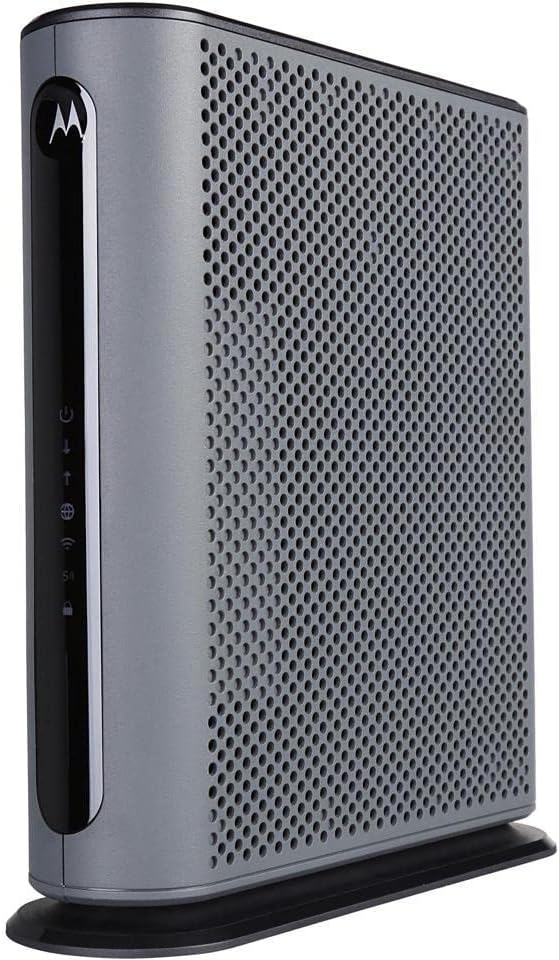
- 16x4 DOCSIS 3.0 channel bonding supports actual cable service speeds up to 375 Mbps
- AC1900 dual-band Wi-Fi runs 2.4GHz and 5GHz simultaneously alongside 4 Gigabit Ethernet ports
- Built-in DFS support opens extra 5GHz channels that most routers cannot access, cutting neighbor interference
- Broadcom modem chipset adds denial-of-service attack protection at the hardware level
- Combines modem and router into one unit, removing a second power cable and box from the desk
Cons
- No phone jack, so it cannot be used for any landline or VoIP calling service
- Only compatible with cable internet; fiber, DSL and satellite services such as Verizon, AT&T or CenturyLink will not work with it
- AC1900 Wi-Fi standard predates Wi-Fi 6, a ceiling for the newest high-throughput client devices
The modem side uses 16x4 DOCSIS 3.0 channel bonding, rated for actual cable internet service speeds up to 375 Mbps. The router side runs AC1900 dual-band Wi-Fi across 2.4GHz and 5GHz simultaneously, with Power Boost amplifying the wireless signal to the FCC-allowed limit for extended range.
- Four Gigabit Ethernet LAN ports handle wired connections to PCs, game consoles or streaming boxes
- DFS channel support opens additional 5GHz spectrum that standard routers cannot use, reducing crowding from neighboring Wi-Fi networks
- AnyBeam beamforming focuses the wireless signal toward connected devices instead of broadcasting evenly in all directions
Larger homes with multiple floors may still see weaker signal at the far edges, since this is a single-unit router rather than a mesh system.
Because the modem and router are combined into one unit, setup involves connecting a single coax cable from the wall and a single power cord, rather than pairing two separate boxes. Activation is completed with the cable provider using the device's serial number and MAC address.
- Four Gigabit Ethernet ports are ready for immediate wired connections out of the box
- A built-in firewall and Broadcom chipset add protection against denial-of-service attacks by default
- No phone jack is present, so this model cannot support telephone or VoIP service
Since it is not a mesh unit, homes with dead zones will need a separate access point added to the network.
This modem is approved for use with Comcast Xfinity (including X1), Cox, Charter Spectrum, Time Warner Cable, Suddenlink, WOW!, CableOne and several other cable internet providers. Buyers should confirm their specific provider's approved device list before ordering, since approval can vary by region.
- Not compatible with fiber, DSL or satellite services from Verizon, AT&T, CenturyLink, Frontier and similar providers
- Requires an active cable internet subscription; it does not work as a standalone Wi-Fi router without one
- Replaces a rented modem/router combo from the provider, removing that unit from the account once activated
Anyone switching providers in the future should re-check the approved device list, since not every cable company accepts every third-party modem model.

Pros
- Combines a DOCSIS 3.0 cable modem and an AC1900 dual-band router in one chassis, removing a second power lead
- Certified for Xfinity by Comcast and Cox cable service on plans up to 800 Mbps
- Gigabit Ethernet ports on the rear for a console or desktop that needs a stable wired link
- Sold through the Amazon Renewed programme, inspected and reset to factory defaults before dispatch
Cons
- Not compatible with Verizon, Spectrum, AT&T, CenturyLink, DSL providers, DirecTV or DISH
- No support for bundled cable voice service, so a phone line needs a separate eMTA modem
- Wi-Fi 5 radios only, so Wi-Fi 6 and 6E clients connect at Wi-Fi 5 rates with no 6GHz band
This is the first thing to check and the reason most returns happen. The unit is certified for Xfinity by Comcast and Cox cable networks, and it is explicitly not compatible with Verizon, Spectrum, AT&T, CenturyLink, any DSL provider, DirecTV or DISH.
It also does not support bundled cable voice service. If your account includes a home phone line through the cable provider, this cannot carry it, and you will need an eMTA modem with telephony ports instead.
Provisioning follows the usual route: register the device MAC address with the provider through their app or by phone, then wait for the downstream and upstream lights to lock before testing anything. Keep the account details to hand, because activation is the step where a self-installed modem most often stalls for an evening.
The unit combines a DOCSIS 3.0 cable modem and an AC1900 dual-band router in a single chassis, so one power lead and one coax feed replace two boxes plus the Ethernet cable between them, and there is one fewer thing to reboot.
It is specified for cable plans up to 800 Mbps. Treat that as the practical ceiling: a plan above that figure will be constrained by the modem rather than by the line, so households on multi-gig service should be looking at a DOCSIS 3.1 unit instead.
Wired devices connect over Gigabit Ethernet on the rear, which is the connection to use for a desktop, a games console or a heavy-streaming TV, since a wired link sidesteps Wi-Fi congestion completely. The wireless side is dual-band Wi-Fi 5.
This unit is sold through the Amazon Renewed programme rather than as new stock. In practice that means it has been inspected and tested by a qualified supplier, cleaned, and reset to factory defaults so that no previous owner's settings or credentials remain on it.
Two things follow. Packaging and accessories are not guaranteed to match a new retail box, so a coax lead or an Ethernet patch cable may or may not be in the carton; check before assuming. And light cosmetic marks are possible, because the standard applied is functional rather than visually pristine.
Before activation, run a factory reset yourself with the recessed rear button, then set a new admin password and a new Wi-Fi passphrase. After that, check for a firmware update, because a unit that has been sitting in stock will be behind on security patches.

Pros
- Mid/high-split DOCSIS 3.1 cable modem delivers up to 2Gbps of
- Unlock faster cable internet speeds, such as Xfinity’s 900Mbps
- Faster download speeds powers your digital lifestyle with enhanced
- 10x faster upload speeds for seamless multi-family gaming, video
Cons
- Requires proper surface alignment during initial installation
- Periodic visual inspection recommended to ensure component tightness
Crafted with attention to functional details, the NETGEAR NETGEAR Nighthawk DOCSIS 3.1 Mid high-Split Cable Modem brings efficient performance to your Modems. Practical hands-on evaluation highlights core functional attributes including Mid/high-split DOCSIS 3.1 cable modem delivers up to 2Gbps of download speeds and 1Gbps of upload speeds. Furthermore, features like Unlock faster cable internet speeds, such as Xfinity’s 900Mbps download speeds and 100Mbps upload speeds. Works with all major US internet providers. Not compatible with Xfinity Voice plans ensure seamless adaptability across varied spatial layouts. Precision engineering delivers a stable foundation tailored for active household demands.
High standards of material craftsmanship ensure the framework manages daily physical loads easily. Materials engineering centers on Faster download speeds powers your digital lifestyle with enhanced speed, capacity, efficiency, and response times, preserving visual appeal and physical integrity over time. Thoughtful material placement preserves functional responsiveness throughout continuous service. Precision engineering delivers a stable foundation tailored for active household demands. Carefully selected components ensure minimal maintenance overhead over long service life. Attention to manufacturing details ensures reliable utility for your Modems. Using proper installation techniques maintains physical stability across daily activities. This balanced configuration fits smoothly into existing interior designs while maximizing efficiency.
To optimize operational lifespan and maintain visual quality, proper setup and care routines are recommended. With user-friendly details such as 10x faster upload speeds for seamless multi-family gaming, video conferencing and uploading even the largest files—simultaneously. Plus provides easy remote access to your home security cameras and files on your NAS, setting up the equipment requires minimal effort. Routine visual checks ensure that mounting hardware and structural screws stay properly tightened. Precision engineering delivers a stable foundation tailored for active household demands. Carefully selected components ensure minimal maintenance overhead over long service life. Attention to manufacturing details ensures reliable utility for your Modems.

Pros
- DOCSIS 3.1 standard supports cable internet plans up to 1 Gbps
- Backward compatible with DOCSIS 3.0 networks for future service plan upgrades
- Single Gigabit Ethernet port connects directly to a computer or separate Wi-Fi router
- Certified for use with Xfinity, Spectrum, and Cox cable networks
- Compact 5.9"L x 5.4"W x 8.8"H footprint fits on a shelf or desk near existing cabling
Cons
- Not compatible with Verizon, AT&T, CenturyLink, DSL, DirecTV, or DISH bundled voice service
- No built-in Wi-Fi router, so a separate router is required for wireless devices
- Made for use in the U.S. only, limiting it for international cable setups
Built on the DOCSIS 3.1 standard, this modem supports cable internet plans up to 1 Gbps and stays backward compatible with DOCSIS 3.0 networks for older service tiers.
- Certified with Spectrum and Cox for speeds up to 1 Gbps, and Xfinity up to 950 Mbps
- Not compatible with Verizon, AT&T, CenturyLink, DSL providers, DirecTV, DISH, or bundled voice service
- A single Gigabit Ethernet port connects to a computer or a separate Wi-Fi router
Because compatibility is tied to specific cable providers rather than being universal, checking that a plan runs on one of the certified networks matters before ordering. For households already on Xfinity, Spectrum, or Cox with plans approaching gigabit speeds, the DOCSIS 3.1 standard leaves headroom for future upgrades without needing a new modem right away.
Setup involves connecting the coax cable, then activating the modem either through an on-screen wizard over Ethernet or by calling the cable provider directly.
- No Wi-Fi router is built in, so a separate wireless router connects through the modem's Ethernet port
- Compact housing measures 5.9"L x 5.4"W x 8.8"H, suited to a shelf or desk near existing cable wiring
- Swapping in this modem in place of a rented unit does not require new account setup beyond activation
Because the modem handles only the internet connection and not wireless distribution, anyone replacing a combined modem-router unit from their provider will need to also connect their own router to get Wi-Fi coverage, which is a common trade-off buyers make for more control over router hardware and features.
This modem suits households on a certified cable network who want to run their own equipment instead of a rented provider modem-router combo.
- DOCSIS 3.1 headroom benefits users on or approaching gigabit-tier cable plans
- Single Ethernet port setup pairs cleanly with an existing or newly purchased Wi-Fi router
- U.S.-only certification limits its use to domestic cable networks
Streaming in 4K, multiplayer gaming, and multiple simultaneous connections all benefit from the modem's support for gigabit-class throughput, though the actual speed experienced depends on the subscribed plan tier rather than the modem itself. Buyers on DSL, fiber, or satellite internet should look at a different device category, since this modem is built specifically for cable connections.
Pros
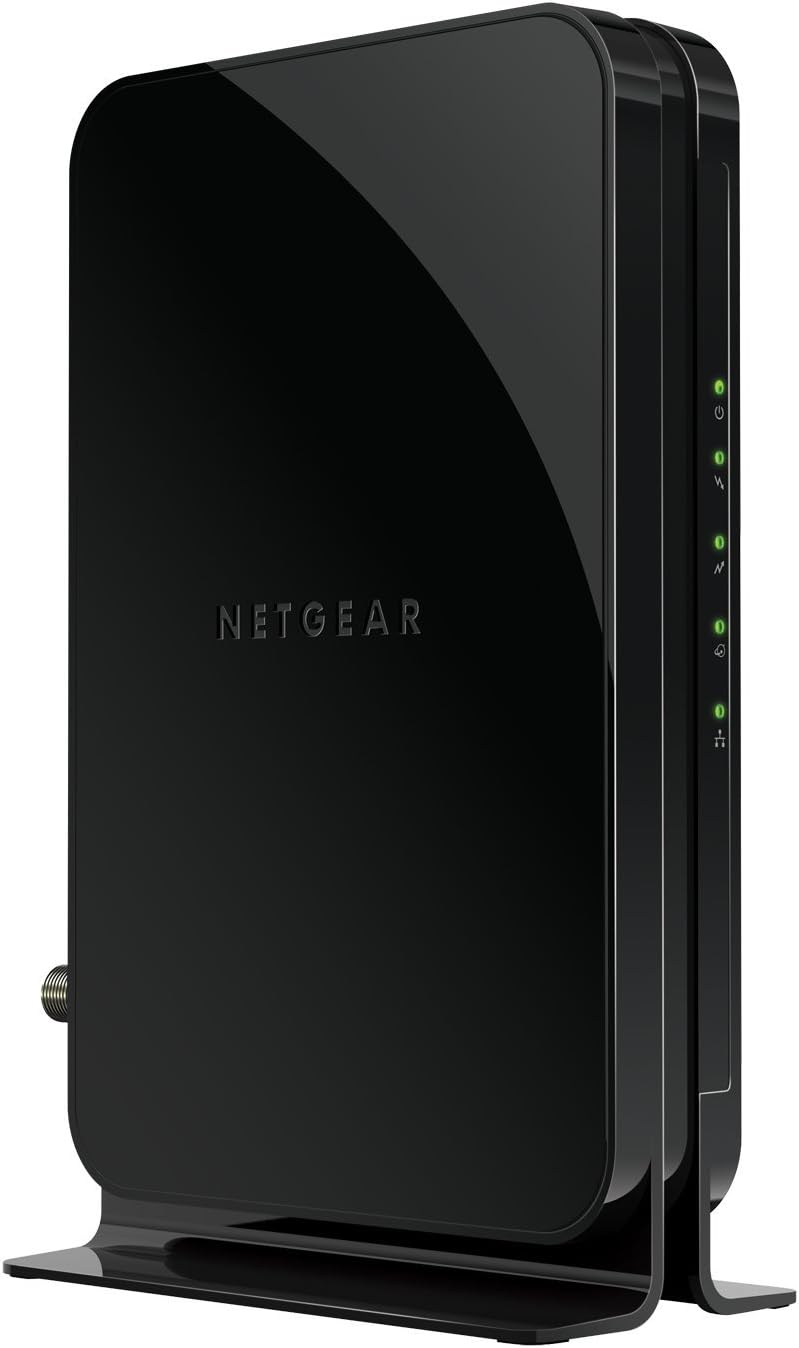
- DOCSIS 3.0 modem with 16x4 channel bonding supports cable internet plans up to 400 Mbps
- Single Gigabit Ethernet port connects directly to a separate WiFi router or single computer
- CableLabs Certified for compatibility with major U.S. cable providers including Xfinity and Cox
- Compact standalone modem design without a built-in router, so any WiFi router can be paired with it
- Setup completes in about 5 minutes by connecting the coax cable and activating with the provider
Cons
- No built-in WiFi, so a separate wireless router is required for wireless devices
- Firmware updates are pushed only through the ISP, and the modem cannot be manually updated by the user
- Not compatible with cable-bundled voice/phone service, only data internet plans
The CM500 uses DOCSIS 3.0 with 16x4 channel bonding to support cable internet plans up to 400 Mbps. Actual top speed available depends on the specific ISP plan tier, with providers like Xfinity supporting up to 200 Mbps and Cox up to 150 Mbps on this modem.
- DOCSIS 3.0 standard with 16x4 channel bonding
- Rated for cable internet plans up to 400 Mbps
- CableLabs Certified for major U.S. cable providers
Because channel bonding capacity sets the practical ceiling, plans above what 16x4 bonding supports will not reach their full advertised speed through this specific modem model.
Setup follows three basic steps: connect the coax cable to the modem, then either connect an Ethernet cable to a computer and follow the on-screen activation, or call the cable provider to activate over the phone. The process is designed to complete in about 5 minutes.
- 1 Gigabit Ethernet port for a computer or separate router
- Three-step activation: connect, activate, and confirm with the ISP
- No built-in WiFi radio, so it functions as a wired modem only
Because there is only one Ethernet port and no internal WiFi, the modem is intended to sit between the wall coax connection and a separate wireless router that then distributes WiFi to the home.
The CM500 is CableLabs Certified and built to work with major U.S. cable internet providers, including Xfinity and Cox, though exact supported speed tiers vary by provider. It is not compatible with cable-bundled voice/phone services.
- CableLabs Certified for compatibility with major cable ISPs
- Works with any separately purchased WiFi router via the Ethernet port
- Not compatible with bundled voice/phone service plans
Firmware updates for the modem are managed entirely by the ISP rather than the user, meaning owners cannot manually flash or update the modem's firmware themselves; updates arrive automatically through the provider's network.

Pros
- 2.5 Gbps Ethernet port supports plans faster than standard gigabit cable service
- DOCSIS 3.1 with 32x8 channel bonding stays backward compatible with older DOCSIS 3.0 networks
- Compatible with major cable ISPs including Xfinity, Spectrum and Cox
- Compact 7 x 1.77 x 8.13 inch footprint fits easily beside a router or on a shelf
Cons
- Single Ethernet port only, so a separate router is mandatory to get any WiFi signal
- No phone or VoIP support, a separate voice-capable modem is needed for landline service
- Works only with cable (coaxial) internet, incompatible with any fiber ISP such as AT&T Fiber or Verizon Fios
The CODA56 supports internet plans up to 2.5 Gbps through its single 2.5 Gbps Ethernet port, using DOCSIS 3.1 technology with 32x8 channel bonding for multi-gig speeds. It stays backward compatible with DOCSIS 3.0 networks for providers or plans that haven't upgraded to 3.1 infrastructure.
- DOCSIS 3.1, 32x8 channel bonding
- Up to 2.5 Gbps via Ethernet port
- Backward compatible with DOCSIS 3.0
- Dimensions: 7"L x 1.77"W x 8.13"H
Actual achievable speed still depends on the subscribed internet plan and the ISP's own network capacity, since the modem's 2.5 Gbps ceiling is a hardware maximum rather than a guaranteed throughput.
This device is a modem only, with a single Ethernet port and no built-in WiFi, so a separate wireless router must be connected downstream to create any wireless network in the home. Setup involves connecting the coax cable from the wall and an Ethernet cable to a router.
- Single Ethernet port, no built-in WiFi
- Requires a separate WiFi router for wireless coverage
- No voice or VoIP support built in
- Compact shelf-friendly footprint
Households that previously used an all-in-one gateway combo unit will need to plan for and install a separate router alongside this modem to restore wireless connectivity.
The CODA56 is built for cable internet providers specifically, listed as compatible with Xfinity, Spectrum and Cox, and it is not compatible with fiber internet services such as AT&T Fiber, Verizon Fios, Frontier Fiber, Google Fiber or CenturyLink Fiber. Confirming coaxial cable service with an ISP before purchase avoids a mismatched setup.
- Compatible with Xfinity, Spectrum and Cox cable plans
- Not compatible with any fiber internet service
- Supports Xfinity up to 2 Gbps, Spectrum 1 Gbps, Cox up to 2 Gbps
- No phone or VoIP service support
Buyers with a fiber connection at home should look for a compatible ONT-paired router instead, since this modem's hardware is built specifically around coaxial cable signal decoding.
Why Buy Your Own Modem for Cox Internet?
Cox, like most cable providers, charges a monthly rental fee for the modem or gateway they hand you when you sign up. That fee typically adds up to well over one hundred dollars every year, and it never stops. Buying your own Cox-compatible modem is a one-time purchase that usually pays for itself within a year, sometimes sooner if you catch a good deal.
Beyond the savings, owning your modem gives you control. You choose a device that matches your plan instead of accepting whatever inventory the provider has on hand. You can upgrade on your own schedule, and you avoid the older, slower units that rental fleets often recycle. The key is making sure any modem you buy appears on the Cox approved list, which every product in this guide does.
- Lower monthly bills: eliminate the recurring rental charge entirely.
- Better performance: pick a modem tuned to your exact speed tier.
- Future flexibility: keep the same device even if you switch cable providers, since most are also approved for Xfinity and Spectrum.
Understanding DOCSIS: The Most Important Spec
DOCSIS is the technical standard that determines how much data your modem can move across the cable line. When shopping for the best modems for Cox, this single specification tells you more about real-world performance than almost anything else on the box.
DOCSIS 3.0 vs DOCSIS 3.1
DOCSIS 3.0 modems are the affordable, proven workhorses of the cable world. They comfortably handle plans up to around 400 to 900 Mbps depending on the channel configuration, which covers the majority of everyday households that stream, browse, and work from home. A solid DOCSIS 3.0 unit like the Motorola MB7621 pairs with any router and supports Cox plans up to roughly 900 Mbps, making it a sweet spot for most families. The budget-friendly NETGEAR CM500 covers plans up to 400 Mbps, while the NETGEAR CM700 stretches to about 800 Mbps.
DOCSIS 3.1 is the newer standard built for gigabit and multi-gigabit plans. If you subscribe to Cox’s fastest tiers, a DOCSIS 3.1 modem such as the ARRIS SURFboard SB8200 or the NETGEAR CM1000 gives you the headroom to hit those speeds and stay compatible as plans get faster. For the highest multi-gig tiers, the NETGEAR CM2500 and the Hitron CODA56 support plans up to 2 Gbps and beyond.
Which One Do You Actually Need?
Here is the simple rule: match the modem to your plan, not to the marketing. If your Cox plan is 500 Mbps or slower, a quality DOCSIS 3.0 modem saves money and performs perfectly. If you pay for gigabit or faster, or you plan to upgrade soon, invest in DOCSIS 3.1 so you are not bottlenecked. Buying more capability than your plan can deliver will not make your existing connection faster.
Standalone Modem or Modem-Router Combo?
One of the biggest decisions when choosing among the best modems for Cox is whether you want a bare modem or an all-in-one unit that includes WiFi. Both approaches work well, and the right choice comes down to how much control and coverage you want.
Standalone Modems
A standalone modem does one job and does it well: it connects your home to Cox and hands the signal off to a router of your choice. This separation is ideal for anyone who already owns a good router or wants to pick a high-performance mesh system. Devices like the Motorola MB7621, the ARRIS SB8200, and the ARRIS SB6183 are modem-only units that give you the flexibility to upgrade your WiFi independently. When your router technology improves, you swap only the router and keep the modem.
Modem-Router Combos
A combo unit bundles the modem and WiFi router into a single box, which means fewer cables, one less device on your shelf, and simpler setup. For smaller homes and apartments, a combo like the Motorola MG7550 with built-in AC1900 WiFi or the NETGEAR Nighthawk C7000 keeps everything tidy. The trade-off is flexibility: when you want to upgrade WiFi, you replace the whole unit, and combos can be harder to place for optimal signal coverage.
- Choose standalone if you want maximum flexibility, plan to use mesh WiFi, or already own a capable router.
- Choose a combo if you want simplicity, live in a smaller space, and prefer one device to manage.
Key Features Worth Paying Attention To
Once you have settled on DOCSIS level and form factor, a few remaining features help you narrow the field. None of these are dealbreakers on their own, but together they separate a good buy from a great one.
Ethernet Ports and Speed
Look at the number and speed of the Ethernet ports. Modems built for gigabit and multi-gig plans, like the ARRIS SB8200 with dual 1 Gbps ports, or the Hitron CODA56 with a single 2.5 Gbps port, ensure the wired connection can keep up with your plan. A modem can only deliver as much speed as its port allows, so this matters most on faster tiers.
Channel Bonding
Channel bonding describes how many data channels a modem can combine at once, often written as 16×4 or 32×8. More channels generally means more capacity and better performance during peak hours. The ARRIS SB6183 uses a 16×4 configuration suited to moderate plans, while higher-tier modems bond many more channels for demanding households.
New, Renewed, or Budget
Renewed units can be a smart way to save money if you are on a tighter budget. The renewed ARRIS SB6183 and the renewed NETGEAR Nighthawk C7000 deliver dependable performance at a lower entry price, which is appealing if you mainly need a reliable connection without chasing top speeds.
Matching a Modem to Your Household
To make the decision concrete, think about your household in terms of speed tier and usage. The best modems for Cox are the ones that fit these real-world profiles rather than the ones with the flashiest spec sheet.
- Budget or basic plans (up to 400 Mbps): a value DOCSIS 3.0 modem like the NETGEAR CM500 or the renewed ARRIS SB6183 covers streaming and browsing without overspending.
- Mainstream plans (500 to 900 Mbps): the Motorola MB7621 or NETGEAR CM700 hit the sweet spot of price and performance for busy families.
- All-in-one simplicity: the Motorola MG7550 or NETGEAR C7000 combo keeps setup easy in smaller homes.
- Gigabit and multi-gig plans: step up to the NETGEAR CM1000, ARRIS SB8200, NETGEAR CM2500, or Hitron CODA56 for full DOCSIS 3.1 speed.
How to Set Up Your New Cox Modem
Activating your own modem on Cox is straightforward. Once your device arrives, the process usually takes fifteen minutes or less and does not require a technician visit.
- Confirm compatibility: every modem in this guide is Cox approved, but it never hurts to verify the model on the provider’s compatibility page.
- Connect the hardware: attach the coax cable to the modem, plug in power, and connect your router or computer via Ethernet.
- Activate the device: call Cox or use their online activation tool and provide the modem’s MAC address, printed on the label.
- Return the rental: once your new modem is online, return the leased equipment promptly to stop the monthly charge.
Frequently Asked Questions
Will any cable modem work with Cox?
No. You need a modem that appears on the Cox approved compatibility list. All of the options highlighted here are approved for Cox and typically for Xfinity and Spectrum as well, which protects your investment if you ever change providers.
Do I need a separate router?
If you buy a modem-only device, yes, you will need a router to create your WiFi network. If you prefer an all-in-one solution, choose a modem-router combo instead. Both paths deliver reliable internet; it comes down to how much flexibility you want.
Is DOCSIS 3.1 worth it if I do not have a gigabit plan?
For most sub-gigabit plans, a good DOCSIS 3.0 modem is all you need and costs less. DOCSIS 3.1 becomes worthwhile if you already have or plan to upgrade to gigabit or multi-gig service, giving you longer-term headroom.
Final Thoughts
Choosing among the best modems for Cox does not have to be complicated. Start with your plan speed to pick the right DOCSIS level, decide whether you want the flexibility of a standalone modem or the simplicity of a combo, and then let features like Ethernet speed and channel bonding fine-tune your choice. Every option in this guide is Cox approved and built to help you drop the rental fee for good.
Buy the modem that matches your household today, activate it in minutes, and enjoy faster, more reliable internet that you actually own. The savings start with your very next bill.