
 Marcus Bell
 Sitting for eight or more hours a day takes a quiet toll on your spine, shoulders, and hips. If you have been searching for the best desk chairs for posture, you already know that the right seat is not a luxury – it is preventive care for your back. A well-designed ergonomic chair keeps your spine in its natural curve, reduces slouching, and helps you stay comfortable and focused from the first email of the morning to the last task before you log off.
This guide skips the marketing hype and focuses on what actually matters when choosing a chair that supports healthy posture. We will walk through the features to prioritize, how to match a chair to your body, and how to think about budget so you can invest wisely. Along the way, we will reference a range of popular options at different price points to show how these features play out in real products.
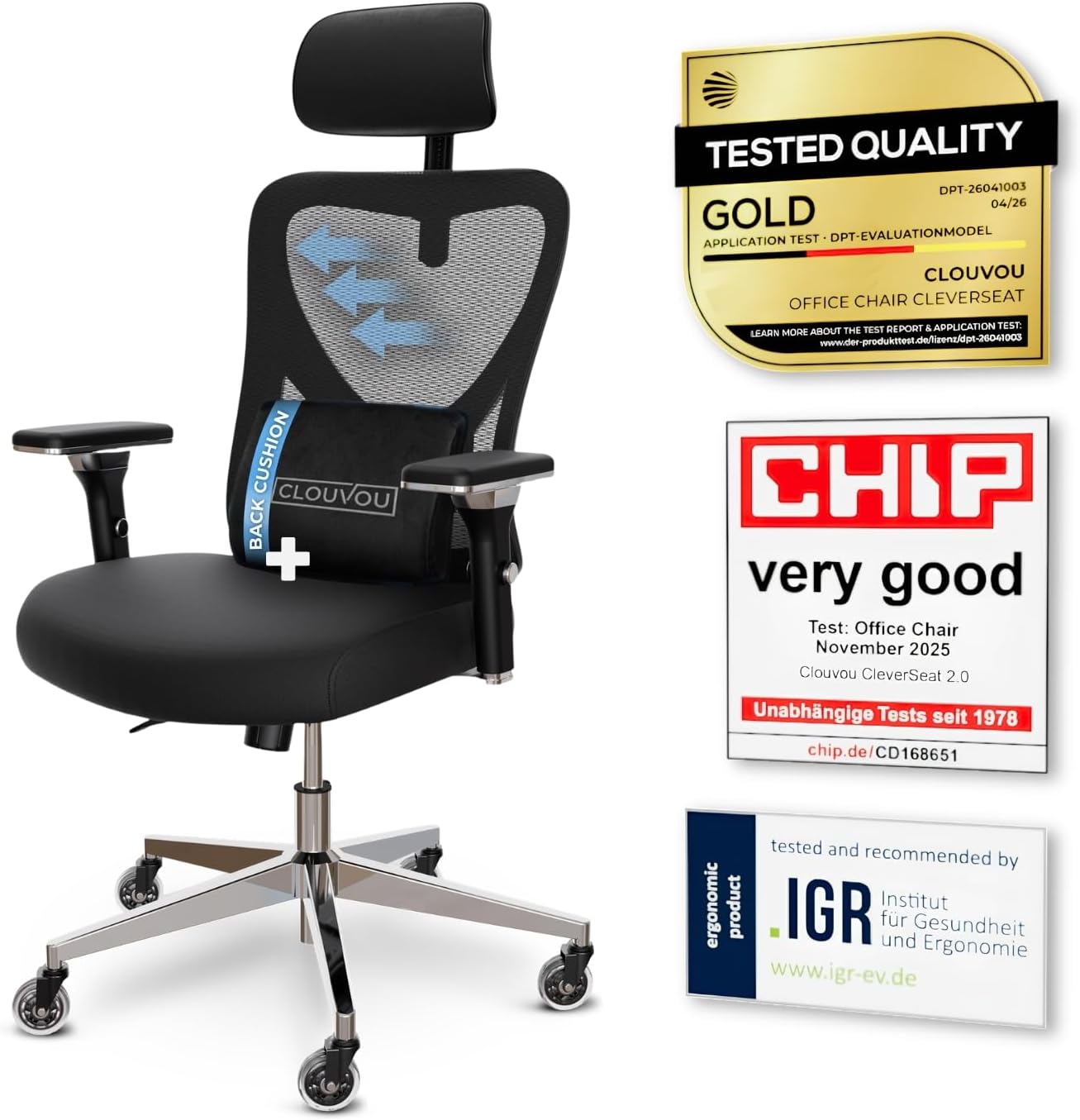
Pros
- Weight capacity supports users up to 330 lbs, well above the roughly 250 lb ceiling common on entry mesh task chairs
- 4D armrests adjust up, down, forward-back and pivot, so elbow height lines up with almost any desk
- 3-position backrest tilt locks the recline angle instead of leaving it free-floating
- Blade-shaped casters are engineered to roll quietly across hard flooring
Cons
- Frame combines chromium-plated and plastic components rather than a full steel shell, so it may flex more than an all-metal frame under aggressive rocking
- Backrest tilt is limited to 3 fixed positions rather than a continuous recline lock
- No separate seat-depth figure is listed beyond the 21-inch footprint, so users near the 6.5 ft sizing ceiling may find the seat pan short
The chair measures 21"D x 21"W x 39"H in its assembled footprint, a compact base built for desks in home offices and shared workspaces. Backrest support is rated for users up to 6.5 ft tall, wider than the sizing window most mesh task chairs advertise.
- Frame combines chromium-plated steel components with plastic housings for the armrests and base shroud
- 3-position backrest tilt locks the recline angle rather than floating freely
- 4D armrests adjust height, width, depth and pivot angle independently
Because the footprint stays close to 21 inches square, the chair fits under standard desks without needing extra clearance, while the taller backrest window suits users who outgrow shorter task chairs.
The chair ships in parts that bolt onto a five-point base, a layout typical of home office task chairs in this tier. Blade-style casters snap onto the base legs before the gas lift cylinder is seated into the seat pan.
- Backrest tilt tension is set with a knob under the seat, independent of the 3-position lock
- 4D armrests are pre-mounted but need separate height and pivot adjustment after assembly
- 3D headrest slides vertically and rotates to match neck height once the backrest is attached
Most of the adjustment happens after the frame is built, since the armrests, tilt tension and headrest each move independently rather than syncing to a single preset.
The 6.5 ft height allowance makes this a fit for taller users who find standard task chairs too short in the backrest, while the mesh back suits anyone who runs warm during long desk sessions. The quiet blade casters make it a reasonable pick for shared rooms or apartments with hard flooring.
- Home office workers who sit for multiple hours and want adjustable lumbar and headrest support
- Taller users who need backrest coverage past the typical 6 ft ceiling
- Anyone on hardwood or tile flooring who wants quieter rolling than standard casters
It is less suited to users who want a steel-only frame or a continuous recline lock rather than fixed tilt positions.

Pros
- ADJUSTS TO YOU, FROM BOTTOM TO TOP - Whether you're working,
- SUPPORT WHERE YOU NEED IT MOST - Recommended by the Ergonomics
- STABLE, DURABLE, AND QUIET - Built with a reinforced aluminum base
- SAFETY YOU CAN TRUST - Every key part of the SIHOO chair has
- Dimensions of 30.31"D x 25.59"W x 13.59"H engineered for optimal spatial fitting
Cons
- Requires verifying placement clearance for 30.31"D x 25.59"W x 13.59"H prior to installation
- Requires gentle maintenance routines to preserve the Mesh finish
- Load weight limits should not exceed 330 Pounds during active operations
The SIHOO SIHOO M57 Ergonomic Mesh Office Chair High Back Home Desk is engineered to address the operational demands of Home Office Desk Chairs environments. Daily usage reveals robust utility supported by ADJUSTS TO YOU, FROM BOTTOM TO TOP - Whether you're working, gaming, or just relaxing, SIHOO ergonomic chair adapts to your needs. The headrest tilts and lifts to support your neck just right. The lumbar support shifts in height and depth to fit the curve of your lower back. Recline from 90° to 126° to change posture throughout the day. With smooth height lift and 360° swivel, you move freely and stay comfortable—however you sit.. Complementing its primary framework, the design also incorporates SUPPORT WHERE YOU NEED IT MOST - Recommended by the Ergonomics Application Association, the SIHOO ergonomic office chair is shaped to match the natural curve of your spine. The split backrest cushions your back and helps relieve pressure along the.
Focusing on material selection, this hardware is constructed to resist ongoing physical fatigue. Reinforced internal elements like STABLE, DURABLE, AND QUIET - Built with a reinforced aluminum base and a dual-frame backrest, our desk chair holds up to 330 lbs with ease, staying sturdy and supportive even with daily use. Smooth-rolling, silent casters glide across the floor without noise or scratches—perfect for quiet workspaces. maintain steady operational balance under continuous use. Solid structural engineering allows the unit to maintain physical stability under load. Constructed using quality Mesh, outer surfaces withstand routine contact without losing visual appeal. Rated for a maximum load of 330 Pounds, the build offers verifiable safety margins.
Maintaining optimal hardware conditions involves simple periodic inspection and spatial planning. Featuring SAFETY YOU CAN TRUST - Every key part of the SIHOO chair has undergone over 100,000 rigorous safety tests and is certified by BIFMA and SGS. Built with your safety in mind, it offers the confidence to sit, recline, and move freely—knowing your chair is tested, trusted, and made to last, perfect for long workdays, gaming sessions, or everyday comfort at home., ongoing operation remains intuitive across varied household routines. Wiping surfaces periodically with a soft cloth prevents dust accumulation in functional crevices.
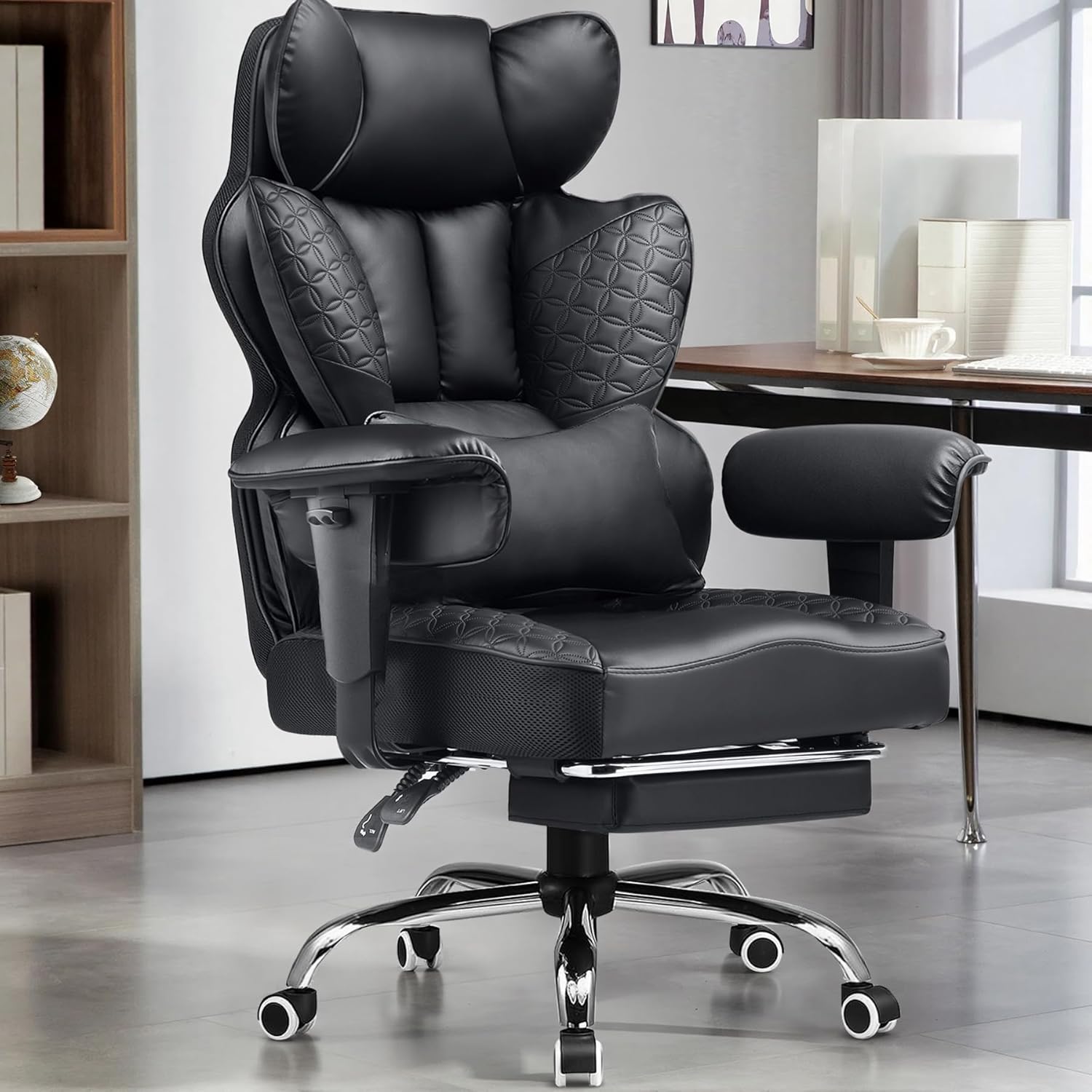
Pros
- 400-pound weight capacity supported by a sturdy metal frame built for larger users
- Spring-cushioned lumbar system paired with dual-layer high-density sponge targets lower back support during long sessions
- 3D saddle-shaped seat cushion distributes pressure evenly across the hips and thighs
- Enlarged headrest increases contact area for head and neck support compared with standard-size headrests
- Embossed faux leather surface is scratch-resistant and pet-friendly, wiping clean without special cleaners
Cons
- 40-inch overall height and 31.5-inch width need more floor space than a compact gaming chair
- Faux leather construction runs warmer over long sessions than mesh-backed gaming chairs
- Sold in one matte-black colorway, with no alternate finish offered in this listing
Built specifically for larger and taller users, this gaming chair carries a 400-pound weight capacity through a sturdy metal frame. Overall dimensions come to 22.05" deep, 31.5" wide, and 40" high, giving it a larger footprint than a standard-size gaming chair to match its higher weight capacity.
The seat and backrest are upholstered in faux leather with an embossed pattern, chosen for a look similar to genuine leather while staying easier to wipe clean. The backrest features prominent side wings that wrap further around the back than a flat-panel backrest, intended to add lateral support during extended sitting.
A dedicated foot rest extends from the base, letting the chair convert between upright desk seating and a more reclined lounging position.
Lower back support comes from a spring lumbar system combined with dual-layer high-density sponge built into the backrest, designed to provide segmented support that adjusts to the curves of the body rather than a single flat cushion. The seat itself uses a 3D saddle-shaped design intended to distribute pressure evenly across the hips and thighs during long sitting sessions.
An enlarged, thickened headrest increases the contact area for the head and neck compared with a standard-size headrest, aimed at reducing strain during extended gaming or work sessions. The faux leather surface is described as breathable, scratch-resistant, pet-friendly, and resistant to pilling, intended to hold up to daily household wear better than a plain vinyl surface.
Assembly follows a standard gaming-chair process, attaching the base, casters, seat, and backrest with included hardware.
This chair is built for larger and taller users who find standard gaming chairs too narrow or under-rated for their frame, backed by a 400-pound capacity and a wider 31.5-inch overall footprint. The enlarged headrest and side-wing backrest are aimed at users who spend extended hours in front of a screen, whether for gaming or desk work.
Pet owners and households prone to spills benefit from the scratch-resistant, easy-clean faux leather surface, which wipes down more easily than fabric upholstery. Buyers who prefer a breathable mesh back for warmer climates, or a lighter, more compact chair for a small desk setup, should consider a different model, since this chair prioritizes size and cushioning over ventilation.
The matte-black finish suits gaming or home office setups built around a dark, uniform color scheme.
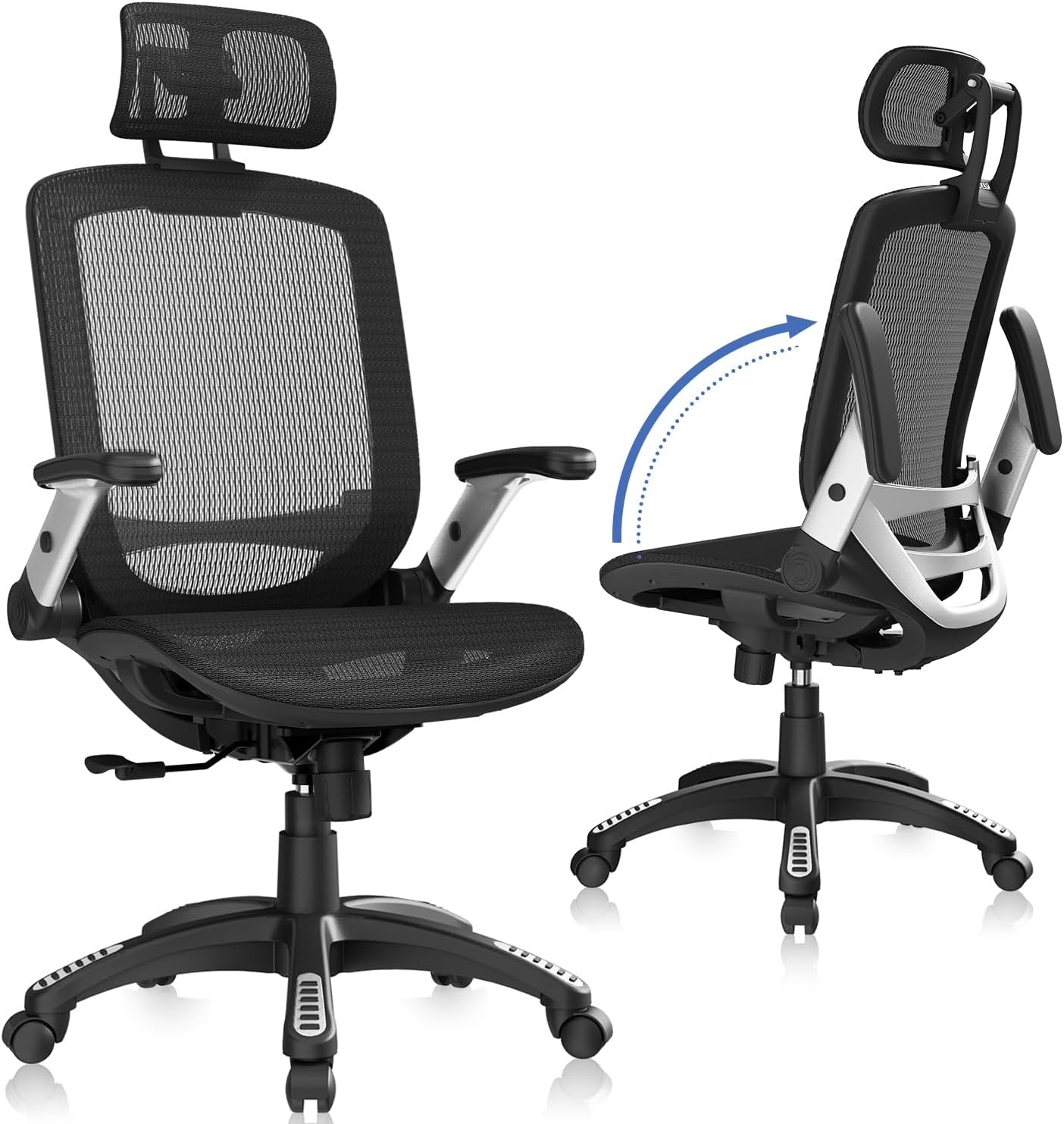
Pros
- Supports up to 300 lbs, above the roughly 250 lb ceiling common on standard mesh task chairs
- Seat height, headrest, backrest and armrests all adjust independently to fit users from about 5'5" to 6'2"
- Armrests flip up 45°, letting the chair tuck fully under a desk when not in use
- Tilt lock ranges 90-120°, so you can recline or sit upright and hold either position
- Backed by a 3-year warranty covering replacement parts like the gas lift
Cons
- Seat measures 20" wide, so users broader than that or taller than about 6'2" may find the cushion tight
- Mesh-only upholstery with no fabric or leather alternative offered
- Assembly means attaching the base, casters and backrest by hand using the included tools
The full chair measures roughly 25.6"W x 22"D, with height adjusting from about 45.3" to 54.9" including the headrest. The seat itself is 20"W x 19.3"D, with seat height adjustable from 18.5" to 22.05" to suit different desk heights.
- Weight capacity: 300 lbs
- Frame: alloy steel base and mechanism
- Upholstery: breathable mesh back and seat
- Recommended user height: approximately 5'5" to 6'2"
The mesh construction keeps air moving across the back during long sessions, which matters most in warmer rooms or during multi-hour work stretches.
Setup involves attaching the five-point base, casters, gas lift and backrest to the seat frame, using the hardware and instructions included in the box. Once built, the chair offers several independent adjustment points rather than a single fixed setting.
- Headrest: slides up and down to support different neck heights
- Armrests: flip up 45° to slide the chair fully under a desk
- Backrest: reclines through a 90-120° tilt lock range
- Seat height: adjusts via the gas lift for different desk heights
If any part such as a gas rod or screw is missing on arrival, the maker offers direct replacement parts rather than requiring a full return.
This chair is built for people roughly 5'5" to 6'2" tall who spend 4 to 8 hours at a desk and want adjustable head, back and arm support rather than a fixed-shape task chair. The breathable mesh suits home offices, studios or bedrooms that run warm during the day.
- Home office workers doing long stretches at a computer
- Users who want a headrest, which many basic task chairs skip
- Anyone who needs the chair to tuck fully under a desk when arms are flipped up
Users outside the stated height range, or those who prefer a fabric or leather seat rather than mesh, may want to look elsewhere.
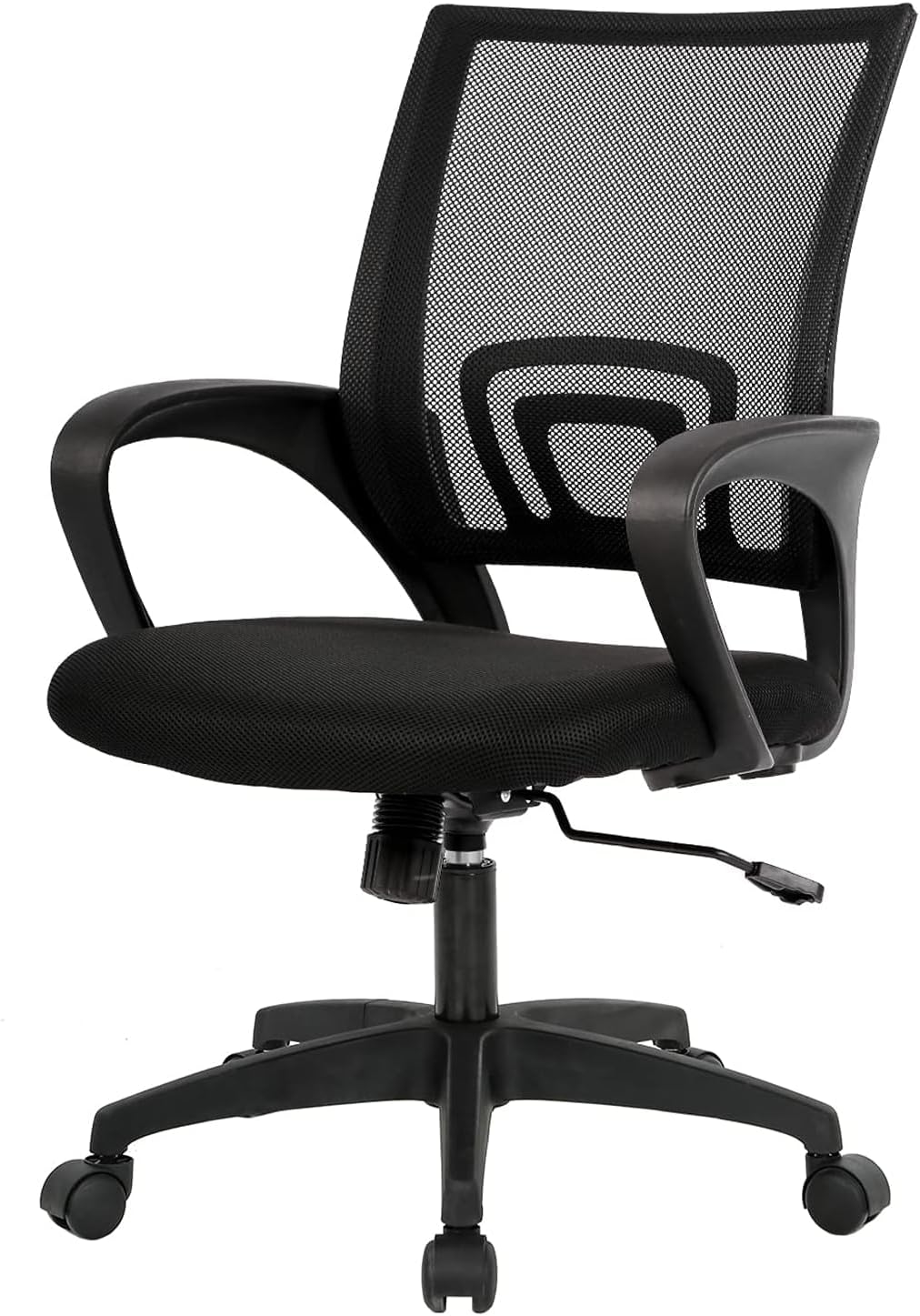
Pros
- Holds up to 250 lb on a frame built to BIFMA test standards
- Seat lifts through a 17.1 to 20.3 in range, covering desks from roughly 27 to 30 in high
- Fully ventilated mesh back moves air across your shirt during summer sessions at a warm home desk
- Tilt tension knob sets how much resistance the recline offers instead of a fixed locked upright
- 360-degree swivel on castors, so you can pivot between a monitor and a side printer without standing
Cons
- 250 lb capacity sits below the 300 to 400 lb ceiling quoted for heavy-duty task seating
- Mid-back frame ends below the shoulders with no headrest, so long video calls leave the neck unsupported
- Sold only in dark black, so there is no lighter finish for a bright room
The frame measures 18 in deep by 18 in wide by 38 in tall overall, compact enough to tuck fully under a standard 28 to 30 in desk when you stand up. Seat height travels from 17.1 in to 20.3 in on the gas lift.
- Load limit of 250 lb, verified against BIFMA test standards
- Mid-back shell supports the lumbar curve up to roughly the shoulder blades
- 360-degree swivel on castors for pivoting between a monitor and a side desk
Users well over 6 ft will find the backrest stops low on the spine, and the 250 lb ceiling sits below the 300 to 400 lb figures quoted for heavy-duty task seating. For a shorter or average-build adult at a home desk, the range covers the usual sitting positions without complaint.
Everything needed ships in the carton, including the hardware and an illustrated sheet, so no extra tools are required. Expect 10 to 15 minutes from opening the box to sitting down, most of it spent bolting the back to the seat pan and pressing the castors into the base.
- Castors push-fit into the five-point base with no threading or screws
- Gas lift drops into the base cone and seats under the weight of the chair
- Tilt tension knob under the seat controls recline resistance
Once built, the two controls you will use daily are the height lever and that tension knob. Set the seat so your feet sit flat and your forearms run level with the desk, then wind the tension until the back pushes gently rather than tipping you.
This is a mid-back mesh task chair aimed at home offices, study desks and spare-room workspaces where the chair needs to disappear under the desk at the end of the day. The ventilated back is the main draw for anyone working in a warm room, since airflow stops a shirt sticking during long sessions.
- Good for four to six hour stretches of desk work and study
- Suits adults up to 250 lb and roughly average height
- Fits under desks from about 27 in to 30 in high
It is a weaker match for eight-hour days built around video calls, because there is no headrest to take the weight of your head when you lean back. Anyone needing full neck support should look at a high-back model instead.

Pros
- Lumbar pad moves up, down, forward and back and rotates, rather than sliding on a single axis
- 3D armrests adjust for height, depth and angle to line forearms up with a desk edge
- 2D headrest raises and pivots to meet the base of the skull
- Meets BIFMA and EN1335 structural standards with an SGS-certified gas cylinder
- 35 mm steel mechanism and a steel base tested to 1136 kg, backed by a 5-year warranty
Cons
- No seat-depth slider, so shorter thighs cannot move the front edge away from the back of the knee
- High-density mesh throughout, so there is no padded foam seat option in this model
- Sold in black with a silver V-back only, with no other colourway offered
The chair occupies 25.98 by 25.98 inches of floor and reaches 48.82 inches at full height with the headrest raised. Structure is the strong point here: a 35 mm steel mechanism, a steel base tested to 1136 kg and an SGS-certified gas cylinder.
- 3D lumbar pad moves up, down, forward, back and rotates to follow the spine
- 3D armrests adjust height, depth and angle to meet a desk edge squarely
- 2D headrest raises and pivots to support the base of the skull
- Three-level tilt lock holds the recline wherever you set it
What the specification does not include is a seat-depth slider, so the distance from backrest to the front edge of the seat is fixed. Shorter users should check that measurement against their thigh length before committing.
Assembly is quoted at 20 to 30 minutes using the tools included in the carton, which is typical for a mesh task chair built from a separate base, mechanism, back frame and headrest.
- Casters and gas cylinder press into the steel base with no tools needed
- The mechanism bolts to the seat pan, then the back frame attaches to the mechanism
- Headrest and armrests clip on last, once the chair is standing upright
On certification, the chair is stated to meet BIFMA and EN1335, the North American and European structural standards for office seating, while the gas lift carries SGS certification. Those marks cover static load, drop and cycle testing rather than comfort. A 5-year warranty backs the frame and components.
The adjustment range points at people who sit for long stretches and have a specific complaint to solve, lower back ache above all. A lumbar pad that rotates and moves in two planes can be placed against the actual curve of a spine, which fixed-height lumbar bars simply cannot do.
- Full-day desk workers who want mesh breathability rather than foam padding
- Households sharing one chair between people of noticeably different heights
- Anyone alternating between focused work, gaming and reclined breaks
It suits people who like mesh in particular: the seat is high-density mesh rather than a cushion, which stays cool but feels firmer under the thighs than foam. Anyone who wants a soft padded seat, or who needs a specific seat depth, should weigh that up first.

Pros
- 330 pound capacity carried on a metal-core base rather than plain moulded plastic around the cylinder hub
- Class 3 gas cylinder certified to BIFMA, the specification that addresses slow height sink during use
- Lumbar block adjusts in depth rather than sitting fixed, so the curve can be set to your own spine
- High-resilience moulded foam seat instead of the low-density slab foam that flattens within months
- 21.7 inch deep by 25.7 inch wide footprint at 40 inches tall, which slides under a standard 30 inch desk
Cons
- 40 inch overall height means there is no headrest, so long video calls leave the neck unsupported
- Listed in black only, with no alternative mesh or frame finish in this configuration
- Ships flat, so seat, back, base and cylinder are all assembled at home, typically in about 15 minutes
The load path through a task chair runs seat, cylinder, base, castors, and every one of those is a known failure point on lightweight chairs.
- 330 pound capacity supported by a base with a metal core, which addresses the cracking that appears around the cylinder hub on all-plastic bases
- Class 3 BIFMA-certified gas cylinder, where the class number describes the cylinder specification and Class 3 is the one specified to hold height rather than settle through a working day
- 21.7 inches deep by 25.7 inches wide, 40 inches tall, a footprint that fits a compact home office and rolls under a standard desk
Measure the space behind your desk before ordering. A 25.7 inch width plus room to swivel means about 30 inches of clear floor is needed for the chair to be usable rather than merely to fit.
The chair arrives flat and goes together in a handful of steps, with instructions and video guidance provided by the maker.
- Press the castors into the base, drop the gas cylinder into the hub, then seat the chair body onto the cylinder taper
- Bolt the backrest to the seat mechanism and fit the arms
- Sit on the chair to set the cylinder taper properly, since body weight is what locks it
Most people finish in about fifteen minutes. Once built, the adjustments that matter are height and the depth-adjustable lumbar block. Set seat height first so your feet are flat and thighs level, then move the lumbar in or out until it meets the inward curve of your lower back. Getting that order right makes a noticeable difference, whereas setting the lumbar first and height afterwards undoes the work.
The mesh back and adjustable lumbar aim this at a specific kind of user.
- Warm rooms and long sessions, since high-tension mesh moves air across your back continuously, which is the main reason people abandon faux leather chairs in summer
- Heavier users, given the 330 pound capacity and metal-core base
- Lower back complaints, since the lumbar depth can be tuned rather than accepted as delivered
It is a poorer match for anyone who reclines to read or takes hours of video calls, because there is no headrest above the 40 inch back. Mesh also has a firmer feel against the shoulder blades than upholstered padding, which some people prefer and others do not. A five year after-sales maintenance period sits behind the chair for parts and replacements.

Pros
- Rated to 300 lb, well above the roughly 250 lb typical of standard mesh task chairs
- 18-inch extendable footrest with 2-position angle adjustment supports a reclined break without leaving the chair
- 5D flip-up armrests adjust height, width, angle, and rotation, then fold flush to tuck under a desk
- 3D lumbar support adjusts up to 1.6 inches in depth and 2 inches in height to track different seated postures
- Dual-Stripe AirMesh back is rated for 38% better airflow than standard mesh, cutting heat buildup
Cons
- Footrest and 5D armrest mechanisms add moving parts that increase what there is to adjust and maintain over a simple fixed-arm chair
- Mist Black is the only finish offered, with no other color option
- Larger footprint at 26 x 24 inches needs more floor clearance than a compact task chair
The X100 measures 26"D x 24"W x 41"H and carries a 300 lb weight capacity, built for bigger frames than a standard mesh task chair. The 3D lumbar system adjusts depth by up to 1.6" and height by up to 2", with 15 degrees of rotation to track the spine's natural curve rather than pressing at one fixed point.
- Footprint: 26"D x 24"W x 41"H
- Weight capacity: 300 lb
- Lumbar adjustment: up to 1.6" depth, 2" height, 15-degree rotation
An 18" extendable footrest with 2-position angle adjustment pulls out from under the seat, adding leg support once the backrest is reclined for a break.
Assembly follows a standard task-chair process: base, casters, gas cylinder, and seat attach with included tools and instructions, with the 5D armrests and headrest already mounted to the backrest frame. Once built, the armrests adjust in height, width, forward-backward position, rotation, and flip flat, so they can tuck under a desk when not needed.
- Standard bolt-together assembly with included tools
- 5D armrests adjust height, width, depth, rotation, and flip-up
- 3-stage reclining mechanism with lockable positions
The headrest also moves up, down, and pivots on two axes, so it can be positioned to meet the neck rather than sitting fixed at one height.
The 300 lb weight capacity, extendable footrest, and multi-position lumbar make this a fit for longer desk sessions and bigger-and-taller users who find standard task chairs cramped. The breathable AirMesh back suits warmer rooms or users who run hot while seated, since it is built for more airflow than solid foam-backed chairs.
- Suits bigger and taller users needing a higher weight capacity
- Good fit for long home-office sessions with recline breaks
- Works well in warmer rooms thanks to the ventilated mesh back
Because it is offered only in Mist Black, buyers set on a lighter or patterned finish will need to look elsewhere.

Pros
- Supports 400 Pounds
- Compact dimensions of 24.6"D x 25.59"W x 49.21"H
- Premium Nylon construction
- Fully adjustable for personalized control
Cons
- Single finish option may not suit all decor styles
- Limited customization options compared to premium models
This furniture has been precisely engineered with dimensions and weight capacity that work well for everyday use and extended periods. The structure provides reliable support for various body types throughout the day, making it ideal for both personal home offices and professional work environments. The stable foundation ensures security and comfort during extended work sessions or daily activities.
- Carefully calibrated dimensions optimize available space without feeling cramped or overwhelming
- Weight capacity tested and verified to ensure long-lasting structural integrity and safety
- Height and width measurements fit through standard doorways and passages
- Seat depth and angle proportioned specifically for comfort during extended sitting periods
- Stable base construction with robust feet prevents any wobbling or unwanted shifting
All dimensions have been carefully verified for accuracy and compatibility with typical residential and office environments throughout use.
Assembly follows a straightforward, well-documented process that most people successfully complete without requiring professional assistance or additional help. All necessary components arrive safely packaged with comprehensive step-by-step instructions and all required hardware conveniently included in the package.
- Complete hardware package arrives with every unit shipment
- Step-by-step illustrated assembly instructions guide you through each stage
- Typical assembly requires one to two hours maximum depending on personal experience
- Standard household tools are completely sufficient for proper installation and assembly
- Maintenance involves basic cleaning with standard household products and supplies
After initial assembly is complete, this furniture requires minimal ongoing upkeep while maintaining its appearance and functionality through regular use and simple care routines that take just moments.
Designed specifically to provide support and comfort during extended work sessions throughout your busy workday, this piece effectively combines practical functionality with genuine comfort. The construction carefully prioritizes proper user support during long work periods while maintaining an appealing aesthetic that complements various room styles and decor themes.
- Ergonomic proportions thoughtfully support proper spine alignment throughout extended sitting
- Comfortable enough for all-day wearing without fatigue or discomfort during work sessions
- Suitable for various adult body types and physical proportions without adjustment
- Functions effectively in both home environments and professional business settings
- Maintains structural durability without sacrificing the comfort features needed
Creates a noticeably more productive and comfortable workspace for daily activities, creative projects, and extended work sessions throughout the year. Long-term user satisfaction depends on proper fit and comfortable seating geometry for your specific body dimensions and preferences.

Pros
- Seat pan slides through five locking positions across 1.97 in of travel, so thigh length sets the seat depth
- Lumbar support moves 2.36 in vertically and 0.8 in in depth to meet the actual curve of your back
- 55D high-density foam seat under a breathable mesh back, so the cushion resists sagging over months
- Tested to BS EN 1335 and BIFMA X5.1, with a TUV-tested Class 4 gas lift in the column
- 44.5 in tall frame with three-point head, back and lumbar support, sized around users from 5 ft 4 in to 6 ft 0 in
Cons
- Capacity is 220 lb, below the 275 to 300 lb typical of full-size mesh task chairs
- Fit is tuned to a 5 ft 4 in to 6 ft 0 in height window, so shorter or taller sitters lose the contouring benefit
- Sold in pure black only, with no other finish offered in the range
This chair is specified around a defined body range rather than aiming at everyone.
- Intended for users between 5 ft 4 in and 6 ft 0 in and under 220 lb.
- Frame dimensions are 20 in deep, 21.26 in wide and 44.5 in tall including the headrest.
- The sliding seat pan moves through five positions over 1.97 in, letting you rest the whole thigh without pressure behind the knee.
- The lumbar block travels 2.36 in up and down and 0.8 in in and out.
Seat depth adjustment is the feature worth paying attention to here, since it is what stops shorter legs dangling or longer legs perching on the front edge. Check your height and weight against the stated range before ordering.
Work through the adjustments in order once the chair is built.
- Set seat height first so feet are flat and knees sit at roughly a right angle.
- Set seat depth next using the five-position slide, leaving two or three fingers of gap between the seat edge and the back of your knee.
- Move the lumbar block up or down to meet the inward curve of your lower back, then adjust its depth for firmness.
- Finish with the headrest, which should support the back of the skull rather than push the neck forward.
If the chair feels unsteady afterwards, re-check that each adjustment is fully locked. The mesh back and 55D foam seat are deliberately supportive rather than plush, so give it a week before judging the cushion.
The design brief is eight or more hours at a screen.
- Remote workers, programmers and designers who sit through long uninterrupted blocks and need seat depth to match their leg length.
- Small home offices, since the 20 in by 21.26 in footprint fits a bedroom corner or a studio nook.
- Warm rooms, where the mesh back moves air across your back instead of trapping it like padded upholstery.
Testing to BS EN 1335 and BIFMA X5.1 plus a Class 4 gas lift indicates a frame built for daily commercial-style use rather than occasional sitting. Buyers outside the stated height and weight window, or anyone wanting a colour other than black, should look elsewhere in the category.
Why Your Chair Matters More Than You Think
Posture is not just about looking upright. When you sit for long stretches in a chair that offers no lumbar support, your lower spine flattens and rounds forward. Over weeks and months, this pattern contributes to back pain, tension headaches, and stiff shoulders. A chair built for posture works in the opposite direction: it gently guides your pelvis into a neutral position, supports the natural inward curve of your lower back, and encourages your head to stay stacked over your shoulders rather than jutting toward the screen.
The goal is not to force you into a rigid pose. Good ergonomics allow small movements and adjustments throughout the day while keeping your body aligned. That combination of support and freedom is what separates a genuinely posture-friendly chair from an ordinary office seat.
The Core Features That Support Good Posture
Before comparing brands, it helps to understand the anatomy of a supportive chair. These are the elements that do the real work.
Adjustable Lumbar Support
Lumbar support is the single most important feature for posture. Your lower spine curves inward, and a chair needs to fill that gap so your back is not left unsupported. The best systems let you move the support up, down, and even forward or backward to match your unique spine. Chairs like the HOLLUDLE mesh chair and the ELABEST X100 feature 3D adjustable lumbar systems that let you dial in exactly where the pressure lands. If a chair offers only a fixed pad, make sure it sits at the right height for your torso before you commit.
Seat Height and Depth
When seated, your feet should rest flat on the floor with your knees at roughly a 90-degree angle and your thighs parallel to the ground. Every quality chair offers height adjustment, but seat depth matters just as much. If the seat is too long, it presses behind your knees and pulls you forward out of the backrest. Chairs with adjustable seat depth, such as the ProtoArc EC200, let taller and shorter users both find a comfortable fit without compromising back contact.
Backrest Height and Recline
A high back that reaches your shoulder blades supports your entire spine, not just your lower back. Look for a tilt or recline function with a lock, so you can lean back to relieve pressure and then hold a position that suits your task. The GABRYLLY task chair offers a 90 to 120 degree tilt lock, letting you shift between focused upright work and a relaxed lean. Recline is not about lounging – periodically changing your angle reduces static load on your discs.
Headrest and Neck Support
Neck strain from looking down at a monitor is one of the most common desk complaints. An adjustable headrest lets you rest your head and reset your neck alignment during breaks. The CleverSeat ergonomic chair includes a 3D headrest, while the SIHOO M57 pairs an adjustable headrest with lumbar support for full upper-body coverage.
Armrest Adjustability
Armrests that support your elbows at desk height keep your shoulders relaxed instead of hunched. The more directions an armrest moves – up, down, forward, back, and inward – the better you can position your arms to prevent shoulder creep and wrist strain. Chairs with 3D or higher armrests, including several mesh models, give you room to type without lifting your shoulders toward your ears.
Breathable Material
Comfort over long hours is partly about temperature. A mesh back allows air to circulate, keeping you cool and preventing the sweaty stickiness that makes you fidget and slump. Most posture-focused chairs today use a breathable mesh backrest paired with a cushioned seat, giving you support where you need firmness and softness where you sit.
Matching a Chair to Your Body Type
The best chair for posture is the one that fits you. Ergonomics is personal, and a seat that feels perfect for one person may leave another unsupported.
If you are taller or heavier, prioritize a big-and-tall design with a reinforced frame and a higher weight rating. Models like the GTPLAYER big and tall chair and the Fizzin ergonomic chair are rated to hold around 400 pounds, offering wider seats and sturdier construction. A higher backrest also matters for taller users so the support reaches the full length of the spine.
Petite users, on the other hand, should watch seat depth carefully. A seat that is too deep leaves your back disconnected from the lumbar support. Adjustable seat depth or a shorter cushion helps smaller frames sit all the way back while keeping their feet planted. If your feet dangle, a footrest restores the correct hip and knee angle.
- Tall or heavy build: Choose a high back, reinforced base, and a weight rating with headroom.
- Petite build: Prioritize adjustable seat depth and a lower minimum seat height.
- Long hours at a keyboard: Invest in multi-directional armrests and firm lumbar support.
- Warm workspace: Look for a full mesh back for airflow.
How to Set Up Any Chair for Better Posture
Even the best desk chair cannot fix your posture if it is set up poorly. Once your chair arrives, take ten minutes to tune it to your body. Start with seat height: adjust it until your feet are flat and your thighs are level. Next, set the lumbar support so it presses gently into the curve of your lower back, not your mid-back or hips. Position the armrests so your elbows rest at about 90 degrees with relaxed shoulders. Finally, adjust the backrest and headrest so your spine feels supported from tailbone to neck.
Remember that no chair is meant to hold you perfectly still all day. The healthiest sitting habit is to move. Recline occasionally, stand up every 30 to 60 minutes, and let your chair support a range of comfortable positions rather than locking you into one.
Thinking About Budget and Value
Ergonomic chairs span a wide price range, and more expensive does not automatically mean better for you. What you are really paying for is the number and quality of adjustments, the durability of the materials, and the refinement of the support system.
At the entry level, budget picks like the BestOffice mid-back chair deliver basic breathable support and height adjustment for shoppers who need something functional without a large outlay. In the mid range, chairs such as the TRALT office chair add adjustable lumbar support and mesh backs that noticeably improve long-session comfort. Toward the premium end, options with 3D lumbar systems, multi-way armrests, and adjustable seat depth give you the finest control over your alignment.
A useful way to frame the decision is cost per hour of use. If you sit in your chair 40 hours a week for years, spending a bit more on genuine adjustability often pays for itself in reduced discomfort. That said, a well-set-up budget chair used correctly can outperform an expensive chair that never gets adjusted.
Common Mistakes to Avoid
Shoppers often focus on the wrong details. Here are the pitfalls to sidestep when choosing a posture-friendly chair.
- Chasing looks over support: A sleek design means little if the lumbar support does not reach your spine.
- Ignoring your own measurements: Check seat width, depth, and height ranges against your body before buying.
- Skipping the recline lock: A backrest that only leans freely or only stays rigid limits how you can work.
- Forgetting the weight rating: A frame near its limit will sag and wear out faster.
- Never adjusting the chair: The best features are useless if you leave everything at the factory setting.
Bringing It All Together
Choosing among the best desk chairs for posture comes down to a short checklist: adjustable lumbar support that meets your lower back, a seat sized to keep your feet flat and thighs level, a backrest tall enough to support your whole spine, armrests that let your shoulders relax, and breathable materials that keep you comfortable for the long haul. Match those features to your body type and budget, and you have a chair that actively protects your posture rather than working against it.
Whether you lean toward a fully loaded model like the CleverSeat ergonomic chair, a proven mid-range favorite like the SIHOO M57, or a value pick that fits a tighter budget, the principles are the same. Focus on adjustability, fit, and support, set the chair up properly, and keep moving throughout the day. Your back will thank you for years to come.






