Sofia Marchetti
 The right light bulb can make a room feel warm and inviting or bright and energizing, and the wrong one can leave a space feeling dim, harsh, or just off. Choosing the best indoor light bulbs is about more than wattage; it involves brightness, color temperature, bulb shape, energy efficiency, and where in your home each bulb will go. With LED technology now dominant, there has never been a better time to upgrade your lighting for comfort and lower energy bills.
This guide cuts through the jargon on the box and explains exactly how to shop for the best indoor light bulbs for every room. Rather than reviewing individual products, we walk through the specifications that matter, how to match bulbs to different spaces, and how to save money without sacrificing quality of light. By the end you will know precisely what to look for.

GE Refresh LED Light Bulbs, 65 Watt, Daylight, BR30 Indoor Floodlights (2 Pack)


Why LED Is the Clear Choice for Indoor Lighting
Old incandescent bulbs waste most of their energy as heat and burn out quickly. LED bulbs, by contrast, use roughly 80 to 90 percent less electricity, last tens of thousands of hours, and run cool to the touch. That means fewer replacements, lower bills, and safer fixtures. Modern LEDs also come in every color temperature and brightness, so you no longer have to compromise on light quality to get efficiency. A long-life LED can last around 15,000 hours, meaning you may not change it for years.
Understanding Brightness: Lumens, Not Watts
For decades we chose bulbs by wattage, but wattage measures energy use, not brightness. With efficient LEDs, the number that matters is lumens. More lumens means more light. As a rough guide to replace old incandescent bulbs:
- 40W equivalent: about 450 lumens, good for accent and mood lighting.
- 60W equivalent: about 800 lumens, the everyday standard for lamps and fixtures.
- 100W equivalent: about 1,500 lumens, for bright task areas and large rooms.
For general-purpose lighting, a 60W-equivalent bulb like the LE 60W Equivalent LED at 800 lumens covers most lamps and ceiling fixtures. When you need serious brightness for a kitchen or workspace, step up to a 100W equivalent such as the MAXvolador 100W Equivalent LED at 1,500 lumens.
Color Temperature: Setting the Mood
Color temperature, measured in Kelvin (K), determines whether light looks warm and yellow or cool and blue. It has a huge effect on how a room feels.
- 2700K (soft white): Warm and cozy, ideal for bedrooms, living rooms, and dining areas.
- 3000K (warm white): Slightly brighter but still inviting, great for kitchens and bathrooms.
- 4000K (neutral/cool white): Clean and balanced, good for workspaces and garages.
- 5000K (daylight): Crisp and energizing, best for task lighting, reading, and detailed work.
For relaxing spaces, a soft white bulb like the Sylvania 2700K Soft White creates a homey glow, while a daylight bulb such as the Sylvania 5000K Daylight is better for kitchens, offices, and anywhere you need to see clearly. Choosing the wrong temperature is the most common lighting mistake, so match it to the room’s purpose.
Consistency Matters
Use the same color temperature for all bulbs in a single room. Mixing warm and cool bulbs in one space looks jarring and uneven. Buying a matched multi-pack, like the Energetic 24-Pack Daylight, makes it easy to keep a whole room or floor consistent.
Bulb Shape and Base
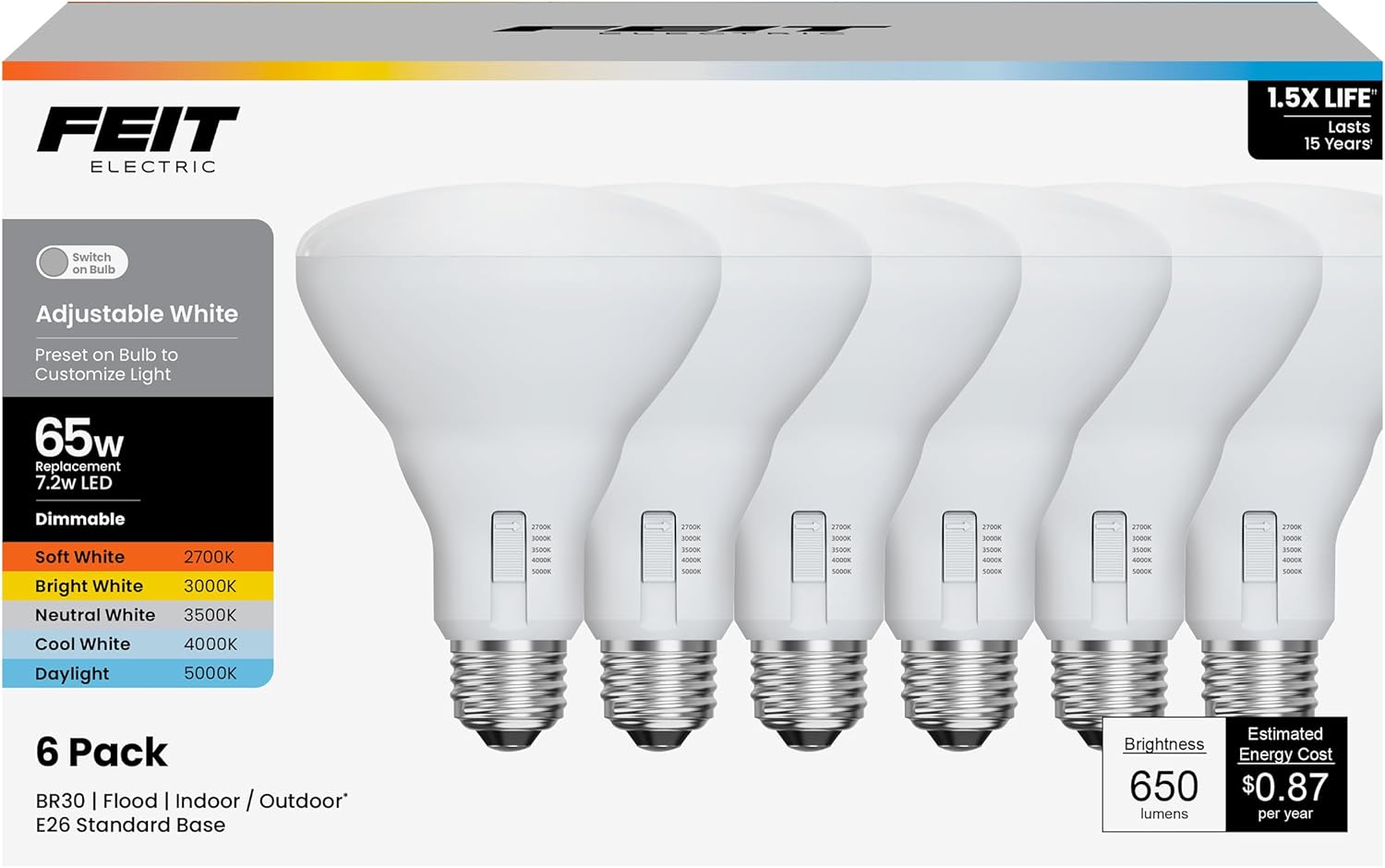
Indoor bulbs come in several shapes for different fixtures. The most common is the A19, the classic pear shape that fits most lamps and ceiling fixtures with a standard E26 medium base. For recessed cans and track lights, a BR30 flood shape spreads light more widely. A flood bulb like the GE Refresh BR30 Floodlight directs light downward, making it ideal for recessed ceiling fixtures, while a versatile 5CCT flood such as the Feit Electric BR30 5CCT lets you dial in the color temperature. Always check that the bulb shape and base match your fixture before buying.
Dimmable or Not?
If your fixture is on a dimmer switch, you must use a bulb labeled dimmable, or it will flicker, buzz, or not dim at all. Dimmable LEDs give you flexible control over brightness and mood, ideal for living rooms and bedrooms. Non-dimmable bulbs are cheaper and perfectly fine for fixtures on simple on/off switches, such as closets, garages, and utility areas. A budget-friendly non-dimmable bulb works great in fixtures where you do not need to adjust the light.
Room-by-Room Recommendations
Living Room
Aim for warm, dimmable light around 2700K to create a relaxing atmosphere. Layer table lamps and overhead fixtures for flexibility. Dimmable bulbs let you brighten for reading and soften for movie nights.
Kitchen
Use brighter, cooler light of 3000K to 4000K for good visibility while cooking. Higher lumens help at countertops and stovetops where you need to see clearly.
Bedroom
Choose warm 2700K bulbs for a calming feel. Dimmable bulbs are especially valuable here so you can wind down with soft light in the evening.
Home Office
Cooler 4000K to 5000K daylight bulbs keep you alert and reduce eye strain during focused work. A daylight bulb suits most desks, though a warmer soft-white tone can also work for a cozier office feel, depending on your preference.
Closets and Utility Spaces
Bright daylight bulbs help you see clearly in these functional areas, and non-dimmable versions keep costs down.
Efficiency and Lifespan
Beyond the light itself, pay attention to the rated lifespan and energy use. LED bulbs commonly last 10,000 to 25,000 hours, so a good bulb might run for a decade in a typical fixture. Look for the estimated yearly energy cost printed on the label, and consider ENERGY STAR-certified bulbs for verified efficiency and quality. Buying a longer-life, efficient bulb costs a little more up front but saves money and hassle over its lifetime.
Don’t Overlook CRI and Flicker
Two specifications that rarely make the front of the package can make or break how a bulb feels in daily use. The first is CRI, or Color Rendering Index, which measures how accurately a bulb reveals true colors on a scale up to 100. Cheap bulbs sometimes score in the low 80s, making food, skin, and decor look slightly washed out or unnatural. For living spaces, kitchens, and anywhere you care about how things look, choose bulbs rated 90 CRI or higher. The second is flicker. Some inexpensive LEDs pulse rapidly in a way that can cause eye strain and headaches over long periods, even if you do not consciously notice it. Quality bulbs use better drivers to minimize flicker, which matters most in rooms where you spend hours, such as offices and reading nooks. Checking these two specs alongside brightness and color temperature ensures the light not only looks right but also feels comfortable to live under all day.
Budget Guidance
LED bulbs are inexpensive, especially in multi-packs, which makes upgrading a whole house affordable. Budget bulbs cover basic needs well, particularly non-dimmable models for utility spaces. Mid-range bulbs from established brands offer better color accuracy, longer warranties, and more reliable dimming. Buying in bulk, like a 24-pack, dramatically lowers the per-bulb cost when you are outfitting many fixtures. For frequently used rooms, spend a little more on higher-CRI, dimmable bulbs; for closets and garages, the most affordable option is fine.
Frequently Asked Questions
What is the best color temperature for indoor lighting?
It depends on the room. Use warm 2700K for bedrooms and living rooms, and cooler 4000K to 5000K for kitchens, offices, and task areas. Match the temperature to how you use the space.
How many lumens do I need for a room?
For general lighting, a 60W-equivalent bulb at about 800 lumens works for most fixtures. Larger rooms and task areas benefit from 100W-equivalent bulbs at around 1,500 lumens.
Can I use any LED bulb in a dimmer?
No. Only bulbs specifically labeled dimmable will work correctly on a dimmer switch. Non-dimmable bulbs may flicker or buzz, so check the packaging.
Do LED bulbs really save money?
Yes. LEDs use up to 90 percent less energy than incandescent bulbs and last far longer, so they save on both electricity and replacement costs over time.
Why do my new bulbs look different from my old ones?
The most likely reason is a mismatch in color temperature. If your old bulbs were warm 2700K and the new ones are 5000K daylight, the room will feel dramatically cooler and bluer even at the same brightness. Check the Kelvin rating on the box and choose a temperature that matches the mood you want, keeping every bulb in a room consistent.
Final Thoughts
Choosing the best indoor light bulbs comes down to matching brightness (lumens), color temperature, bulb shape, and dimmability to each room’s purpose, then favoring efficient LEDs for long life and low bills. Get those basics right and every room will feel exactly the way you want it. To go further, explore our guides to the best light bulbs overall and the best light bulbs for bathrooms, or see our best light bulbs for bathroom roundup for grooming-friendly options. Growing plants indoors? Our guide to the best grow light bulbs for indoor plants covers specialized options.