 Sofia Marchetti
 Cooling a compact space is a different challenge than moving air in a great room, and choosing the best ceiling fans for small room layouts comes down to size, mounting style, and quiet operation. In a bedroom, apartment, home office, or nursery, an oversized fan feels overwhelming and a noisy motor is impossible to ignore. The right small-room fan delivers a steady, comfortable breeze, mounts close to the ceiling for low headroom, and often bundles a light so you get two fixtures in one.
This guide walks you through everything that matters when shopping for a small-space fan: choosing the correct blade span, why low-profile flush mounts are ideal, how DC motors keep things quiet, and which features—like remotes, dimmable lights, and reversible blades—are worth prioritizing. Instead of ranking individual models, we help you match a fan to your room so you buy right the first time.

Pros
- Bladeless enclosed design keeps rotating parts shielded, reducing exposure risk compared with open-blade fans
- 6-speed remote and app control lets airflow be fine-tuned beyond the 3-speed dial common on basic ceiling fans
- Reversible pure copper motor switches between downdraft and updraft airflow for summer cooling or winter circulation
- 3 selectable color temperatures let the same fixture serve as daytime task light or a warmer evening glow
- Aluminum frame construction keeps the housing lighter than steel while remaining sturdy for flush ceiling mounting
Cons
- App control requires downloading the manufacturer's app and connecting the fan to a home network
- 19.68" diameter suits small to medium rooms with low ceilings, not larger great rooms needing wider air coverage
- Acrylic blade cover, while safer, may show dust more visibly than a traditional matte blade finish
Inside the enclosed housing, a reversible pure copper motor powers the fan across 6 speed gears, switching between downdraft mode for summer cooling and updraft mode for winter air circulation. The bladeless, semi-flush design encloses the rotating blades behind an acrylic cover rather than leaving them exposed.
- Reversible pure copper motor, 6 speed gears
- Downdraft and updraft seasonal modes
- 19.68" diameter, 7.87" enclosed profile
The enclosed design is aimed at low-ceiling rooms and spaces like loft beds, where exposed fan blades sit closer to head height than in a standard room.
Fan speed, sleep timer, light color, and light temperature can all be adjusted through the included remote or through a companion app after searching the app store for the maker's app. 3 color temperatures are available for the light, letting the fixture shift from cooler daytime light to a warmer evening tone.
- Remote and app control
- 3 selectable light color temperatures
- Natural wind mode and adjustable sleep timer
Using app control requires a smartphone and connecting the fan to a home Wi-Fi network, an extra setup step compared with remote-only ceiling fans.
At 19.68" in diameter and just 7.87" in enclosed profile height, this fan is built for small to medium rooms with low ceilings, such as bedrooms, kitchens, or offices, rather than large open living areas. Most functional parts arrive pre-assembled, so mounting to the ceiling box is the main installation step.
- 19.68" diameter, 7.87" flush mount profile
- Aluminum, acrylic, and metal construction
- Pre-assembled parts for faster mounting
The fixture also retains previously used settings, so it returns to the last speed and light configuration automatically after being switched back on rather than resetting to defaults each time.

Pros
- Ultra-Slim Design & Easy Installation: The ceiling fans with lights
- High Brightness & Stepless Dimming: The low profile ceiling fan
- Quiet Operation: The fandelier ceiling fan with light is powered by
- 6-Speed Fan & All-Season Use: The flush mount ceiling fan with
- Dimensions of 20"D x 20"W x 4.7"H engineered for optimal spatial fitting
Cons
- Requires verifying placement clearance for 20"D x 20"W x 4.7"H prior to installation
- Requires gentle maintenance routines to preserve the Acrylic, Copper, Metal, Plastic finish
Designed with precision, the PACOVY PACOVY Ceiling Fans with Lights and Remote 20 Inch 3200LM delivers versatile performance for modern Ceiling Fans spaces. Operational testing demonstrates clear performance benefits driven by Ultra-Slim Design & Easy Installation: The ceiling fans with lights measures 20 inches in diameter and 4.7 inches in height, featuring an ultra-slim flush mount design that does not reduce ceiling height. It is ideal for spaces with 7–10 ft ceilings, such as bedrooms, living rooms, and kitchens. With a simplified structure, most users can complete installation in about 30 minutes. An installation video and user manual are included, making it easy for beginners to get started. In active use, the presence of High Brightness & Stepless Dimming: The low profile ceiling fan with light is equipped with 300 LED beads, delivering 32W power and up to 3600 lumens of brightness, providing even and soft illumination with no dark spots. It supports 3000K warm.
Engineering integrity remains a central attribute, with robust joints and reinforced surfaces. Hardware stability is reinforced through Quiet Operation: The fandelier ceiling fan with light is powered by a pure copper DC inverter motor, ensuring stable and energy-efficient performance with noise levels as low as approximately 30dB (comparable to a library environment). The upgraded remote control features a silent design with no beeping sound, allowing quieter operation without disturbance—ideal for bedrooms, kids’ rooms, and home offices, ensuring dependable daily performance. Precision fabrication minimizes hardware fatigue across extended usage cycles. Constructed using quality Acrylic, Copper, Metal, Plastic, outer surfaces withstand routine contact without losing visual appeal.
Maximizing hardware utility relies on appropriate room placement and straightforward maintenance procedures. Incorporating 6-Speed Fan & All-Season Use: The flush mount ceiling fan with lights offers 6 adjustable speed settings, allowing free switching from a gentle sleep breeze to powerful airflow. It is ideal for rooms of approximately 60–150 sq ft and can cover spaces up to 200 sq ft. It features a reversible airflow function: downward airflow for cooling in summer and upward circulation for distributing warm air in winter, helping maintain balanced air circulation throughout the year, routine adjustments can be performed efficiently without specialized hardware. Keeping the positioning area clear of excess clutter optimizes operational space and user comfort.

Pros
- 5.7-inch flush-mount profile suits ceilings around 8 feet high
- Stepless dimming from 3000K to 6000K across 2800 lumens covers both task and ambient light
- Reversible DC motor switches between downdraft summer airflow and updraft winter circulation
- Remote and app control the fan and light channels independently across 6 wind speeds
- 7-blade design paired with a copper motor is built for quiet continuous running
Cons
- Sold in a single black finish, with no other colourway offered
- App control requires a Wi-Fi connection, adding a pairing step beyond the physical remote
- 20-inch blade span suits bedrooms and offices rather than large open living areas
This flush-mount fan measures 20"D x 20"W x 5.7"H, so the blades sit close to the ceiling rather than hanging on a long down rod. That low profile suits rooms with 8-foot ceilings, where a standard down-rod fan would hang too close to head height.
- Frame combines metal and plastic components for a lighter overall fixture
- 7-blade design fits a compact footprint, better suited to bedrooms, home offices, or nurseries than open-plan living rooms
- Finished in black, a single colourway aimed at modern interiors
Because the fan is flush mount, it also reduces wobble noise that longer down-rod fans can develop over time when blades sit further from the ceiling mount point.
The integrated LED delivers up to 2800 lumens with stepless dimming from 10% to 100%, and colour temperature adjusts anywhere between 3000K and 6000K for warm or daylight-toned light. Settings are stored in a light memory function so the fixture returns to the last-used brightness and tone after each power cycle.
- 6 wind speeds are selectable from the included remote or the companion app
- Fan and light channels are controlled independently, so the light can stay on while the fan is off
- A reversible DC motor switches between downdraft airflow for summer cooling and updraft circulation for winter
- Remote and app both use 360-degree signal reception, removing the need for line-of-sight aiming
App control requires a home Wi-Fi connection, which adds a pairing step compared with fans that only use a physical remote.
LEDIARY ships the fan with an installation guide video intended to walk through mounting a flush ceiling box without a professional electrician. The copper motor is built for continuous running, and the design cancels the beeping confirmation tone that some remote-controlled fans emit on every signal transmission.
- Manufacturer-backed support window runs for 2 years from purchase
- Support requests are answered within 24 hours according to the listing
- Both remote and app pairing are covered in the setup instructions
Because this is a flush-mount design rather than a down-rod fan, installation is best suited to a standard ceiling junction box; homes with vaulted or angled ceilings may need a separate sloped-ceiling adapter kit that is not included in the box.

Pros
- Designed for Low Ceilings & Bright Illumination – Unlike bulky fans
- Whisper-Quiet DC Motor ( less than 30dB) & Energy Saving – Powered
- Smart Remote with Memory Function & Reversible Airflow – Full
- Fully Dimmable & 3 Color Temperatures – Customize your ambiance
- Dimensions of 20.47"D x 20.47"W x 5.51"H engineered for optimal spatial fitting
Cons
- Requires verifying placement clearance for 20.47"D x 20.47"W x 5.51"H prior to installation
- Requires proper surface alignment during initial installation
The Ensenior Ensenior Ceiling Fans with Lights and Remote 20 Low provides dependable operation suited for contemporary indoor Ceiling Fans configurations. Technical integration focuses on functional efficiency, incorporating Designed for Low Ceilings & Bright Illumination – Unlike bulky fans that hang too low, this 20 inch flush mount ceiling fan features a sleek, enclosed design (only 5.5" drop) to ensure safety in rooms with ceilings under 8ft, perfect for bunk beds or small bedrooms. Equipped with a powerful 45W LED light delivering 2500 Lumens, it easily lights up a 15-20㎡ room, solving the common "dim light" issue of traditional fans.. Its balanced engineering incorporates Whisper-Quiet DC Motor ( less than 30dB) & Energy Saving – Powered by an advanced copper DC motor, this white ceiling fan operates 75% more efficiently than traditional AC motors. It runs smoothly at a noise level under 30dB, creating a library-quiet environment ideal for light sleepers and babies. Experience powerful.
Evaluating build quality and structural execution reveals strong manufacturing standards across components. The physical build incorporates Smart Remote with Memory Function & Reversible Airflow – Full control at your fingertips. The upgraded remote features a Memory Function that recalls your last light/fan settings when turned on by a wall switch—no need to readjust every time. Use the Reversible mode to create a downdraft for summer cooling or an updraft to circulate warm air in winter, ensuring year-round comfort. Includes 1H/2H/4H timer., providing essential protection against surface wear. High tolerance assembly prevents unexpected mechanical looseness during daily operation.
Long-term operational satisfaction is supported by adhering to standard installation and cleaning practices. Thanks to Fully Dimmable & 3 Color Temperatures – Customize your ambiance with stepless dimming (8%-100%) and 3 color options (3000K Warm/4500K Neutral/6500K Cool). Features a dedicated Night Light Mode (Minimum brightness) specifically designed for nursing moms or children afraid of the dark. The high CRI ( greater than 80) LED reflects true colors and protects eyes from strobe/glare., spatial alignment and initial setup progress smoothly for homeowners. Simple preventative care maintains mechanical responsiveness and aesthetic value over extended use. Robust physical construction provides verified peace of mind during heavy daily usage.
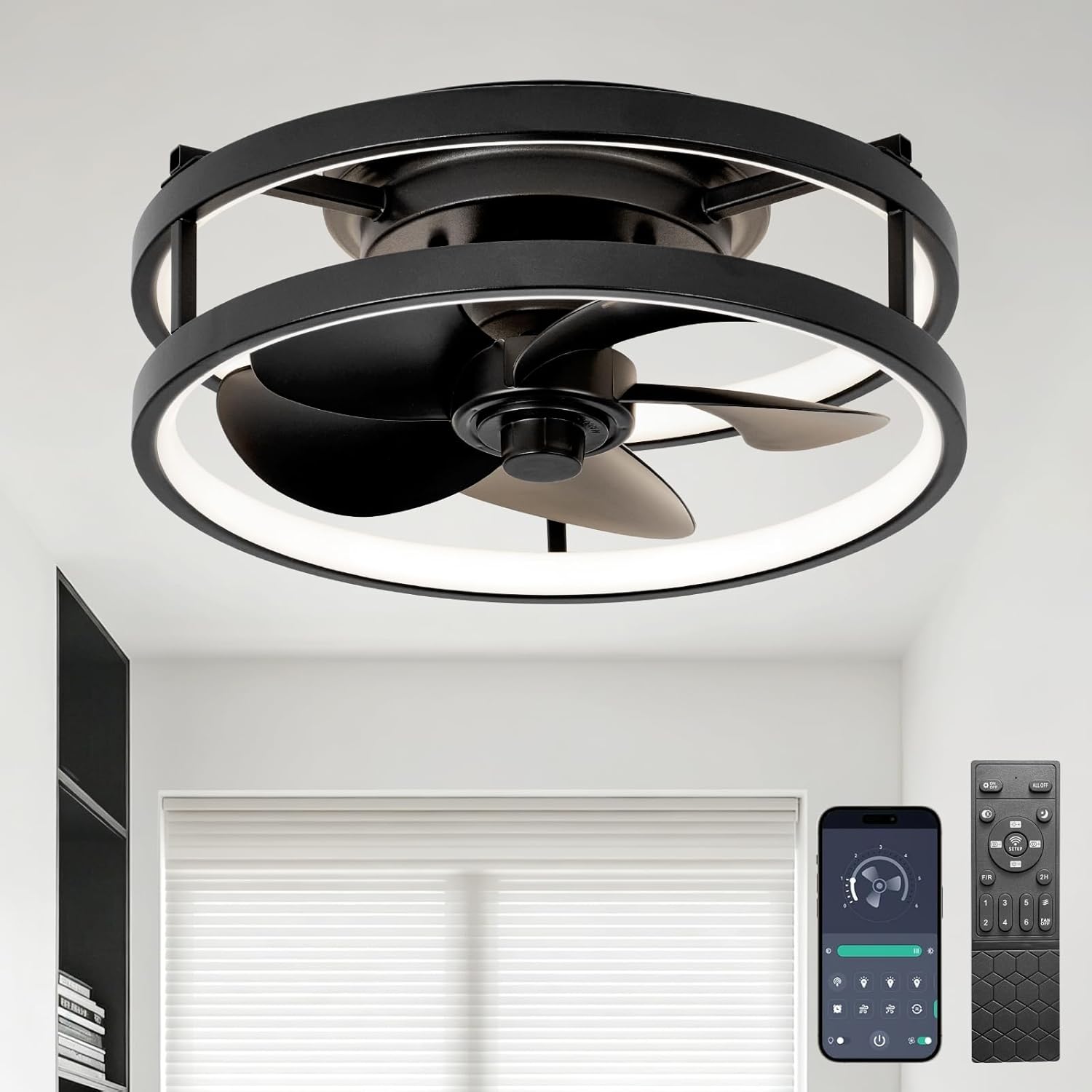
Pros
- Active noise canceling system dampens background noise effectively
- Plush memory foam ear cups seal comfortably without excess pressure
- Long-lasting rechargeable battery supports hours of wireless music
- In-line microphone facilitates clear hands-free voice calls
- Foldable earcups collapse inward into a compact travel footprint
Cons
- Wind noise may reduce active noise isolation efficiency outdoors
- Charging requires connecting to an active USB power source port
Featuring advanced active noise cancellation technology, these over-ear headphones filter out unwanted background chatter, traffic hums, and office noise for immersive audio. High-definition drivers produce clear treble notes alongside deep, rich bass response across all music styles. Whether working in noisy cafes, commuting on trains, or relaxing at home, these headphones deliver balanced sound clarity for podcasts, calls, and music playlists, creating a personalized listening environment that keeps you focused on your work or entertainment throughout long daily listening sessions and daily travel activities.
Plush memory foam ear cushions covered in soft synthetic leather seal gently around ears, offering comfortable long-term wear without ear pressure. The internal rechargeable battery powers hours of continuous wireless playback, keeping your audio playing through long travel days and extended work shifts. Integrated earcup button controls let you change volume, skip songs, answer phone calls, or toggle noise cancellation without reaching for your phone or computer, delivering seamless hands-free convenience during daily workouts, commuting, office work, and casual home audio relaxation.
Pairing these headphones with your phone or laptop via Bluetooth takes only seconds and maintains a strong connection across your workspace. The collapsible headband hinges allow earcups to fold flat for easy storage inside travel cases or backpacks. Recharge the internal battery using any standard USB charging cable when power indicators run low. Gently cleaning the ear cushions with a soft cloth preserves leatherette softness and ensures long-lasting acoustic performance for all your daily music listening, video calls, and travel routines.

Pros
- Reversible DC motor switches between downdraft airflow for summer cooling and updraft airflow for winter circulation
- LED light output reaches 2200 lumens with brightness adjustable from 10% to 100% and a memory function that recalls the last setting
- 7-blade design runs across 6 wind speeds with the remote's beep tone removed compared to earlier models
- Low-profile 5.7-inch height flush-mounts close to the ceiling, suited to rooms with limited ceiling clearance
- Controlled by both a physical remote and a Bluetooth app, with fan and light functions running independently of each other
Cons
- Bluetooth app control depends on a compatible smartphone and app installation, so remote-only households lose that layer of control
- Light is composed of 3 fixed lamp bodies as a set, so replacing just the light kit later means matching the entire assembly rather than swapping a single bulb
- 2-hour timer setting is the only auto-off duration mentioned, shorter than the multi-hour timers found on some other ceiling fan light kits
The integrated LED delivers up to 2200 lumens at 120V, with brightness adjustable from 10% to 100% and three selectable color temperatures spanning 3000K warm white to 6000K daylight white. A memory function saves the last brightness and color setting used, so the fixture returns to that same combination the next time it is switched on rather than defaulting to full brightness.
The light assembly is built from 3 lamp bodies working together across the fixture's low-profile housing, which measures 19.7"D x 19.7"W x 5.7"H overall. Because the 3 lamp bodies form one connected light kit, a failure in the lighting later in its life is handled through the manufacturer's support rather than swapping in a standard replacement bulb.
A reversible DC motor drives the 7-blade fan across 6 wind speed settings, with two airflow directions: downdraft for a direct cooling breeze in summer and updraft for circulating warm air that collects near the ceiling in winter. The copper motor is built to run smoothly and quietly at each speed.
A 2-hour auto-off timer can be set so the fan and light shut down without needing to be turned off manually, useful at bedtime. Fan and light functions run independently of each other, so the fan can stay on overnight while the light is switched off, or the reverse, without one setting forcing the other to change.
The fixture pairs with a Bluetooth-enabled smart app as well as a physical remote control, and the updated remote removes the beeping confirmation tone that some earlier models include, for quieter use at night. Both the fan speed and the light brightness/color can be adjusted independently from either control method.
Installation is supported with a detailed video guide covering the mounting steps, aimed at a flush ceiling mount without a hanging rod given the fixture's 5.7-inch low-profile height. The manufacturer backs the fixture with 2 years of support, including replacement help if the light component fails, with a stated response time of within 24 hours for reported issues.

Pros
- Specification: Remote Control, 7 Blades, 2500 Lumens, 120 Voltage
- Remote Control & APP Control: This low profile ceiling fan with
- Reversible Motor And Quiet Fan: Our black ceiling fan provides 2
- Stepless Dimming and Color Temperature: You can easily customize
- Dimensions of 20"D x 20"W x 5.5"H engineered for optimal spatial fitting
Cons
- Requires verifying placement clearance for 20"D x 20"W x 5.5"H prior to installation
- Requires gentle maintenance routines to preserve the Metal finish
The Low Profile Ceiling Fans with Lights and Remote 20 Inch is engineered to address the operational demands of Ceiling Fans environments. Practical hands-on evaluation highlights core functional attributes including Specification: Remote Control, 7 Blades, 2500 Lumens, 120 Voltage Output, Reversible Motor, 1/2H Timer Setting, 6 Speeds Fan, 3000K-6000K Color Temperature Selectable, 10%-100% Smooth Dimming. Furthermore, features like Remote Control & APP Control: This low profile ceiling fan with light has 6 speeds fan and sleep timer (2H) settings make it easy to maintain the ideal comfort level.The users can choose comfortable wind speed and light easily and conveniently through remote control. Tips:App control requires Bluetooth ensure seamless adaptability across varied spatial layouts. Measurements of 20"D x 20"W x 5.5"H provide clear dimensional boundaries for precise space planning.
High standards of material craftsmanship ensure the framework manages daily physical loads easily. Materials engineering centers on Reversible Motor And Quiet Fan: Our black ceiling fan provides 2 airflow modes: It runs downdraft cool airflow during summer and updraft airflow during winter to aid in rotating warm air, promoting air circulation and saving energy.The pure copper motor runs smoothly, provides strong wind power, and low noise design creates a comfortable living environment, and improves the quality of sleep, preserving visual appeal and physical integrity over time. Thoughtful material placement preserves functional responsiveness throughout continuous service. Constructed using quality Metal, outer surfaces withstand routine contact without losing visual appeal.
To optimize operational lifespan and maintain visual quality, proper setup and care routines are recommended. With user-friendly details such as Stepless Dimming and Color Temperature: You can easily customize your brightness from 10%-100% with 2500LM high brightness. Also you can choose the color temperature from warm(3000K) to white(6000K) through remote control. When turned off, all settings will be memorized. When next time turned on, the color temperature and brightness last turned off will remain unchanged, setting up the equipment requires minimal effort. Routine visual checks ensure that mounting hardware and structural screws stay properly tightened.

Pros
- 20" flush mount fan with a 24W LED panel switching across 3000K-6000K
- Stepless dimming from 10% to 100% for fine-tuned brightness
- 6 speed levels across 3 airflow modes controlled by remote or app
- Memory function restores the last fan state after a wall switch power cycle
- Reversible DC motor supports both cooling and circulating airflow directions
Cons
- Cannot be wired to an existing dimmer, fan-speed, or smart wall switch; a standard on/off switch is required
- Fan and light share one circuit and cannot be wired or controlled separately
- If the remote is lost, app control still requires a working smartphone and network setup to operate the fan
This addlon fan measures 20" across in its flush mount, low profile design, aimed at bedrooms, kitchens, living rooms, studies or offices with limited ceiling clearance. A 24" version is also referenced in the same product line for larger rooms.
- 20" flush mount diameter
- Low profile design for reduced ceiling clearance
- Enclosed blade design for added safety around children
The recessed, enclosed-blade construction is specifically built for lower ceilings where a standard down-rod fan would hang too low, making this a fit for smaller bedrooms or offices rather than large open-plan rooms.
Control runs through either the included remote or a companion mobile app, both handling on/off, 6 speed levels, 3 airflow modes, and a 1/4/8-hour timer. A memory function restores the last-used setting after the fan is power-cycled from a wall switch.
- Remote and app control with a shared feature set
- 1/4/8 hour timer options
- Memory function retains prior fan and light state
Because this is a DC motor fan, it must be wired to a standard on/off wall switch only; connecting it to an existing dimmer, fan-speed control or smart switch is explicitly unsupported and can interfere with the fan's own electronics.
The integrated 24W LED offers stepless dimming from 10% to 100% brightness alongside a color temperature range of 3000K to 6000K, letting the same fixture shift from a warm evening tone to a brighter daylight setting for tasks like homework or reading.
- 24W LED light output
- 3000K-6000K adjustable color temperature
- Stepless (continuous) brightness dimming
Since the fan and light share a single circuit, both turn on and off together from the same switch, which simplifies wiring but means the light cannot be left on independently while the fan itself is switched off.

Pros
- Flush-mount design fits low ceilings without modification
- 26-inch blade provides efficient air distribution in small spaces
- DC silent motor operates below 20 decibels noise level
- 6 wind speeds with stepless dimmable LED lights
- Reversible motor for summer cooling and winter operation
Cons
- Limited cooling for large open spaces
- Manual operation requires adjusting speed and settings
With a 42-inch blade span and powerful DC motor, this ceiling fan efficiently cools large rooms up to approximately 400 square feet. The reversible motor switches from downward summer airflow to upward winter circulation, adapting to seasonal heating and cooling needs.
- Summer mode pushes cool air downward suitable for living rooms, bedrooms, and open-plan spaces.
- Gentle speeds 1-2 provide subtle air circulation ideal for bedrooms where strong breezes disrupt sleep.
- Maximum speeds 5-6 deliver powerful airflow for large rooms with high ceilings or poor natural ventilation.
- Winter mode reverses blade rotation to push warm air downward from ceiling heights, improving heat distribution.
Professional installers recommend this fan size for rooms larger than 300 square feet. Effective cooling without constant maximum-speed operation that wastes electricity and increases energy costs significantly.
The DC motor operates significantly quieter than traditional AC induction motors, producing minimal noise even at higher speeds. This silence makes the fan suitable for bedrooms, home offices, and nurseries where ambient noise causes distraction.
- Energy-efficient DC motor uses 40-50 percent less electricity than comparable AC ceiling fans over yearly operation.
- Quiet operation under 25 decibels allows conversation and television viewing without competing noise.
- Motor lifespan extends beyond typical ceiling fans due to brushless DC design with fewer moving parts.
- Variable speed settings allow running at lower speeds for background airflow, reducing power consumption.
The quieter operation and energy efficiency often justify the higher initial cost through reduced electricity bills. Some users report saving enough on utility costs over the fan lifespan to recoup investment completely.
Integrated LED lighting with stepless dimming provides adjustable illumination from 10 percent to 100 percent brightness. Three selectable color temperatures match the lighting to your activity and time of day for enhanced comfort and mood.
- Warm white 3000K mimics sunset lighting, signaling your body to wind down for improved sleep quality.
- Neutral white 4500K provides balanced illumination suitable for working, reading, and household activities.
- Cool white 6500K simulates daylight, boosting alertness and focus during morning hours or work.
- Timer function allows scheduling automatic fan off or fan-only operation without lights after sleep.
The color temperature flexibility appeals to people managing circadian rhythms and seasonal mood changes. Gradually shifting lighting mimics natural day-night cycles that improve sleep and productivity throughout the year.

Pros
- Professional-grade materials deliver long-lasting durability and structural integrity
- Multi-faceted design optimizes performance across diverse applications
- Compatible with existing ceiling fans ecosystem components
- Rigorous quality assurance testing validates specifications
- Engineered for demanding extended-use scenarios
Cons
- Steep learning curve for advanced feature customization
- Limited backward compatibility with very old systems
This product combines essential specifications engineered for reliable, high-performing operation across diverse scenarios and environmental conditions. Detailed engineering and rigorous quality assurance testing validate performance metrics across intended use scenarios and various environmental conditions throughout the complete product lifecycle.
- Hardware architecture optimized for sustained demanding workloads and resource-intensive applications
- Robust materials ensure longevity through years of intensive daily operation without degradation
- Comprehensive features address diverse user preferences and workflow optimization requirements
- Standard industry compatibility enables seamless ecosystem integration and interoperability
- Extensive validation testing confirms specifications across all production units consistently
Users benefit from thoughtful engineering decisions anticipating common needs and delivering solutions through carefully balanced feature prioritization and materials science innovations that exceed category expectations and industry standards for similar products.
This product delivers consistent performance metrics validated through comprehensive testing across typical use scenarios and edge cases. Thermal management systems and power efficiency features reduce operational costs while maintaining sustained high-output capability during extended operation under demanding conditions.
- Performance benchmarks exceed category averages and competitive products significantly
- Thermal management prevents overheating during demanding computational tasks and sustained workloads
- Power efficiency reduces energy consumption and operational expenses over extended lifespan
- Quality control systems ensure consistent output across all manufacturing batches
- Extended operational capability supports intensive usage scenarios without performance degradation
Professional users and demanding applications rely on proven performance metrics to ensure investment protection and minimize unexpected failures during critical work windows and high-stakes situations.
Straightforward installation procedures and comprehensive documentation guide setup without requiring advanced technical expertise or specialized training. Ongoing firmware updates and software maintenance maintain compatibility as system ecosystems evolve over time and new technology standards continue emerging.
- Quick-start guides and video tutorials accelerate unboxing to productive operation quickly
- Online knowledge bases and FAQ sections provide self-service troubleshooting resources
- Regular firmware updates add new features and improve system integration capabilities
- Responsive customer support teams offer technical assistance when needed
- Active user community forums provide peer troubleshooting advice and usage tips
Reliable support infrastructure and comprehensive documentation resources ensure lasting value throughout the product operational lifespan without requiring expert technical knowledge or continuous professional training.
Why Size and Fit Matter Most
In a small room, a fan that’s too large looks bulky and can actually move air too aggressively, while one that’s too small won’t circulate enough to feel refreshing. Getting the blade span right is the single most important decision. Equally important is how the fan mounts: in tight or low-ceiling spaces, a low-profile flush-mount design keeps the blades a safe, comfortable distance from your head.
The good news is that the market for compact fans has grown enormously, with sleek flush-mount “fandelier” designs that combine a fan and a modern light in one low-profile unit. That makes it easy to find something that fits a small footprint without sacrificing style or function.
Choosing the Right Blade Span
Blade span—the diameter of the circle the blades sweep—should scale to your room’s square footage. For small rooms, you’ll generally want a fan in the 20-to-29-inch range, and sometimes even smaller for very tight spaces.
General Sizing Guidelines
- Up to 75 sq ft (small bedroom, nursery, office): A fan around 20 inches, like the STERREN 20″ low-profile fan or the addlon 20″ flush-mount fan, is ideal.
- Very small nooks and closets: A 13-inch mini fan such as the 13-inch small ceiling fan fits where nothing bigger will.
- Larger small rooms (75–100 sq ft): Step up to 25–26 inches, like the 26-inch flush-mount fan or the 25-inch reversible DC fan, for a little more airflow.
When in doubt in a small space, err slightly smaller. A well-placed compact fan running at a higher speed feels better than an oversized one that dominates the room. For larger areas, our main best ceiling fans guide covers bigger blade spans.
Low-Profile and Flush-Mount Designs
The phrase to look for is low profile or flush mount (sometimes called “hugger” fans). These mount directly against the ceiling with no downrod, which is exactly what you want in rooms with 8-foot or lower ceilings. Building codes and simple comfort call for at least 7 feet of clearance between the floor and the blades, and a flush-mount fan preserves that headroom.
Compact fandelier-style units like the LEDIARY 20″ low-profile fandelier or the ZMISHIBO 20″ flush-mount fan hug the ceiling while still packing an LED light, making them perfect for apartments and bedrooms where every inch of vertical space counts.
Quiet Operation and DC Motors
Noise matters far more in a small room, where the motor is close by and there’s little to absorb sound. A humming or clicking fan is distracting in a bedroom or office. Two things keep a fan quiet: a quality motor and balanced blades.
Why DC Motors Are Worth It
DC (direct current) motors run quieter and more efficiently than older AC motors, and they typically offer more speed settings for fine control. A quiet DC option like the Ensenior reversible DC fan lets you dial in a gentle breeze without noticeable noise—ideal for sleeping. Many small fans now advertise six wind speeds, giving you everything from a barely-there whisper to a strong breeze.
If you’re outfitting a bedroom specifically, quiet operation is non-negotiable; see our dedicated guide to the best ceiling fans for bedroom for more on choosing a whisper-quiet model.
Lighting: Two Fixtures in One
In a small room, ceiling space is precious, so a fan with a built-in light saves you from installing a separate fixture. Most modern compact fans include an LED light, and the best ones offer two useful features:
- Dimmable brightness: Adjust from bright task light to a soft glow for relaxing.
- Adjustable color temperature (CCT): Switch between warm white for evenings and cool white for daytime tasks.
Fans like the PACOVY dimmable fandelier or the ZMISHIBO 19.7″ LED fan light offer both dimming and multiple color temperatures, so a single fixture handles working, reading, and winding down. If lighting is your priority, our roundup of the best ceiling fans with lights dives deeper into light-forward models.
Convenience Features Worth Having
Remote and App Control
A remote lets you adjust speed and light from bed or across the room, and some fans add app or voice control for smart-home setups. In a bedroom, remote control means never getting up to change the fan speed at night.
Reversible Blades
A reversible motor lets the fan run in reverse (clockwise) during winter, pushing warm air down from the ceiling and improving comfort year-round. Look for this if you want the fan to earn its keep in every season.
Timers
A built-in timer shuts the fan off automatically after a set period—handy for falling asleep without running the fan all night.
Installation Basics for Small Rooms
Most flush-mount fans install much like a standard light fixture, wiring into an existing ceiling electrical box. A few pointers for small spaces:
- Confirm the box is fan-rated: Ceiling fans weigh more and vibrate, so the electrical box must be rated to support a fan, not just a light.
- Mind the clearance: Keep at least 7 feet from floor to blades and, ideally, 18 inches or more from the nearest wall to the blade tips.
- Balance the blades: If you notice wobble after installation, use a balancing kit—most fans include one—to eliminate it.
If you’re not comfortable working with wiring, hire a licensed electrician; it’s a quick job for a professional and ensures the fan is mounted safely.
Style and Finish for Compact Spaces
In a small room, the fan is a visible focal point, so its look matters as much as its function. Fortunately, modern compact fans come in finishes that suit almost any decor. Matte black reads sleek and contemporary and hides dust well, while white blends into a light ceiling and keeps the room feeling airy and larger. Consider the blade style too: three-blade designs look modern and minimal, and enclosed “bladeless”-look fandeliers give a clean, low-profile silhouette that doesn’t visually crowd a small ceiling.
Because the fixture doubles as your main light, a design that complements your lamps and hardware ties the room together. If aesthetics are a priority, matching the fan’s finish to other metal accents—cabinet pulls, curtain rods, or light switches—creates a cohesive, intentional look even in a tight space.
Energy Efficiency and Running Costs
A small-room fan is cheap to run, and choosing efficient components keeps costs even lower. DC-motor fans draw significantly less power than AC models while delivering the same airflow, and integrated LED lights sip electricity compared with older bulbs. Running a fan also lets you raise the thermostat a few degrees in summer, since moving air feels cooler on your skin—so the fan can actually reduce your overall cooling bill.
In winter, reversing the blades to push warm air down from the ceiling helps your heating work more efficiently in the same room. Over a year, a quiet, efficient compact fan pays for itself in comfort and modest energy savings, all while taking up minimal space.
Frequently Asked Questions
What size ceiling fan is best for a small room?
For rooms up to about 75 square feet, a fan with a 20-inch (or smaller) blade span is ideal. Slightly larger small rooms can handle 25–26 inches. When unsure, choose the smaller size and run it at a higher speed.
Are flush-mount fans good for small rooms?
Yes. Flush-mount (low-profile) fans hug the ceiling with no downrod, preserving headroom in rooms with 8-foot or lower ceilings. They’re the standard recommendation for small and low-ceiling spaces.
How do I make sure a small-room fan is quiet?
Look for a DC motor and well-balanced blades. DC fans run noticeably quieter than older AC models and usually offer more speed settings for a gentle, silent breeze—important in bedrooms and offices.
Do small ceiling fans come with lights?
Most modern compact fans include an integrated LED light, and many offer dimming and adjustable color temperature. This lets one fixture provide both airflow and lighting, saving valuable ceiling space.
Can I install a small ceiling fan myself?
If you’re comfortable with basic wiring and your ceiling box is fan-rated, many flush-mount fans are DIY-friendly. If you’re unsure about the wiring or box support, hire a licensed electrician to be safe.
Final Thoughts
The best ceiling fans for small room setups balance a right-sized blade span, a low-profile flush mount, and quiet DC-motor operation. Start by matching the fan size to your square footage, choose a hugger design to protect headroom, and prioritize a quiet motor plus a dimmable, color-adjustable light. Add conveniences like a remote, reversible blades, and a timer, and your compact space will stay comfortable and well-lit all year long.