Owen Bradley
 Once you decide liquid cooling is the direction for your build, a second, bigger question appears: do you buy a sealed all-in-one cooler and bolt it in, or do you assemble a custom water loop from separate parts? An AIO is the plug-and-play path, while a custom loop is the enthusiast’s project that promises the best temperatures and the most striking looks, at a real cost in money, time, and ongoing maintenance. This guide compares AIO vs custom water loop on cooling headroom, cost, upkeep, and risk, so you can decide honestly whether a sealed cooler is enough for your CPU and GPU or whether the custom route is worth the commitment.
What Sets the Two Apart
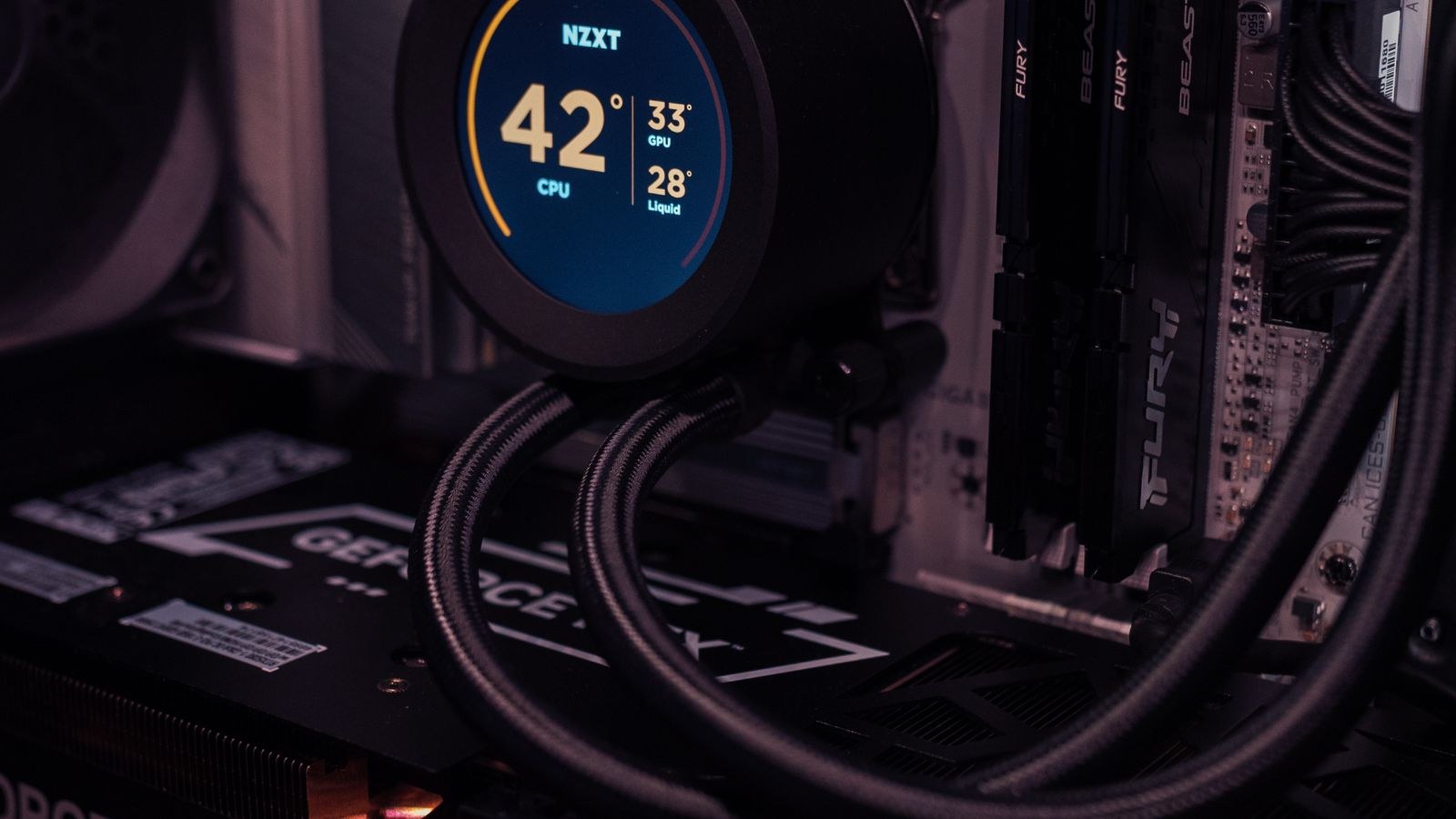
An all-in-one cooler arrives as a single sealed unit: a pump and block combined, pre-filled tubing, and a radiator with fans. You mount the block on the CPU, screw the radiator to the case, plug in the fans, and you are done. Everything is factory-assembled and the loop is closed, so you never touch the coolant.
A custom loop is built from individual components you select and connect yourself: a water block for the CPU and often the GPU, a separate pump, a reservoir, a radiator or several, fittings, tubing, and coolant. You design the routing, cut and fit the tubing, fill the loop, and test for leaks. It is a genuine build project rather than an installation.
Cooling Performance and Headroom
For cooling a single CPU, a good AIO with a large radiator gets you most of the way to a custom loop’s performance. The gap on a lone processor is often modest. Where the custom loop pulls decisively ahead is total thermal capacity: with multiple large radiators and the ability to cool the GPU in the same loop, it moves far more heat than any sealed cooler can.
That extra headroom matters most for hot, high-core-count CPUs paired with a power-hungry graphics card, or for heavy overclocking where every degree of margin counts. For a mainstream build, a quality AIO is more than sufficient, and our roundup of the best AIO CPU coolers shows how capable sealed units have become. If you are chasing the absolute lowest temperatures across CPU and GPU together, the custom loop is the only option that gets you there.
Cost: The Gap Is Large
This is the factor that ends many custom loop dreams. An AIO is a single purchase at a reasonable price, and even a premium 360mm unit costs a fraction of a custom loop. A custom loop adds up quickly because every part is separate: blocks, a pump, a reservoir, one or more radiators, fittings that are priced per connection, tubing, and coolant. The total can run several times the price of a strong AIO before you have cooled anything.
You are paying for performance, expandability, and appearance, not just cooling. If your goal is simply keeping the CPU cool for the least money, an AIO or even a good air cooler wins easily. The custom loop makes financial sense only when its performance and looks are things you specifically want. To understand the components on the CPU-cooling side of that equation, the best liquid CPU coolers guide is a useful reference point.
Maintenance and Upkeep
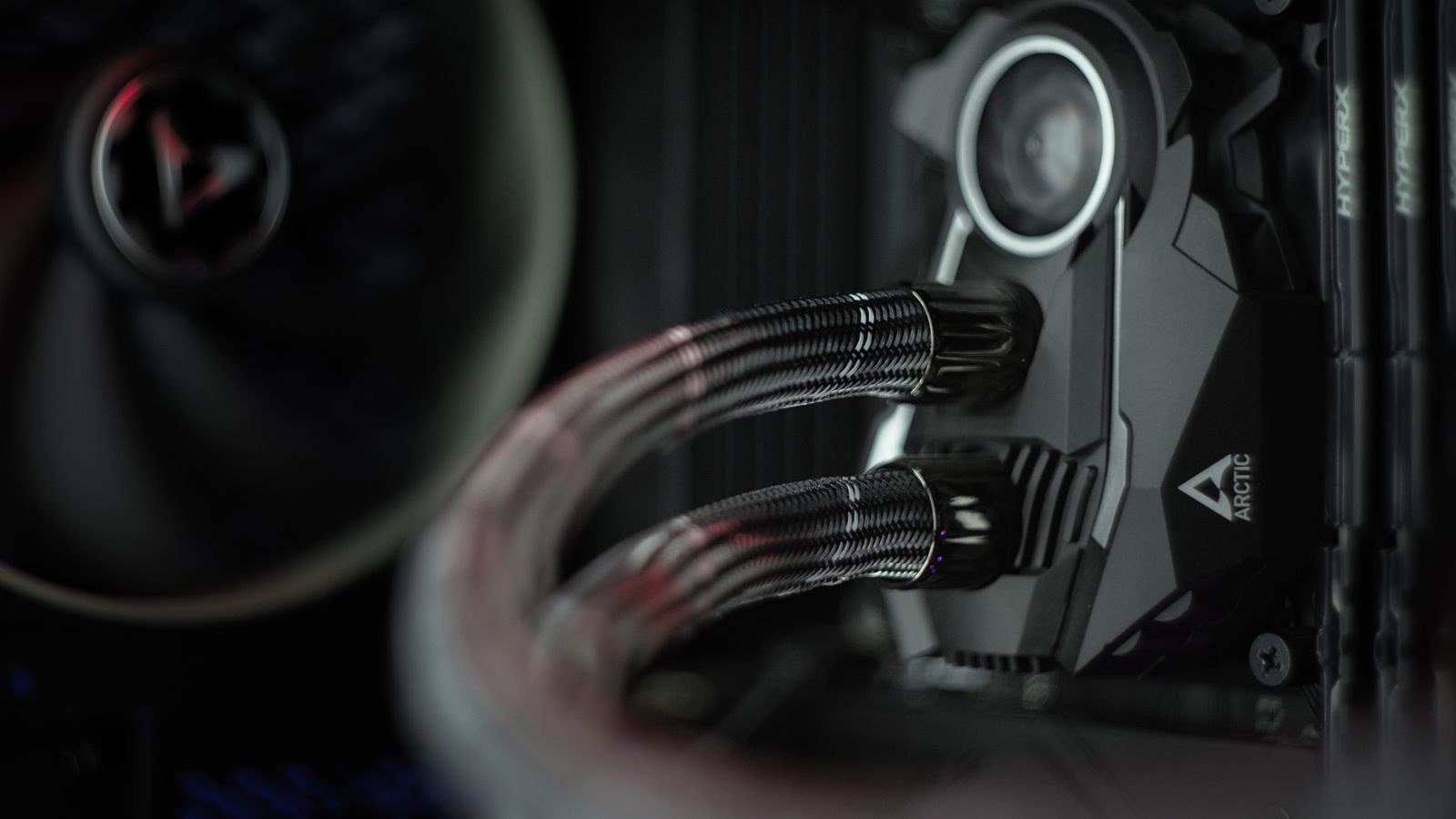
An AIO is effectively maintenance-free. The loop is sealed, so there is nothing to top up, flush, or clean beyond dusting the radiator fans occasionally. You install it and forget about it for the life of the unit, which is typically backed by a five or six year warranty.
A custom loop is an ongoing responsibility. Coolant should be checked and periodically drained and replaced, blocks and radiators can accumulate residue over time, and the fluid level in the reservoir needs an occasional look. Skipping maintenance invites reduced performance and gunk buildup. For people who enjoy tinkering, this upkeep is part of the appeal; for everyone else, it is a chore the AIO simply does not have.
Risk and Reliability
Both systems carry the small inherent risk of any liquid near electronics, but the risk profiles differ. An AIO is factory-sealed and pressure-tested, so leaks are rare and the number of potential failure points is small. The main long-term risk is pump wear, which is a known and warrantied concern.
A custom loop has many more connection points, and every fitting you install yourself is a potential leak if it is not seated correctly. A proper leak test before powering on is mandatory, and even then the responsibility for a watertight loop rests on your assembly. The upside is that individual parts are replaceable and upgradable, so a failed pump or a cracked fitting does not mean scrapping the whole cooler as it might with a sealed AIO.
Case Requirements
Your chassis has to accommodate whichever path you choose, and the demands differ sharply. An AIO needs a mounting location for its single radiator, which most decent mid towers handle. A custom loop needs room for multiple radiators, a pump, and a reservoir, plus routing space for tubing, which pushes you toward larger cases.
Before committing to either, confirm your case supports the radiator sizes and hardware involved. Custom builders in particular should plan around chassis designed for the job, such as those in our best PC cases for water cooling guide, and pay close attention to radiator clearance, since a full custom loop often uses the thickest and longest radiators available. Our list of the best PC cases for large radiators helps narrow that search.

Appearance and the Enthusiast Appeal
There is no denying that a well-built custom loop is a showpiece. Hard tubing routed in clean angles, a glowing reservoir, and coordinated colors turn a PC into a centerpiece. AIOs have improved cosmetically, with attractive blocks and lighting, but they cannot match the bespoke, sculptural look of a custom loop.
For many custom builders, the appearance and the satisfaction of building the loop are as important as the temperatures. That is a completely valid reason to choose one, as long as you go in clear-eyed about the cost and upkeep that come with it. Do not forget the small consumables either; using the right materials, including a quality option from our notes on the best thermal paste for liquid cooling, helps the whole system perform as intended.
Which Should You Choose?
Here is the honest recommendation for each kind of builder:
- Choose an AIO if: you want strong liquid cooling performance with no maintenance, minimal leak risk, and a reasonable price. This suits the vast majority of gaming and productivity builds, including those with hot CPUs, thanks to large radiator options.
- Choose a custom loop if: you need to cool both a demanding CPU and GPU in one loop, you want the absolute best temperatures and expandability, you enjoy the build process and upkeep, and you have the budget and case space to do it properly.
For most people, a good AIO is the sensible, satisfying choice that delivers excellent cooling without the cost, risk, or ongoing work. The custom loop is a passion project that rewards enthusiasts who want maximum performance and a striking, personalized build and who accept the commitment that comes with it.
Frequently Asked Questions
Is a custom water loop worth it for cooling just the CPU?
Usually not on cooling grounds alone. A large AIO cools a single CPU nearly as well for a fraction of the price and effort. A custom loop is worth it mainly when you also cool the GPU, chase extreme temperatures, or want the custom appearance.
Do AIO coolers require maintenance?
Essentially none. The loop is sealed, so aside from occasionally dusting the radiator fans, there is nothing to top up or flush. This is one of the biggest practical advantages an AIO has over a custom loop.
How often does a custom loop need maintenance?
Plan to check fluid levels periodically and to drain and replace the coolant on a regular schedule, along with cleaning components over time. The exact interval depends on your coolant and parts, but a custom loop is an ongoing responsibility rather than a one-time install.
Which is more likely to leak?
A custom loop has many more self-installed connection points, so the leak risk rests on your assembly and makes a proper leak test essential. A factory-sealed AIO is pressure-tested and rarely leaks, with pump wear being its more typical long-term concern.
Final Thoughts
The choice between an AIO and a custom water loop comes down to how much performance you truly need and how much you are willing to invest to get it. A sealed AIO delivers most of the cooling benefit with none of the maintenance, low leak risk, and a friendly price, which makes it the right call for almost every build, even ambitious ones. A custom loop unlocks the highest thermal ceiling, the ability to cool multiple components, and a one-of-a-kind look, but it demands money, case space, careful assembly, and ongoing care. Be honest about your CPU and GPU heat, your budget, and your appetite for upkeep, and the right path becomes clear rather than a matter of pride.