 Ryan Delgado
 If your workspace runs on video calls — daily standups, client check-ins, screen shares with teammates in another time zone — your laptop’s built-in camera is probably holding you back. The best workstation webcams fix that fast: sharper video, cleaner audio pickup, and a lens that handles your desk lighting instead of fighting it. This guide breaks down what actually matters for a desk-mounted webcam, then walks through picks suited to different budgets and workflows. After years of running back-to-back client calls from a home office, we’ve found that consistent autofocus and clean audio matter far more day-to-day than a headline resolution number.
Quick answer: For most people in 2026, the best workstation webcams pick is the Logitech C920 HD Pro Webcam — our #1 rated choice. See the full ranked comparison, alternatives and buying advice below.

Pros
- 1080p at 30 frames per second with onboard H.264 encoding
- 78 degree diagonal field of view frames one person plus background
- Glass multi-element lens with autofocus keeps held-up text legible
- Folding clip fits laptop lids and monitors, and hides a tripod thread
- Stereo microphones either side of the lens handle desk-distance calls
Cons
- Caps at 1080p30, with no 60 fps or 4K capture
- USB-A 2.0 cable of about 1.5 m, so USB-C machines need an adapter
- No privacy shutter in the box, so the lens needs a separate cover
The camera records 1080p at 30 frames per second through a 78 degree diagonal field of view, wide enough for one person plus a slice of the room behind them but not for a sofa full of people. Autofocus runs on a glass multi-element lens rather than plastic, which keeps text on a held-up page legible.
- Full HD video calling across the major conferencing platforms
- Onboard H.264 encoding takes load off the host processor
- Automatic light correction lifts faces in dim rooms, at the cost of grain
There is no optical zoom and no motorised pan or tilt, so framing is decided entirely by where you physically place the camera. A bright window behind you will still silhouette your face, exactly as it would on any fixed-exposure webcam.
The body clips to a laptop lid or a monitor bezel with a hinged foot that folds flat, and that same foot hides a standard tripod thread underneath for a desk stand or a boom arm. Connection is a captive USB-A 2.0 cable roughly 1.5 m long.
- No driver install needed on current Windows, macOS, Chrome OS or Linux
- Logitech's desktop utility unlocks manual focus, exposure and white balance
- Machines with only USB-C need a hub or an A-to-C adapter
Cable length is the practical constraint for anyone mounting the camera above a large monitor or on a tripod set back from the desk, since a USB 2.0 extension beyond about 5 m needs an active repeater to stay stable.
Two microphones sit either side of the lens and capture stereo audio, which is fine for meetings at normal desk distance and adequate for casual recording. They also pick up keyboard noise and room reflections, so anyone recording voice seriously will still want a separate microphone.
- Suits home office video calls, lectures and streaming at 1080p30
- Works as a second angle for creators already running a main camera
- Exposure is automatic, so a lamp facing you improves results more than any setting
It is less suited to 4K production work or fast-motion streaming where 60 frames per second matters. No privacy shutter is included, so if you want the lens physically blocked between calls you will need a clip-on cover.

Pros
- Records and streams 1080p at 30 fps through a five-element glass lens
- Automatic light correction lifts detail in a room lit only by a monitor
- Two microphones sit either side of the lens for stereo capture on calls
- Body is 1.7 x 3.7 x 2.7 inches with a clip that folds down to a tripod thread
- Ships with a 3-month XSplit VCam licence for background blur without a green screen
Cons
- No physical privacy shutter, so a lens cover has to be sourced separately
- Capped at 30 fps, so 60 fps 1080p streaming is off the table
- The bundled background-removal licence lasts 3 months, after which that job falls to the conferencing app
Capture tops out at 1080p at 30 fps through a five-element glass lens with autofocus. Glass rather than plastic optics is the main reason the image holds detail towards the edges of frame instead of smearing.
- Automatic light correction lifts exposure in a room lit only by the monitor
- Autofocus locks on quickly when you hold an object or document up to camera
- Stereo audio comes from two microphones placed either side of the lens
The 30 fps ceiling is the limitation to know about. For meetings, lectures and talking-head recording it is entirely sufficient, but for gameplay overlays or anything with fast motion a 60 fps camera will look smoother. Exposure can be locked manually in the settings software if the automatic correction hunts under fluorescent light.
The clip folds around a laptop lid, a slim monitor bezel or a thicker desktop panel, and the underside carries a standard tripod thread for a desk arm or light stand. The body is 1.7 x 3.7 x 2.7 inches, small enough not to block the top of a display.
- Plugs in over USB and is recognised as a standard camera with no driver installation
- Optional desktop software exposes manual focus, exposure and field-of-view settings
- A 3-month XSplit VCam licence handles background blur and replacement without a green screen
There is no privacy shutter on the body, so anyone who wants the lens physically covered between calls will need a stick-on slider. The fixed cable also sets how far the camera can sit from the machine.
Because it presents as a standard USB camera, it works across conferencing apps with no per-app setup: Teams, Meet and Zoom all list it as a source, and it is compatible with Windows 11 and macOS. Console support extends to Nintendo Switch 2 GameChat mode.
- Home workers on daily video calls who want a step up from a laptop lens
- Course creators and streamers recording at 1080p and 30 fps
- Shared meeting rooms, where the tripod thread allows a fixed mount on a stand
It is less suited to anyone chasing 4K framing crops or 60 fps motion, and to setups where the camera must sit far from the computer, since the attached cable sets the maximum distance without a powered USB extension.

Pros
- SUPPORT WORK FROM ANYWHERE WITH SYNC Whether employees are in the
- Ultra 4K HD resolution 4 times the resolution of a typical HD webcam
- look your best and enjoy professional video experience wherever you are
- Noise-canceling technology Dual omni-directional mics suppress
- 3 field of view presets Choose 90 , 78 or 65 dFOV via Logi Tune to
Cons
- Requires verifying desktop clearance for 1"D x 1"W x 4"H dimensions
- Requires routine care to keep exterior housing dust-free
- Initial setup requires checking operating instructions carefully
The Logitech 4k Webcam Compact Unit High Performance Model offers reliable functional utility tailored for modern home and workplace environments. Designed to enhance daily productivity, this unit integrates SUPPORT WORK FROM ANYWHERE WITH SYNC Whether employees are in the alongside Ultra 4K HD resolution 4 times the resolution of a typical HD webcam. Users will find the intuitive design straightforward to operate across various room configurations and daily routines. The versatile construction adapts easily to personal workspaces, providing consistent practical value and streamlined usability. Physical dimensions measuring 1"D x 1"W x 4"H allow for straightforward spatial planning prior to final placement.
Built using resilient structural components, this unit features a sturdy outer housing engineered to resist operational wear. Precision manufacturing ensures that all joints and surface connections remain firmly aligned during regular daily activity. look your best and enjoy professional video experience wherever you are reinforces overall physical stability over extended service periods. Structural integrity remains firm throughout regular usage, giving owners peace of mind. Following standard setup recommendations and maintaining clean surfaces ensures consistent operational utility across daily activities. This functional equipment provides steady performance and practical convenience when properly integrated into your workspace.
Initial setup requires placing the unit on a flat, stable surface with adequate clearance around all sides for proper operation. Ensure all power or connection cables are routed neatly without sharp bends to prevent wire strain. Regular care involves wiping exterior housing surfaces with a soft cloth to remove dust buildup. Inspecting mechanical connections periodically preserves operational efficiency and maintains cosmetic appearance over time. Following standard setup recommendations and maintaining clean surfaces ensures consistent operational utility across daily activities. This functional equipment provides steady performance and practical convenience when properly integrated into your workspace.
Pros
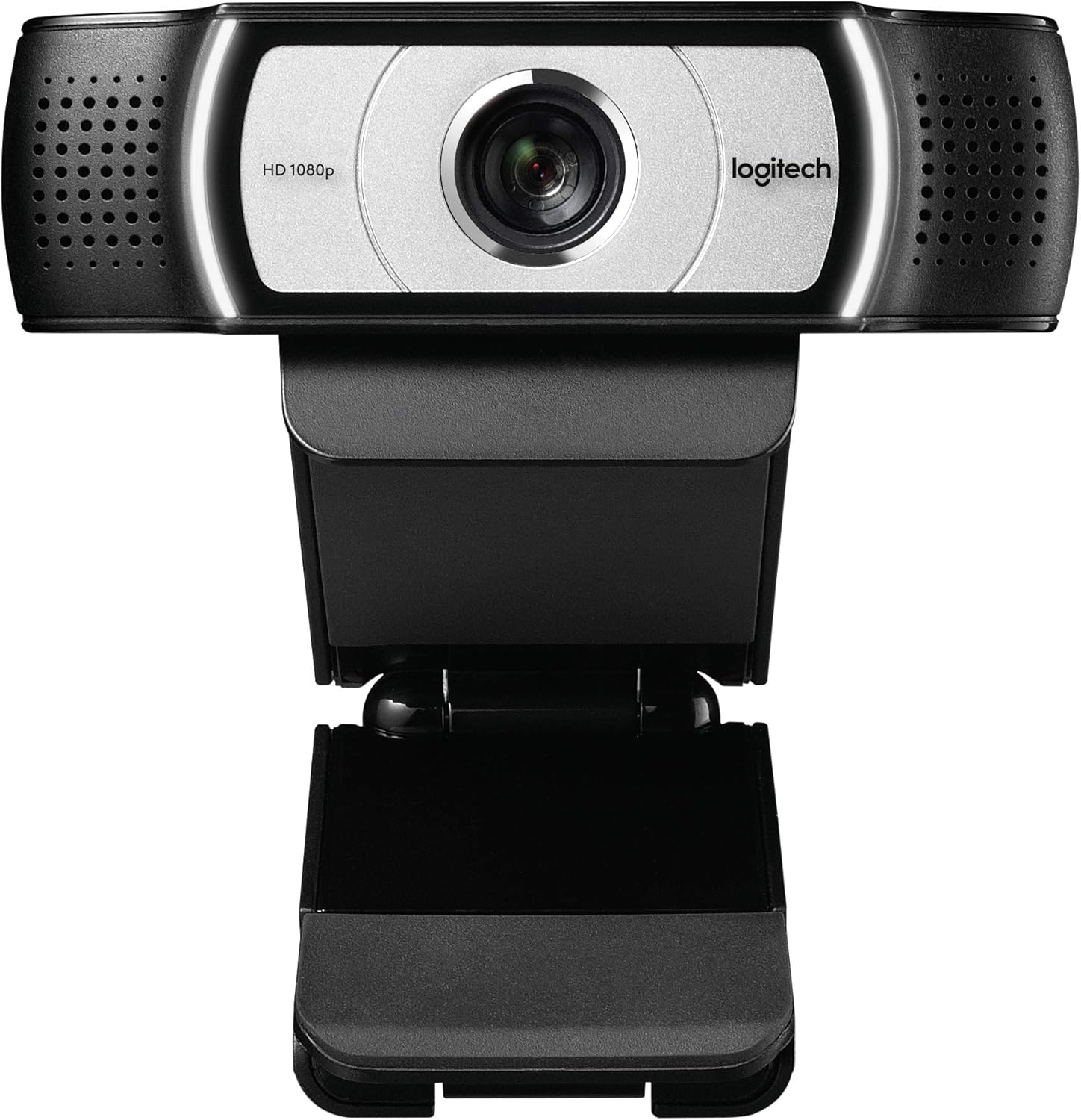
- 90-degree field of view captures a whiteboard or three people sharing one side of a desk
- Pan, tilt and 4x digital zoom framing controlled from the camera settings application
- Onboard UVC H.264 encoding moves compression into the camera and off the host CPU
- 1080p at 30 fps with dual microphones either side of the lens for stereo capture
- Certified for Microsoft Lync 2013 and Skype, USB 2.0 certified and ready for USB 3.0 ports
Cons
- Ships in a brown box without the retail software bundle, so the settings application is a separate download
- 1080p is capped at 30 fps, so it cannot deliver 60 fps for smooth fast motion
- The 4x zoom is digital, cropping into the sensor and softening detail as you push in
The lens covers 90 degrees, wider than the 78 degrees on most desktop cameras, and that difference decides what the camera is really for. Ninety degrees takes in a whiteboard behind you, or three people sharing one side of a table, with nobody leaning into frame.
- Pan, tilt and 4x digital zoom reframe the shot from the settings software
- Body measures 0.95 by 3.7 by 3.7 inches with a universal clip
- A tripod thread underneath allows mounting on a stand or an arm
The zoom is digital rather than optical, so it crops into the sensor and softens detail as you push in. Used sparingly to tighten a head-and-shoulders shot it is useful; used at maximum it visibly costs resolution.
This is the business variant, certified for Microsoft Lync 2013 and Skype and tested against the wider conferencing ecosystem including Skype for Business, Cisco Jabber, BlueJeans, Vidyo and Zoom. It presents as a standard UVC device, so any application that lists cameras will find it.
- Sync device management software lets IT teams keep remote cameras up to date
- Dual microphones either side of the lens capture stereo audio
- RightLight processing lifts exposure in rooms lit from behind by a window
Being a business SKU, it arrives in a brown box without the retail software bundle. The settings application that exposes pan, tilt and zoom is a separate download, which catches out anyone expecting an installer or a disc in the carton.
The feature that separates this from consumer cameras is onboard UVC H.264 encoding. Compression happens inside the camera rather than on the computer, so the host CPU is freed up and the stream leaving the USB port is already compressed.
- Lower CPU load matters on older laptops running a call alongside other work
- Smaller streams hold together better on constrained upload connections
- Hi-Speed USB 2.0 certified and ready for USB 3.0 ports
The application has to request the H.264 stream for any of this to apply; software that only accepts raw video pushes the work back onto the processor. Resolution tops out at 1080p and 30 fps, so the encoding advantage shows up as stability on weak connections rather than as extra sharpness.

Pros
- Records full 1080p video at 30 frames per second for sharp, smooth video calls
- 78-degree field of view suits one or two people in frame without a fisheye effect
- RightLight 2 Technology auto-adjusts exposure for dim or uneven lighting instead of washing out the image
- Certified for Microsoft Teams and compatible with Zoom, Google Meet, Skype for Business and Cisco Jabber
- Built-in dual stereo microphones capture voice without a separate USB headset
Cons
- USB-A connection only, so newer USB-C-only laptops need an adapter or hub
- Fixed autofocus and exposure system has no manual override for unusual lighting setups
- No physical privacy shutter is included on this model, unlike some newer webcams that add one
The C925e records at full 1080p resolution and 30 frames per second, aiming for smooth, true-to-life video rather than the choppier motion or softer detail of lower-resolution webcams. A 78-degree field of view is sized for one or two people sitting at a desk, wide enough to avoid a cramped frame without introducing the distortion of an ultra-wide lens.
RightLight 2 Technology automatically adjusts exposure to compensate for dim rooms or backlighting from a window, and built-in dual stereo microphones handle voice pickup directly, removing the need for a separate USB headset or desk mic during calls.
- 1080p video at 30 fps
- 78° field of view
- RightLight 2 auto exposure adjustment
The webcam connects over USB-A and installs as a plug-and-play device, with no separate driver install required on most systems. It's certified for Microsoft Teams and lists compatibility with Zoom, Google Meet, Skype for Business, Cisco Jabber, BlueJeans, Broadsoft, LifeSize Cloud, and Vidyo, covering most business conferencing platforms already in use.
Because the connection is USB-A rather than USB-C, laptops that only offer USB-C ports will need an adapter or dock to connect it, worth checking against your specific machine before setup. An adjustable clip mounts it to a laptop lid or an external monitor without extra hardware.
- USB-A plug-and-play connection
- Certified for Microsoft Teams
- Compatible with Zoom, Google Meet, Cisco Jabber, more
An adjustable clip lets the C925e sit on top of a laptop screen or clamp onto an external monitor, positioning the lens at eye level for a more natural video call angle than a webcam propped on a stack of books. The compact housing is built for open workspaces, home offices, and private offices alike.
This listing doesn't include a built-in privacy shutter, a feature found on some newer webcam models, so anyone wanting to physically block the lens between calls will want to add a slide cover or unplug the USB cable when not in use.
- Adjustable clip for laptops or monitors
- No built-in privacy shutter on this model
- Suits open, home, and private offices

Pros
- 1080p sensor with HD autofocus and automatic light correction for backlit desks
- 78 degree diagonal field of view frames one person plus room to hold up a document
- Two omnidirectional mics capture speech from roughly one metre away
- Attachable privacy screen flips over the lens so the state is obvious at a glance
- Quarter-inch thread under the clip lets it sit on a tripod instead of a monitor bezel
Cons
- Field of view is fixed at 78 degrees with no pan, tilt or zoom in the camera itself
- The mics stay switched off until enabled in the Logi Tune desktop app
- No infrared sensor, so Windows Hello face sign-in is not supported
Video is 1080p with HD autofocus and automatic light correction, which lifts a face out of shadow when a window sits behind the desk.
- 78 degree diagonal field of view, fixed, framing one person with enough room to hold up a sample or a document
- Autofocus holds sharpness as you lean in and back rather than hunting mid-sentence
- Two omnidirectional mics capture speech from roughly one metre, once enabled in the Logi Tune desktop app
The narrow-ish angle is deliberate for one-to-one calls, since wider lenses pull in the whole room and shrink the speaker. If two people need to share the frame, or a whiteboard behind you has to stay readable, this is the wrong angle and a wider conference camera suits better. The body measures 2.8 x 3.7 x 1.7 inches.
An adjustable clip grips a laptop lid or a monitor bezel and folds flat against the base, while a quarter-inch thread underneath fits any photo tripod or desk arm.
- Clip tension holds on thin laptop lids as well as thicker all-in-one panels
- The tripod thread suits overhead or side-angle shots for showing objects on the desk
- An attachable privacy screen flips down over the lens, so a glance confirms the camera is blind
Setup is USB plug and play on Windows, macOS, Chrome OS and Linux, with no driver install for basic use. Logi Tune adds field of view, focus and image controls, and Logitech Sync handles fleet updates when a whole team runs the same model. The shutter is a separate clip-on part, so it can go missing if the camera moves between desks.
The camera is certified for Zoom and works with Microsoft Teams, Google Meet, Cisco Webex and the other main platforms, which matters in workplaces where IT will only sign off on tested hardware.
- TAA compliant, a requirement for many United States public sector purchases
- Logitech Sync device management lets an admin check firmware and usage across a fleet remotely
- A standard UVC device, so it also appears in OBS, Streamlabs and browser-based calls
For a single home user most of this is invisible. For anyone fitting out a floor of hot desks, the certification list and the fleet management support are the whole reason this model exists alongside the consumer version. Mounting hardware, optics and the 1080p output are shared with that consumer line.
Pros
- Full 1080p/30fps video calls deliver professional appearance on video conferencing platforms
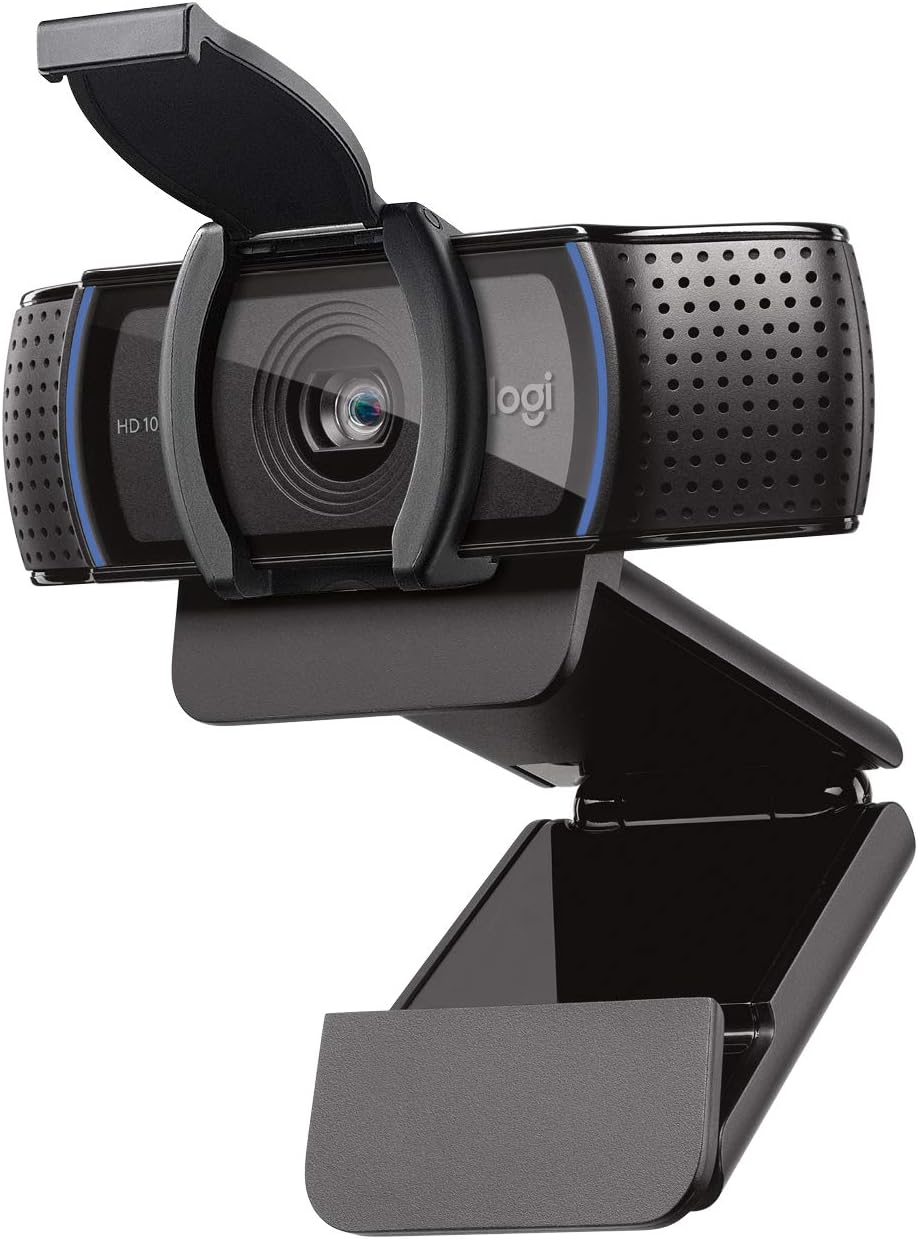
- Privacy shutter mechanically blocks lens when not in use, eliminating tape hacks
- Glass lens with autofocus and light correction adapts to various lighting conditions automatically
- Dual stereo microphones capture natural sound without tinny distortion
- Universal compatibility with Skype, Zoom, FaceTime, Hangouts, and standard USB platforms
Cons
- 30fps maximum limits smooth video on platforms supporting 60fps, noticeable on fast camera pans
- Privacy shutter requires manual operation each call, adding minor friction to workflow
Full HD 1080p resolution captures fine facial details essential for professional video calls. The glass lens maintains sharpness across the entire frame without edge distortion common in plastic lens designs. H.264 compression efficiently manages bandwidth while maintaining visual clarity.
Advanced light correction automatically adjusts exposure and white balance as lighting conditions change. Works effectively in offices with fluorescent lighting and homes with mixed natural/artificial lighting. Users appear well-lit and professionally presented without manually adjusting settings between calls.
Dual microphones positioned on opposite sides capture sound directionally, focusing on speech while minimizing background noise. Noise cancellation algorithms reduce keyboard clacking and ambient office noise during calls. Natural-sounding audio reproduction essential for professional communication.
Frequency response optimized for human voice (300 Hz - 3.5 kHz), minimizing artifacts in speech clarity. Monaural or stereo recording options available through software settings. Background noise reduction allows working in offices without disturbing colleagues during calls.
The privacy shutter provides mechanical lens blocking when the camera isn't in use, eliminating security concerns about unauthorized viewing. Unlike tape solutions, the shutter enables instant activation without leaving adhesive residue. Many users appreciate peace of mind during non-call times.
USB plug-and-play compatibility works with Windows, Mac, and Linux without driver installation on most systems. Works seamlessly across Zoom, Skype, FaceTime, Google Meet, and webinar platforms. Optional 3-month XSplit VCam license historically included, though current bundles vary by seller.
Pros
- STARVIS image sensor captures an 8.5 Megapixel effective resolution, feeding video up to 3840 x 2160 for 4K capture
- 1080p streaming runs at a full 60 fps for smoother motion in video calls versus the common 30fps webcam standard
- USB-C connection avoids USB-A adapters on newer laptops and docks
- Built-in privacy cover physically blocks the lens when not in use, no software toggle required
- Certified to work with Microsoft Teams, Zoom and Google Meet without extra drivers
Cons
- Sold as a Renewed unit, so cosmetic wear and a shorter included-accessory set are possible versus new stock
- Wired-only USB-C connection means no wireless or Bluetooth pairing option
- Effective resolution tops out at 8.5MP, so full 4K stills fall short of dedicated mirrorless-camera webcam adapters
The MX Brio uses a STARVIS image sensor rated at 8.5 effective Megapixels, capable of a maximum video resolution of 3840 x 2160 and a maximum frame rate of 60 fps. In practice, most video calls run at 1080p and 60fps, which keeps motion smooth during screen-sharing or fast hand movement without the bandwidth demands of full 4K streaming.
- Sensor: STARVIS, 8.5 effective MP
- Max resolution: 3840 x 2160
- Max frame rate: 60 fps
- Connection: Wired USB-C
This unit is sold in Renewed condition, so functional performance matches new units while packaging and minor cosmetic details may differ.
The webcam is built to work directly with Microsoft Teams, Zoom and Google Meet, the three platforms most home and hybrid offices standardize on, without requiring a proprietary companion app to join a call. The USB-C connector plugs into modern laptops and docks directly, or through a USB-C to USB-A cable for older desktops.
- Verified compatibility: Microsoft Teams, Zoom, Google Meet
- Connector: USB-C (wired)
- No wireless or Bluetooth pairing mode
Because it is wired-only, users on tablets or phones without a USB-C data port will need a compatible adapter or dock to connect it at all.
A physical privacy cover slides over the lens, giving a hardware-level guarantee that the camera cannot capture video when closed - a step beyond software-only privacy toggles some competitors rely on. Setup is plug-and-play over USB-C, with most conferencing apps detecting the camera automatically without a driver install.
- Physical lens cover included
- Plug-and-play USB-C install
- No app account required for basic video calling
Buyers who need a companion app for advanced framing or exposure controls should check the software separately, since the core hardware ships without one pre-installed.

Pros
- 1080p video at 30 frames per second delivers clear detail for video calls on PC or Mac
- 90-degree field of view with 4x digital zoom plus pan and tilt suits whiteboard presentations
- UVC H.264 encoding processes video inside the camera, easing the load on the host computer
- Universal tripod-ready clip mounts to laptops, LCD monitors, or CRT monitors without extra hardware
- Certified for Microsoft Lync 2013 and Skype, and compatible with most UC conferencing applications
Cons
- Ships in business packaging without the companion webcam software bundled with some retail camera models
- No physical privacy shutter is included, so a separate cover or software mute handles camera privacy
- USB-A connection only, so newer USB-C-only laptops need an adapter
The camera captures full 1080p video at 30 frames per second, giving video calls sharper detail than many built-in laptop cameras. A 90-degree field of view extends coverage for group shots or whiteboard content, and 4x digital zoom lets a presenter frame in on a document or product without moving the camera.
- 1080p resolution at 30 fps keeps motion smooth during calls
- Pan and tilt adjust framing without repositioning the whole camera body
- UVC H.264 encoding handles video processing in the camera itself, reducing strain on the host computer's bandwidth
This combination suits presentations and demos as much as one-on-one video calls, since the wider field of view captures more of a room or desk setup.
The camera is certified for Microsoft Lync 2013 and Skype, and it works with most UC and web conferencing applications through standard UVC drivers. It connects over USB-A, so most desktops and older laptops can use it directly without extra software installation.
- Plug-and-play compatibility avoids the need for a dedicated driver in most conferencing apps
- USB-A connector may require an adapter for newer USB-C-only laptops
- Business packaging ships without the consumer webcam software bundled with some other camera models
Because it relies on standard UVC compatibility rather than a proprietary app, it tends to work across a wide range of conferencing software without additional configuration.
A universal clip on the camera body fits laptop screens, LCD monitors, and older CRT monitors, and it is also tripod-ready for a fixed desk setup. At 1.7 inches deep by 3.7 inches wide by 2.8 inches tall, the camera stays compact on top of a monitor bezel.
- Clip mount adjusts to different screen thicknesses without tools
- Tripod thread allows a fixed camera position separate from a monitor
- Compact body avoids blocking much of the screen above which it sits
Setup is largely limited to clipping the camera into place and connecting the USB cable, since no separate power adapter is required.

Pros
- Genuine 4K UHD CMOS sensor captures true native resolution rather than software-upscaled footage
- PDAF autofocus keeps focus locked during movement, useful for lectures or demos where the presenter moves around
- Dual omnidirectional microphones pick up voice clearly for conference calls without needing a separate headset mic
- 73° field of view frames the speaker without pulling in as much background clutter as wider-angle webcams
- Built-in privacy cover physically blocks the lens when the camera is not in use, no cap to misplace
Cons
- Video defaults to 1080p out of the box, so reaching full 4K resolution requires switching it on manually through the bundled software or an app like PotPlayer or OBS
- Plug-and-play USB connection means no Bluetooth or wireless option, so it needs a free USB port within cable reach of the mounting spot
- Auto light correction helps in mixed lighting but is not a substitute for a dedicated ring light in consistently dark rooms
The C960 uses a genuine 4K UHD CMOS sensor rather than an upscaled lower-resolution chip, paired with PDAF (Phase Detection Auto Focus) technology that tracks movement to keep the subject sharp during business calls or lectures. Auto light correction evens out exposure between overexposed and underlit areas of the frame, and the 73° field of view keeps the composition centered on the presenter rather than a wide room shot.
- Genuine 4K UHD CMOS sensor
- PDAF auto focus for stable tracking during movement
- Auto light correction for mixed or low-light rooms
- 73° field of view
By default, the camera streams at 1080p; reaching the full 4K feed requires switching resolution through the bundled camera software or a third-party app such as PotPlayer or OBS rather than happening automatically out of the box.
Dual omnidirectional microphones are built into the housing to pick up voice clearly during calls without requiring a separate USB microphone, useful for remote teaching or conference calls where audio clarity matters as much as video. A sliding privacy cover built into the unit physically blocks the lens when the camera is not in use, a more reliable option than a separate cap that can get lost.
- Dual omnidirectional microphones for clear voice pickup
- Built-in sliding privacy cover over the lens
- Plug-and-play USB connection, no separate driver install needed
- Compact 3.9"D x 2.3"W x 2.2"H housing
Because the microphones are omnidirectional, they will also pick up ambient room noise in an open office, so a dedicated headset microphone remains the better choice for calls in shared or noisy spaces.
The C960 works as a plug-and-play USB webcam with Zoom, Microsoft Teams, Skype, and Google Meet without needing platform-specific drivers, since it registers as a standard UVC camera device. Reaching full 4K resolution and adjusting focus or light correction settings manually requires EMEET's own camera software, or a third-party tool like OBS or PotPlayer for finer control.
- Plug-and-play compatibility with Zoom, Teams, Skype, and Google Meet
- Works as a standard USB video class (UVC) device
- Bundled software unlocks 4K switching and manual settings
- Compatible with OBS and PotPlayer for advanced control
Anyone wanting to run the camera at full 4K resolution inside a browser-based meeting app rather than desktop software should confirm that platform supports 4K webcam input before assuming this camera will output 4K automatically.
What Makes a Webcam Workstation-Ready
A workstation webcam has to earn its spot on your desk every single day. Resolution is the first thing people notice, but it isn’t the only thing that matters. Frame rate, field of view, and low-light handling shape how you actually look on a call.
Most workstation webcams top out at 1080p/30fps, which is plenty sharp for video conferencing over typical office bandwidth. A few step up to 4K, which helps if you also record video or stream, but it demands more USB bandwidth and storage. Field of view (FOV) matters too — a wide 90-degree lens fits more of your background or a second person, while a narrower lens keeps the focus tightly on you.
Autofocus and light correction separate a good desk camera from a frustrating one. Offices rarely have studio lighting, so a camera that adjusts exposure automatically saves you from looking washed out near a window or too dark under overhead fluorescents. Built-in stereo mics with noise reduction also matter if you don’t already use a headset — they’re often the difference between sounding clear and sounding like you’re in a hallway.
Finally, check certification. Webcams labeled as certified for Zoom, Microsoft Teams, or Google Meet have been tested to work reliably with those platforms, which cuts down on the setup headaches that come with generic plug-and-play cameras.
How We Evaluated These Desk Camera Picks
Every one of the 10 webcams below is a real listing with published pricing, star ratings, and review counts, which we used to judge how consistently each camera performs for real buyers. Reliability across thousands of reviews tells you more than a spec sheet ever could.
Several picks here share the same core sensor and firmware, just packaged for different price points or resale channels — that’s common in the webcam space, since brands often refresh casings and bundles rather than the internals. We call out where two options are close cousins so you’re not paying more for a feature you won’t use.
We also weighed practical setup factors: how easily each camera clips to a monitor, whether it needs its own software, and how it performs in typical home-office lighting rather than a lab.
Best Overall Workstation Webcam
The Logitech C920 HD Pro Webcam remains the safest pick for most desks. It records 1080p video, handles autofocus well, and its stereo mics are good enough for casual calls without a headset.
What makes it a strong choice is consistency: it’s sold millions of units and holds a 4.6-star average across tens of thousands of reviews, which is rare for any electronics category. Setup is plug-and-play on Windows, Mac, and most conferencing apps.
Where it falls short: the mic doesn’t reject background noise as well as a dedicated headset, and there’s no true 4K option in this exact model. If you’re on calls in a shared or noisy space, pair it with a headset rather than relying on the built-in mic alone. For a quiet private office, though, the built-in mic alone is usually enough to sound professional.
Webcam Picks for Specific Workstation Needs
Not everyone needs the same camera. Here’s how to match a pick to your actual setup.
Best for Certified Video Conferencing
The Logitech C925-e Business Webcam is built for offices that standardize on Microsoft Teams, Zoom, or Skype. It includes a privacy shutter and automatic light correction, and IT teams like that it’s certified rather than just compatible.
It costs more than the base C920, so it’s worth it mainly if your company already mandates certified hardware or you’re outfitting a shared conference nook.
Best Wide-Angle for Dual-Monitor Desks
If you sit close to a wide dual-monitor setup, the Logitech C930e Webcam with its 90-degree field of view keeps more of your desk and whiteboard visible on camera. That extended view is handy for demos or when a second person joins you on-screen.
The trade-off is that the wider angle can make you look smaller in frame, so you may need to sit closer than you would with a standard lens.
Best for Sharper 4K Detail
The Logitech 4K Webcam is worth the upgrade if you record tutorials, do design reviews, or want extra detail when cropping in during a call. The higher resolution also holds up better if you ever move to a larger external display.
Keep in mind 4K video uses more USB bandwidth and CPU during encoding, so older laptops may not see the full benefit on a live call.
Best Budget-Friendly 4K Option
The EMEET C960 4K Webcam undercuts the big-name 4K options while still offering dual mics and automatic light correction. It’s a reasonable pick if you want sharper video without a premium price tag.
Software support and long-term reliability data are thinner than for the established Logitech lineup, simply because it has fewer years and reviews on record — worth factoring in if brand track record matters to you.
Best for Dim or Mixed Lighting
The Logitech C920S HD Pro Webcam adds a physical privacy shutter and slightly refined light correction over the original C920. It handles mixed lighting — a window behind you plus an overhead light — more gracefully than cheaper cameras.
It’s not a dramatic upgrade over the base C920, so only pay the difference if the shutter or the light handling specifically matters to you.
Common Buying Mistakes for a Desk Webcam
The biggest mistake is buying resolution you won’t use. If your video calls run through a browser at 720p anyway, a 4K webcam won’t visibly improve your image — you’re paying for a spec your software caps.
Another common error is ignoring mount compatibility. Some webcams clip only onto specific monitor thicknesses or curved-screen bezels, so measure your display edge before ordering, especially with an ultrawide or curved monitor.
Buyers also overlook listings marked as renewed or refurbished. Renewed units, like some 4K models on Amazon, can be a smart way to save money, but confirm the return window and warranty terms before you check out.
Finally, don’t assume every webcam works well without extra light. Even good light correction has limits — a small desk lamp aimed at your face still makes a bigger difference than any camera spec.
It also pays to check the cable length before you buy. A short cord can force an awkward mounting position on a tall monitor arm or a deep desk, which undercuts the framing benefits you paid extra for.
Webcam Placement and Setup Tips
Mount your webcam at eye level, roughly centered above your primary monitor. Looking slightly down at a low-mounted camera is the single most common reason people look unflattering on calls.
Light your face, not your background. Position a lamp or window in front of you rather than behind you, since backlighting confuses even strong auto-exposure.
If you run a dual- or triple-monitor workstation monitor setup, mount the camera on whichever screen you look at most during meetings, not just the center display. And if your desk mic still picks up keyboard clatter, a dedicated workstation headset solves that faster than any webcam upgrade.
Cable management matters more than it seems. Route the USB cable along your workstation desk edge so it doesn’t tug the camera out of position every time you stand up or adjust your chair.
Frequently Asked Questions
Do I need a 4K webcam for everyday video calls?
No. Most conferencing apps cap video at 1080p or lower, so a 4K webcam mainly helps for recording or cropping footage, not live calls.
What’s the real difference between similar Logitech webcam models?
Many share the same core sensor, with differences coming from certification, mic tuning, or included accessories like a privacy shutter. Check the specific features you need rather than assuming newer means better.
Do workstation webcams need extra lighting?
Most benefit from it. Auto light correction helps, but a simple desk lamp aimed at your face still improves video quality more than any camera setting.
Can I mount a workstation webcam on any monitor?
Most clip-style webcams fit standard flat monitors, but very thin bezels or curved screens can be tricky. Check the clip design against your monitor’s edge thickness before buying.
Is it worth buying a renewed or refurbished webcam?
It can be, especially for pricier 4K models, as long as the listing includes a clear return window and warranty. Just confirm the seller and condition grade before checking out.
Choosing the Right Desk Camera for Your Setup
There’s no single best workstation webcam for everyone — the right pick depends on how often you’re on camera, how your office is lit, and whether your company requires certified hardware. Start with the criteria in this guide, match it to your daily calls, and check the current price on Amazon before you commit.
If you’re setting up more of your desk at once, our guide to workstation keyboards covers the other piece of gear most people upgrade right alongside their camera.