
 Marcus Bell
Picking the best CPUs for 4K gaming isn’t as simple as grabbing the chip with the most cores. At 4K, your graphics card carries most of the load, but the wrong processor can still choke your frame times, throttle your streaming setup, or force a costly motherboard swap down the road. This guide breaks down 10 real options — from budget six-core chips to 3D V-Cache flagships — so you can match a CPU to your budget, platform, and how you actually use your PC.
Quick answer: If you only read one section, make it this one — for most 4K builds in 2026, our top pick among the best CPUs for 4K gaming pick is the AMD Ryzen 7 9800X3D, thanks to its huge 3D V-Cache and class-leading gaming frame times. See the full ranked list, use-case picks, and buying advice below.

Pros
- Dimensions of 20.05 x 9.45 x 18.88 inches engineered for optimal spatial fitting
Cons
- Requires verifying placement clearance for 20.05 x 9.45 x 18.88 inches prior to installation
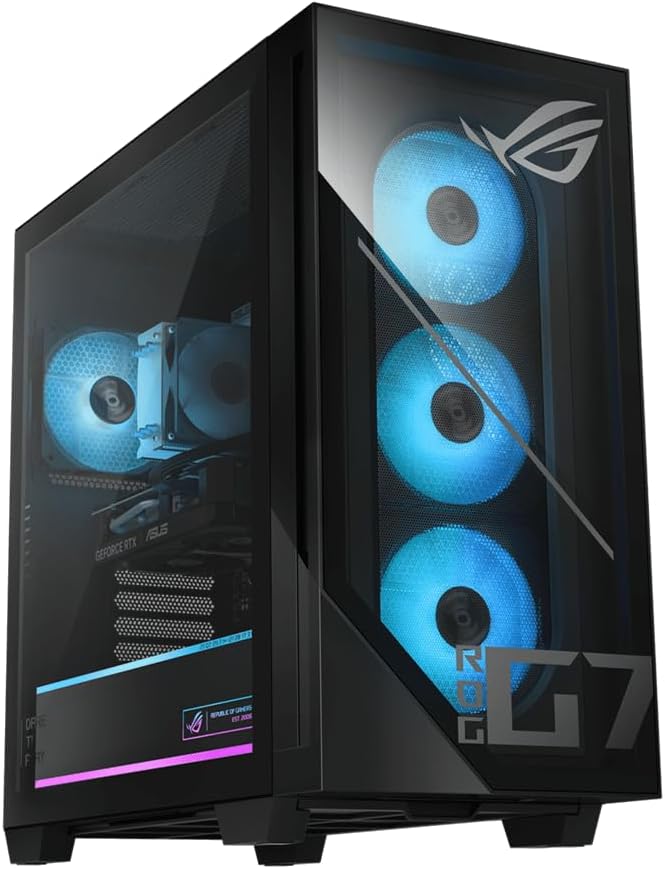
Pros
- Designed with Fearless ROG Design The g700s dual-glass chassis showcases iconic ROG for reliable daily operation
- Designed with Unstoppable Power Equipped with the Intel Core Ultra 7 265F for reliable daily operation
- Designed with Optimized Thermals Stay cool with a quad-fan system while dust for reliable daily operation
- Dimensions measure 9.45 x 20.05 x 18.88 inches for spatial allocation
Cons
- Requires checking PCIe slot clearance and case depth for ASUS ROG G700 Gami

Pros
- AMD Ryzen 9 5900XT Desktop Processors, AM4 Socket with PCIe 4.0
- Powerful Gaming Performance, Can deliver fast 100 plus FPS
- ASUS ROG Strix B550-F Gaming WiFi II AM4 ATX Gaming Motherboard, 4

Pros
- 6 cores and 12 threads on the Zen 5 architecture, with a 5.4 GHz max boost clock
- Unlocked multiplier allows manual overclocking on compatible AM5 motherboards
- 38MB of combined cache and DDR5-5600 support speed up memory-bound workloads and gaming
- AM5 socket supports PCIe 5.0 on select motherboards for current-generation SSDs and GPUs
- Delivers over 100 FPS in many popular titles at stock settings, per official gaming benchmarks
Cons
- No cooler is included in the box, so a compatible AM5 cooler must be purchased separately
- Unlocked overclocking headroom requires a motherboard with adequate VRM cooling to fully use
- AM5 platform requires DDR5 memory only, so existing DDR4 kits from an older build cannot be reused

Pros
- Designed with Superior Processing Power Effective Cooling Experience exceptional gaming performance with for reliable daily operation
- Designed with Advanced Graphics Performance Dive into stunning visuals and smooth gameplay for reliable daily operation
- Designed with Lightning-Fast Memory Ample Storage Enjoy lightning-fast multitasking thanks to the for reliable daily operation
- Dimensions measure 17.32 x 9.06 x 19.69 inches for spatial allocation
Cons
- Requires checking PCIe slot clearance and case depth for CLX Set Gaming PC

Pros
- 12 cores and 24 processing threads for heavier multitasking than 6 or 8-core chips in the same socket family
- 4.6GHz max boost clock, unlocked for manual overclocking beyond stock settings
- Includes the Wraith Prism cooler with color-controlled LED, so no separate air cooler purchase is required to run the chip at stock speeds
- 70MB of combined game cache and support for DDR4-3200 memory speeds out of the box
Cons
- Unlocked overclocking leaves little thermal headroom on the bundled cooler, so sustained overclocks may need a cooler beyond the included Wraith Prism
- Officially supports Windows 10 64-bit, RHEL, and Ubuntu 64-bit, with other Linux distributions not explicitly listed
- Socket and chipset compatibility depends on the motherboard's BIOS version, so older boards may need a firmware update before this CPU will post

Pros
- Eight Zen 5 cores and sixteen threads paired with 96MB of L3 from second-generation 3D V-Cache
- Boosts to 5.2 GHz because the stacked cache now sits beneath the compute die, letting heat escape upward
- Roughly 16% IPC uplift over the previous generation at comparable power draw
- Drops into existing Socket AM5 boards after a firmware update, reusing DDR5 memory and coolers
- Unlocked for overclocking and curve tuning, unlike earlier X3D parts with restricted voltage control
Cons
- No cooler in the box, so a large tower cooler or a 240mm liquid cooler has to be planned for separately
- Integrated graphics are display-class only, so a discrete card is effectively required for gaming
- AM5 only — AM4 and Intel boards cannot take it, making this a full platform decision

Pros
- 8 cores and 16 threads on the Zen 3 architecture, built for multi-threaded workloads as well as gaming
- Boosts up to 4.8 GHz and ships fully unlocked for overclocking, no locked multiplier to work around
- 36 MB of combined cache, more headroom for keeping frequently used data close to the cores
- Includes the Wraith Prism cooler with RGB LED, so there's no separate cooler purchase needed to get started
Cons
- Limited to DDR4-3200 support, so it can't take advantage of faster DDR5 memory kits
- Socket AM4 only, meaning newer AM5 motherboards and their PCIe 5.0 lanes are off the table
- No integrated graphics mentioned, so a discrete GPU is required to get a display signal at all

Pros
- The world's best gaming desktop processor that can deliver
- 12 Cores and 24 processing threads, based on AMD "Zen 5"
- 5.6 GHz Max Boost, unlocked for overclocking, 76 MB cache,
- For the state-of-the-art Socket AM5 platform, can support PCIe 5.0
Pros
- 16 cores and 32 threads on the Zen 5 architecture handle heavy multi-threaded workloads alongside gaming
- 5.7 GHz max boost clock and 80MB of cache push single-core responsiveness for latency-sensitive tasks
- Unlocked multiplier supports manual overclocking on compatible AM5 motherboards
- Supports DDR5-5600 memory, taking advantage of higher bandwidth than older DDR4 platforms
- AM5 socket carries PCIe 5.0 support on select motherboards for current-generation GPUs and NVMe drives
Cons
- No cooler is included in the box — AMD recommends a liquid cooler, which is an added purchase most basic air coolers won't fully replace
- AM5 socket motherboards run costlier on average than mature previous-generation AM4 boards, an ecosystem cost beyond the chip itself
- 80MB of cache and 16 active cores draw more power under full multi-threaded load than lower-core-count chips in the same family
Does the CPU Even Matter at 4K Resolution?
You’ve probably heard that at 4K, the GPU does almost all the work and the CPU barely matters. That’s true for average frame rates, but it’s not the whole story. A weak processor still shows up in your 1% low frame times — the stutters you feel even when the average number looks fine.
CPU choice also matters more than people assume once you add ray tracing, upscaling like DLSS, or a high refresh-rate 4K monitor into the mix. Modern GPUs can push well past 100fps at 4K in competitive titles, and at that point your processor needs enough headroom to keep up. If you’re also pairing your build with a high-refresh 4K panel, it’s worth reading our guide to the best 4K gaming monitors to make sure the two match.
Streaming, recording, Discord, and background apps add another layer. A CPU that’s merely “good enough” for gaming alone can feel sluggish the moment you start multitasking around your game.
Best CPUs for 4K Gaming by Use Case
Instead of ranking chips purely on paper specs, here’s how each of our top picks fits a specific kind of gamer. Match your situation to the use case below rather than just chasing the highest core count.
Best Overall: AMD Ryzen 7 9800X3D
The AMD Ryzen 7 9800X3D (, 4.8 stars from 5,935 reviews) is the current favorite among enthusiasts building a dedicated 4K gaming rig. Its extra-large 3D V-Cache keeps frequently used game data closer to the cores, which smooths out frame delivery in CPU-heavy scenes like crowded open worlds. You get 8 cores and 16 threads, which is plenty for gaming plus a stream overlay running in the background.
Best for Streaming and Heavy Multitasking: AMD Ryzen 9 9950X
If you game and stream at the same time, or you edit footage between sessions, the AMD Ryzen 9 9950X (, 4.8 stars) gives you 16 cores and 32 threads to spread the workload. That headroom means your encoder, chat overlay, and game can all run without stepping on each other’s toes. It draws more power than the 9800X3D, so plan for solid cooling if you pick this one.
Best Balanced 12-Core: AMD Ryzen 9 9900X
The AMD Ryzen 9 9900X (, 4.8 stars) sits between the two chips above. Twelve cores and 24 threads give you room for future games that lean harder on multi-core performance, without the premium price tag of the flagship 9950X. It’s a sensible pick if you want to build once and not think about a CPU upgrade for years.
Best Value Pick: AMD Ryzen 5 9600X
Not everyone needs 12 or 16 cores for gaming. The AMD Ryzen 5 9600X (, 4.9 stars from 3,843 reviews) delivers strong single-thread performance for a fraction of the cost of the chips above. If most of your budget is going toward the graphics card and a 4K monitor, this is where you can save without sacrificing much in-game.
Best for AM4 Upgraders on a Budget: AMD Ryzen 7 5800XT
Already own an AM4 motherboard and don’t want to replace it? The AMD Ryzen 7 5800XT (, 4.8 stars) is an 8-core, 16-thread drop-in upgrade that squeezes more life out of an existing build. It won’t match the newest AM5 chips in raw gaming benchmarks, but it’s a far cheaper path to better 4K performance than a full platform swap.
Best New Build on AM4: Ryzen 9 5900XT + Motherboard Combo
If you’re starting fresh but still want the lower cost of the AM4 ecosystem, the AMD Ryzen 9 5900XT Combo (, 5.0 stars) bundles a 12-core processor with a capable motherboard in one purchase. It’s a straightforward way to avoid compatibility guesswork if you’re assembling your first PC.
Best Proven Veteran: AMD Ryzen 9 3900X
The AMD Ryzen 9 3900X (4.8 stars from over 12,600 reviews) is older, but its 12 cores and 24 threads still hold up for 4K gaming paired with a mid-range or higher GPU. It’s worth checking the current price on Amazon if you’re rebuilding an older AM4 system on a tight budget.
What to Look for When Buying a CPU for 4K Gaming
Once you’ve narrowed things down by use case, a few technical factors decide whether a chip is actually a good fit for your setup.
Cores and Threads
Most current games are happy with 6 to 8 fast cores. Extra cores mainly help when you’re streaming, running background capture software, or doing other work while you game. Don’t pay for 16 cores if you’re only ever gaming solo.
Cache Size and 3D V-Cache
Cache acts like a short-term memory bank the CPU can access almost instantly. Chips with 3D V-Cache, like the 9800X3D, hold more game data in that fast memory, which reduces the stutters that show up in busy scenes even at 4K.
Platform and Socket Compatibility
AM5 motherboards support the newest Ryzen chips and typically DDR5 memory, while AM4 boards are cheaper but limited to older-generation processors. Check your existing motherboard’s socket before buying a CPU, since a mismatch means you’re also shopping for a new board.
Power Draw and Cooling
Higher core-count chips pull more power under load and run hotter. A 16-core processor needs a sturdier cooler than a 6-core one, and your case airflow matters more than people expect. If you’re building a full system around one of these chips, it’s also worth reviewing the best PSUs for 4K gaming so your power supply isn’t the weak link.
Common Mistakes to Avoid When Buying a CPU for 4K Gaming
Overspending on cores is the most common misstep. Buying a 16-core chip for a build that’s used purely for single-player gaming rarely pays off in frame rate, since most games can’t use that many threads efficiently.
Another frequent error is ignoring the motherboard entirely. Some shoppers pick a CPU, then discover their current board doesn’t support it, turning a simple CPU swap into a full platform rebuild.
Pairing a strong CPU with a weak power supply is a quieter problem. Instability under load often gets blamed on the processor when the real cause is an undersized or aging PSU.
Finally, don’t assume 4K removes the CPU from the equation entirely. If you play competitive, high-refresh titles or plan to upgrade your GPU again in a year or two, a stronger CPU keeps your build from becoming the bottleneck later.
Do You Need a New Motherboard Too?
If you’re moving from an older Intel or AM4 system to a current AMD chip on AM5, yes — you’ll need a new board and likely new DDR5 memory as well. That adds real cost on top of the processor itself, so factor it into your total budget before you commit to a specific CPU.
If you’d rather compare gaming CPUs more broadly, outside the specific context of 4K, our best CPUs for gaming roundup covers picks across resolutions and budgets. And if online play, streaming, or downloading large game files is part of your routine, a slow connection can undo a lot of that CPU investment — see our best routers for 4K gaming picks for a matching network setup.
Frequently Asked Questions
Does a better CPU actually improve 4K gaming performance?
Yes, though the effect is smaller than at 1080p. A stronger CPU mainly improves 1% low frame times and consistency rather than raw average FPS at 4K.
Do I need an 8-core CPU for 4K gaming in 2026?
Not necessarily. Six fast cores handle most current games fine. Eight or more cores help mainly if you stream, record, or multitask heavily alongside gaming.
Is AM4 still worth buying in 2026, or should I move to AM5?
AM4 still makes sense if you already own a compatible board and want a budget upgrade. For a brand-new build, AM5 offers a longer upgrade runway and DDR5 support.
How much should I spend on a CPU for a 4K gaming build?
Many builders do well putting more of their budget toward the GPU and monitor, then choosing a mid-range CPU like the Ryzen 5 9600X or Ryzen 9 9900X to balance the system.
Will a high-end CPU bottleneck my graphics card at 4K?
It’s unlikely. At 4K, the GPU is almost always the limiting factor, so a strong CPU simply gives you headroom rather than creating a mismatch.
There’s no single “best” chip for every 4K setup — it comes down to how you use your PC beyond just gaming. Start with your budget, confirm your motherboard’s socket, and pick the use case above that matches how you actually play.


