
 Marcus Bell
Picking the best RGB RAM for a build is trickier than it looks, because lighting is only half the story. You still need the right speed, capacity and timings for your CPU and motherboard, plus software that plays nicely with the rest of your parts. This guide breaks down what actually matters when memory doubles as a lighting feature, then matches specific kits to the builds they suit best. Whether you’re on a tight budget, upgrading to a new DDR5 platform, or chasing a matched white theme, you’ll find a pick that fits below.
Quick answer: For most people in 2026, the best RGB RAM is the CORSAIR Vengeance RGB PRO — our #1 rated choice. See the full ranked comparison, alternatives and buying advice below.

Pros
- High performance DDR4 memory illuminates your system with vivid,
- Take control with CORSAIR iCUE software and synchronize lighting across
- Customize lighting profiles with millions of different patterns and
- Compatible with Intel and AMD DDR4 motherboards.

Pros
- Illuminate your system with vivid, animated lighting from ten
- Choose from dozens of preset lighting profiles, or create your own in
- Just 44mm tall for wide compatibility with air coolers such as the
- Optimized for maximum bandwidth and tight response times on the latest
- A custom performance PCB provides the highest signal quality for the
Pros
- Matched pair of 8 GB modules runs dual channel at DDR4-3200 with CL16-18-18-38 timings at 1.35 V
- XMP 2.0 profile applies the rated speed from one BIOS toggle instead of manual sub-timing work
- Aluminium heatspreader topped with a full-width diffuser spreads RGB evenly rather than showing dots
- 288-pin U-DIMM works in Intel and AMD desktop boards, with a JEDEC fallback profile so it always boots
- Built on a custom 10-layer PCB with hand-screened memory ICs
Cons
- The tall heatspreader can foul a large tower air cooler that overhangs the first DIMM slot
- Lighting is configured through motherboard vendor software or a separate utility, with no control on the module
- Reaching 3200 MT/s is an overclock and depends on the processor memory controller and the board QVL
The kit is a matched pair of 8 GB modules totalling 16 GB, in the 288-pin U-DIMM form factor used by desktop boards.
- Rated for DDR4-3200 at CL16-18-18-38 with 1.35 V applied
- Non-ECC, built on a custom 10-layer PCB with hand-screened memory ICs
- Ships with both a JEDEC default profile for first boot and an Intel XMP profile for the rated speed
CL16 at 3200 MT/s is a tighter set of timings than the JEDEC standard at that frequency, which is where the difference over generic memory comes from, particularly on Ryzen systems where the memory clock ties into the internal fabric. Because the modules are sold as a matched set, they should not be mixed with another kit, as two separate pairs frequently refuse to run at rated speed together.
Pros
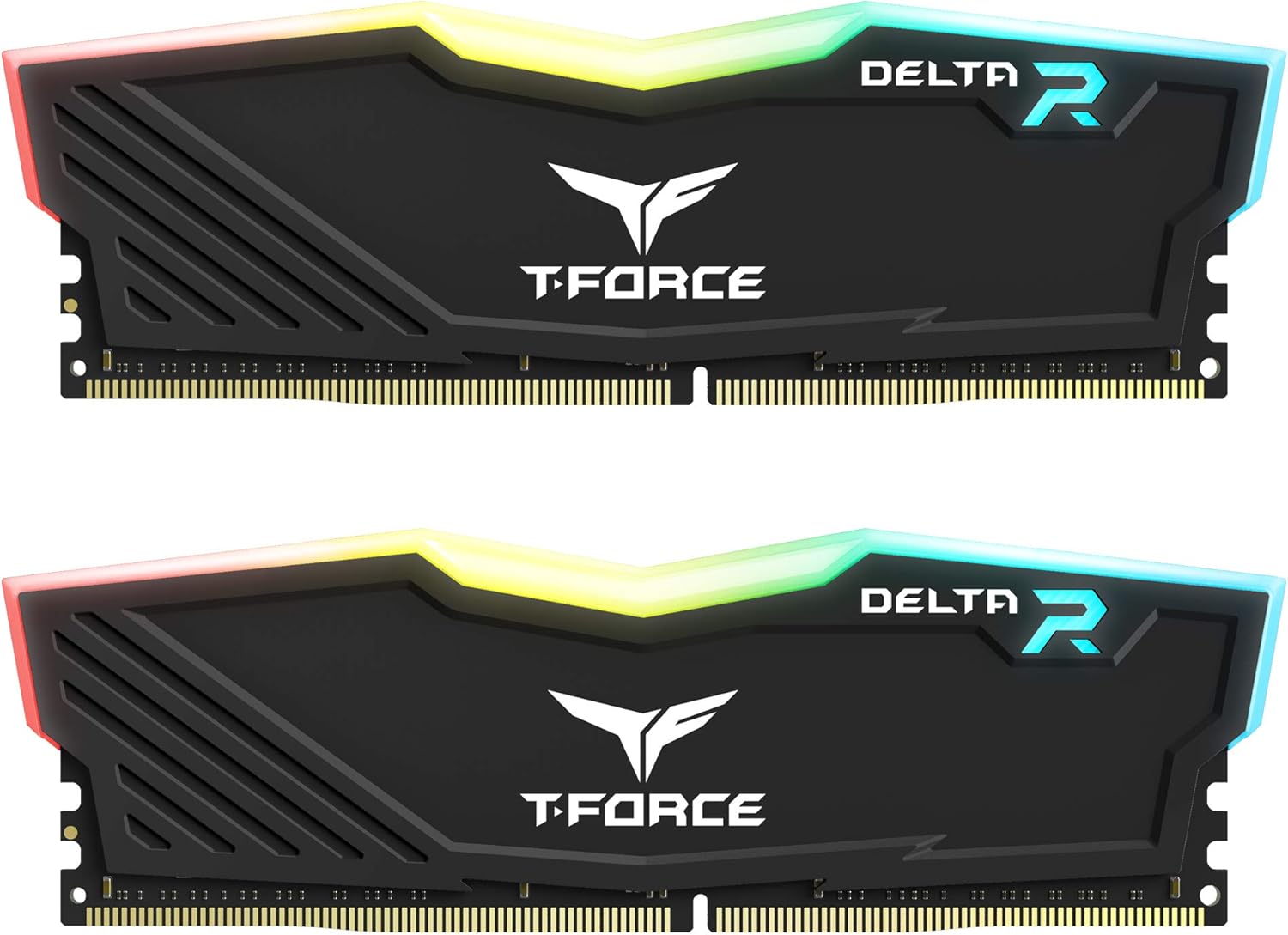
- Delta RGB 16GB (2 x 8GB) 3200 MHz (PC4-25600) CL16 DDR4
- Full-frame 120 ultra wide-angle illumination with built-in force flow
- Aluminum alloy heat sink with asymmetrical minimalist design.
- Supports T-Force BLITZ control (beta version) Asus Aura Sync software
- Supports XMP 2.0 one-click overclocking technology

Pros
- 32GB kit split across two 16GB modules for dual-channel configurations
- Speeds up to 6000MHz with CL36-44-44-96 timings and Intel XMP 3.0 profiles for one-click overclocking
- Ten individually addressable RGB LEDs per module light through a panoramic bar visible from any angle
- Runs at 1.35V, within standard DDR5 voltage range for most current motherboards
- CORSAIR iCUE software adds onboard voltage regulation control for finer overclocking adjustments
Cons
- Reaching the full 6000MHz speed requires overclocking through XMP or manual BIOS adjustments; base JEDEC speed runs lower out of the box
- DDR5 is not backward compatible with DDR4 or DDR3 motherboards, so a compatible 600-series or newer chipset is required
- RGB lighting customization depends on installing CORSAIR iCUE software, adding a software dependency for full control beyond default lighting
This kit pairs two 16GB modules (32GB total) rated up to 6000MHz with CL36-44-44-96 timings at 1.35V, built for Intel DDR5 platforms.
- Ten individually addressable RGB LEDs per module run through a panoramic light bar visible from any angle
- Custom Intel XMP 3.0 profiles can be saved and adjusted through CORSAIR iCUE
- A custom PCB is built for signal quality on the latest Intel DDR5 boards
- Onboard voltage regulation supports more finely tuned overclocking than relying on motherboard-only controls
Rated speed and timings represent the XMP profile ceiling; actual results still depend on the specific motherboard and CPU memory controller paired with the kit.
Pros
- 32GB kit split across 2x16GB modules leaves DIMM slots free on quad-slot boards for a future capacity upgrade
- Rated 3200MT/s with CL16-18-18-38 timings at 1.35V under the included Intel XMP profile
- Built on a 10-layer PCB with hand-screened memory ICs, aimed at more consistent module-to-module quality than basic PCB designs
- 288-pin non-ECC U-DIMM format is standard for both current Intel and AMD desktop platforms
- Per-module RGB lighting is customizable through software, syncing with other RGB components
Cons
- Rated speed and timings only apply once XMP is manually enabled in BIOS; at default JEDEC settings it runs slower
- The manufacturer warns against mixing modules from different kits, so future capacity increases should use another matched kit, not single sticks
- Actual XMP overclock stability still depends on motherboard and CPU memory controller compatibility, not the RAM alone
This kit provides 32GB of DDR4 memory split across two 16GB modules, rated to run at 3200MT/s with CL16-18-18-38 timings at 1.35V once the included Intel XMP profile is enabled. Without XMP enabled, the kit defaults to the standard JEDEC profile, which runs at a lower, more conservative speed until you switch it on manually in BIOS.
- 32GB total (2x16GB modules)
- Rated speed: DDR4-3200
- Timings: CL16-18-18-38 at 1.35V
- 288-pin non-ECC U-DIMM format
The heatspreaders use a hairline-finished aluminum design over hand-screened memory ICs on a custom 10-layer PCB, positioned as a build-quality step up from simpler 4- or 6-layer PCB designs. Per-module RGB lighting can be customized through supported software for color and effect syncing with other RGB parts in the build.
Because this is sold as a matched 2x16GB kit, adding capacity later means buying a second identical or explicitly compatible kit rather than a single mismatched module, since mixing kits from different batches can cause stability issues. On a 4-DIMM motherboard, this leaves two slots open for exactly that kind of future expansion.
- 32GB now, with 2 DIMM slots free on quad-slot boards
- Expansion requires a matched kit, not a single stick
- Same 10-layer PCB and heatspreader design across the line for visual matching
For builders planning to go beyond 32GB down the line, checking the Qualified Vendor List for a confirmed-compatible second kit before buying avoids timing or voltage mismatches between the original and new modules. As a first build or single upgrade, 32GB at DDR4-3200 covers current gaming and most productivity workloads without needing to fill every slot immediately.
Pros
- 32GB kit ships as two matched 16GB modules, built for DDR4-3600 speeds at CL18-22-22-42 timings
- Runs at 1.35V, within the standard voltage range most DDR4 motherboards support without a BIOS voltage override
- Includes both a JEDEC default profile and an Intel XMP profile, so the kit boots safely at default speed before any overclock is enabled
- Aluminium heatspreaders with an RGB light diffuser only add height and lighting; the module PCB itself is a standard 288-pin U-DIMM footprint
Cons
- Reaching the 3600MT/s speed requires manually enabling the XMP profile in BIOS; at default settings, the kit runs at the slower JEDEC speed
- Modules are matched as a kit and are not intended to be mixed with other kits or single modules, limiting later capacity upgrades to identical kits
- RGB lighting and full effect customization depend on separate software support tied to the motherboard, which is not included with the memory itself
This kit provides 32GB of total capacity across two matched 16GB modules, built for DDR4-3600MT/s at CL18-22-22-42 timings and 1.35V. It is a non-ECC, 288-pin U-DIMM design intended for desktop motherboards rather than server ECC platforms. Two profiles are stored on the modules: a conservative JEDEC default speed that the system boots at automatically, and an Intel XMP profile carrying the full 3600MT/s speed and timings.
The aluminium heatspreader uses a hairline-finish design with a light diffuser strip running along the top for the RGB lighting effects, sitting on top of hand-screened memory ICs mounted to a 10-layer PCB. The taller heatspreader height compared to low-profile memory kits is worth checking against CPU cooler clearance before installing.

Pros
- G.SKILL Trident Z5 Neo RGB Series DDR5 U-DIMM Memory Kit, Model
- 32GB total capacity kit containing 2x16GB modules, rated for up to
- Non-ECC, DDR5 U-DIMM, 288-pin, for Desktop PC Gaming
- Includes JEDEC default profile, and AMD EXPO memory overclock profile
- Do not mix memory kits. Memory kits are sold in matched kits that are

Pros
- 32GB kit (2x16GB) rated at DDR5-6000 with CL36-36-36-96 timings at 1.35V
- Supports both AMD EXPO and Intel XMP 3.0 overclock profiles from a single kit
- 288-pin U-DIMM form factor compatible with current Intel 600/700/800-series and AMD 600/800-series chipsets
- Aluminum heatspreader with a translucent RGB light bar for thermal handling and visual customization
- Non-ECC design intended for desktop gaming and workstation builds rather than server use
Cons
- Rated 6000MT/s speed and EXPO/XMP profiles only activate after manually enabling the profile in BIOS
- Kit must be used as a matched pair; mixing modules from other kits risks stability issues
- 1.35V operating voltage exceeds base JEDEC DDR5 specification, so older or entry-level motherboards may not fully support the rated speed
This kit ships as two 16GB U-DIMM modules for a 32GB total capacity, rated to run at DDR5-6000 with CL36-36-36-96 timings at 1.35V. The modules are built from hand-screened DDR5 DRAM ICs and use a 288-pin non-ECC design intended for desktop platforms rather than server boards.
- 2x16GB modules, 32GB total capacity
- DDR5-6000 rated speed at CL36-36-36-96 timings
- 1.35V operating voltage with AMD EXPO and Intel XMP 3.0 profiles
At default JEDEC settings without an enabled overclock profile, the kit will boot at the standard SPD speed rather than the rated 6000MT/s figure.

Pros
- G.SKILL Trident Z RGB Series DDR4 U-DIMM Memory Kit, Model
- 64GB total capacity kit containing 2x32GB modules, rated for up to
- Non-ECC, DDR4 U-DIMM, 288-pin, for Desktop PC Gaming
- Includes JEDEC default profile, and Intel XMP memory overclock profile
- Do not mix memory kits. Memory kits are sold in matched kits that are
What to Check Before You Buy RGB RAM
Illuminated memory kits look similar from a distance, but the specs underneath vary a lot once you compare listings side by side. Getting these details right saves you from a mismatched or bottlenecked system down the line, and it only takes a few minutes to confirm before checkout.
DDR4 or DDR5
Your motherboard decides this one for you, not preference. Older Intel and AMD platforms still run DDR4, while newer builds need DDR5. Check your board’s manual before you add anything to your cart, since the two standards aren’t interchangeable and won’t fit in the wrong slots.
Speed and Timings
Higher MHz numbers help, but only up to what your platform actually supports. A 3200MHz kit on a board rated for 3200MHz makes more sense than an unused 6000MHz kit throttled down to fit. Timings like CL16 or CL18 matter too — lower numbers mean tighter latency, which shows up in fast-paced games and quick app switching alike.
Capacity for Your Workload
16GB still covers most gaming setups comfortably, especially paired with a fast SSD for background tasks. Streamers, video editors and anyone running multiple virtual machines should look toward 32GB or higher instead. Going with 64GB only makes sense if you regularly work with large project files or run memory-hungry creative software daily.
Lighting Software and Compatibility
Every brand ties its RGB memory to its own app — Corsair uses iCUE, G.Skill uses its Lighting Control app, and some motherboards sync through their own utility instead. Mixing brands is fine visually, but syncing every light to one rhythm usually means picking a single ecosystem or relying on motherboard-level ARGB headers for a shared profile.
Warranty and Build Quality
Most reputable RGB memory kits carry a limited lifetime warranty, which is worth confirming before you buy. Aluminum heat spreaders also help with heat dissipation on kits running at higher voltages. A kit with thousands of verified reviews and a consistent rating, like the options below, is generally a safer bet than an unfamiliar off-brand listing.
Best RGB RAM for Every Type of Build
Not every rig has the same needs, so here’s how these kits stack up against common use cases rather than as a flat ranking. Match your platform and budget first, then use the notes below to break any tie between similar-looking kits.
Best for Budget DDR4 Gaming Rigs
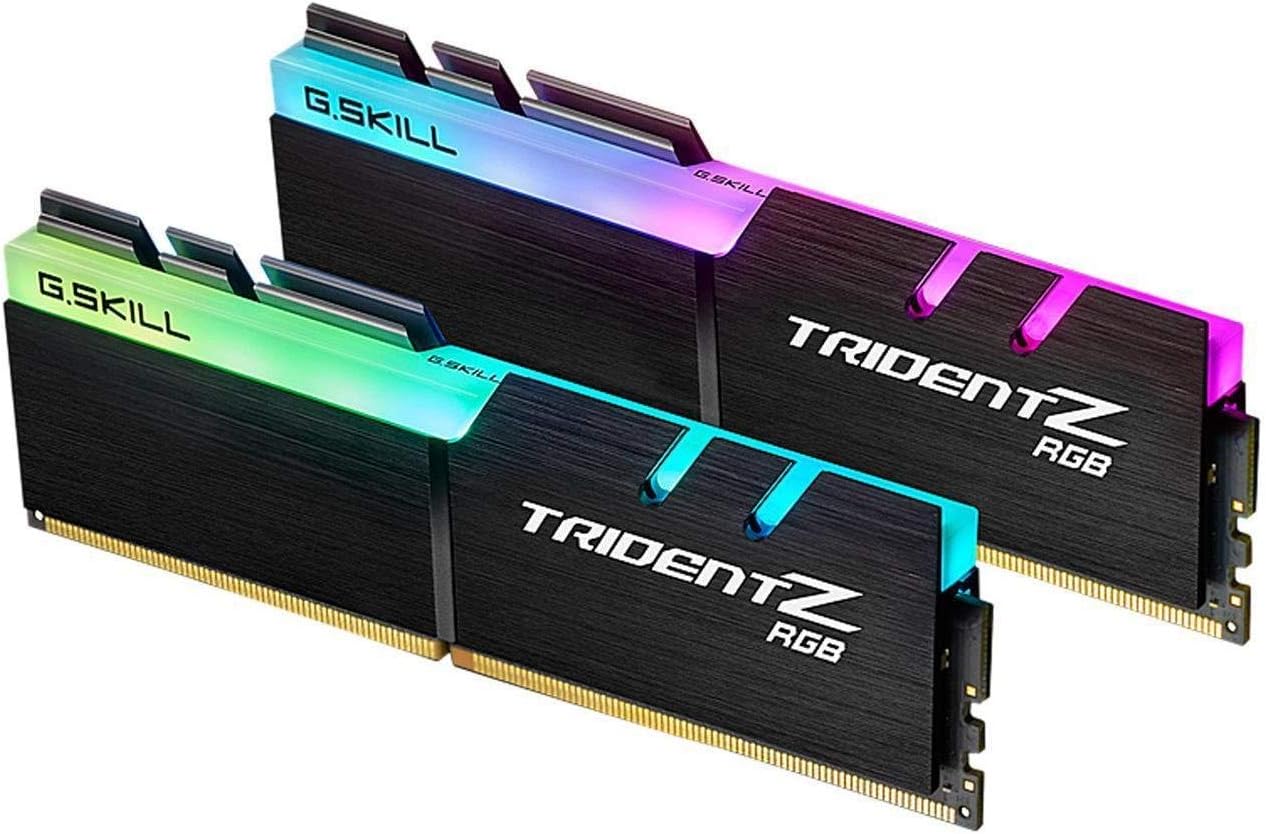
If you’re building on DDR4 and want light without overspending, the G.Skill Trident Z RGB 16GB is worth checking. It runs at 3200MT/s with CL16 timings, which is snappy for the price. Reviewers consistently praise the crown-style light bar, and at nearly 9,000 reviews it has a solid track record behind it.
Best Value for Most Gamers
If 16GB feels tight for your multitasking habits, the G.Skill Trident Z RGB 32GB kit is a practical step up. It keeps the same 3200MT/s speed and CL16 timings as the smaller kit, so you gain headroom for background apps, browser tabs and game clients without giving up responsiveness. It’s a sensible pick if you’re not sure whether 16GB will be enough two years from now.
Best for New DDR5 Platforms
Moving to a current Intel or AMD board means DDR5 is mandatory, not optional. The CORSAIR Vengeance RGB DDR5 gives you 32GB clocked up to 6000MHz with Intel XMP 3.0 support, so it drops into most modern boards without manual tuning. It’s a sensible middle ground between raw speed and everyday reliability.
Best for AMD EXPO Overclocking
AMD Ryzen owners chasing tighter timings should look at the G.Skill Trident Z5 Neo RGB. It’s built specifically around AMD EXPO profiles, running 6000MT/s at a tight CL30, which is faster than most CL36 kits at similar clock speeds. The matte black heat spreader also keeps it from clashing with darker builds.
Best for High-Capacity Workstations
Video editors, 3D artists and anyone juggling dozens of browser tabs alongside creative software should consider the G.Skill Trident Z RGB 64GB kit. It’s overkill for casual gaming, but for large render projects or virtual machines, that extra headroom prevents slowdowns when memory usage spikes.
Best for a Matched White Build
White and light-themed cases need memory that matches, not just lights that look good on black PCBs. The CORSAIR Vengeance RGB PRO SL White is designed for exactly that, pairing a white heat spreader with ten-zone RGB so it doesn’t look out of place next to a white motherboard and case.
Is RGB RAM Worth the Extra Cost?
RGB memory usually costs a bit more than plain black heat spreaders with identical specs, and that premium pays for the light bar and onboard controller, not extra performance. If lighting doesn’t matter to you, a non-RGB kit with the same speed and timings will run exactly the same. But if you’ve already invested in an RGB case, cooler and fans, matching memory finishes the look without touching your frame rates one way or the other.
The trade-off worth knowing about: RGB kits are sometimes a few millimeters taller than bare modules, so double-check clearance if you’re running a large air cooler. Beyond that, you’re really just deciding whether the visual upgrade is worth the small price difference. If your case has a tempered glass panel, the answer is usually yes, since the lighting shows through constantly rather than sitting hidden inside a closed chassis.
Common Mistakes When Buying RGB RAM
A few recurring errors trip up first-time buyers more than anything else. Most of these take thirty seconds to check and can save you a return shipment later.
- Ignoring motherboard QVL lists. Not every kit is validated for every board, and unlisted kits can fail to boot at rated speeds.
- Buying DDR4 for a DDR5 board (or vice versa). The two aren’t physically compatible, so double-check your socket type first.
- Overlooking clearance with tall CPU coolers. Some RGB heat spreaders are tall enough to clash with air coolers, so measure before buying.
- Assuming all RGB software plays nicely together. Mixing brands can mean juggling two or three apps instead of one unified profile.
- Skipping the manual XMP or EXPO enable. Kits often run at base JEDEC speeds until you turn on the rated profile in BIOS yourself.
Building a Full RGB Setup Around Your RAM
Once your memory lighting is dialed in, it’s worth thinking about how the rest of your desk matches. A synced RGB monitor extends the same lighting theme past the case, which makes a noticeable difference in a dim room. If your power supply sits in view through a windowed panel, a PSU with RGB accents keeps that corner from looking dark and mismatched. And if you’re planning the whole desk layout around this build, browsing desks with RGB lighting is a natural next step for tying the setup together.
None of these are required to enjoy your new RAM, but they’re worth a look if the goal is a cohesive battlestation rather than just a lit-up memory kit sitting inside an otherwise plain case.
Frequently Asked Questions
Does RGB RAM affect gaming performance?
No, the lighting itself doesn’t change performance. What matters is speed, timings and capacity — the same specs that apply to non-RGB kits. RGB is purely cosmetic on top of those numbers, so don’t pay extra for it if you’d rather save the money.
Can I mix RGB RAM brands in the same build?
Yes, physically it works fine as long as speed and capacity match. The lighting sync may not be perfectly unified, though, since each brand typically needs its own software running in the background.
Is DDR5 RGB RAM worth it over DDR4?
Only if your motherboard requires DDR5. It’s not a drop-in upgrade for older boards, so check compatibility before comparing prices between the two standards, since a faster kit won’t help on an unsupported platform.
How much RGB RAM do I actually need?
16GB handles most gaming comfortably in 2026, while 32GB suits streaming or multitasking-heavy setups. Reserve 64GB for heavy content creation or professional workloads where every gigabyte gets used.
Will RGB RAM fit under my CPU cooler?
Check your cooler’s clearance specs first, especially with tall air coolers. Most RGB heat spreaders add a few extra millimeters compared to plain memory, and this can matter with certain heatsink designs that hang low over the first slot.
Every kit above passes the basics — solid ratings, thousands of verified reviews and dependable timings — so the right pick really comes down to matching your platform and your case’s theme. Start with your motherboard’s supported speed, decide how much capacity your workload actually needs, and let that narrow the list before lighting becomes the deciding factor.


