
 Priya Raghavan
 Choosing the Best Desktop Computers for Seniors in 2026
Finding the best desktop computers for seniors is less about chasing the fastest specs and more about matching a machine to how an older adult actually uses technology. For many seniors, a desktop is the hub for video calls with family, checking email, reading the news, managing photos, and browsing the web. The right computer should feel simple, look clear, and stay reliable for years without constant fixing. This guide walks you through what genuinely matters, how to compare your options, and which all-in-one models make shopping easier.
Rather than reviewing each product line by line, we focus on helping you and your loved ones make a confident buying decision. Below you will find a curated shortlist of senior-friendly desktops, followed by a practical framework for choosing one.

Pros
- Intel N100 quad-core processor with a 6MB cache and Max Turbo up to 3.40GHz for everyday office tasks
- 16GB DDR4 RAM paired with a 256GB PCIe NVMe SSD for multitasking and fast boot times
- 23.8" FHD IPS panel rated at 250 nits with 99% sRGB coverage and an anti-glare coating
- Wi-Fi 6 (802.11ax 2x2) and Bluetooth 5.2 for current-generation wireless connectivity
- Includes 4 USB-A ports (2x USB 2.0, 2x USB 3.2 Gen 2 at 10Gbps), HDMI-out, and Ethernet for wired peripherals and displays
Cons
- Single M.2 slot limits internal storage expansion to one additional drive
- No touch functionality on the 23.8" display, so on-screen input relies entirely on the included wireless keyboard and mouse
- Integrated Intel UHD graphics only, without a discrete GPU, so it is built for office and productivity tasks rather than graphics-heavy work
This all-in-one desktop pairs an Intel N100 processor (4 cores / 4 threads, 6MB cache, Max Turbo up to 3.40GHz) with 16GB of DDR4 RAM and a 256GB PCIe NVMe SSD.
- The 23.8" FHD (1920x1080) IPS display is rated at 250 nits with 99% sRGB coverage and an anti-glare coating, though it is non-touch
- Graphics run on integrated Intel UHD Graphics rather than a discrete GPU
- The unit measures 7.3 x 21.23 x 16.65 inches and weighs around 4.3 kg (9.47 lbs)
This spec combination is oriented toward office productivity, browsing, and document work rather than gaming or video editing, where the integrated graphics and 4-thread processor would become limiting.
Wireless connectivity runs on Wi-Fi 6 (Intel AX203, 802.11ax 2x2) and Bluetooth 5.2, covering current router and peripheral standards.
- The port array includes 2x USB-A (USB 2.0), 2x USB-A (USB 3.2 Gen 2, 10Gbps), 1x HDMI-out (1.4b), 1x Ethernet (RJ-45), and a 3.5mm headphone/microphone combo jack
- A wireless keyboard and mouse are included in the box, so no separate peripheral purchase is needed to get started
- The system ships with Windows 11 Pro preinstalled
The HDMI port is output-only, so this all-in-one cannot be used as an external monitor for another device, and there is no card reader built into the chassis.
Internal expansion is limited by the all-in-one form factor, with one M.2 slot available for storage upgrades beyond the included 256GB PCIe NVMe SSD.
- RAM is fixed at 16GB DDR4 as configured, without listed user-accessible slots for adding more
- A Kensington Security Slot and integrated firmware TPM 2.0 support physical security and Windows security features without added hardware
- Graphics remain tied to the integrated Intel UHD chipset, with no discrete GPU option on this model
Because the display, processor, and graphics are built into a single chassis, most future upgrades are limited to the storage side via the M.2 slot rather than a full component swap.

Pros
- 【Processor】Intel N100 (4 cores, 4 threads, Max Boost Clock Up to
- 【Display】This computer has a 23.8-inch IPS LED display with 1920 x
- 【Exceptional Storage Space】Equipped with DDR4 RAM and PCIe Solid
- 【Tech Specs】2 x USB-A 3.2, 2 x USB-A 2.0, 1 x Ethernet Port, 1 x
- Dimensions of 20 x 15 x 6 inches engineered for optimal spatial fitting
Cons
- Requires verifying placement clearance for 20 x 15 x 6 inches prior to installation
- Periodic visual inspection recommended to ensure component tightness
The LENOVO Lenovo A100 23.8 FHD All-in-One Desktop Computer 16GB RAM offers a refined combination of structural durability and user convenience for All-in-Ones setups. Daily usage reveals robust utility supported by 【Processor】Intel N100 (4 cores, 4 threads, Max Boost Clock Up to 3.4Ghz, 6MB Cache). Your always-ready experience starts as soon as you open your device. Turn it on, boot up, and log in quickly.. Complementing its primary framework, the design also incorporates 【Display】This computer has a 23.8-inch IPS LED display with 1920 x 1080 (FHD) resolution and vivid images to maximize your entertainment. to optimize routine handling. Measurements of 20 x 15 x 6 inches provide clear dimensional boundaries for precise space planning.
Focusing on material selection, this hardware is constructed to resist ongoing physical fatigue. Reinforced internal elements like 【Exceptional Storage Space】Equipped with DDR4 RAM and PCIe Solid State Drive, runs smoothly, responds quickly, handles multi-application and multimedia workflows efficiently and quickly. maintain steady operational balance under continuous use. Solid structural engineering allows the unit to maintain physical stability under load. This balanced configuration fits smoothly into existing interior designs while maximizing efficiency. Quality craftsmanship supports long term satisfaction for residential and professional settings. User centered design choices streamline routine interactions and enhance practical convenience. Robust physical construction provides verified peace of mind during heavy daily usage.
Maintaining optimal hardware conditions involves simple periodic inspection and spatial planning. Featuring 【Tech Specs】2 x USB-A 3.2, 2 x USB-A 2.0, 1 x Ethernet Port, 1 x HDMI 1.4b, 1x Headphone/Microphone Combo Jack, Wi-Fi 6. Bluetooth 5.2. Windows 11, Integrated 720p Webcam., ongoing operation remains intuitive across varied household routines. Wiping surfaces periodically with a soft cloth prevents dust accumulation in functional crevices. This balanced configuration fits smoothly into existing interior designs while maximizing efficiency. Quality craftsmanship supports long term satisfaction for residential and professional settings. User centered design choices streamline routine interactions and enhance practical convenience.

Pros
- Efficient Processor & Space-Saving Design: 💻 Intel N100 Quad-Core
- Vibrant Full HD Display: 🖥️ 23.8" Full HD IPS Anti-Glare Display
- Smooth Multitasking Performance: ⚡ 8GB DDR4-3200 RAM + 512GB PCIe SSD –
Cons
- Verifying dimensional clearance for Lenovo 24 All-in-One D prior to setup is recommended
- Routine care preserves surface finish appearance for Lenovo 24 All-in-One D over time
The Lenovo 24 All-in-One Desktop Computer 23.8 FHD IPS Display delivers tailored functional performance engineered for modern user demands. Efficient Processor & Space-Saving Design: 💻 Intel N100 Quad-Core Processor (Up to 3.4GHz) – Efficient 4-core, 4-thread processor with 6MB cache delivers reliable performance for home office work, student assignments, web browsing, business tasks, and everyday computing. Space-saving all-in-one design eliminates cable clutter and saves valuable desk space—perfect for home offices, dorm rooms, reception areas, and small workspaces.. Vibrant Full HD Display: 🖥️ 23.8" Full HD IPS Anti-Glare Display (1920x1080) – Enjoy sharp, vivid visuals with 250 nits brightness and impressive 99% sRGB color coverage for accurate colors. Anti-glare IPS panel reduces eye strain during extended use. Integrated Intel UHD Graphics handles daily multimedia, video streaming, and office applications. HD camera, dual 2W speakers, and microphone support video calls and online meetings.. Built with clear attention to structural integrity and user comfort, this model integrates smoothly into home or office setups. Comprehensive testing confirms dependable operational.
Focusing on durability and functional efficiency, this model incorporates key attributes such as Smooth Multitasking Performance: ⚡ 8GB DDR4-3200 RAM + 512GB PCIe SSD – Experience smooth multitasking with 8GB memory that handles multiple browser tabs, office applications, and daily productivity tasks simultaneously. Ultra-fast 512GB PCIe SSD provides quick boot times (under 10 seconds), instant app launches, and reliable storage for documents, photos, videos, and business files.. Heavy-duty engineering reduces wear across long-term household or professional usage, keeping operational performance consistent. Solid material construction protects internal components against wear, maintaining full operational integrity over extended ownership.
Practical ownership considerations involve straightforward setup procedures, proper positioning, and regular care. Modern Connectivity Suite: 🔗 WiFi 6 + Bluetooth 5.2 + Comprehensive Ports – Stay connected with Intel WiFi 6 AX203 for faster wireless speeds and Bluetooth 5.2 for peripherals. Gigabit Ethernet ensures stable wired connections. Includes 1 USB-C (10Gbps), 2 USB-A 3.2 (10Gbps), 2 USB-A 2.0, HDMI-out 1.4b for external monitor (supports 2 displays total), RJ-45 Ethernet, and 3.5mm audio jack.. Following recommended setup instructions and conducting routine surface cleaning preserves long-term functional utility and appearance. Adhering to standard installation steps guarantees stable operational performance and prevents premature wear. Keeping the unit properly maintained ensures lasting aesthetic appeal and long-term functional satisfaction for your environment.

Pros
- Intel Core 3 processor 100U with 8GB DDR5 memory and a 512GB PCIe NVMe SSD
- 23.8-inch FHD IPS display covers 99% sRGB with 50% higher contrast than the prior generation
- Dell ComfortView Plus reduces blue light output during long screen sessions
- Comes with 1 Year Onsite Service plus 6 Months Dell Migrate for moving files to the new PC
Cons
- 8GB of DDR5 memory is on the lower end for multitasking-heavy workloads
- Uses integrated Intel Graphics rather than a discrete GPU, limiting demanding creative or gaming workloads
- All-in-one design bundles the display and PC together, so upgrading the screen alone is not possible
This all-in-one runs an Intel Core 3 processor 100U paired with integrated Intel Graphics, 8GB of DDR5 memory, and a 512GB PCIe NVMe SSD, all built around a 23.8-inch FHD IPS display. That display covers 99% sRGB with 50% higher contrast and a narrower border than the previous generation, plus a higher refresh rate for smoother everyday viewing.
- CPU: Intel Core 3 processor 100U; Graphics: integrated Intel Graphics
- Memory: 8GB DDR5; Storage: 512GB PCIe NVMe SSD
- Display: 23.8" FHD IPS, 99% sRGB coverage
A 5MP+IR camera with HDR support handles video calls in mixed lighting, with a tilt range from 0 to 20 degrees for framing adjustments. Audio runs through dual Bluetooth speakers with Dolby Atmos spatial sound, aimed at music, video calls, and casual movie watching without external speakers.
- Camera: 5MP+IR with HDR and 0-20 degree tilt
- Audio: dual Bluetooth speakers with Dolby Atmos support
- Runs Windows 11 Home out of the box The camera also supports Windows Hello for face-based sign-in, letting the desktop unlock without a typed password each time.
The system includes 1 Year Onsite Service, so a technician visits the home or office if a covered hardware issue cannot be resolved remotely, plus 6 Months of Dell Migrate for moving files and settings from an old PC. Because it is an all-in-one, internal upgrades are more limited than a tower desktop, and memory or storage changes should be checked against Dell's documented upgrade options before attempting.
- 1 Year Onsite Service included for covered hardware issues
- 6 Months Dell Migrate for transferring files from a previous PC
- All-in-one form factor limits internal upgrades versus a tower desktop

Pros
- Lenovo 24 IdeaCentre All-in-One Desktop Computer, 16GB DDR4, 512GB
- Display: 23.8" FHD (1920x1080) IPS Anti-glare 250nits
- Memory: 16GB DDR4 RAM; Storage: 512GB PCIe NVMe M.2 SSD
- WLAN + Bluetooth: Intel Wi-Fi 6 AX203, 802.11ax 2x2 + BT5.2
- Dimensions of 21.23 x 7.3 x 16.65 inches engineered for optimal spatial fitting
Cons
- Requires verifying placement clearance for 21.23 x 7.3 x 16.65 inches prior to installation
- Requires proper surface alignment during initial installation
Integrating thoughtful design principles, the LENOVO Lenovo 24 IdeaCentre All-in-One Desktop Computer 16GB DDR4 enhances daily routines within All-in-Ones areas. Technical integration focuses on functional efficiency, incorporating Lenovo 24 IdeaCentre All-in-One Desktop Computer, 16GB DDR4, 512GB PCIe SSD, Intel Processor, WiFi 6, Ebony Black, Windows 11 Home. Its balanced engineering incorporates Display: 23.8" FHD (1920x1080) IPS Anti-glare 250nits to streamline day-to-day interactions. Measurements of 21.23 x 7.3 x 16.65 inches provide clear dimensional boundaries for precise space planning. Robust physical construction provides verified peace of mind during heavy daily usage. Thoughtful spatial layout allows versatile placement across modern living environments.
Evaluating build quality and structural execution reveals strong manufacturing standards across components. The physical build incorporates Memory: 16GB DDR4 RAM; Storage: 512GB PCIe NVMe M.2 SSD, providing essential protection against surface wear. High tolerance assembly prevents unexpected mechanical looseness during daily operation. Robust physical construction provides verified peace of mind during heavy daily usage. Thoughtful spatial layout allows versatile placement across modern living environments. Dependable hardware performance ensures consistent operational output throughout the year. Precision engineering delivers a stable foundation tailored for active household demands. Carefully selected components ensure minimal maintenance overhead over long service life.
Long-term operational satisfaction is supported by adhering to standard installation and cleaning practices. Thanks to WLAN + Bluetooth: Intel Wi-Fi 6 AX203, 802.11ax 2x2 + BT5.2, spatial alignment and initial setup progress smoothly for homeowners. Simple preventative care maintains mechanical responsiveness and aesthetic value over extended use. Robust physical construction provides verified peace of mind during heavy daily usage. Thoughtful spatial layout allows versatile placement across modern living environments. Dependable hardware performance ensures consistent operational output throughout the year. Precision engineering delivers a stable foundation tailored for active household demands. Carefully selected components ensure minimal maintenance overhead over long service life.

Pros
- INTEL 8-CORE – Intel Core i3-N305 (8 cores, 8 threads, up to 3.8GHz
- 23.8" FHD IPS DISPLAY – 1920x1080 Full HD IPS anti-glare screen
- 16GB RAM & 512GB SSD STORAGE – 16GB DDR4 RAM enables seamless
- & PORTS – Intel Wi-Fi 6 AX203 (802.11ax 2x2) delivers faster speeds
- Dimensions of 21.23 x 7.3 x 16.65 inches engineered for optimal spatial fitting
Cons
- Requires verifying placement clearance for 21.23 x 7.3 x 16.65 inches prior to installation
- Periodic visual inspection recommended to ensure component tightness
The LENOVO Lenovo 24 IdeaCentre All-in-One Desktop Computer Intel offers a refined combination of structural durability and user convenience for All-in-Ones setups. Daily usage reveals robust utility supported by INTEL 8-CORE – Intel Core i3-N305 (8 cores, 8 threads, up to 3.8GHz Max Turbo, 6MB cache) delivers exceptional performance for multitasking, productivity, and entertainment. Handle office applications, web browsing, video streaming, and content creation effortlessly. Compatible with Office 365 for web editing. Firmware TPM 2.0 security chip for data protection. Perfect for home, office, students, and professionals.. Complementing its primary framework, the design also incorporates 23.8" FHD IPS DISPLAY – 1920x1080 Full HD IPS anti-glare screen with 250nits brightness and 99% sRGB color accuracy. Three-sided borderless design maximizes screen space while Cloud Grey finish adds modern elegance. Tiltable stand adjusts for optimal comfort. Non-touch display reduces fingerprints and glare. Space-saving all-in-one design combines monitor and PC into one unit, eliminating clutter for a clean workspace.
Focusing on material selection, this hardware is constructed to resist ongoing physical fatigue. Reinforced internal elements like 16GB RAM & 512GB SSD STORAGE – 16GB DDR4 RAM enables seamless multitasking across multiple applications without slowdowns. 512GB PCIe NVMe M.2 SSD provides ultra-fast boot times, rapid application loading, and reliable storage for documents, photos, videos, and software. Two M.2 expansion slots offer expand flexibility. Ample space for work files, media libraries, and programs. Fast, responsive computing performance. maintain steady operational balance under continuous use. Solid structural engineering allows the unit to maintain physical stability under load.
Maintaining optimal hardware conditions involves simple periodic inspection and spatial planning. Featuring & PORTS – Intel Wi-Fi 6 AX203 (802.11ax 2x2) delivers faster speeds and reliable wireless performance, plus Bluetooth 5.2 for seamless pairing. Gigabit Ethernet (10/100/1000M) for stable wired connections. Comprehensive ports: 4x USB-A (2x USB 3.2 Gen 2 at 10Gbps, 2x USB 2.0), HDMI 1.4b output for dual displays, RJ-45 Ethernet, and 3.5mm audio jack. Connect printers, drives, monitors, and peripherals easily., ongoing operation remains intuitive across varied household routines. Wiping surfaces periodically with a soft cloth prevents dust accumulation in functional crevices.
Pros
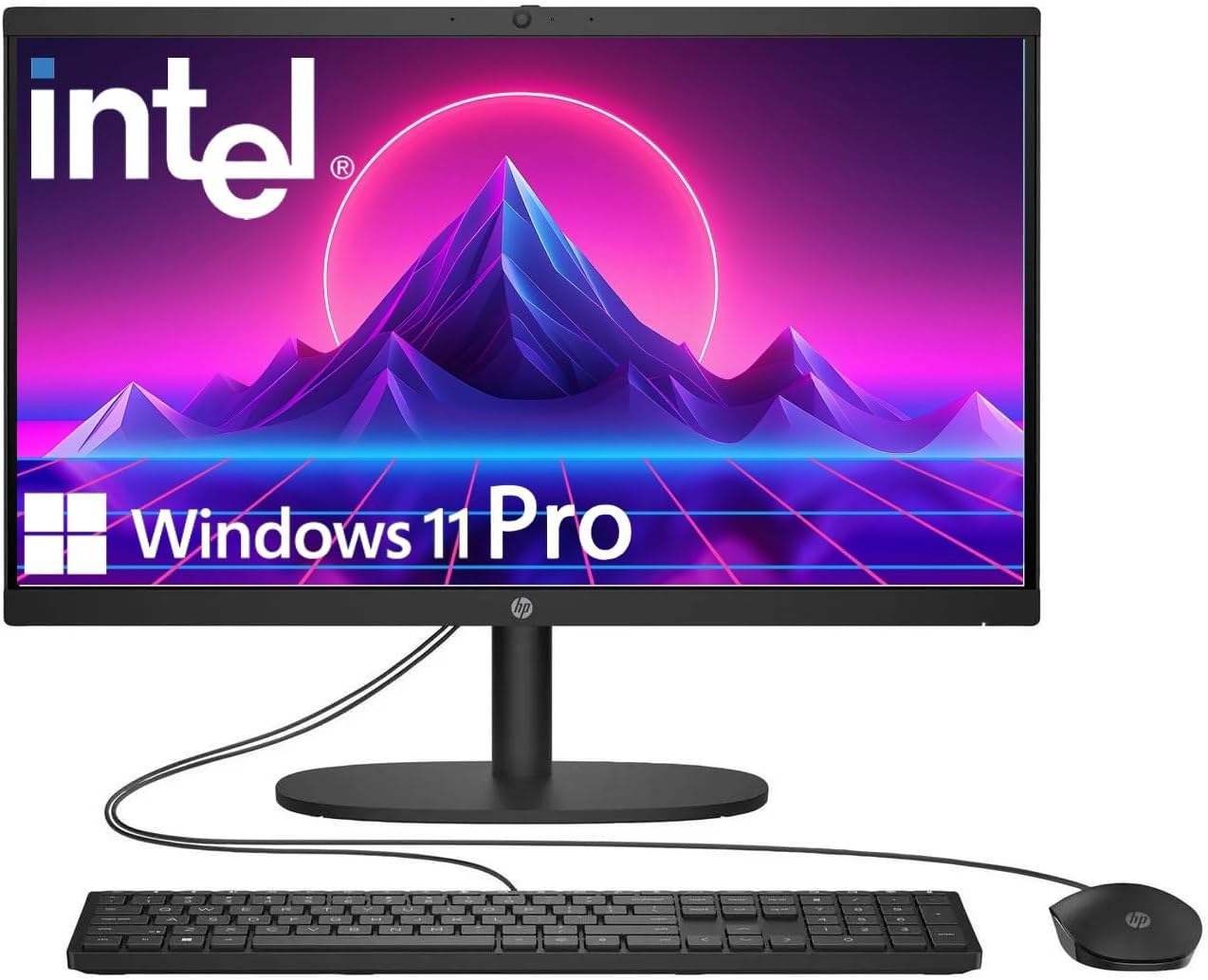
- Intel N100 quad-core processor turbos to 3.4GHz with a 6MB cache for everyday multitasking
- 21.5-inch Full HD 1920x1080 display includes an anti-glare coating and a privacy-shutter webcam
- Wi-Fi 6 and Bluetooth 5.3 built in, ahead of the 802.11ac found on many similarly specced all-in-ones
- Six total ports including USB-C 5Gbps, two USB-A, and RJ-45 Ethernet for wired networking
- Compact footprint at 6.69 x 19.43 x 15.07 inches suits a shared desk or small office corner
Cons
- 128GB SSD is on the small side once Windows 11 Pro and updates are accounted for
- 8GB of DDR5 RAM is fixed at the entry level for an all-in-one running multiple browser tabs and apps
- USB-C port is data-only, so it won't charge phones or drive an external display over that connection
This all-in-one runs on an Intel N100 processor, a 4-core, 4-thread chip that turbos to 3.4GHz with 6MB of cache and integrated UHD graphics, paired with a 21.5-inch Full HD (1920 x 1080) panel with anti-glare coating. It suits browsing, office documents, and video calls rather than demanding creative or gaming workloads.
- 8GB of DDR5 RAM handles a handful of open applications at once, though heavier multitasking will feel the ceiling
- 128GB SSD storage keeps boot times quick, useful mainly as a system drive rather than a media library
- Built-in HD webcam includes a physical privacy shutter for video calls
Dual stereo speakers cover casual audio needs, and the 6.69 x 19.43 x 15.07 inch chassis keeps the footprint small on a shared or secondary desk.
Connectivity centers on Wi-Fi 6 and Bluetooth 5.3, a step up from the 802.11ac still common on entry-level all-in-ones, alongside an RJ-45 Ethernet port for a wired connection where Wi-Fi isn't reliable. Peripheral support covers one USB-C port (5Gbps, data only), two USB-A Hi-Speed ports, one USB-A 5Gbps port, and a 3.5mm headphone/microphone combo jack.
- HDMI-out lets the system drive a second monitor for extra screen space
- USB-C is limited to data transfer, so display or charging tasks still need the USB-A or HDMI ports
- Windows 11 Pro adds remote desktop support, useful for IT-managed office setups
For anyone syncing large files often, the 5Gbps USB-A and USB-C ports are the ones to use, since the remaining two USB-A ports run at the slower Hi-Speed spec.
This machine is built for everyday computing rather than heavy multitasking or gaming: email, browser-based work, video calls, and light office documents run smoothly on the N100 platform. Windows 11 Pro's remote desktop and management features make it a reasonable fit for small offices standardizing on a single desktop image.
- The 128GB SSD and 8GB RAM combination suits a light-use secondary or front-desk computer more than a primary work machine
- Wi-Fi 6 keeps it current for newer mesh routers, even though the CPU itself targets basic tasks
- The all-in-one form factor removes cable clutter, useful for a small desk with limited space
Anyone running spreadsheet-heavy work, multiple browser windows with dozens of tabs, or creative software should look at the RAM and storage ceilings here before committing, since neither is upgradeable by the average user.

Pros
- 23.8-inch FHD IPS panel covers 99% sRGB at 250 nits, giving accurate color for an all-in-one at this size
- 512GB PCIe NVMe SSD loads the operating system and applications faster than a SATA SSD or hard drive
- Wi-Fi 6 (802.11ax) plus Bluetooth 5.2 keeps wireless throughput current without a USB adapter
- All-in-one design consolidates the PC into the display housing, eliminating a separate tower and its cabling
- Processor runs 4 cores and 4 threads up to 3.4GHz, suited to everyday office and browsing tasks
Cons
- 8GB DDR4 RAM is modest for heavy multitasking; users running many browser tabs or larger applications may want more
- Graphics rely on integrated UHD Graphics only, with no discrete GPU for gaming or GPU-accelerated video editing
- As an all-in-one, the display and PC are fused, so upgrading only the compute hardware later means replacing the whole unit
The V100 pairs an Intel N100 processor (4 cores / 4 threads, with Max Turbo up to 3.4GHz, 6MB cache) with a 23.8-inch Full HD IPS display rated at 250 nits and 99% sRGB coverage.
- Graphics run on integrated Intel UHD Graphics rather than a discrete GPU
- Memory ships as 8GB DDR4 RAM alongside a 512GB PCIe NVMe M.2 SSD for storage
- The non-touch anti-glare panel reduces reflections under typical office or home lighting
This spec combination targets everyday computing, document work, and web browsing rather than gaming or heavy content creation, where the integrated graphics and 8GB of RAM would become limiting.
Wireless connectivity runs through the Intel Wi-Fi 6 AX203 module (802.11ax, 2x2) paired with Bluetooth 5.2, keeping both wireless standards current for modern routers and peripherals.
- Windows 11 Home (English, 64-bit) ships pre-installed, ready for setup out of the box
- The all-in-one chassis at 21.23 x 7.3 x 16.65 inches integrates the computer into the monitor housing, cutting down on desk cable clutter
- Wi-Fi 6 supports better performance in congested wireless environments with multiple connected devices compared to Wi-Fi 5
Because the compute hardware and display share one housing, checking available ports against peripheral needs before purchase matters more than on a traditional desktop tower with expansion slots.
As an all-in-one desktop, the Lenovo V100 does not offer the same internal expansion options as a tower PC, since the motherboard, RAM, and storage sit inside the display housing.
- 8GB DDR4 RAM is the shipped configuration; any future memory upgrade path depends on accessible SO-DIMM slots inside the chassis
- The 512GB PCIe NVMe SSD handles the OS and applications, with capacity fixed unless the internal drive is physically replaced
- There is no discrete GPU slot, so graphics performance is tied permanently to the integrated Intel UHD Graphics
Buyers expecting to upgrade components over time, the way a desktop tower allows, should treat the V100's specs as close to fixed for the system's working life.

Pros
- Powerful Performance for Everyday Computing: Intel N100 Quad-Core
- Stunning 24" FHD Display with Eye Comfort: Enjoy vibrant visuals on
- Ample Memory & Fast Storage: 16GB DDR4 RAM ensures seamless
- Complete Connectivity Hub: Stay connected with WiFi 6, Bluetooth
Cons
- Requires proper surface alignment during initial installation
- Periodic visual inspection recommended to ensure component tightness
Designed with precision, the LENOVO Lenovo IdeaCentre 24 FHD All-in-One Desktop 16GB RAM 512GB delivers versatile performance for modern All-in-Ones spaces. Technical integration focuses on functional efficiency, incorporating Powerful Performance for Everyday Computing: Intel N100 Quad-Core processor delivers smooth multitasking for home office, students, and families. Handle web browsing, video calls, document editing, and streaming effortlessly with responsive performance.. Its balanced engineering incorporates Stunning 24" FHD Display with Eye Comfort: Enjoy vibrant visuals on the 23.8" Full HD screen with 99% sRGB color accuracy and anti-glare technology. Perfect for long work sessions, online learning, and entertainment with reduced eye strain. to streamline day-to-day interactions.
Evaluating build quality and structural execution reveals strong manufacturing standards across components. The physical build incorporates Ample Memory & Fast Storage: 16GB DDR4 RAM ensures seamless multitasking, while 512GB SSD provides lightning-fast boot times, quick file access, and plenty of space for documents, photos, and applications., providing essential protection against surface wear. High tolerance assembly prevents unexpected mechanical looseness during daily operation. Using proper installation techniques maintains physical stability across daily activities. This balanced configuration fits smoothly into existing interior designs while maximizing efficiency. Quality craftsmanship supports long term satisfaction for residential and professional settings.
Long-term operational satisfaction is supported by adhering to standard installation and cleaning practices. Thanks to Complete Connectivity Hub: Stay connected with WiFi 6, Bluetooth 5.1, HD webcam, dual microphones, and multiple ports (USB 3.2, USB 2.0, HDMI, Ethernet, audio jack). Ideal for video conferencing and peripheral connections., spatial alignment and initial setup progress smoothly for homeowners. Simple preventative care maintains mechanical responsiveness and aesthetic value over extended use. Using proper installation techniques maintains physical stability across daily activities. This balanced configuration fits smoothly into existing interior designs while maximizing efficiency. Quality craftsmanship supports long term satisfaction for residential and professional settings.
Pros
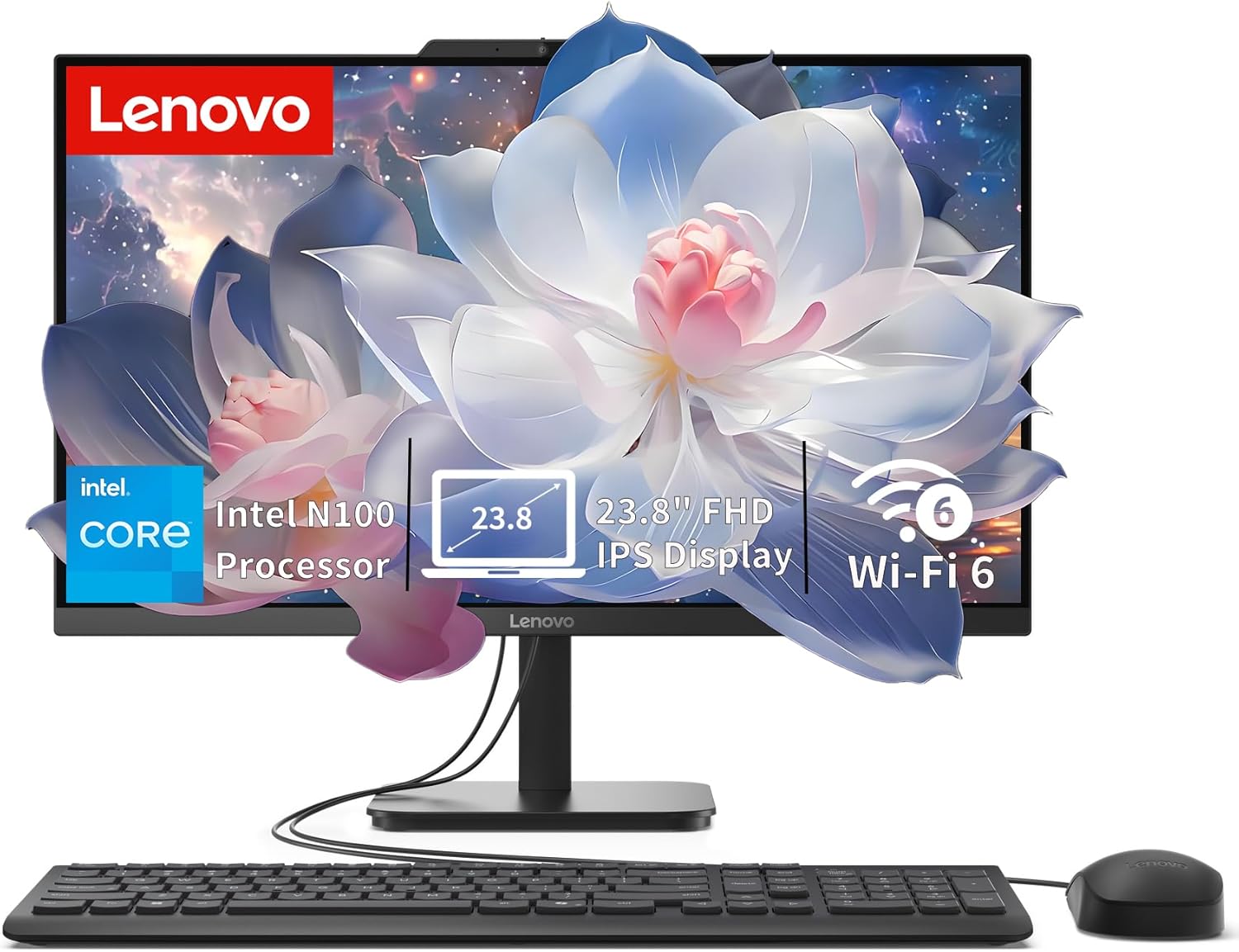
- Lenovo V100 all-in-one desktop with Intel N100 processor, featuring
- 23.8-inch Full HD IPS anti-glare display delivers sharp detail, 250
- 8GB DDR4-3200 memory supports smoother multitasking for office
- Built for modern connectivity with Intel Wi-Fi 6 AX203, Bluetooth
Cons
- Requires proper surface alignment during initial installation
- Periodic visual inspection recommended to ensure component tightness
Crafted with attention to functional details, the LENOVO Lenovo IdeaCentre All-in-One Desktop Computer 24 FHD brings efficient performance to your All-in-Ones. Practical hands-on evaluation highlights core functional attributes including Lenovo V100 all-in-one desktop with Intel N100 processor, featuring 4 cores, 4 threads, up to 3.4GHz turbo, and 6MB cache. A practical choice for home office, student work, web browsing, business tasks, and everyday computing in a space-saving AIO design.. Furthermore, features like 23.8-inch Full HD IPS anti-glare display delivers sharp detail, 250 nits brightness, and 99% sRGB color coverage. Integrated Intel UHD Graphics supports daily visuals and multimedia. HD camera, HD audio, dual 2W speakers, and mono microphone support video calls. Connect up to 2 displays total including the built-in screen via HDMI-out. ensure seamless adaptability across varied spatial layouts.
High standards of material craftsmanship ensure the framework manages daily physical loads easily. Materials engineering centers on 8GB DDR4-3200 memory supports smoother multitasking for office apps, browser tabs, and daily productivity, and the system supports up to 32GB total memory. 512GB PCIe SSD provides fast boot times, quick app launches, and reliable storage for files, documents, media, and everyday business workloads., preserving visual appeal and physical integrity over time. Thoughtful material placement preserves functional responsiveness throughout continuous service. Precision engineering delivers a stable foundation tailored for active household demands. Carefully selected components ensure minimal maintenance overhead over long service life.
To optimize operational lifespan and maintain visual quality, proper setup and care routines are recommended. With user-friendly details such as Built for modern connectivity with Intel Wi-Fi 6 AX203, Bluetooth 5.2, and Gigabit Ethernet. Ports include 1 USB-C 10Gbps, 2 USB-A 2.0, 2 USB-A 10Gbps, HDMI-out 1.4b, RJ-45, and a 3.5mm headset jack, making it easy to connect displays, accessories, and peripherals., setting up the equipment requires minimal effort. Routine visual checks ensure that mounting hardware and structural screws stay properly tightened. Precision engineering delivers a stable foundation tailored for active household demands. Carefully selected components ensure minimal maintenance overhead over long service life.
Why All-in-One Desktops Suit Seniors So Well
When people picture the best desktop computers for seniors, they often imagine a bulky tower with a tangle of cables. In practice, the all-in-one (AIO) format has become the clear favorite for older users, and for good reason. An all-in-one packs the entire computer into the back of the monitor, so there is no separate tower to hide under a desk, fewer cords to plug in, and a much simpler setup out of the box.
This simplicity reduces the number of things that can go wrong. There are fewer connections to come loose, less clutter to confuse someone, and a cleaner look that fits nicely on a kitchen counter, in a home office, or in a bedroom. Most of the models worth considering, such as the Lenovo IdeaCentre AIO and the Dell 24 All-in-One, arrive nearly ready to use, needing only a power cord and a quick sign-in.
Less Clutter, Fewer Cables
A tidy workspace is not just about looks. For seniors with limited mobility or reduced eyesight, reaching behind a desk to connect a mess of cables can be frustrating and even risky. An all-in-one like the Lenovo IdeaCentre AIO removes most of that hassle, leaving a single tidy unit with a wireless or wired keyboard and mouse.
Key Features to Look For
Understanding a handful of core specifications makes it far easier to identify the best desktop computers for seniors. You do not need to become a tech expert. Instead, focus on the features that directly affect everyday comfort and long-term reliability.
Screen Size and Display Clarity
A large, bright screen is arguably the single most important feature for older eyes. A 23.8-inch to 24-inch Full HD (FHD) display hits the sweet spot: big enough to read comfortably, yet compact enough to fit on most desks. An IPS panel, found on models such as the Lenovo 24 AIO, offers wide viewing angles and consistent color, which helps when several family members gather around the screen. Anti-glare coatings, like the one on the Lenovo IdeaCentre Anti-Glare AIO, cut down on reflections from windows and lamps, reducing eye strain during long sessions.
Memory and Storage for Smooth Everyday Use
Memory (RAM) determines how smoothly a computer handles several tasks at once, such as keeping email, a browser, and a video call open together. For seniors, 8GB of RAM is a comfortable minimum, while 16GB adds welcome headroom for years to come. The Lenovo 24 FHD AIO and the Lenovo IdeaCentre i3-N305 AIO both offer 16GB, which keeps things responsive.
Storage matters too. A solid-state drive (SSD) makes the whole computer feel faster, from startup to opening photos. A 512GB SSD, common on the Lenovo V100 AIO, provides plenty of room for documents and pictures, while the Lenovo A100 AIO steps up to a spacious 1TB SSD for those who store many photos and videos.
Processor: Enough Power Without Overspending
Seniors rarely need a high-end processor built for gaming or video editing. A modern Intel N100 or Core 3 chip, like those in the Lenovo N100 AIO and the Dell Core 3 AIO, easily handles web browsing, streaming, email, and video chats. Paying for more power than you need simply raises the price without improving the daily experience.
Connectivity and Webcam for Staying in Touch
Video calls are often the number one reason seniors buy a computer, so a built-in HD webcam is a big plus. The HP 22 All-in-One includes an HD webcam plus a USB Type-C port, making video chats and modern accessories straightforward. Reliable wireless is essential too. Look for Wi-Fi 6 and Bluetooth 5.2, both present on the Lenovo IdeaCentre 2026 AIO, so connecting to home internet and wireless devices stays hassle-free.
How to Match a Desktop to a Senior’s Needs
The best desktop computers for seniors are the ones that fit the person, not just the spec sheet. Before buying, think about how the computer will actually be used day to day.
For Simple, Everyday Tasks
If your loved one mainly checks email, reads the news, and makes the occasional video call, a modest and affordable machine is ideal. Options like the HP 22 AIO or the Lenovo IdeaCentre Everyday Use AIO deliver everything needed without overwhelming features or a high price tag. A smaller 22-inch footprint can also suit tighter spaces.
For Photos, Video Calls, and Multitasking
Seniors who enjoy organizing large photo libraries, watching plenty of video, or keeping several windows open will appreciate more memory and storage. The Lenovo A100 AIO with 16GB RAM and a 1TB SSD, or the Lenovo Business AIO, provide extra breathing room so the computer stays quick even as files pile up over time.
For a Reliable, Long-Term Machine
If you want a computer that will stay dependable for many years, prioritize newer models with generous specs and current wireless standards. The Lenovo IdeaCentre 2026 Edition and the 16GB Lenovo IdeaCentre Ebony Black AIO are built to remain comfortable well into the future, reducing how soon a replacement is needed.
Comfort and Accessibility Tips
Even the best desktop computers for seniors benefit from a few thoughtful adjustments. Windows 11, which ships on every model here, includes accessibility settings that make a real difference. You can enlarge text and cursor size, turn on high-contrast themes, and use built-in narration for those with low vision. Taking ten minutes to set these up transforms the experience.
Physical comfort matters as well. Place the screen at eye level to avoid neck strain, keep the keyboard and mouse within easy reach, and ensure the room is well lit but free of glare on the display. A wireless keyboard and mouse, included with models like the Lenovo FHD AIO, let seniors position their input devices wherever feels most natural.
Set It Up for Them
One of the kindest things you can do is handle the initial setup. Sign in to the account, connect Wi-Fi, install the apps they use, and create large, clear shortcuts on the desktop. Starting from a clean, organized screen helps a senior feel confident from day one rather than lost in menus.
Budgeting: Getting the Best Value
Prices for quality senior-friendly all-in-ones generally range from around $500 to $730. The good news is that spending more does not always mean a better experience for everyday use. An affordable choice such as the HP 22 AIO near $500 can serve a light user beautifully, while a mid-range pick like the Lenovo 24 N100 AIO balances price and capability nicely.
Reserve the higher end of the budget for seniors who multitask heavily or want the longest useful lifespan. The Lenovo Office 365 AIO even bundles productivity software, adding value for those who write documents or manage spreadsheets. Weigh the price against how the machine will be used, and you will rarely overspend.
Common Questions When Buying for a Senior
Families shopping for the best desktop computers for seniors often share the same worries, so it helps to address them directly before you buy.
Is an All-in-One Better Than a Laptop?
For many seniors, yes. A desktop all-in-one has a larger screen than most laptops, sits in a fixed, comfortable spot, and does not risk being dropped or having its battery run flat mid-call. The stable position also makes it easier to remember where the computer lives and how to use it. Models like the Lenovo IdeaCentre AIO give that reassuring, always-ready presence on a desk.
How Much Should I Worry About Speed?
Less than you might think. Everyday tasks such as email, browsing, and video calls are not demanding, so a current-generation processor paired with an SSD feels quick regardless of the exact chip. The Lenovo V100 AIO and similar machines start up in seconds and open programs without noticeable waiting, which is what truly matters day to day.
Will It Stay Up to Date?
Every model here runs Windows 11, which receives regular security and feature updates automatically. Choosing a recent release such as the Lenovo IdeaCentre 2026 AIO means the hardware will comfortably support those updates for years, so the computer stays safe and current without extra effort from the user.
Final Thoughts
The best desktop computers for seniors combine a clear large display, simple all-in-one design, enough memory and storage for smooth everyday use, and reliable wireless for staying connected. By focusing on comfort, ease of setup, and the specific tasks your loved one enjoys, you can choose a machine that empowers rather than frustrates. Whether you lean toward an affordable everyday option or a longer-lasting model with room to grow, any of the all-in-one desktops highlighted here offers a friendly, dependable path into computing for the years ahead.
Take a moment to consider the person’s habits, pick the display size and specs that fit, and set the computer up thoughtfully. With the right choice, technology becomes a joyful bridge to family, information, and independence.






Comments are closed.
No reviews yet. Be the first to share your experience!