
 Ryan Delgado
 Dialogue clarity makes or breaks a home theater, and that is exactly the job of the center channel. If you want movie voices to stay crisp above explosions and swelling scores, the best center channel speakers anchor everything happening on screen. This speaker handles roughly 60% of a film’s audio, from whispered lines to shouted commands. Pick the wrong one and dialogue turns muddy or thin. Pick the right one and your whole surround setup snaps into focus. Below you get a ranked list, use-case picks, real specs, and honest trade-offs so you buy once and enjoy it for years.
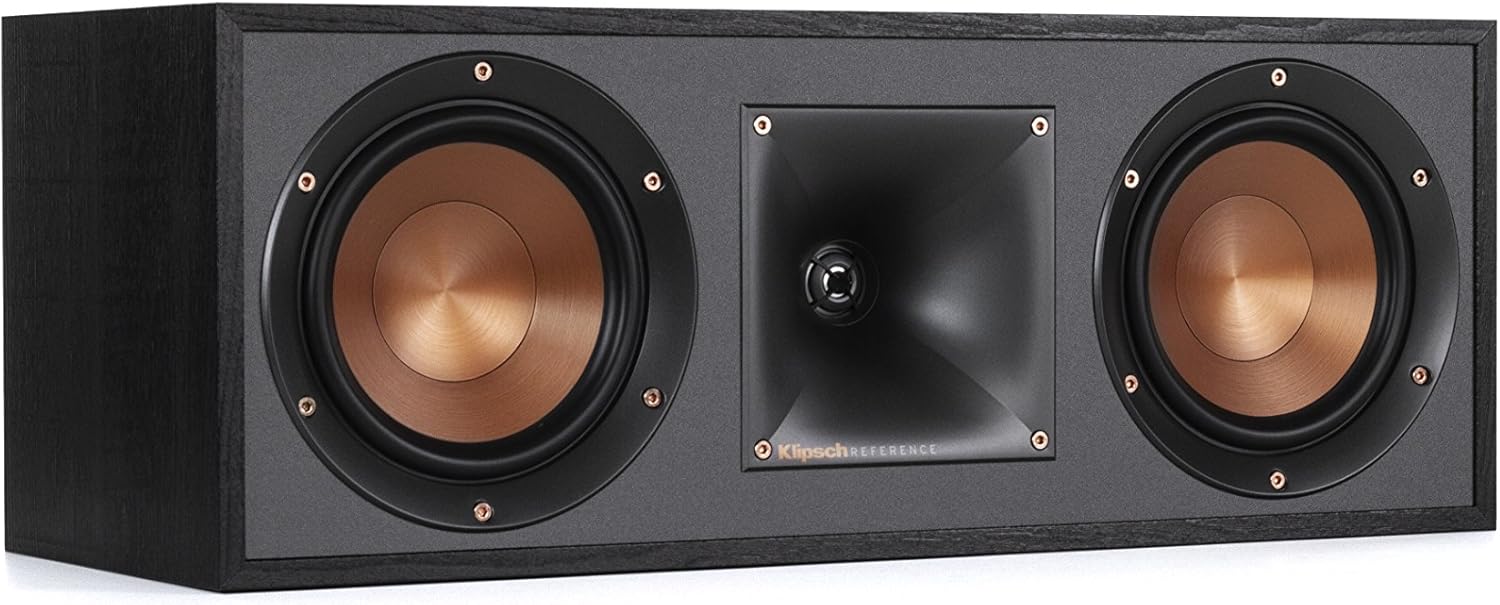
Quick answer: For most home theaters in 2026, the best center channel speakers is the Klipsch R-52C — our #1 rated choice. See the full ranked comparison, alternatives and buying advice below.
Pros
- Dual 5.25-inch spun-copper IMG woofers add more cone area than a single-woofer center channel for clearer dialogue at volume
- 95dB sensitivity at 2.83V/1m means it reaches loud output levels with less amplifier power than a lower-sensitivity speaker needs
- Handles up to 400 watts of power, giving headroom for a stronger AV receiver without distortion at high volumes
- Frequency response of 89Hz-21kHz (+/-3dB) covers dialogue and most of the audible range for home theater use
- 1-inch aluminum tweeter mated to a 90x90 tractrix horn is built to control dispersion for clearer sound off-axis, not just directly in front
Cons
- No wireless or Bluetooth capability - this is a passive speaker that requires a wired connection to an AV receiver or amplifier
- At 18.75 inches wide, it needs a shelf or stand deep and wide enough to fit under or near a TV, unlike a slim soundbar
- No listed cabinet material on this specific listing, so texture and finish details should be confirmed against Klipsch's full spec sheet before matching to existing speakers
This center channel pairs dual 5.25-inch spun-copper IMG woofers with a 1-inch aluminum LTS tweeter mounted in a 90x90 square tractrix horn, aimed squarely at clear dialogue reproduction in a home theater setup. Sensitivity is rated at 95dB at 2.83V/1m, meaning it produces loud, clean output without demanding a high-power amplifier, and it handles up to 400 watts for headroom on louder movie scenes.
- Dual 5.25-inch spun-copper IMG woofers
- 95dB sensitivity at 2.83V/1m
- 400 watt power handling
Note: frequency response is specified at 89Hz-21kHz (+/-3dB), so very deep bass content still needs a dedicated subwoofer in the system.
As a passive speaker, the R-52C connects with standard speaker wire to an AV receiver or amplifier's center channel output rather than pairing wirelessly, so it fits into an existing home theater system with dedicated channels already in place. The tractrix horn tweeter is designed to control dispersion, keeping dialogue clear for listeners off to the side of the room, not just those seated directly in front.
- Passive speaker, wired connection to a receiver or amp
- Tractrix horn tweeter for controlled dispersion
- Designed as a dedicated center channel, not a standalone speaker
Limitation: because it is passive, it cannot function on its own - a receiver or amplifier with a center channel output is required to power it.
The R-52C measures 7.62"D x 18.75"W x 7.3"H, a shape designed to sit horizontally under or above a television rather than stand upright like a bookshelf speaker. Its width means it needs a stand, shelf or TV console with enough depth and clearance on either side for the drivers to breathe.
- 7.62"D x 18.75"W x 7.3"H
- Horizontal center-channel cabinet shape
- Black finish
Note: narrow TV stands or shelves under 19 inches wide may not comfortably fit this speaker's footprint, so measuring the intended spot first is worthwhile.

Pros
- Rated for 400W of peak power handling, giving headroom for dynamic movie soundtrack swings without distortion
- Dual 5.25-inch copper-spun IMG woofers pair with a 1-inch aluminum Linear Travel Suspension tweeter for detailed dialogue reproduction
- Proprietary 90x90 Tractrix Horn loading extends high-frequency response and improves off-axis imaging compared to a standard dome tweeter
- Two-way design handles the majority of a movie's dialogue and much of its overall soundtrack from a single center channel
- Brushed black polymer veneer cabinet measures 22 in W x 11.75 in D x 10.75 in H, sized to sit beneath most TV stands
Cons
- As a passive speaker with a two-way design, it requires a separate AV receiver or amplifier to drive it
- No wireless or Bluetooth connectivity is included — connections are wired speaker terminals only
- Center channel placement beneath or above a TV works best; the cabinet's width may not fit narrower TV stand shelves
The R-25C uses a two-way design built around dual 5.25-inch copper-spun IMG woofers and a 1-inch aluminum Linear Travel Suspension horn-loaded tweeter.
- Peak power handling is rated at 400W
- The proprietary 90x90 Tractrix Horn shapes high-frequency dispersion for more consistent sound off-axis
- As a center channel, it's engineered to carry the bulk of a movie's dialogue alongside a large share of the overall mix
- Cabinet dimensions measure 22 in W x 11.75 in D x 10.75 in H
Because this is a passive speaker, actual output and power delivered depend on the AV receiver or amplifier driving it, not the speaker's power figure alone.
The enclosure uses a brushed black polymer veneer finish designed to blend into a home theater setup beneath a television.
- Dimensions of 22 in W x 11.75 in D x 10.75 in H suit placement on a TV stand shelf or media console
- The horn-loaded tweeter sits at the center of the front baffle between the two woofers for consistent stereo imaging
- Connection is made through standard wired speaker terminals on the rear of the cabinet
Because the cabinet is a fixed width, narrower TV stand shelving or thin media consoles should be measured against the speaker's footprint before purchase.
As a passive center channel speaker, this unit is designed to be one part of a larger home theater system rather than a stand-alone unit.
- It requires a separate AV receiver or amplifier with a dedicated center channel output
- No Bluetooth, Wi-Fi, or built-in amplification is included — all connections run through wired speaker terminals
- It pairs naturally with other Klipsch Reference-series speakers for matched tonal balance across a full surround setup
Buyers building a system from scratch will need to plan for a compatible receiver separately, since this speaker has no built-in power section of its own.

Pros
- BIGGER TRACTRIX HORN A new, larger 90 x 90 silicone composite hybrid
- LINEAR TRAVEL SUSPENSION (LTS) TITANIUM DIAPHRAGM TWEETER The exclusive
- VENTED TWEETER DESIGN The vented tweeter housing enhances the detail in
- ALL-NEW CERAMETALLIC WOOFERS Updated for absolutely flawless sound
- TRACTRIX PORTS Utilizing Tractrix geometry, the Reference Premiere
Cons
- Requires verifying desktop clearance for 15.08"D x 32.06"W x 6.87"H dimensions
- Requires routine care to keep exterior housing dust-free
- Initial setup requires checking operating instructions carefully
The klipsch Reference Premiere RP-504C II Ebony Center offers reliable functional utility tailored for modern home and workplace environments. Designed to enhance daily productivity, this unit integrates BIGGER TRACTRIX HORN A new, larger 90 x 90 silicone composite hybrid alongside LINEAR TRAVEL SUSPENSION (LTS) TITANIUM DIAPHRAGM TWEETER The exclusive. Users will find the intuitive design straightforward to operate across various room configurations and daily routines. The versatile construction adapts easily to personal workspaces, providing consistent practical value and streamlined usability. Physical dimensions measuring 15.08"D x 32.06"W x 6.87"H allow for straightforward spatial planning prior to final placement.
Built using resilient structural components, this unit features a sturdy outer housing engineered to resist operational wear. Precision manufacturing ensures that all joints and surface connections remain firmly aligned during regular daily activity. VENTED TWEETER DESIGN The vented tweeter housing enhances the detail in reinforces overall physical stability over extended service periods. Structural integrity remains firm throughout regular usage, giving owners peace of mind. Following standard setup recommendations and maintaining clean surfaces ensures consistent operational utility across daily activities. This functional equipment provides steady performance and practical convenience when properly integrated into your workspace.
Initial setup requires placing the unit on a flat, stable surface with adequate clearance around all sides for proper operation. Ensure all power or connection cables are routed neatly without sharp bends to prevent wire strain. Regular care involves wiping exterior housing surfaces with a soft cloth to remove dust buildup. Inspecting mechanical connections periodically preserves operational efficiency and maintains cosmetic appearance over time. Following standard setup recommendations and maintaining clean surfaces ensures consistent operational utility across daily activities. This functional equipment provides steady performance and practical convenience when properly integrated into your workspace.
Pros
- 90° x 90° Tractrix horn widens high-frequency directivity for a larger listening area
- 1-inch aluminum tweeter with Kapton suspension keeps distortion low at high volumes
- Dual 3.5-inch spun-copper woofers add midrange clarity for dialogue-heavy content
- Magnetic grilles and hidden fasteners give a clean look without visible screws
- Measures a low 4.96 inches tall, fitting under most TV stands
Cons
- No powered amplification onboard, needs a separate AV receiver to drive it
- Available only in black, with no other cabinet finish
- At 25.98 inches wide, it needs a shelf or stand deep enough for the horn assembly
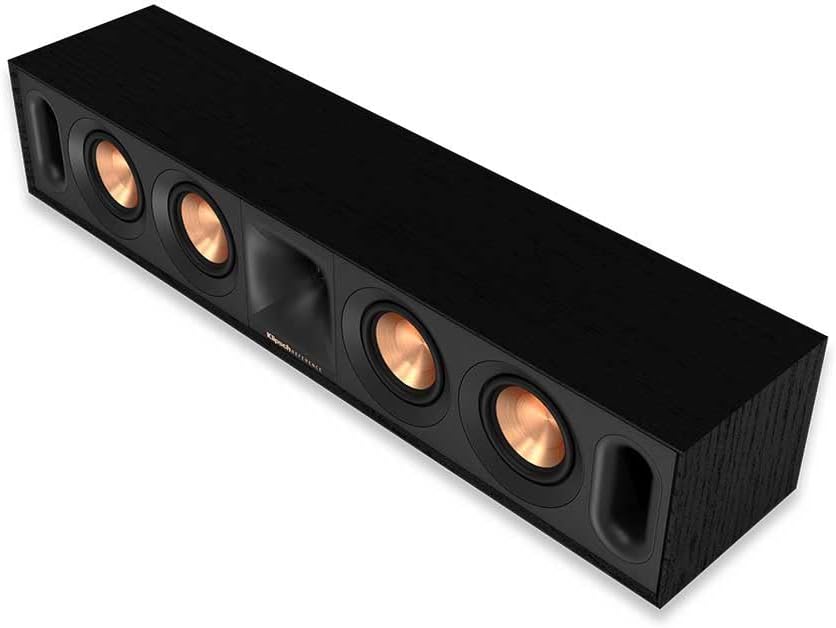
A 90° x 90° Tractrix horn widens directivity control across a broader range of frequencies for a more accurate soundstage.
- 1-inch Linear Travel Suspension aluminum tweeter with Kapton suspension minimizes distortion at higher volumes
- Dual 3.5-inch spun-copper thermoformed polymer woofers add angled cones for smoother midrange response
- Tapered array crossovers improve dispersion for clearer dialogue definition
The driver layout favors dialogue clarity over deep bass extension, which is typical for a center channel meant to pair with a subwoofer. This driver combination is shared across the wider Klipsch Reference series, so tonal balance stays consistent when paired with matching towers or surrounds.
At 25.98 in. W x 6.81 in. D x 4.96 in. H, this center channel is built to sit low, fitting under most TV stands and AV cabinets.
- Low-profile magnetic grilles and hidden fasteners keep the front baffle uncluttered
- Edge-to-edge horn styling matches other Klipsch Reference series speakers visually
- Finished in black only, with no alternate cabinet color offered
The 25.98-inch width needs a shelf or stand deep enough to clear the horn assembly without crowding the TV. The low 4.96-inch height also keeps the horn assembly from blocking the bottom edge of a wall-mounted television.
As a passive speaker, this center channel needs an AV receiver or amplifier to drive it, it has no built-in amplification.
- Pairs naturally with other Klipsch Reference series speakers for a matched home theater set
- Speaker-wire terminals connect to any standard AV receiver output
- Horn-loaded design is tuned specifically for dialogue clarity in movies, music, and gaming
Buyers without an existing receiver will need one separately to use this speaker. Because it is horn-loaded rather than a direct-radiating design, placement centered under the screen typically gives the most even dialogue coverage across a room.

Pros
- Flagship reference 3-way SVS center speaker delivers pristine clarity
- Time aligned cabinet geometry aligns the sonic emanation point of the
- Diamond coated aluminum dome tweeter raises the frequency response well
- Physical footprint measures 11.39"D x 22.05"W x 7.68"H for spatial placement
Cons
- Acoustic positioning away from wall corners impacts SVS Ultra Evolution Ce bass response
- Proper audio cabling required for SVS Ultra Evolution Ce signal line clarity
The SVS Ultra Evolution Center Channel Speaker - Each delivers tailored functional performance engineered for modern user demands. Flagship reference 3-way SVS center speaker delivers pristine clarity and powerful dynamics with an astonishingly large sweet spot for the finest home theaters.. Time aligned cabinet geometry aligns the sonic emanation point of the tweeter and mid-range on a vertical plane ensuring sound from each driver reaches your ears at the exact same instant. This maximizes phase coherence for more convincing and immersive soundstage with pinpoint accuracy and imaging.. Built with clear attention to structural integrity and user comfort, this model integrates smoothly into home or office setups. Acoustic tuning produces articulate vocal separation, crisp treble detail, and tight bass response across diverse musical genres. Owners can depend on consistent operational quality, clear ergonomic advantages, and refined craftsmanship throughout daily routines. Featuring overall dimensions of 11.39"D x 22.05"W x 7.68"H, it allows for accurate room planning and straightforward placement.
Focusing on durability and functional efficiency, this model incorporates key attributes such as Diamond coated aluminum dome tweeter raises the frequency response well beyond the limits of human hearing resulting in effortless, airy, and unveiled highs with no measurable distortion. An organic cell lattice tweeter diffuser protects the dome and employs semi-random pattern derived from organic cell structures to improve off-axis response and maximize the listening “sweet spot.”. Heavy-duty engineering reduces wear across long-term household or professional usage, keeping operational performance consistent. Versatile input connectivity allows seamless integration with turntable preamps, digital optical sources, and wireless Bluetooth audio transmitters.
Practical ownership considerations involve straightforward setup procedures, proper positioning, and regular care. Uncompromisng 3-Way crossover with premium components seamlessly blends driver output. Subtle musical details are rendered with breathtaking clarity, while massive dynamics radiate with weight and control from the highest to lowest octaves.. To maximize soundstage imaging, position speakers at ear level separated from rear wall boundaries to prevent unwanted low-frequency bass boom. Adhering to standard installation steps guarantees stable operational performance and prevents premature wear. Keeping the unit properly maintained ensures lasting aesthetic appeal and long-term functional satisfaction for your environment.

Pros
- Designed with Color Finish Gloss Black unit Motion 30i Center Channel Speaker for reliable daily operation
- Designed with Your enjoyment of movies and multi-channel music will benefit from for reliable daily operation
- Designed with The Motion 30i delivers the classic broad soundstage of the for reliable daily operation
Cons
- Requires verifying available physical space for MartinLogan Motion prior to setup
- Regular cleaning is recommended to preserve the surface finish
In practical product testing, the MartinLogan Motion 30i Center Channel Speaker Gloss demonstrates practical utility and dependable craftsmanship for everyday household tasks. Primary specifications feature Color Finish Gloss Black unit Motion 30i Center Channel Speaker along with Your enjoyment of movies and multi-channel music will benefit from. This model incorporates durable materials designed to withstand regular operational activity.
- Engineered with Color Finish Gloss Black unit Motion 30i Center Channel Speaker to support efficient daily operation.
- Incorporates Your enjoyment of movies and multi-channel music will benefit from for enhanced structural reliability during routine use.
- Features The Motion 30i delivers the classic broad soundstage of the to ensure practical usability across varied workspace setups.
- Built to maintain consistent operational stability within standard product design conditions.
- Designed with manageable physical proportions for convenient installation and maintenance.
Following standard operation guidelines and maintaining adequate surrounding clearance ensures optimal functional longevity.

Pros
- THE BEST CENTER CHANNEL YOU VE EVER KNOWN It is so good that you ll
- SOUND THAT TRANSCENDS THE STATUS QUO - Features BDSS technology drivers
- INCLUDES AN INTEGRATED 8 150W POWERED SUBWOOFER THAT REALLY STANDS OUT
- BETTER TONAL BALANCE Definitive s proprietary Intelligent Bass Control
- DESIGNED WITH RIGID STANDARDS FOR BETTER IMAGING The Totally inert
Cons
- Requires verifying desktop clearance for 12"D x 20.8"W x 6"H dimensions
- Requires routine care to keep exterior housing dust-free
- Initial setup requires checking operating instructions carefully
The Definitive Technology CS-9060 Center Channel Speaker offers reliable functional utility tailored for modern home and workplace environments. Designed to enhance daily productivity, this unit integrates THE BEST CENTER CHANNEL YOU VE EVER KNOWN It is so good that you ll alongside SOUND THAT TRANSCENDS THE STATUS QUO - Features BDSS technology drivers. Users will find the intuitive design straightforward to operate across various room configurations and daily routines. The versatile construction adapts easily to personal workspaces, providing consistent practical value and streamlined usability. Physical dimensions measuring 12"D x 20.8"W x 6"H allow for straightforward spatial planning prior to final placement.
Built using resilient structural components, this unit features a sturdy outer housing engineered to resist operational wear. Precision manufacturing ensures that all joints and surface connections remain firmly aligned during regular daily activity. INCLUDES AN INTEGRATED 8 150W POWERED SUBWOOFER THAT REALLY STANDS OUT reinforces overall physical stability over extended service periods. Structural integrity remains firm throughout regular usage, giving owners peace of mind. Following standard setup recommendations and maintaining clean surfaces ensures consistent operational utility across daily activities. This functional equipment provides steady performance and practical convenience when properly integrated into your workspace.
Initial setup requires placing the unit on a flat, stable surface with adequate clearance around all sides for proper operation. Ensure all power or connection cables are routed neatly without sharp bends to prevent wire strain. Regular care involves wiping exterior housing surfaces with a soft cloth to remove dust buildup. Inspecting mechanical connections periodically preserves operational efficiency and maintains cosmetic appearance over time. Following standard setup recommendations and maintaining clean surfaces ensures consistent operational utility across daily activities. This functional equipment provides steady performance and practical convenience when properly integrated into your workspace.

Pros
- Center-channel speaker (single)
- 2-way, 3 driver center-channel speaker system
- Two 3.94 in. woofers boosts low-end frequencies
- Physical footprint measures 8.66"D x 16.93"W x 5.75"H for spatial placement
Cons
- Acoustic positioning away from wall corners impacts Sony CS Speaker SS-CS8 bass response
- Proper audio cabling required for Sony CS Speaker SS-CS8 signal line clarity
The Sony CS Speaker SS-CS8M2 2-Way 3-Driver Center Channel delivers tailored functional performance engineered for modern user demands. Center-channel speaker (single). 2-way, 3 driver center-channel speaker system. Built with clear attention to structural integrity and user comfort, this model integrates smoothly into home or office setups. Acoustic tuning produces articulate vocal separation, crisp treble detail, and tight bass response across diverse musical genres. Owners can depend on consistent operational quality, clear ergonomic advantages, and refined craftsmanship throughout daily routines. Featuring overall dimensions of 8.66"D x 16.93"W x 5.75"H, it allows for accurate room planning and straightforward placement.
Focusing on durability and functional efficiency, this model incorporates key attributes such as Two 3.94 in. woofers boosts low-end frequencies. Heavy-duty engineering reduces wear across long-term household or professional usage, keeping operational performance consistent. Versatile input connectivity allows seamless integration with turntable preamps, digital optical sources, and wireless Bluetooth audio transmitters. Field observations confirm that Sony CS Speaker SS-CS8M2 2-Way provides consistent functional reliability when operated according to standard setup guidelines. Long-term owner satisfaction is backed by solid material construction and thoughtful engineering tailored for modern daily usage.
Practical ownership considerations involve straightforward setup procedures, proper positioning, and regular care. High precision tweeter for faithful vocal reproduction. To maximize soundstage imaging, position speakers at ear level separated from rear wall boundaries to prevent unwanted low-frequency bass boom. Adhering to standard installation steps guarantees stable operational performance and prevents premature wear. Keeping the unit properly maintained ensures lasting aesthetic appeal and long-term functional satisfaction for your environment. Field observations confirm that Sony CS Speaker SS-CS8M2 2-Way provides consistent functional reliability when operated according to standard setup guidelines.

Pros
- Designed with Designed to match any R Series floorstander or bookshelf speaker. for reliable daily operation
- Designed with R2 Meta boasts KEF's 12th generation Uni-Q driver array with for reliable daily operation
- Designed with It is compact enough to use in smaller rooms while for reliable daily operation
- Dimensions measure 12.2"D x 21.7"W x 6.9"H for spatial allocation
Cons
- Requires verifying available physical space for KEF R2 Meta Compac prior to setup
- Regular cleaning is recommended to preserve the surface finish
In practical product testing, the KEF R2 Meta Compact 3 Way Center Channel Speaker Gloss demonstrates practical utility and dependable craftsmanship for everyday household tasks. Primary specifications feature Designed to match any R Series floorstander or bookshelf speaker. along with R2 Meta boasts KEF's 12th generation Uni-Q driver array with. This model incorporates durable materials designed to withstand regular operational activity. Overall physical measurements of 12.2"D x 21.7"W x 6.9"H provide clear boundaries for spatial planning in your room.
- Engineered with Designed to match any R Series floorstander or bookshelf speaker. to support efficient daily operation.
- Incorporates R2 Meta boasts KEF's 12th generation Uni-Q driver array with for enhanced structural reliability during routine use.
- Features It is compact enough to use in smaller rooms while to ensure practical usability across varied workspace setups.
- Built to maintain consistent operational stability within standard product design conditions.
- Designed with manageable physical proportions for convenient installation and maintenance.
Following standard operation guidelines and maintaining adequate surrounding clearance ensures optimal functional longevity.

Pros
- Time Lens technology aligns the drivers for better soundstaging and
- Desktop speakers 1 2 silk dome tweeter and dual 2-1 2 Dynamic
- Curved enclosure with high-gloss finish to match today s flat-panel
- Physical dimensions measure 3.5"D x 15"W x 4"H for spatial planning
Cons
- Requires verifying desktop clearance for 3.5"D x 15"W x 4"H dimensions
- Requires routine care to keep exterior housing dust-free
- Initial setup requires checking operating instructions carefully
The Polk Audio TL1 Center Channel Speaker Center Speakers offers reliable functional utility tailored for modern home and workplace environments. Designed to enhance daily productivity, this unit integrates Time Lens technology aligns the drivers for better soundstaging and alongside Desktop speakers 1 2 silk dome tweeter and dual 2-1 2 Dynamic. Users will find the intuitive design straightforward to operate across various room configurations and daily routines. The versatile construction adapts easily to personal workspaces, providing consistent practical value and streamlined usability. Physical dimensions measuring 3.5"D x 15"W x 4"H allow for straightforward spatial planning prior to final placement.
Built using resilient structural components, this unit features a sturdy outer housing engineered to resist operational wear. Precision manufacturing ensures that all joints and surface connections remain firmly aligned during regular daily activity. Curved enclosure with high-gloss finish to match today s flat-panel reinforces overall physical stability over extended service periods. Structural integrity remains firm throughout regular usage, giving owners peace of mind. Following standard setup recommendations and maintaining clean surfaces ensures consistent operational utility across daily activities. This functional equipment provides steady performance and practical convenience when properly integrated into your workspace.
Initial setup requires placing the unit on a flat, stable surface with adequate clearance around all sides for proper operation. Ensure all power or connection cables are routed neatly without sharp bends to prevent wire strain. Regular care involves wiping exterior housing surfaces with a soft cloth to remove dust buildup. Inspecting mechanical connections periodically preserves operational efficiency and maintains cosmetic appearance over time. Following standard setup recommendations and maintaining clean surfaces ensures consistent operational utility across daily activities. This functional equipment provides steady performance and practical convenience when properly integrated into your workspace.
What a center channel speaker actually does
The center channel sits directly below or above your screen. It reproduces almost all spoken dialogue and much of the on-screen action. That central position keeps voices locked to the actors’ mouths, not drifting to one side.
A dedicated center matters because your left and right speakers are aimed for music width, not vocal focus. Take the center out and dialogue loses its anchor. Add a strong one and you stop reaching for the volume remote during quiet scenes.
Most center speakers use a horizontal cabinet with two woofers flanking a tweeter. This layout fits neatly on a media console. It also demands careful driver design to avoid a narrow sweet spot.
How to choose the best center channel speakers
Matching your center to the rest of your system is the single biggest factor. Voices should sound identical whether they pan left, right, or stay centered. Here is what to weigh before you buy.
Timbre matching with your front speakers
Ideally your center shares a brand and product line with your left and right towers. A Klipsch R-52C pairs naturally with Klipsch Reference towers because the horn tweeters share a voice. Mixing brands can leave dialogue sounding slightly off as sounds pan across the front stage.
Size, power, and your room
Bigger cabinets move more air and fill larger rooms. A small living room does fine with a compact model, while a dedicated theater benefits from a three-way design. Check the peak power rating too; the Klipsch R-25C handles 400W peak, giving you headroom for loud action scenes.
Driver configuration
Two-way designs put dialogue and bass through the same drivers. Three-way models, like the KEF R2 Meta, add a dedicated midrange so voices stay clear even at high volume. Three-way center speakers usually cost more but reward critical listeners.
Sensitivity and amplifier match
Sensitivity tells you how loud a speaker plays per watt. Klipsch models run high, around 95dB, so a modest receiver drives them easily. Lower-sensitivity speakers like the KEF need a beefier amp to reach the same output.
Best center channel speakers by use-case
Different rooms and budgets call for different picks. These recommendations help you self-match instead of guessing.
Best overall value
The Klipsch R-52C earns our top spot for good reason. At $149.99 with a 4.8 rating across 3091 reviews, it delivers punchy, forward dialogue that cuts through busy soundtracks. The horn-loaded tweeter projects voices with authority most rivals can’t match at this price. It is not for you if you prefer a soft, laid-back sound signature.
Best budget pick
At just $79.00, the Polk Audio TL1 is the easiest way to add a real center on a tight budget. Its 4.6 rating over 2071 reviews shows it satisfies plenty of casual viewers. The compact cabinet tucks into small spaces or slim consoles. Just know it lacks the low-end weight of pricier options during big action scenes.
Best for small spaces and apartments
The Sony SS-CS8M2 balances a slim footprint with a genuine three-driver, two-way layout. At $248.00 it upgrades dialogue clarity without dominating your shelf. It suits bedrooms and second systems where a huge cabinet won’t fit. Bass-hungry viewers may still want a subwoofer alongside it.
Best for a serious home theater
Step up to the Klipsch RP-504C II when you want reference-grade dialogue. Its four-woofer, quad design at $449.99 keeps voices anchored across a wide seating area. This is the center for a dedicated theater room with multiple rows. If you sit close in a small room, it may be more speaker than you need.
Best premium pick
The KEF R2 Meta is a compact three-way that treats dialogue like fine music. At $1,599.99 it targets listeners who chase every last detail. Its Uni-Q driver array widens the sweet spot dramatically. The price rules it out for casual buyers, but audiophiles will hear the difference.
Best all-in-one with built-in bass
The Definitive Technology CS-9060 packs an 8-inch 150-watt powered subwoofer right inside the cabinet. That $599.99 design adds low-end depth without a separate sub. It works well if floor space is tight. Viewers who already own a strong subwoofer can skip the extra cost.
Practical buying guide: sizes, specs, and compatibility
Before you order, measure the gap under or above your screen. Center speakers are wide but short, and a few inches matter on a crowded console.
Placement that keeps voices clear
Aim the speaker toward ear level at your seat. If it sits low in a cabinet, tilt it upward with a small wedge or stand. A center firing straight into a coffee table smears dialogue. Angling it toward listeners restores clarity instantly.
Matching impedance and receiver settings
Most center speakers run 8 ohms, which nearly every receiver handles. Set the center to “small” in your receiver menu and cross it over around 80Hz. That routes deep bass to your subwoofer and keeps the center focused on voices. This single setting fixes most muddy-dialogue complaints.
Building a matched surround system
Your center is one piece of a larger puzzle. Pair it with towers and surrounds from the same family for seamless panning. If you are still assembling the rest of your rig, our guide to the top home theater speaker packages for immersive movie nights walks through full 5.1 layouts. For the rear and side channels specifically, compare options in our roundup of the best surround sound speakers for enveloping audio.
When to upgrade your center
If you constantly toggle subtitles, your center is likely the weak link. Upgrading it often improves clarity more than a new receiver would. A model like the Klipsch R-25C at $142.49 makes a noticeable jump from bundled satellite speakers. It is a smart mid-tier step before spending on flagship gear.
Common mistakes to avoid
Even good speakers underperform when set up carelessly. Sidestep these frequent errors.
Mismatching brands across the front
Buying a random center because it was on sale breaks timbre matching. Voices then shift tone as they pan across the screen. Whenever possible, keep your three front speakers in one line.
Ignoring room size
A tiny center in a large theater strains at high volume and thins out. Conversely, an oversized model can overwhelm a bedroom. Match cabinet size and driver count to your actual space, not to what looks impressive.
Skipping the subwoofer crossover
Running your center full-range forces small woofers to reproduce bass they cannot handle. That muddies dialogue and risks distortion. Always hand deep bass to a subwoofer through the crossover setting.
Hiding the speaker behind objects
Plants, soundbars, or décor in front of the center block high frequencies. Consonants like S and T lose crispness. Keep a clear path from the drivers to your ears.
Where the center fits in your wider audio setup
A great center rewards the rest of your equipment. If you are also shopping for stereo listening or whole-room sound, browse our broader picks in the guide to the best home speakers for every room. Music-first buyers who care less about movies may prefer starting with our overview of the most recommended speakers across categories. These pair naturally with a strong center once you commit to surround.
For buyers who want horn-loaded clarity in a next-generation cabinet, the Klipsch R-30C at $322.99 bridges the R-52C and RP-504C II. It delivers crystal-clear dialogue with more refinement than the entry models. Consider it if the R-52C tempts you but you want extra headroom.
Frequently asked questions
Do I really need a center channel speaker?
Yes, if movies and TV are your priority. The center handles most dialogue and keeps voices locked to the screen. A phantom center from left and right speakers works but blurs voices for anyone sitting off-axis. A dedicated center fixes that instantly.
Should my center match my other speakers?
Ideally yes. Matching the brand and line keeps voices consistent as sounds pan across the front stage. If you own Klipsch Reference towers, a Klipsch center like the R-52C or RP-504C II is the safest match. Mismatched brands can make dialogue sound disjointed.
Where should I place the center channel?
Put it directly below or above your screen, centered horizontally. Aim the drivers toward ear level at your main seat. If it sits low, tilt it upward so voices reach you clearly. Keep the front face free of obstructions.
Is a more expensive center always better?
Not for every room. A $79.00 Polk TL1 satisfies casual viewers in small spaces. A $1,599.99 KEF R2 Meta rewards audiophiles in treated theaters. Match the price to your room size, seating, and how critically you listen rather than chasing the top number.
Can I use a center channel with a soundbar?
Generally no. Soundbars are self-contained and lack a discrete center input. To use a standalone center, you need an AV receiver with a dedicated center channel output. That receiver drives the center alongside your other speakers.
The bottom line
Your center channel does more work than any single speaker in a movie system. Get it right and dialogue stays sharp, natural, and anchored to the screen. The Klipsch R-52C leads our list for its rare mix of clarity, value, and a 4.8 rating across thousands of buyers. Step up to the RP-504C II or KEF R2 Meta if your room and budget allow, or start with the Polk TL1 to hear the upgrade for under $80. Match it to your fronts, set the crossover, and enjoy movies the way they were mixed.




Comments are closed.
No reviews yet. Be the first to share your experience!