 Naomi Tanaka
 Choosing the best vacuum sweepers for your home means balancing suction power, weight, floor type, and price. Whether you are dealing with pet hair on carpet, dust on hardwood, or crumbs in tight corners, the right sweeper turns a dreaded chore into a five-minute pass. In this guide we break down what actually matters when you shop, the main types of vacuum sweepers available, and how to match a machine to your space so you buy once and buy well.
Rather than reviewing every model in detail, this overview focuses on helping you choose. We highlight standout options along the way so you can jump straight to a product that fits your needs, but the goal is to make you a smarter buyer first.
What to Look for in the Best Vacuum Sweepers
Before comparing models, it helps to understand the handful of specifications that separate a great vacuum sweeper from one that ends up in a closet. Focus on these and you will filter out most of the noise.
Suction Power and Brushroll Design
Suction is the headline feature, but brushroll design matters just as much. A motorized brushroll digs debris out of carpet fibers, while a self-cleaning brushroll resists the hair wrap that kills performance over time. If you have pets or long-haired household members, prioritize models built to shed tangles. Cordless units like the Dyson V8 Cordless pair strong suction with anti-tangle heads, making them a reliable pick for mixed messes.
Weight and Maneuverability
A powerful vacuum you never use because it is too heavy is a bad purchase. Lightweight uprights and stick vacuums are far easier to carry up stairs, and lift-away designs let you detach the canister to reach ceilings, drapes, and car interiors. Swivel steering also makes a real difference when you are weaving around furniture legs. If portability is your top concern, a stick model such as the Bissell Featherweight Stick is remarkably nimble for the price.
Filtration and Dust Capacity
HEPA filtration traps fine dust and allergens instead of blowing them back into the room, which is essential for allergy sufferers. A larger dust cup means fewer trips to the trash, but it also adds weight, so think about how big your space is. Bagless designs save on running costs, while sealed systems keep captured particles locked in until you empty them.
Corded vs. Cordless vs. Robot
Corded vacuums deliver consistent, unlimited runtime and typically the strongest suction. Cordless models trade a little power for freedom of movement and quick grab-and-go cleanups. Robot vacuums handle daily maintenance automatically. Many homes end up with two machines: a primary sweeper for deep cleans and a robot or handheld for touch-ups between.
Top Vacuum Sweepers to Consider in 2026
Below is a curated shortlist of vacuum sweepers worth a look this year, spanning uprights, cordless sticks, and a robot mop combo so there is something for every home and budget.

Pros
- Detachable pod design switches the vacuum from a full-size upright to a portable canister for stairs and furniture
- HEPA filtration with a sealed system is built to trap dust and allergens inside the vacuum rather than recirculating them
- Swivel steering improves maneuvering around furniture legs and tight corners compared with a fixed-wheel upright
- LED headlights on the nozzle reveal dust and debris in dim rooms or under furniture
- Includes dusting brush, upholstery tool, and crevice tool for above-floor cleaning without separate attachments to buy
Cons
- 0.9-quart dust cup is on the smaller side, meaning more frequent emptying during large cleaning sessions
- Bagless design means direct contact when emptying the dust cup, which some users prefer to avoid versus bagged models
- No cordless option here, so cleaning is limited by cord length and nearby outlet placement
The detachable pod separates from the main upright body with the push of a button, converting the vacuum into a lighter, portable unit for stairs, furniture, and other above-floor cleaning. Once detached, the dusting brush, upholstery tool, and crevice tool attach directly to the pod for baseboards, curtains, blinds, and tight corners.
- Detachable pod for portable cleaning
- Included dusting brush, upholstery, and crevice tools
- 0.9-quart bagless dust cup
This two-in-one format means a single vacuum handles both full-room floor cleaning and detailed above-floor work, without switching to a separate handheld unit.
A HEPA filter combined with an anti-allergen complete seal system is built to trap dust and non-living allergen matter inside the vacuum rather than letting it escape back into the room through the exhaust. This is paired with swivel steering for maneuvering around furniture without losing contact with the floor.
- HEPA filter with anti-allergen complete seal
- Swivel steering for tight-space maneuvering
- LED headlights to reveal hidden debris
The sealed HEPA system is most relevant for households managing dust sensitivities, since it is specifically designed to keep filtered particles contained rather than recirculated during vacuuming.
Powerful multi-surface suction is built to lift dirt, debris, and pet hair from both carpet and hard floors, making this a fit for homes with mixed flooring rather than a single-surface specialist vacuum. LED headlights help spot debris in low-light areas like under beds or in dim hallways.
- Multi-surface suction for carpet and hard floors
- LED headlights for low-light debris detection
- Lightweight upright body for repeated room-to-room use
Homes with pets benefit from the wide upholstery tool for removing hair from furniture and stairs, in addition to the main floor-cleaning path through carpets and hardwood.
Pros
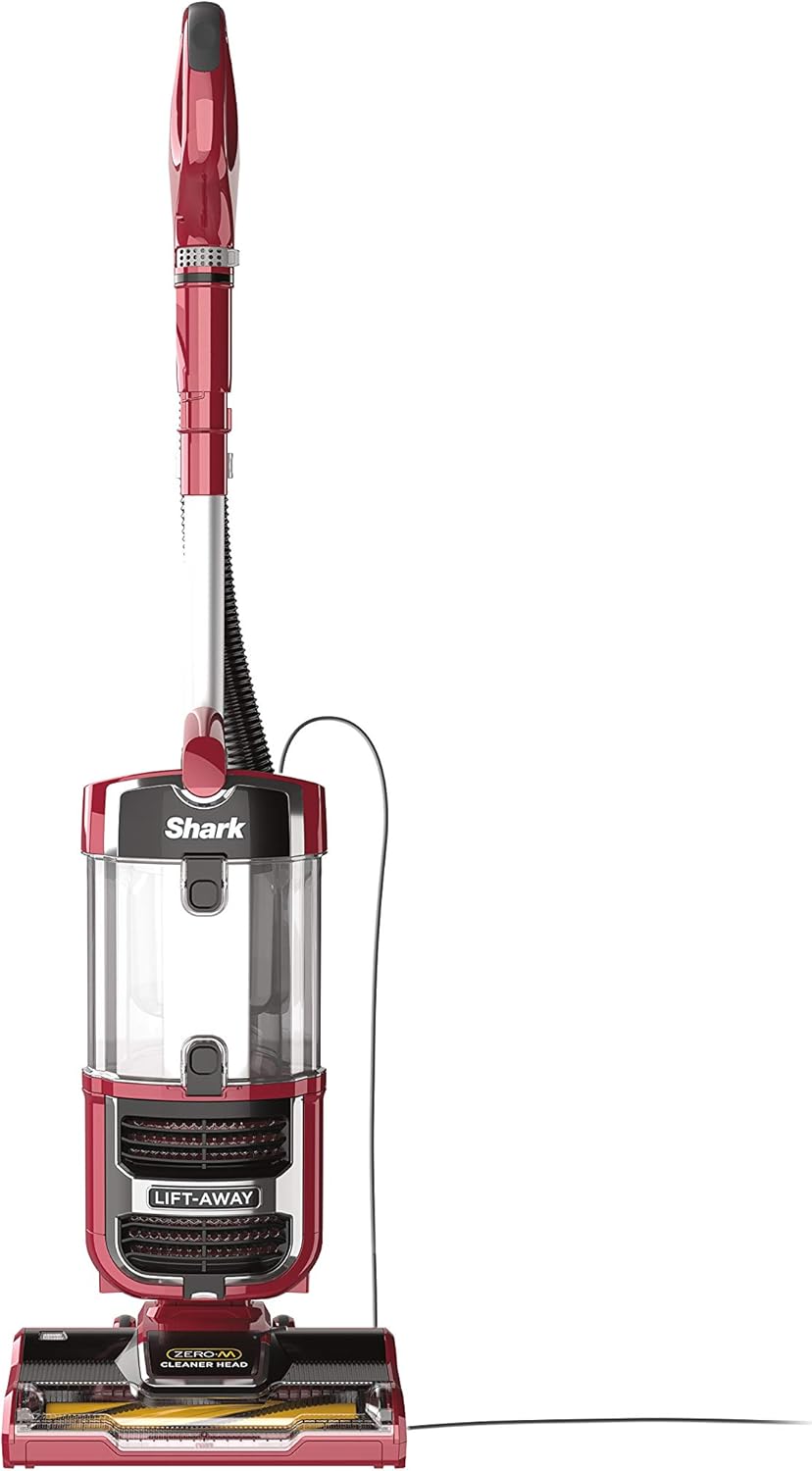
- Self-cleaning brushroll clears wrapped hair automatically, cutting down the manual hair-removal task upright vacuums with plain brushrolls require
- HEPA filter combined with Anti-Allergen Complete Seal Technology traps over 99.9% of dust and allergens inside the machine
- Lift-Away pod detaches from the base for portable cleaning of stairs and furniture without hauling the full unit
- Weighs 13.4 lbs, lighter than the 14.5-16.7 lb range of several other models in the same Navigator lineup
- Draws 800 watts, the lowest power draw among the compared Shark Navigator models while still running the self-cleaning brushroll
Cons
- No Powered Lift-Away motor in the detached pod, so suction is weaker in Lift-Away mode than in models with that feature
- Bagless dust cup needs manual emptying and occasional rinsing, an upkeep step a bagged vacuum avoids
- Suction control is a manual slider rather than an automatic floor-sensing system, so switching between carpet and hard floor takes a manual adjustment each time
The self-cleaning brushroll is designed to clear wrapped pet hair automatically as it spins, cutting down on the scissors-and-comb cleanup that plain brushrolls demand after vacuuming a shedding pet's favorite spots. The bagless dust cup lifts out for emptying directly into the trash and can be rinsed clean, avoiding the ongoing cost and hassle of replacement bags.
Filtration runs through a HEPA filter combined with Anti-Allergen Complete Seal Technology, together built to trap over 99.9% of dust and allergens inside the machine rather than letting them recirculate through the exhaust air, a detail that matters for households managing allergies or asthma. The filter itself should be rinsed or replaced on a regular schedule to keep suction consistent as it collects fine particles over time.
A suction control slider lets the level of vacuum power be adjusted manually to match the surface, from bare hard floors up to thicker carpet, rather than relying on an automatic floor sensor. Swivel steering is built into the base for maneuvering around furniture legs and tight corners without repositioning the whole vacuum body.
In upright mode, the unit handles standard floor and carpet cleaning, drawing 800 watts of power, a lower figure than several other Navigator models in the same lineup that push closer to 1150 watts. Because there is no Powered Lift-Away motor built into the detachable pod, suction drops somewhat once the pod is lifted away from the base, so it performs best on floors while running as a full upright.
Detaching the pod from the base switches the vacuum into Lift-Away mode, useful for cleaning stairs, upholstery, curtains, and above-floor surfaces without lugging the entire 13.4 lb unit up and down each step. An extendable hose in this mode reaches crown molding and other hard-to-reach high spots that the upright body alone cannot get to.
Extra tools are included in the box for tight spaces, stubborn pet hair, and upholstery cleaning, rounding out the accessory kit beyond the main brushroll. Note that the printed manual references the "ZU560 series," which is the documentation used for both the ZU560 and this ZU561 model, so the manual content still applies even though the model number printed on it differs slightly from the unit in the box.

Pros
- Up to 40 minutes of fade-free runtime per charge
- Motorbar cleaner head automatically de-tangles wrapped long hair and pet hair from the brush bar while cleaning
- Whole-machine filtration captures 99.99% of particles down to 0.3 microns in Max mode
- Converts to a handheld vacuum with one click for cars, stairs, and upholstery
- Crevice tool reaches up to 7 inches into tight, narrow spaces
Cons
- 40-minute runtime is a maximum figure that drops depending on power mode and floor type used
- Max mode boosts suction but reduces filtration slightly to 99.97% versus 99.99% in standard mode, and also drains the battery fastest
- Cordless format means limited total runtime rather than a corded vacuum's unlimited runtime, so larger homes may need to pause and recharge mid-clean
This vacuum delivers up to 40 minutes of fade-free run time, with two selectable cleaning modes trading suction power for extended run time. A power trigger only draws power while actively pressed, helping stretch battery life further during a cleaning session rather than running continuously.
- Actual runtime varies with power mode, dust level, floor type, and attachments used
- Max mode boosts suction but shortens available runtime and battery life per charge
- Cordless design allows full-room cleaning without a power cord getting in the way
Larger homes may need to plan a mid-clean recharge, since 40 minutes is the upper limit under ideal conditions rather than a guaranteed runtime in every mode.
The Motorbar cleaner head is built to deep clean both carpets and hard floors in a single pass, with hair removal vanes that automatically clear wrapped long hair and pet hair from the brush bar while vacuuming. That reduces the need to stop and manually cut hair free from the roller.
- Single Motorbar head is designed to transition across carpet and hard floor without swapping attachments
- De-tangling vanes work continuously during use rather than needing a manual cleaning cycle
- Suited to homes with pets shedding on mixed flooring
Deep pile or high-shag carpet can still tax any cordless stick vacuum's runtime and suction more than low-pile carpet or hard flooring.
This vacuum converts to a handheld with one click for cleaning cars, stairs, and upholstery, and ships with an engineered crevice tool that reaches up to 7 inches into tight, hard-to-reach spaces. Whole-machine filtration is sealed to capture 99.99% of particles as small as 0.3 microns in Max mode, with 99.97% filtration in other modes.
- Handheld conversion needs no extra tools, just detaching the main body
- Crevice tool is included in the box for tight spaces
- Backed by a 2-year limited warranty plus lifetime support
Because filtration efficiency shifts slightly between modes, anyone with allergy concerns should default to Max mode when filtration matters more than runtime.
Pros
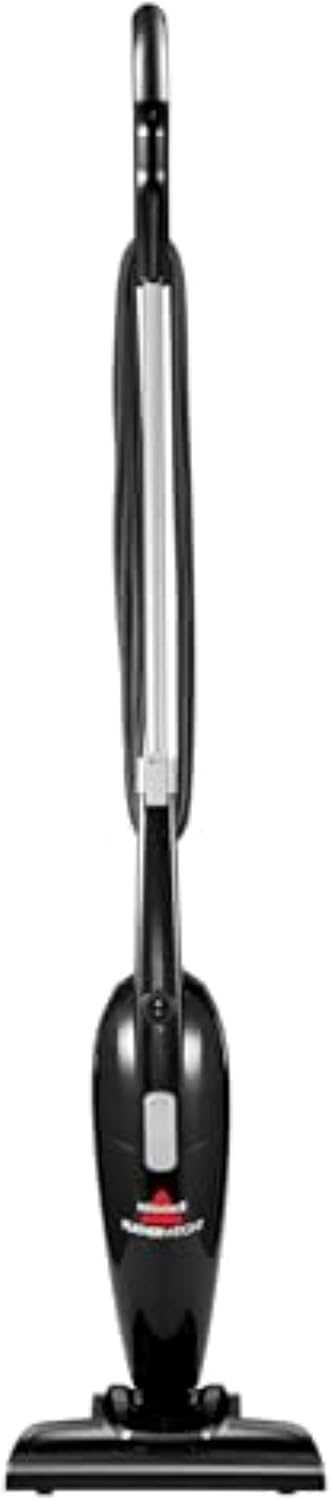
- Weighs under 4 pounds, so it is easy to carry room to room or up a flight of stairs
- Converts between stick, hand and stair vacuum configurations from one unit
- 15-foot power cord allows continuous cleaning across a room without stopping to swap outlets
- Bagless 0.67-liter dirt cup has a transparent window to monitor fill level at a glance
- Comes with a dedicated crevice tool for baseboards, cushions and other tight spots
Cons
- Corded design means reach is limited to 15 feet from the outlet, unlike cordless stick vacuums
- Best suited to hard floors and low-pile rugs - it is not built for thick or plush carpet
- No motorized brushroll, so it relies on suction alone rather than agitation to lift embedded debris
This is a bagless stick vacuum with a 0.67-liter dirt cup that has a transparent design, making it easy to see when it needs emptying. The simple release mechanism is built for mess-free disposal without touching the collected debris directly.
- Bagless design with a 0.67L transparent dirt cup
- Simple empty mechanism
- No motorized brushroll to clean or untangle
Because there's no motorized brushroll, there's also nothing to detangle from hair or fibers, though it also means less agitation on carpet fibers.
This vacuum is engineered for hard floors, area rugs and low-pile carpet, using suction alone to lift surface dirt and debris rather than a rotating brush. It converts between a full stick vacuum, a handheld unit, and a stair-cleaning configuration depending on the surface.
- Suited to hard floors, area rugs and low-pile carpet
- Converts to hand vacuum or stair configuration
- Suction-only pickup, no brushroll agitation
Thick or plush carpet is outside its intended use, since it relies on suction rather than brush agitation to lift embedded dirt.
Weighing under 4 pounds, this vacuum is light enough to carry from room to room, under furniture, or up a flight of stairs without strain. It includes a professional-grade crevice tool and a floor nozzle for stairs, plus a 15-foot power cord for continuous corded cleaning.
- Weighs under 4 pounds
- Includes a crevice tool and stair floor nozzle
- 15-foot power cord
Being corded, its working range is limited to 15 feet from an outlet, unlike cordless stick vacuums that trade cord-free freedom for battery runtime.
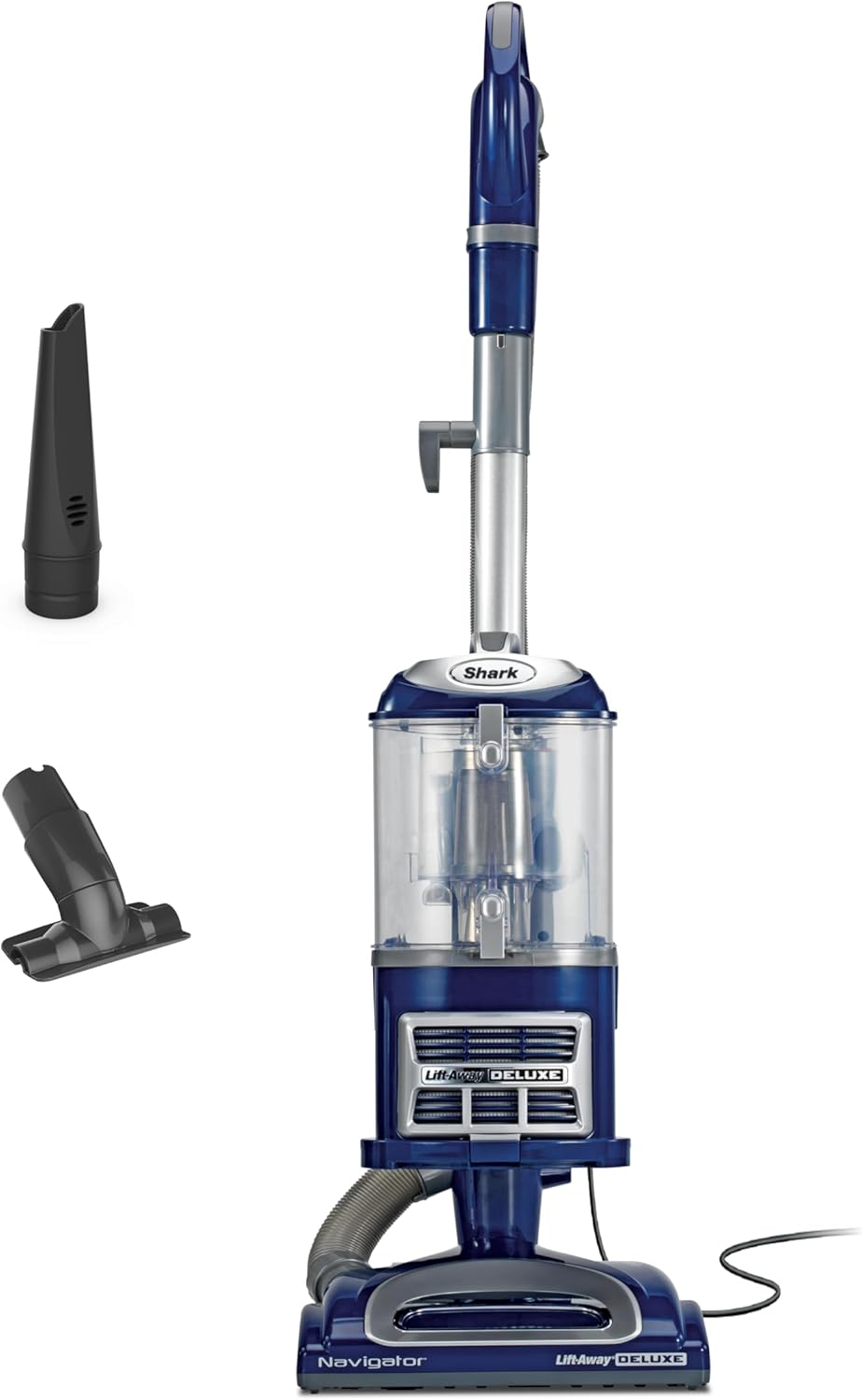
Pros
- Detachable Lift-Away pod converts the upright into a portable canister for stairs and furniture
- HEPA filtration with a complete seal is designed to trap dust and allergens inside the vacuum
- Brushroll shutoff switches between deep carpet cleaning and gentle hardwood floor modes
- 0.9-quart dust cup capacity supports longer cleaning sessions before emptying
- Swivel steering keeps the vacuum maneuverable around furniture and tight corners
Cons
- Bagless design means the dust cup must be emptied by hand rather than swapping a bag
- 0.9-quart capacity is on the smaller side, so large cleaning jobs need more frequent emptying
- Corded operation limits range to the length of the power cord, unlike cordless stick vacuums
This vacuum uses a HEPA filter with an anti-allergen complete seal system, designed to trap dust and non-living allergen particles inside rather than recirculating them into the room. The bagless 0.9-quart dust cup empties in seconds with a one-touch release rather than requiring bag replacement.
- HEPA filter with sealed system for allergen containment
- 0.9-quart bagless dust cup capacity
- One-touch empty mechanism for quick cleanup between sessions
Regular filter maintenance keeps suction consistent over time, and because the system is bagless, ongoing costs stay limited to occasional filter replacement rather than recurring bag purchases.
A brushroll shutoff switch lets this vacuum move between deep carpet cleaning and gentle hardwood floor cleaning without changing attachments, while swivel steering supports maneuvering around furniture legs and tight corners on either surface type.
- Brushroll shutoff for switching between carpet and hard floor modes
- Swivel steering for tight-space maneuverability
- Multi-surface suction tuned for both carpets and hardwood
Homes with mixed flooring benefit most from the brushroll shutoff feature, since it avoids scattering debris on hard floors that a spinning brushroll designed for carpet can sometimes cause.
The detachable Lift-Away pod separates from the main body for above-floor cleaning, pairing with the included upholstery and crevice tools to reach stairs, curtains, baseboards, and furniture that the upright body alone cannot access.
- Lift-Away pod detaches for portable, above-floor cleaning
- Upholstery tool included for furniture and stairs
- Crevice tool included for tight spaces and edges
Pet owners get particular use from the upholstery tool paired with the strong suction, since it is built specifically to lift pet hair from fabric surfaces that a floor nozzle alone would miss.

Pros
- Five height settings step the brush roll from bare hardwood up to shag pile without stalling
- Quick-release handle detaches onto a stretch hose for stairs, car interiors and ceiling corners
- 7 in crevice tool, dusting brush and upholstery tool all store on board rather than in a cupboard
- Washable filter and a bagless dust cup, so there is no running supply of bags to keep in stock
- Cyclone stage separates coarse debris from fine dust ahead of the filter, holding suction steadier through a long session
Cons
- Corded upright, so cleaning a whole floor means moving the plug between sockets
- Roller brush and belt must be cleared of hair and thread every two weeks, or the belt can fail
- Upright body will not lie flat enough to reach under low furniture, leaving that to the hose and crevice tool
Five height settings are the key mechanism: a dial raises and lowers the brush roll so it keeps contact with the surface without burying itself in the pile.
- Lowest setting for bare hardwood, tile and laminate, where the wheels roll without scratching or gouging
- Middle settings for low and medium pile carpet, the usual bedroom and hallway case
- Highest setting for shag rugs and thick pile, where a fixed-height head would stall or shove the rug along the floor
The cyclone stage separates larger debris and fine dust ahead of the filter, which holds suction steadier through a long session than a straight filter path. On carpet, the motorised roll agitates the pile to lift embedded grit that suction alone leaves behind. Height selection is manual, so moving from a deep rug to a tiled kitchen means a turn of the dial rather than pushing through.
The handle is quick-release: it detaches while staying connected to a stretch hose, which turns the upright into an above-floor cleaner without a second machine in the cupboard.
- 7 in crevice tool for skirting boards, car seat rails and the gap beside a sofa cushion
- Dusting brush for lampshades, door frames, ceiling corners and air vents
- Upholstery tool for sofas, mattresses and car interiors, which is where pet hair concentrates
All three store on board rather than in a drawer, so they are to hand the moment you notice a cobweb instead of two rooms away. The hose stretch sets the practical reach up a wall or down into a car footwell. The dust cup is bagless with a bottom-empty release, so ongoing consumables come down to the occasional filter rather than a bag supply.
The manufacturer is unusually direct about this, and it bears repeating: clear the roller brush and belt of hair and thread every two weeks. Left for months, a wrapped roll stalls the belt, and the documented failure mode is a snapped belt or smoke from the friction.
- Long hair and carpet threads are the usual culprits; a seam ripper or scissors run along the roll clears them in a couple of minutes
- The filter is washable, so it is rinsed and fully air-dried rather than replaced on a schedule
- Never refit a filter while it is still damp, since moisture in the airflow path is what breeds odour in a bagless machine
- The dust cup empties from the bottom and rinses clean
Filtration is quoted at 99.9 percent of dust, dander and allergens captured, which only holds while the filter is clean and correctly seated.
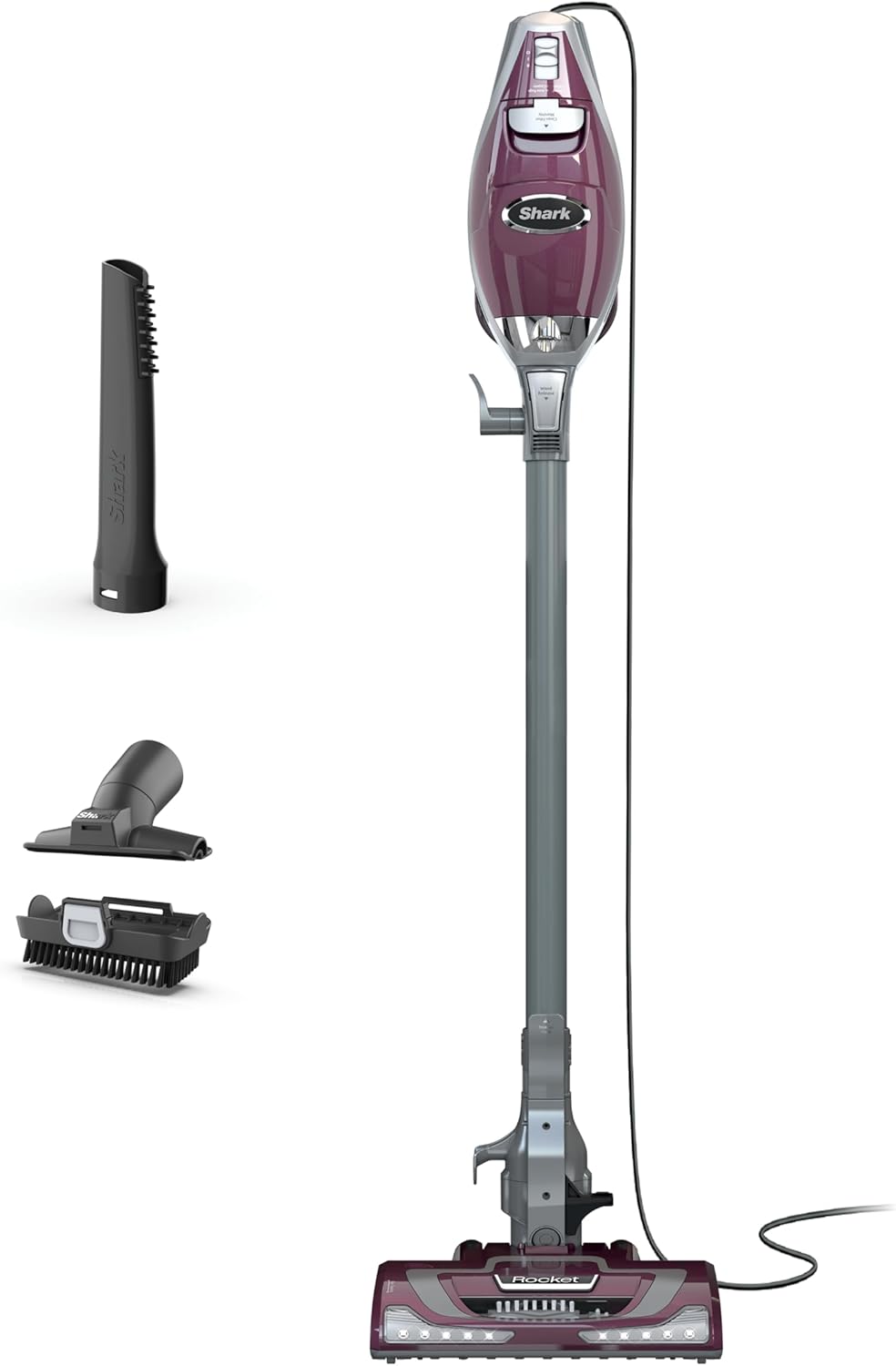
Pros
- Weighs under 10 lbs, lighter than most corded uprights for carrying up and down stairs
- Converts to a handheld unit in seconds for stairs, upholstery and car interiors
- LED headlights on the nozzle reveal debris on dark carpet and under furniture
- Includes a dedicated Pet Multi-Tool and Crevice Tool for embedded hair and tight gaps
- Corded design delivers constant suction with no battery to run down mid-clean
Cons
- Corded-only design means cleaning range is limited by cable length and outlet placement, unlike cordless stick vacuums
- XL dust cup still needs manual emptying after each session, with no self-empty base included
- No stated HEPA filtration in the listed specs, worth checking for allergy-sensitive households
The XL dust cup empties by hand after each session since there's no self-empty base included. Weighing under 10 lbs, the vacuum itself is light enough to carry to a trash can rather than needing to be dragged there.
- XL-capacity dust cup reduces mid-clean emptying versus smaller-capacity stick vacuums
- Corded power means no battery to charge or replace over time
- Duster Crevice Tool included for reaching tight gaps around furniture
Because it runs corded rather than cordless, there's no battery degradation to plan around, but upkeep still means periodically checking the brush roll for tangled hair and clearing the dust cup filter for airflow.
This 2-in-1 vacuum is built to deep-clean carpets and rugs while also picking up debris on hardwood, tile, and laminate. Swivel steering helps it maneuver around furniture legs and tight corners on any of those surfaces.
- Deep-cleans carpets and rugs in upright mode
- Handles hardwood, tile, and laminate without a mode switch
- Low-profile nozzle reaches under couches, beds, and cabinets
LED headlights on the nozzle help reveal dust and pet hair in low-light areas like under furniture, which is useful across all the floor types this vacuum is built to clean.
The vacuum converts from an upright stick into a handheld unit for stairs, upholstery, and car interiors, and it ships with two attachments to extend that handheld use.
- Pet Multi-Tool for embedded pet hair on upholstery and stairs
- Crevice Tool for tight gaps along baseboards and furniture edges
- Handheld conversion for above-floor cleaning without a separate handheld vacuum
With only two attachments included, users wanting a dusting brush or upholstery-specific head for delicate fabrics will need to buy those separately, since this kit focuses on pet hair and crevice cleaning rather than a full attachment set.

Pros
- 15,000 Pa turbo suction with automatic carpet boost lifts dander and kibble crumbs out of pile rather than skimming it
- 28cm roller mop spins at 270 RPM through 24 water ports with a built-in scraper, so it rinses itself mid-clean
- DuoSpiral brush clears hair up to 30 cm long without wrapping, which is the difference-maker in multi-pet homes
- Dock empties into a 3L bag and dries the mop with 50 degree C hot air, covering roughly 75 days of upkeep
- LiDAR mapping with no onboard cameras, running at 54.89 dB in normal use
Cons
- Obstacle avoidance is specified down to 3 x 3 x 3 cm, so thin cables, socks and small chargers still need picking up first
- Mop lift is 10.8mm, enough for flatweave rugs but not for shag or thick pile, which must be excluded in the app map
- The all-in-one dock needs a permanent floor footprint plus side clearance, unlike a bare charging plate
The dock handles most of the work owners normally do by hand. After each run it empties debris into a 3L bag, washes the roller mop, dries it with 50 degree C hot air so mould cannot take hold, collects the dirty water and refills the clean tank.
- Roughly 75 days between dust bag changes for an average household, with the maker claiming the dock covers about 95% of routine upkeep.
- The internal scraper strips dirt off the roller continuously while mopping, so the pad is washing floors rather than smearing them.
- What you still do: swap the bag, top up clean water and rinse the wastewater tank every week or two.
Filters, the roller and the brush remain consumables, so factor replacement parts into ownership across a couple of years of daily cleaning.
Suction peaks at 15,000 Pa and steps up automatically when the machine detects carpet, which is what pulls dander and crumbs out of pile. On hard floors the 28cm HydroJet roller spins at 270 RPM through 24 water ports, so it is wet-scrubbing rather than dragging a damp cloth around.
- Hard floors: sealed wood, tile and vinyl are the sweet spot, since the roller rinses itself throughout the run.
- Low pile carpet: the mop lifts 10.8mm, enough clearance for flatweave rugs and thin runners.
- Thick or shag pile: 10.8mm is not enough lift, so those rooms should be excluded as no-mop zones in the map.
The DuoSpiral brush is specified to clear hair up to 30 cm long without wrapping, which is what keeps a household with long-haired pets from cutting tangles off the roller by hand each week.
Mapping uses LiDAR rather than a camera. That means no lens pointing into your rooms, and it also means navigation works in complete darkness, which camera-based machines struggle with on a night schedule.
- Obstacle avoidance is specified for objects of 3 x 3 x 3 cm and larger, covering pet bowls, shoes and most toys.
- Below that threshold — thin cables, socks, small chargers — a quick tidy before the run is still sensible.
- 54.89 dB in normal running is quiet enough to leave working while you sit in an adjoining room, though turbo mode on carpet is noticeably louder.
Multi-floor maps mean several storeys can be stored at once, but the dock lives on one level only, so cleaning upstairs means carrying the machine up and bringing it back down to empty.

Pros
- 10.5 inch cleaning path covers wide floor sections in fewer passes
- Weighs 7.7 lbs, light enough to carry between floors or up stairs one-handed
- Washable filter avoids recurring filter-replacement costs
- Crevice tool and dusting brush store onboard for edges, upholstery and window tracks
Cons
- Bagless dust cup must be emptied manually after most sessions, with no auto-empty base
- Roller brush and belt need clearing of hair and debris roughly every 2 weeks or performance drops
- Corded design ties cleaning range to outlet placement and cord length
The Eureka NEU10AE5 is an upright, corded vacuum with a 10.5 inch cleaning path aimed at covering hard floors and carpet in fewer strokes. At 7.7 lbs, it sits well below most full-size uprights, which typically run 12 to 17 lbs.
- Bagless dust cup with a quick-release handle for above-floor cleaning
- Washable filter housed in the body, rinse and air-dry rather than replace
- Onboard crevice tool and dusting brush for stairs, upholstery and window tracks
The lightweight body is designed to be carried one-handed between rooms or floors, and the compact profile is meant to store upright in a closet without needing a dedicated bay.
Upkeep centers on two recurring tasks: emptying the bagless dust cup and clearing the roller brush. The manufacturer recommends cleaning the roller brush and belt every 2 weeks, since hair and debris buildup can eventually strain or break the belt.
- Filter is washable, rinse under water and let dry fully before reinserting
- Dust cup releases from the handle for above-floor spot cleaning with the attachments
- No bags to buy, but the belt is a wear part that will eventually need replacement
Because it is corded, there is no battery to charge or degrade over time, but cleaning range on any single pass is limited to the length of the power cord.
This vacuum is built for mixed hard floors and low-pile carpet rather than thick pile. The wide 10.5 inch nozzle and all-floor suction are aimed at hardwood, tile and everyday carpet found in apartments and smaller homes.
- Hardwood, laminate and tile floors pick up dirt and hair without extra passes
- Low-pile carpet is within its design range for everyday debris and pet hair
- Attachments extend reach to upholstery, stairs, and hard-to-reach corners like ceilings and lampshades
Owners in apartments or smaller households benefit most from its light weight and compact storage, while homes with thick pile or wall-to-wall plush carpet may want a vacuum with a dedicated deep-carpet setting.

Pros
- Self-cleaning brushroll strips wrapped hair from the bristles during use, cutting down on manual hair removal
- DuoClean PowerFins pairs a fin roller for carpets with a soft roller for hard floors in a single pass
- HEPA filtration traps 99.9% of particles 0.3 microns and larger per ASTM F1977 testing, sealed by the anti-allergen system
- Powered Lift-Away pod detaches for motorized cleaning under furniture or portable use on stairs and upholstery
- 30-foot cord and 5.5-foot hose extend reach across a room without needing to change outlets mid-clean
Cons
- 1-quart dust cup is on the smaller side for an upright, so larger homes may need to empty it more than once per full cleaning session
- Corded design means outlet placement limits how far you can go before needing to unplug and re-plug in another room
- Detachable pod and dual-roller system add moving parts versus a simple single-brushroll upright, meaning more components to keep clear of debris
The brushroll uses a self-cleaning design that strips wrapped hair away during operation, reducing how often it needs to be pulled out and cleared by hand compared to a standard bristle roller.
- Self-cleaning brushroll reduces hair wrap
- 1-quart dust cup empties with a bottom-release latch
- HEPA filter traps 99.9% of particles 0.3 microns and larger (ASTM F1977)
Because the seal system pairs a HEPA filter with sealed joints throughout the body, most of the trapped dust and allergens stay inside the machine until the cup is emptied, rather than leaking back out through gaps in the housing.
DuoClean PowerFins combines two rollers in one nozzle: a PowerFins roller that digs into carpet fibers and a soft roller that polishes hard floors, switching cleaning style automatically as you move between rooms.
- PowerFins roller for carpet and rugs
- Soft roller for hardwood, tile, and laminate
- Active Glide technology for smoother push-pull across mixed flooring
Active Glide is tuned mainly for hard floors and low-pile carpet transitions; thick, high-pile carpet will still take more effort to push through than a dedicated carpet vacuum built around a single aggressive brushroll.
The Powered Lift-Away pod detaches from the base for cleaning above the floor, and the kit includes a set of attachments aimed specifically at pet hair and tight spaces.
- Self-cleaning Pet Power Brush for upholstery
- Pet Crevice Tool for corners and between cushions
- Dusting brush for shelves and blinds
- LED headlights on the nozzle for low-light debris spotting
With the pod lifted away, the motorized nozzle still runs on power, so stairs and furniture get the same active brushroll cleaning as the floor rather than switching to a passive hose attachment.
Each of these earns its spot for a different reason. The Shark Rotator Lift-Away is a versatile all-rounder with detachable canister cleaning, while the Shark Navigator Lift-Away Speed adds a self-cleaning brushroll that resists hair wrap. For hands-off households, the eufy C28 Robot Vacuum and Mop combines high suction with self-emptying convenience. Budget shoppers should note the Eureka AirSpeed Upright, which delivers strong bagless performance at an entry-level price. The remaining picks round out the list with specialized strengths, from deep-carpet power to lightweight portability, so you can match a proven model to your exact cleaning routine.
How to Choose the Right Vacuum Sweeper for Your Floors
The single most important question is what surfaces you clean most. Matching the machine to your floors prevents both wasted money and disappointing results.
Mostly Carpet
Deep-pile carpet needs a motorized brushroll and strong suction to lift ground-in dirt. Full-size uprights excel here because they combine both with a wide cleaning path. Models like the Shark Navigator Lift-Away Deluxe pair a large dust cup with carpet-focused agitation, so you can cover a whole room before emptying. If you want extra power on thick rugs, a premium upright with a powered lift-away design steps things up.
Mostly Hard Floors
On tile, laminate, and hardwood, aggressive brushrolls can scatter debris, so look for a brushroll on/off switch or a soft roller mode. Lightweight sticks and stick-hybrid uprights shine on hard floors because they glide easily and reach under low furniture. For a deeper look at surface-specific picks, see our guide to the best vacuum cleaners for hardwood floors.
Mixed Floors and Pet Hair
Most homes mix carpet and hard flooring, which is where adaptable vacuums earn their keep. Look for adjustable suction, a self-cleaning brushroll, and easy transitions between surfaces. Pet owners in particular benefit from tangle-resistant designs and strong airflow. The Shark Rocket Pet Plus is a corded stick built specifically for hair, and a value-focused Eureka PowerSpeed upright handles mixed floors without breaking the bank.
Upright, Stick, or Robot: Which Type Wins?
Each format solves a different problem, and understanding the trade-offs helps you avoid buyer’s remorse.
- Upright vacuums offer the best cleaning power and widest path, ideal for larger carpeted homes. They are heavier but tackle deep dirt in fewer passes. Explore more options in our roundup of the best upright vacuum cleaners.
- Stick and cordless vacuums prioritize convenience and quick cleanups. They are perfect for apartments, hard floors, and homes where storage space is tight. Our guide to the best cordless vacuums digs deeper into runtime and power trade-offs.
- Robot vacuums and mop combos automate daily maintenance so floors stay presentable with zero effort. They work best as a supplement to a stronger primary vacuum rather than a total replacement.
If you are still weighing your options across every category, our master list of the best vacuum cleaners compares the whole field side by side.
Features That Are Worth Paying For
Not every add-on justifies a higher price, but a few genuinely improve daily use. Lift-away or detachable canister designs let you clean stairs and upholstery without hauling the whole unit. LED headlights reveal hidden dust along baseboards and under beds. A self-cleaning brushroll saves you the tedious job of cutting away wrapped hair. And a good set of tools, such as a crevice tool and upholstery brush, expands what a single machine can do.
Conversely, be skeptical of gimmicky app features you will never open, or oversized dust bins on machines meant for small apartments. Spend your budget on suction, filtration, and build quality first.
Maintenance Tips to Keep Your Sweeper Running
Even the best vacuum sweepers lose performance if neglected. A little routine care protects your investment and keeps suction strong for years.
- Empty the dust cup regularly rather than waiting until it is packed, which strains the motor and reduces airflow.
- Wash or replace filters on the schedule in your manual; a clogged filter is the most common cause of weak suction.
- Clear the brushroll of hair and thread every few weeks, even on self-cleaning models, to preserve carpet agitation.
- Check for clogs in the hose and nozzle if suction suddenly drops, since blockages are usually quick to clear.
Common Mistakes to Avoid When Buying
Shoppers often anchor on a single flashy number, usually suction wattage, and ignore how a vacuum actually performs on their floors. A machine with monster suction but no brushroll control can be miserable on hardwood, while a modest-suction stick with a soft roller may clean hard floors beautifully. Read specs as a package, not a single headline figure.
Another frequent misstep is underestimating weight. That full-size upright feels fine in the store, but carrying it up two flights of stairs every week is a different story. If your home has multiple levels, either commit to a lift-away or lightweight design, or plan to keep a second vacuum upstairs. Similarly, do not overlook cord length on corded models or battery runtime on cordless ones; both dictate how much you can clean before stopping.
Finally, buyers often forget about ongoing costs. Replacement filters, brushrolls, and batteries add up over a vacuum’s lifespan. Bagless models save on bags but still need periodic filter replacements, and cordless batteries eventually lose capacity. Factoring in these consumables gives you a truer picture of long-term value than the sticker price alone.
Setting a Realistic Budget
Vacuum sweepers range from under $50 to several hundred dollars, and price roughly tracks power, durability, and features. Budget bagless uprights around the $60 to $90 mark, like the Eureka models above, clean well for the money and suit smaller homes. The $150 to $250 range unlocks premium uprights and capable cordless sticks with better filtration and tangle resistance. Above that, you are paying for flagship cordless performance or self-emptying robot convenience.
The best value is the machine you will actually reach for often. A mid-range model that fits your floors, your storage space, and your physical comfort will outperform a pricier vacuum that feels like a burden to use.
Final Thoughts on Buying the Best Vacuum Sweepers
Finding the best vacuum sweepers comes down to matching suction, weight, and format to the way you live. Carpet-heavy homes lean toward powerful uprights, hard-floor apartments favor nimble sticks, and busy households appreciate a robot handling the daily grind. Prioritize the specifications that affect real-world cleaning, filtration, brushroll design, and maneuverability, and let marketing extras take a back seat.
Use the shortlist and buying framework above to narrow your options with confidence. Whether you choose a versatile Shark lift-away, a lightweight Bissell stick, or a hands-free eufy robot, the right vacuum sweeper will keep your floors cleaner with less effort, and that is what makes it worth the investment.