 Naomi Tanaka
 If you share your home with a shedding dog, you already know the daily battle: tumbleweeds of fur under the couch, dark hair woven into the carpet, and a fresh dusting on the floor within hours of cleaning. The best robot vacuums for dog hair take that chore off your plate, patrolling your floors on a schedule and hauling away the fur before it piles up. But not every robot handles pet hair well. The right model needs strong suction, tangle-resistant brushes, a generous dirt bin or self-emptying dock, and smart navigation that actually finishes the job.
This guide walks through what separates a great pet-hair robot from a frustrating one, then points you to standout models at every budget so you can match the machine to your dog, your floors, and your home layout.
Pros
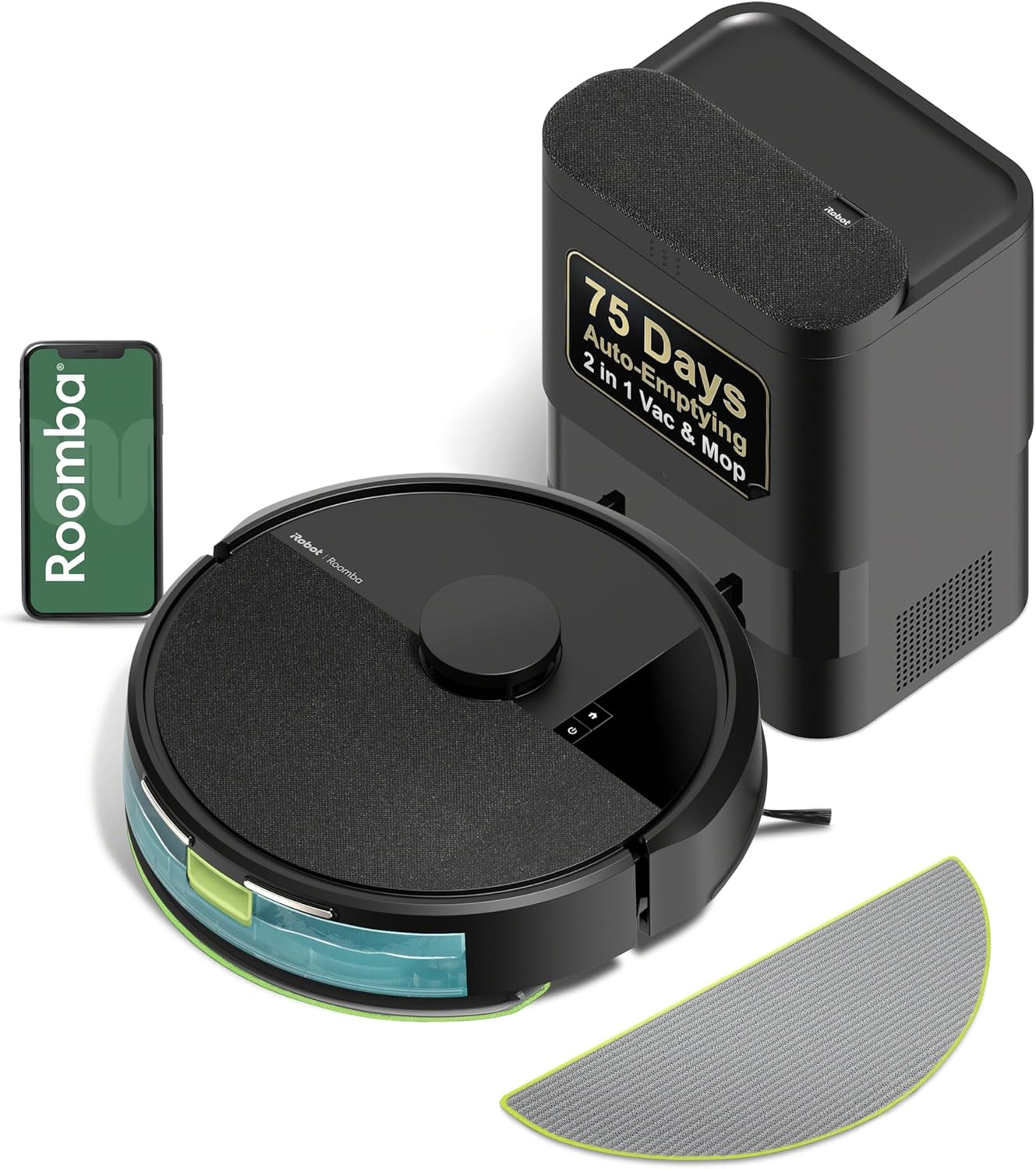
- AutoEmpty dock holds up to 75 days of debris in a bag that traps 99% of allergens as small as 0.7 microns
- Delivers 70x more suction than Roomba 600 series models, with an edge-sweeping brush rated 20% better at corner cleaning
- ClearView LiDAR maps the home for navigation and includes sensors that detect stairs to prevent falls
- Automatically detects and avoids carpet while in mopping mode, so rugs stay dry without manual room exclusion zones
- App supports vac-only, mop-only, or combo cleaning modes with adjustable suction and mopping solution levels
Cons
- Mop pad is a washable microfiber pad rather than disposable, adding a wash-and-dry step between mopping sessions
- AutoEmpty bags are a proprietary consumable that need periodic reordering, unlike bagless models with a reusable bin
- LiDAR-based navigation and app scheduling depend on a stable WiFi connection, so offline use loses mapping and remote scheduling features
The AutoEmpty dock is the core maintenance feature here, holding up to 75 days of collected debris in a sealed bag that traps 99% of allergens as small as 0.7 microns, so emptying the robot itself is not a daily task. When the bag does fill, it lifts straight out and drops in the trash, with a fresh bag replacing it in the base rather than requiring the bin to be washed or scraped out.
- AutoEmpty dock holds up to 75 days of debris
- Bag traps 99% of allergens down to 0.7 microns
- Microfiber mop pad is washable and reusable
- App tracks filter and maintenance status
The mop pad needs to be removed, washed, and dried between sessions to stay effective, and the AutoEmpty bags themselves are a recurring consumable that will need periodic reordering over the life of the machine.
A multi-surface brush combined with 70x more power-lifting suction (versus Roomba 600 series models) is built to pull debris from both carpet and hard flooring in the same pass, while an edge-sweeping brush adds a claimed 20% improvement in corner and edge cleaning. For mopping, the robot automatically detects carpet and steers around it, so rugs are not accidentally soaked during a combo cleaning run.
- Multi-surface brush works across carpet and hard floors
- 70x more suction than Roomba 600 series
- Automatic carpet detection and avoidance while mopping
- ClearView LiDAR navigation with stair-drop sensors
Because carpet avoidance is automatic during mopping, homes with mixed flooring do not need manually defined no-mop zones, though thick, high-pile rugs still rely on the same detection sensor working correctly to stay dry.
Three core cleaning modes, vacuum only, mop only, or combo vac-and-mop, are selectable through the app, along with adjustable suction power, number of cleaning passes, and how much mopping solution is applied per session. Scheduling can target specific rooms based on the LiDAR-built map rather than cleaning the whole home every time.
- Vac-only, mop-only, and combo cleaning modes
- Adjustable suction levels and mopping solution amount
- Room-targeted scheduling via the mapped floor plan
- Works with Alexa, Siri, and Google Assistant voice commands
Voice and app control both depend on the robot being connected to home WiFi, so scheduling changes or targeted room cleaning are not available if the network connection drops, though the robot can still complete a previously scheduled or manually started clean.

Pros
- AutoWash Dock self-empties for up to 75 days and washes plus heat-dries the mop pads between runs, cutting down on manual maintenance
- PerfectEdge technology and DualClean mop pads extend cleaning 18% further along walls and corners versus standard vacuum-and-mop mode
- Up to 70x more suction than the Roomba 600 series, paired with a multi-surface rubber brush and edge-sweeping brush for mixed flooring
- ClearView Pro LiDAR mapping combines with PrecisionVision AI to route around cords, socks, and pet messes rather than driving through them
Cons
- AutoWash Dock is a large multifunction base that needs its own counter or floor footprint near an outlet, bigger than a simple charging dock
- Self-emptying interval tops out at 75 days for debris, but mop pad washing and drying cycles still run on a shorter schedule that needs monitoring
- SmartScrub's extra scrubbing pressure is aimed at hard floors, and the listing does not describe a deep-carpet cleaning mode for thick pile rugs
The AutoWash Dock handles most of the day-to-day upkeep: it empties collected debris automatically for up to 75 days, then rinses the mop pads during cleaning so dirt is not dragged back across the floor, and finishes by washing and heat-drying the pads once a cleaning run is done. A self-cleaning cycle inside the dock also cuts down on residue buildup over time.
- Debris self-emptying: up to 75 days
- Mop pad care: rinse, wash, and heat-dry cycles
- Dock self-cleaning: built in
Because the dock takes over emptying and pad washing, the main recurring task left for an owner is checking the dock's water and debris reservoirs periodically rather than hand-washing mop pads after every run.
PerfectEdge technology and DualClean spinning mop pads are built to reach 18% further into corners and along walls than standard vacuum-and-mop mode, targeting the edges where dirt tends to collect. A multi-surface rubber brush and edge-sweeping brush handle the transition between carpets and hard floors in the same pass.
- Hard floors: mopping plus vacuuming in one pass
- Carpets: rubber brush with Carpet Boost suction increase
- Edges and corners: PerfectEdge reach, 18% more coverage
PrecisionVision AI and ClearView Pro LiDAR work together to map the home and steer around obstacles like cords or pet accidents, while built-in cliff sensors are designed to stop the robot from rolling down stairs or off raised ledges.
The AutoWash Dock is the centerpiece accessory included with this model, combining a debris bin, mop pad washing station, and heat-drying function in one unit rather than requiring separate purchased add-ons. The DualClean spinning mop pads and multi-surface rubber brush ship attached and ready to run.
- Included: AutoWash Dock with debris bin and mop pad washer
- Included: DualClean spinning mop pads
- Included: multi-surface rubber brush, edge-sweeping brush
Because the dock bundles debris emptying with mop pad care, there are fewer separate consumables to buy right away, though replacement mop pads and the sealed debris bags used by the dock will still need restocking over time.

Pros
- Suction rated at 20,000Pa, paired with DualClean mop pads for combined vacuum and mop passes in one run
- AutoWash Dock empties collected debris automatically for up to 90 days between manual bin changes
- Mop pads are washed and heat-dried at 113°F after every run, so the mop begins each session with an already-cleaned pad
- Body is 46% slimmer than the Roomba 105 series, letting it reach under lower furniture that blocks bulkier robots
- Offers 4 selectable cleaning modes: vacuum-only, mop-only, simultaneous vacuum-and-mop, or vacuum-first-then-mop
Cons
- SmartScrub's extra scrubbing pressure targets dried-on messes, but heavily soiled floors may still need a manual pass first
- AutoWash Dock's 90-day self-emptying interval depends on the dock's water tank and debris bin also being kept filled and emptied
- LiDAR mapping and obstacle avoidance handle common household clutter, but cords and small objects on the floor should still be cleared before a run for best results
This robot combines 20,000Pa of suction with DualClean mop pads, running vacuum and mop passes together or separately depending on the selected mode. SmartScrub technology applies extra pressure specifically to break down dried food, muddy tracks and kitchen splatter that a lighter pass would leave behind.
- 20,000Pa suction
- DualClean mop pads for wet cleaning
- SmartScrub adds pressure on stubborn, dried-on messes
- 4 selectable modes: vacuum-only, mop-only, combined, or sequential
Switching between the four modes lets a single run be tailored to a quick dry pickup or a deeper combined vacuum-and-mop pass without changing machines.
The AutoWash Dock empties collected debris automatically for up to 90 days between manual bin changes, and washes plus heat-dries the mop pads at 113°F after every single run. This keeps each new cleaning session starting with pads that were not left sitting dirty since the last use.
- Debris self-emptying for up to 90 days
- Mop pads washed and heat-dried at 113°F after each run
- Reduces manual mop pad washing between sessions
- Dock refills the onboard water tank automatically
Because the dock's water tank and debris bin still need periodic refilling and emptying by hand, the 90-day interval assumes those are kept topped up.
A 46% slimmer body compared with the Roomba 105 series lets this robot reach under sofas and low cabinets that block bulkier designs, while extending edge brushes pull debris from corners and along baseboards. Tangle-free rubber brushes are built to handle pet fur without repeated stops to clear the roller.
- 46% slimmer profile than the Roomba 105 series
- Extending brushes clean edges and corners
- Tangle-free rubber brushes resist pet hair wrap
- LiDAR mapping navigates around cords and furniture
Because navigation relies on LiDAR mapping and obstacle recognition rather than a physical bumper alone, clearing loose cables and small objects from the floor before a run still helps avoid snags.
Pros
- 6000Pa suction lifts debris from carpet while an anti-tangle brush avoids the manual hair-cutting maintenance typical of roller brushes
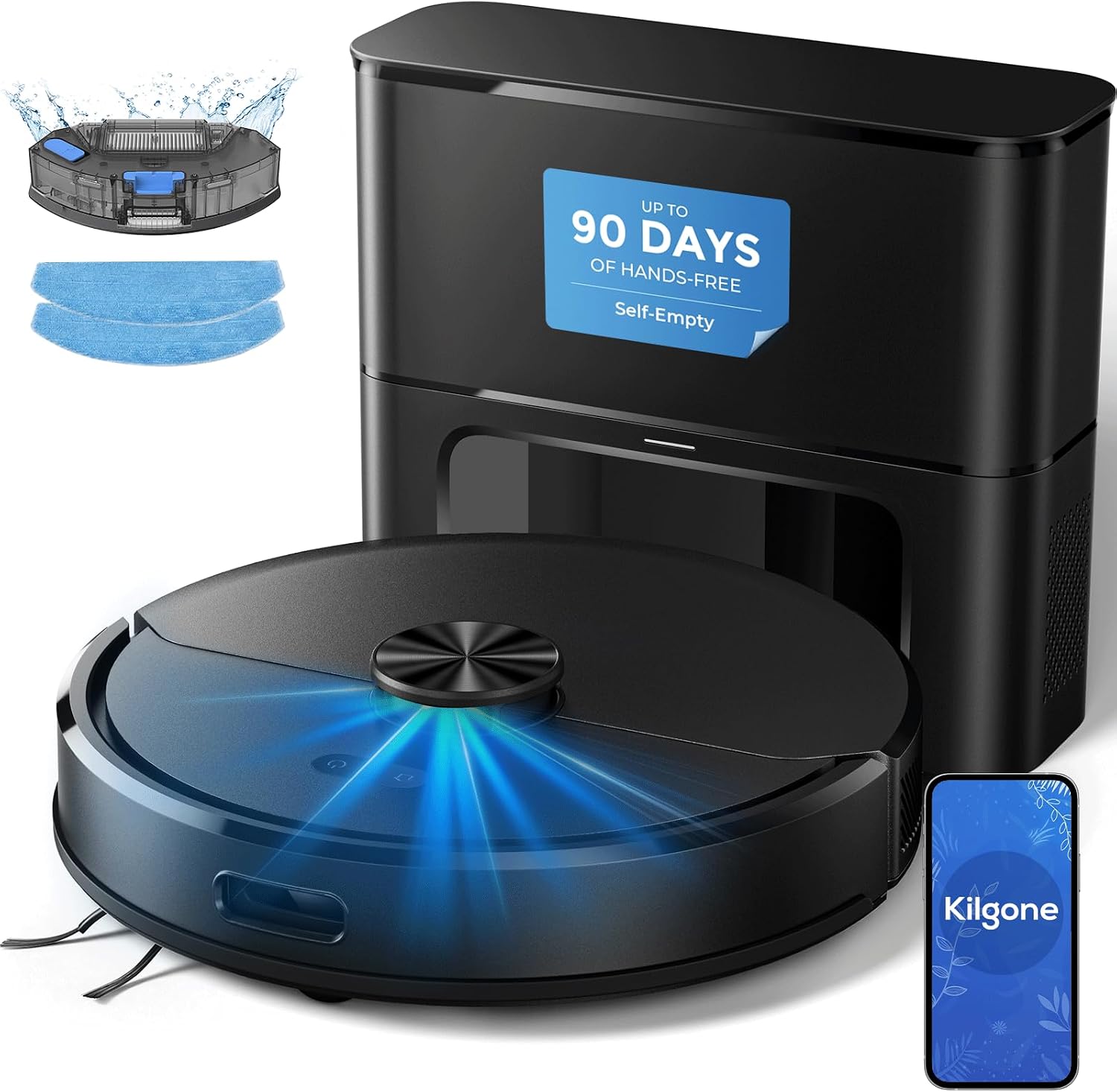
- Self-empty station holds debris in a 2.5L sealed bag for up to 90 days between manual emptying
- LiDAR navigation stores up to 5 separate floor maps for multi-level homes
- Single charge covers up to 1,615 square feet with a runtime up to 200 minutes
- App-based room, zone, and point cleaning let you target a specific spill instead of a full-home run
Cons
- Mopping mode requires manually marking carpets as no-mop zones, or the mop pad will wet the carpet
- Self-empty station needs its own dedicated floor space near an outlet, not a compact charging dock
- The 2.5L dust bag is a proprietary consumable that needs periodic replacement, an added cost beyond the vacuum itself
The included self-emptying station transfers collected debris into a 2.5L sealed dust bag, holding up to 90 days of typical household dirt and pet hair before the bag needs replacing. An anti-tangle roller brush is built in specifically to stop long hair from wrapping around the roller, cutting down on the manual hair-cutting maintenance many robot vacuums require.
- 2.5L sealed dust bag, up to 90 days between changes
- Anti-tangle roller brush design
- Self-emptying station handles daily debris transfer automatically
Because the dust bag is a proprietary consumable rather than a washable bin, ongoing use means planning for replacement bags once the 90-day capacity is reached.
6000Pa suction is tuned to lift embedded debris from carpet as well as hard flooring, while 360° LiDAR navigation maps up to 5 separate floor levels for multi-story homes. In mopping mode, carpets need to be manually marked as no-mop zones on the app map so the mop pad does not wet carpeted areas.
- 6000Pa suction for carpet and hard floors
- 360° LiDAR navigation with 5-map storage
- Manual no-mop zone marking required to protect carpet
Households with mixed flooring should set up no-mop zones before the first mopping run, since the vacuum will not automatically detect carpet edges during mop mode.
On a single charge, the unit runs up to 200 minutes and covers up to 1,615 square feet, auto-returning to the self-empty station to recharge and resume the same cleaning run once topped up. The companion app adds room, zone, and point cleaning modes for targeting a specific spill or high-traffic area instead of a full-home pass.
- Up to 200 minutes runtime, 1,615 sq ft coverage per charge
- Auto recharge and resume for whole-home runs
- Room, custom-zone, and point cleaning modes via the app
For larger homes beyond that coverage figure, the auto-resume feature keeps a single cleaning cycle running across multiple charges rather than restarting the whole map from scratch.

Pros
- 10000Pa suction power reaches deep into carpet fibers and along room edges in a single pass
- 2.7L sealed dust bag in the RockDock Plus base extends emptying cycles to roughly 7-9 weeks between changes
- Dual anti-tangle brush system resists hair wrap from long-haired pets around the main and side brushes
- PreciSense LiDAR navigation builds a real-time map for optimized room-to-room cleaning paths
- Three adjustable water flow settings tune the mopping pass to different floor conditions
Cons
- Vacuums and mops in the same pass rather than swapping to a dedicated mop mode, so very wet mopping is not an option
- Self-empty base needs a sealed dust bag as a recurring consumable rather than a reusable bin
- LiDAR-based mapping needs a reasonably open floor plan to build an accurate map, so heavily cluttered rooms slow initial setup
A 10000Pa suction power figure is aimed at pulling dirt and debris from deep in carpet fibers as well as along baseboards and room edges in a single cleaning pass. The dual anti-tangle system pairs a JawScrapers main brush with a side brush engineered to resist hair wrap, intended to cut down on the tangling that long-haired pet fur causes in standard brush designs.
- 10000Pa suction power
- Dual anti-tangle main and side brush design
- Combined vacuum-and-mop cleaning in a single pass
Households with long-haired pets are the clearest use case for the anti-tangle brush system, since that is specifically the wear pattern it is built to reduce.
The RockDock Plus base holds a 2.7L sealed dust bag, built to collect debris across roughly 7-9 weeks of typical cleaning before it needs to be changed, cutting down on how often the bin has to be emptied by hand. Three adjustable water flow settings for the mopping function let the wetness level be tuned to floor type and how much grime needs lifting.
- 2.7L sealed dust bag rated for 7-9 weeks between changes
- Three adjustable water flow settings for mopping
- Auto-empty base handles debris collection automatically
The sealed bag is a recurring consumable rather than a washable bin, so keeping replacement bags on hand is part of ongoing upkeep.
PreciSense LiDAR builds a real-time map of the home, which the robot uses to plan efficient room-to-room cleaning paths rather than a random bump-and-turn pattern. The Roborock app extends control beyond the robot itself, supporting scheduled cleaning, no-go zones to block off specific areas, and off-peak charging timed around a household's routine.
- PreciSense LiDAR real-time mapping and navigation
- App-based scheduling, no-go zones and off-peak charging
- Room-to-room travel using the generated map
A cluttered floor with lots of loose cables or furniture can slow the first mapping run, since LiDAR navigation performs best once it has a clear layout to reference on repeat cleans.

Pros
- 8000Pa suction pulls embedded dirt and pet hair from carpets and hard floors
- All-in-one dock empties into a 2.7L bag that lasts 7-9 weeks before it needs changing
- 4L water tank auto-refills the mop system for up to 3552 sq ft of coverage per fill
- SGS-certified brush system is rated for 0% hair tangling around the main and side brushes
- LiDAR navigation builds and stores multi-floor maps for room-specific cleaning
Cons
- Dirty water tank in the dock needs regular manual cleaning to keep the mop-washing cycle sanitary
- Dual spinning mops lift only 10mm off the floor, not enough clearance to fully avoid thick pile carpet during mixed-floor runs
- Dust bag and mop pad washing both rely on the dock, so placement needs room for the full station rather than just a charging pad
The QV 35A runs 8000Pa of suction alongside dual spinning mops that lift 10mm when carpet is detected, aiming to handle vacuuming and mopping in a single pass across mixed flooring.
- 8000Pa suction targets embedded dirt, debris, and pet hair in carpet fibers and hard floor corners
- An asymmetrical side brush and full-rubber main brush are built for a 0% hair tangling rate, SGS-certified
- Reactive Tech obstacle avoidance detects furniture, cords, and shoes to steer around them mid-run
The 10mm mop lift keeps pads off carpet during vacuum-only passes, though very thick pile can still limit how close the mops get before lifting.
The all-in-one dock handles dust emptying, mop washing, and water refilling without daily hands-on upkeep, though the dock itself needs periodic attention to keep running cleanly.
- Dust auto-empties into a sealed 2.7L bag rated to last 7-9 weeks before replacement
- A 4L clean water tank auto-refills the mop system, covering roughly 3552 sq ft before needing a refill
- Mop pads are washed and dried at the dock after each cleaning run
The dirty water tank inside the dock should be cleaned on a regular schedule to prevent buildup, since it collects the wastewater from every mop wash cycle.
LiDAR navigation maps each floor of the home individually, storing multiple layouts so the robot can switch between levels without remapping every time.
- Multi-floor mapping supports separate saved layouts for homes with more than one level
- No-go zones can be set around stairs or tight spaces to prevent the robot from getting stuck
- Threshold crossing is built in for moving between rooms with small floor transitions
The roborock app allows temporary cleaning zones and scheduling, useful for households with pets that need extra passes over carpeted areas.

Pros
- ClearView LiDAR mapping navigates in organized rows instead of random bounce patterns
- 3-stage cleaning system pairs a multi-surface brush with an edge-sweeping brush for baseboards and corners
- Spot Cleaning mode repeats passes over one area for up to five minutes when spills happen
- Auto-recharge and resume lets it finish a job after topping up battery mid-clean
- Keep Out Zones can be set around cords and pet bowls through the companion app
Cons
- Requires Wi-Fi and the companion app for scheduling and zone features, offline use limits it to onboard buttons only
- No self-emptying base included with this bundle, so the bin needs manual emptying after each run
- Navigation performs best on a single level, so multi-floor homes need to be remapped per floor
The 3-stage cleaning system combines suction with a multi-surface brush and an edge-sweeping brush, aimed at pulling embedded dust and pet hair from both carpet and hard flooring in the same pass. Suction is rated at 70 times the power-lifting force of the Roomba 600 series, giving it more pull through deeper carpet pile than entry-level robot vacuums typically manage.
- Surfaces: carpets and hard floors
- Brush system: multi-surface roller plus edge-sweeping brush
- Suction: 70X power-lifting versus Roomba 600 series
Edge and corner coverage relies on the sweeping brush design to pull debris out from baseboards, since the round chassis cannot reach flush into square corners. Rooms with a mix of hardwood, tile, and area rugs are the sweet spot, though very thick shag carpet can still slow the brush roll compared with low-pile carpet or hard flooring.
Setup pairs the robot with the companion app over Wi-Fi, where LiDAR mapping builds a room-by-room map used for scheduled cleans, high-traffic targeting, and Keep Out Zones around cords or pet bowls. Filter life and cleaning history are also tracked in the app, giving a maintenance reminder rather than requiring a manual log.
- Navigation: LiDAR mapping, row-pattern cleaning
- App features: scheduling, Keep Out Zones, filter life tracking
- Connectivity: Wi-Fi required for full feature set
Without an active Wi-Fi connection, scheduling and zone editing are unavailable, leaving only the onboard start/stop control. Routine maintenance is limited to emptying the bin and clearing hair from the brush roll after each run, since this bundle does not include an automatic emptying dock.
When battery runs low mid-clean, the robot returns to its dock, recharges, and resumes the same job rather than starting over, which matters most in larger homes where a single charge cannot cover every room. Voice control through a connected assistant adds a hands-free way to start or stop a clean without opening the app.
- Recharge behavior: auto-return and resume mid-job
- Control options: app, onboard buttons, voice assistant
- Spot cleaning: repeats one area for up to 5 minutes
Obstacle handling is tuned for everyday clutter like cords, toys, and furniture legs, including in low light, but very low-profile obstacles or thick rugs with fringe can still occasionally cause a pause. Homes with stairs benefit from the built-in drop sensors, though gates or barriers are still advisable for open stairwells during unattended runs.

Pros
- Self-emptying base holds up to 60 days of debris, cutting how often the bin needs manual emptying
- True HEPA filtration captures 99.97% of particles down to 0.3 microns, trapping dust and allergens in the sealed base
- 360 degree LiDAR navigation maps the home and takes multiple passes in a matrix grid pattern for consistent coverage
- Runtime reaches up to 120 minutes per cycle, with automatic recharge-and-resume to finish larger homes in one session
- Works across carpet and hard floors, with a self-cleaning brushroll designed to handle pet hair specifically
Cons
- Self-empty base is bagless but still requires periodic emptying of its own larger bin roughly every 60 days
- LiDAR mapping and voice control depend on a stable Wi-Fi connection and the Shark or Alexa/Google apps
- 120-minute runtime may require multiple charging cycles to fully cover larger multi-story homes in one pass
The bagless self-empty base holds up to 60 days of debris before it needs emptying, and true HEPA filtration traps 99.97% of dust and allergens down to 0.3 microns inside the sealed base rather than releasing them back into the room. A self-cleaning brushroll is built specifically to manage pet hair buildup.
- No replacement bags required for the self-empty base
- HEPA filtration housed in the base, not just the robot's onboard bin
- Self-cleaning brushroll reduces manual hair removal between cleanings
Even with the 60-day self-empty capacity, the base's larger bin still needs to be emptied out periodically rather than never touched at all.
360 degree LiDAR vision builds a map of the home and directs the robot through a matrix grid pattern, making multiple passes over dirt and debris on both carpet and hard floors. The vacuum detects and avoids obstacles in its path as it works.
- Matrix Clean Navigation targets whole-home coverage rather than random bouncing patterns
- Works across mixed flooring including hard surfaces and carpet in the same run
- Adapts to everyday layout changes detected during mapping
Homes with a mix of open rooms and tighter hallways benefit most from the LiDAR mapping, since it plans routes methodically instead of relying on bump sensors alone.
The robot connects to home Wi-Fi and pairs with Amazon Alexa or Google Assistant for hands-free scheduling and on-demand cleaning by voice. Runtime reaches up to 120 minutes per charge, and Recharge and Resume sends the robot back to the dock mid-clean before finishing the job automatically.
- Wi-Fi connectivity is required for scheduling and remote start features
- Voice control works through Alexa or Google Assistant once linked
- Recharge and Resume avoids restarting a full cleaning cycle from scratch
For larger homes that exceed the 120-minute runtime in one pass, the automatic recharge cycle means the job still finishes without needing to manually restart the robot.
Pros
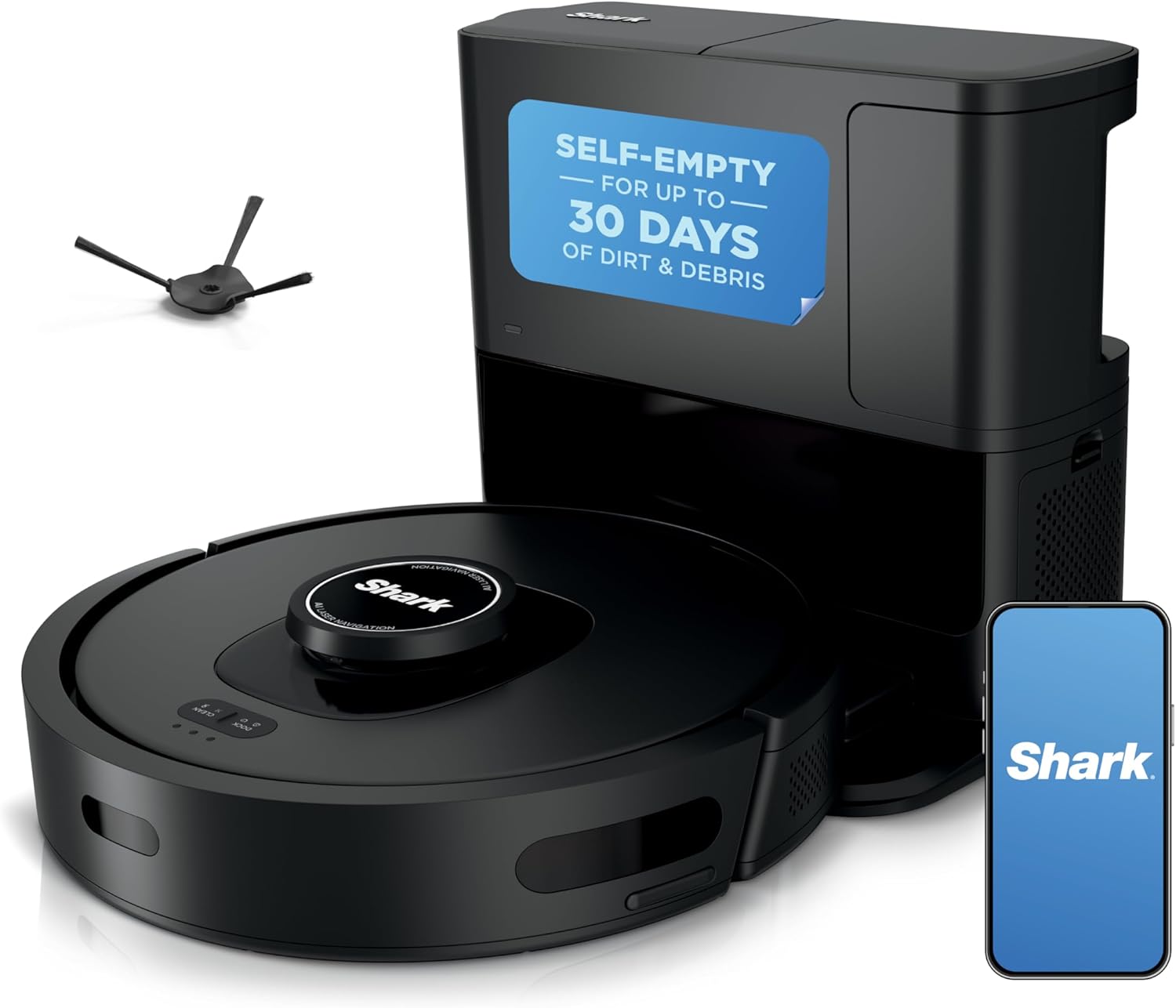
- Self-emptying base stores up to 30 days of debris before the bagless bin needs emptying
- True HEPA filtration captures 99.97% of dust and allergens down to 0.3 microns
- 360° LiDAR mapping navigates and avoids obstacles methodically rather than relying on random bump-and-turn movement
- Self-cleaning brushroll is built to handle pet hair without manual detangling after each run
- Up to 120 minutes of runtime, with Recharge and Resume automatically continuing a cleaning cycle after docking
Cons
- Matrix Clean's multiple-pass grid pattern takes longer per room than a single-pass cleaning route
- Voice control through Alexa or Google Assistant requires those ecosystems already set up in the home
- LiDAR-based mapping needs a reasonably clear, well-lit layout to map accurately, so heavily cluttered floors can slow initial mapping
The bagless, self-emptying base holds up to 30 days of dirt and debris on its own, cutting down how often the bin needs manual emptying, while true HEPA filtration traps 99.97% of dust and allergens down to 0.3 microns.
- Self-cleaning brushroll reduces manual hair removal after each cleaning cycle
- Recharge and Resume lets the robot return to the dock, recharge, and pick up a cleaning cycle where it left off
- Base capacity means weeks between manual maintenance rather than days
This setup is aimed at reducing the routine upkeep that typically comes with robot vacuum ownership.
360° LiDAR vision maps the home methodically, detecting and avoiding obstacles as it goes, while Matrix Clean Navigation runs the robot through a precise grid pattern with multiple passes over dirt and debris.
- Adapts to everyday layout changes rather than requiring a fixed floor plan
- Whole-home deep-cleaning coverage from the grid-based navigation pattern
- Works across all floor types the suction is built for
The multi-pass grid approach favors thoroughness over speed, so full-home cleaning cycles run longer than a simpler single-pass robot vacuum.
Powerful suction combined with a self-cleaning brushroll and HEPA filtration is built specifically around pet hair, dust, and dander pickup, with hands-free scheduling and control through Alexa or Google Assistant.
- Set cleaning schedules or trigger on-demand cleaning entirely by voice
- Self-cleaning brushroll reduces the hair tangling common with pet-heavy households
- Up to 120 minutes of runtime covers larger homes in a single cleaning cycle
It is built for pet-owning households running voice assistants already, rather than a no-frills, manually operated vacuum.
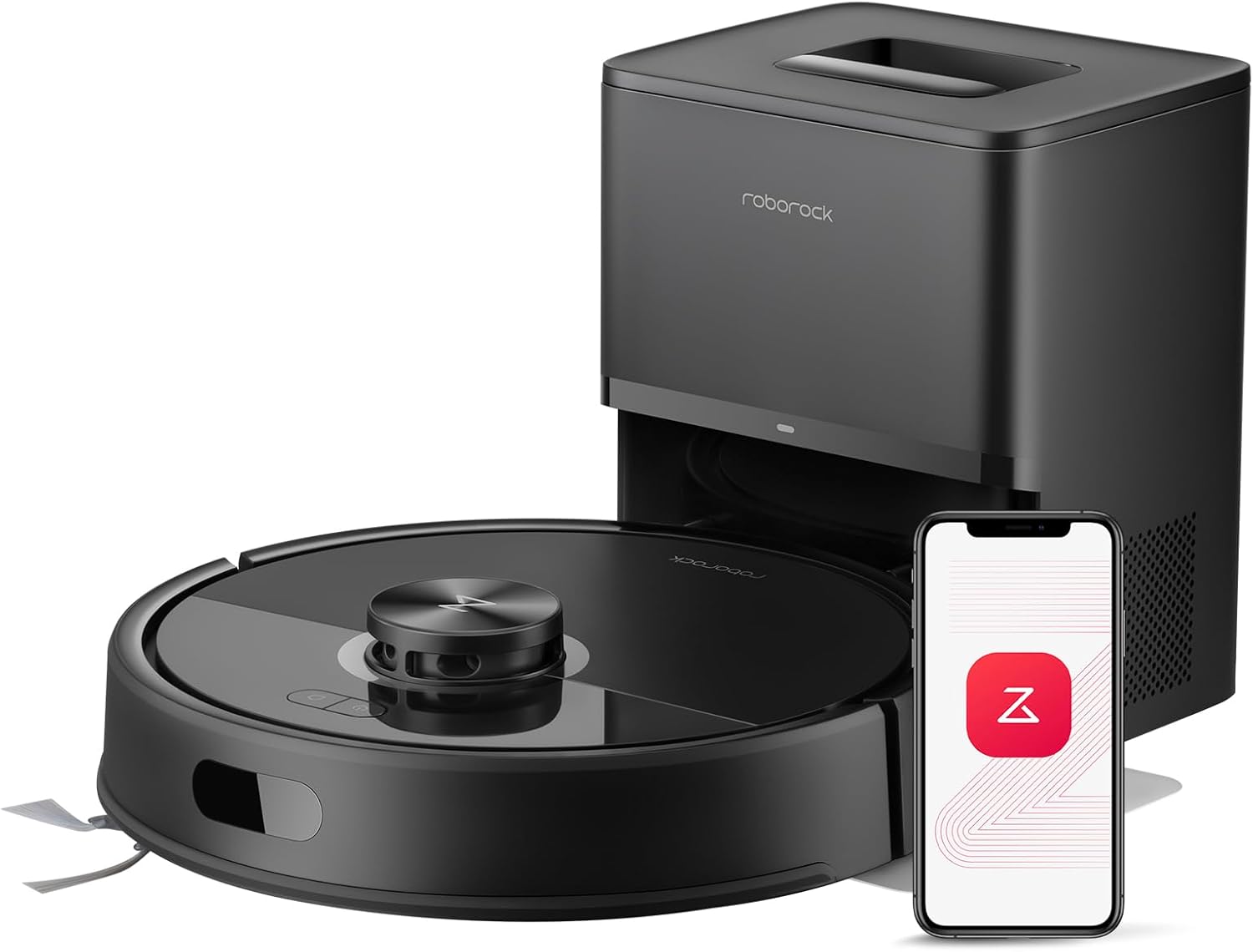
Pros
- 2.7L sealed dust bag in the dock stretches self-emptying intervals to roughly 7-9 weeks between manual bag changes
- 10,000Pa suction pulls debris from carpet edges and hard floors alike in a single pass
- Dual anti-tangle brush system, including a 0%-tangle side brush, is built to resist long pet hair wrap
- LiDAR navigation maps rooms in real time, enabling no-go zones and multi-room scheduling from the app
- Three adjustable water flow settings let you tune mopping intensity by floor type
Cons
- Vacuuming and mopping run in the same pass, so it cannot mop-only on rooms where you want to skip vacuuming
- Dust bag emptying interval depends on debris volume, so heavy-shedding multi-pet homes will empty sooner than 7-9 weeks
- LiDAR turret sits above the body, adding height that can prevent docking under some low-clearance furniture
Rated at 10,000Pa, the suction motor is built to pull debris from carpet fibers as well as hard floor surfaces in a single pass, with three adjustable water flow settings tuning mop intensity for different floor types.
- 10,000Pa suction power
- 3 adjustable water flow settings for mopping
- Dual anti-tangle brush system, including a 0%-tangle side brush
- PreciSense LiDAR real-time mapping
The anti-tangle brush design specifically targets long pet hair, which otherwise wraps around a standard roller brush and forces manual cleanout partway through a cleaning session.
A 2.7L sealed dust bag in the charging dock automatically empties the robot after each run, extending the interval between manual bag changes to roughly 7-9 weeks under typical household debris levels. Homes with multiple pets shedding heavily will likely see that interval shorten.
- 2.7L sealed dust bag in the dock
- Roughly 7-9 weeks between manual bag changes
- Automatic self-emptying after each cleaning run
Because vacuuming and mopping happen in the same pass, there is no way to run a mop-only cycle on a room where vacuuming should be skipped, which matters for households wanting more granular room-by-room cleaning control.
The PreciSense LiDAR system builds a real-time map of the home, enabling no-go zones, multi-room scheduling, and off-peak charging set through the companion app. The LiDAR turret sits above the main body, adding some overall height.
- Real-time LiDAR mapping and navigation
- App-based no-go zones and scheduling
- Off-peak charging scheduling available
That added turret height can prevent the robot from docking under some low-clearance furniture, so measuring under-furniture clearance is worth doing before assuming it will clean beneath every piece in a room.
Why dog hair needs a specialized robot vacuum
Dog hair behaves differently from ordinary dust. It’s light enough to float and cling to fabric, yet coarse enough to wrap tightly around a spinning brush roll. A vacuum that lacks the suction to lift embedded fur from carpet, or the brush design to resist tangles, will leave streaks behind and clog within days. That is why the best robot vacuums for dog hair are engineered around three pillars: powerful, consistent suction; anti-tangle brush systems; and large-capacity waste handling so you are not emptying a tiny bin after every run.
Homes with multiple pets or long-haired breeds push these demands even further. If you own a heavy shedder like a Husky, Golden Retriever, or German Shepherd, prioritize models with the highest suction ratings and self-emptying docks. Lighter shedders and smaller homes can get excellent results from mid-range machines without the premium price.
Top picks for cleaning up after your dog
Below are the models that consistently rise to the top for pet households, spanning entry-level value to feature-loaded flagships. Each is a strong choice depending on your priorities and floor type.
Best overall value: iRobot Roomba 105 Combo
The iRobot Roomba 105 Combo hits a sweet spot for pet owners who want a proven brand without a flagship price. It pairs power-lifting suction with LiDAR navigation and an AutoEmpty dock that self-empties for up to 75 days, so a week’s worth of shed fur disappears without you touching the bin. Its dual rubber brushes resist tangling far better than bristle rolls, and automatic carpet detection lifts the mop so it never drags a wet pad across your rugs. For most single-dog households, this is the easiest recommendation.
Best premium all-rounder: iRobot Roomba 505X
Step up to the iRobot Roomba 505X and you get 70x more suction, a multifunction dock that self-empties for 75 days, plus self-cleaning and hot-dry mopping. Its lifting, spinning mop pads and AI obstacle avoidance mean it can dodge a chew toy or dog bowl instead of plowing through it. If you want one machine that vacuums and genuinely mops between deep cleans, this flagship earns its keep in busy pet homes.
Highest suction for embedded fur: iRobot Roomba 415X
When your dog’s hair works its way deep into medium-pile carpet, raw suction matters. The iRobot Roomba 415X delivers a massive 20,000Pa of suction alongside a 90-day self-emptying dock, hot-dry mop cleaning, and smart obstacle avoidance. It is the pick for larger homes or multi-pet households where fur accumulates fast and you want the longest possible stretch between dock maintenance.
Best budget LiDAR robot: Kilgone Robot Vacuum and Mop
If you want laser-guided mapping and a self-emptying station without spending flagship money, the Kilgone Robot Vacuum and Mop is a standout. It offers 6000Pa suction, an anti-tangle brush, multi-floor mapping, and up to 90 days of hands-free emptying. Suction is lower than the premium iRobots, so it suits light-to-moderate shedders and homes that lean toward hard floors, but the value is hard to beat.
Best for tangle-free pet hair: roborock Q7 M5+
Roborock built the roborock Q7 M5+ around a dual anti-tangle system that is specifically aimed at pet hair and carpet, backed by 10,000Pa suction and up to 7-9 weeks of self-emptying. PreciSense LiDAR navigation maps your home accurately so it cleans in efficient rows rather than wandering. It comes in a black finish as well if you prefer a darker look to match your decor. For long-haired dogs whose fur normally chokes a brush roll, this dual-brush design is a genuine problem solver.
Best mopping combo: roborock Qrevo Series
For homes with a lot of hard flooring, the roborock Qrevo Series combines 8000Pa suction with anti-tangle brushes, auto mop washing, and 200RPM spinning mop pads. Its all-in-one dock handles both emptying and mop cleaning, and smart obstacle avoidance keeps it out of trouble. If your dog tracks in muddy paw prints as often as it sheds, this vacuum-and-mop combo keeps floors both fur-free and genuinely clean.
Best vacuum-only Roomba: iRobot Roomba 105X
Not everyone needs mopping. The iRobot Roomba 105X focuses purely on vacuuming with smart LiDAR mapping, 70x power-lifting suction, custom room cleaning, and app and voice control. Skipping the mop keeps the price down and simplifies maintenance, making it a smart choice for carpeted homes with pets and kids where dry pickup is all you want.
Best self-empty capacity from Shark: Shark AV2501AE
Shark’s Shark AV2501AE pairs an XL HEPA self-empty base with a 60-day bagless capacity, LiDAR navigation, and Alexa compatibility. The HEPA filtration is a meaningful bonus in allergy-prone households, trapping the fine dander that rides along with dog hair. It handles both carpet and hard floors and is a dependable mid-range pick for allergy-conscious pet owners.
Best smart-mapping Shark: Shark AV2501S AI Ultra
The Shark AV2501S AI Ultra adds Matrix Clean, which makes repeated overlapping passes to dig fur out of high-traffic zones, along with full home mapping and a 30-day HEPA bagless base. If your dog has a favorite spot that always collects hair, the targeted Matrix Clean passes are built exactly for that scenario.
How to choose the best robot vacuum for dog hair
With so many capable machines, the right pick comes down to matching features to your specific situation. Focus on these factors before you buy.
Suction power
Suction is measured in Pascals (Pa), and for pet hair more is generally better, especially on carpet. Budget models around 6000Pa handle hard floors and light shedding, while 8000-10,000Pa and beyond pulls embedded fur out of medium-pile rugs. iRobot rates its top models by relative power (“70x”) rather than Pa, but the flagships sit firmly in the high-suction tier. Match suction to your flooring: hardwood and tile forgive lower numbers, thick carpet does not.
Anti-tangle brushes
This is the single most important feature for dog hair. Traditional bristle brushes wrap fur into a tight collar that you have to cut off with scissors. Look for rubber dual-brush or dedicated anti-tangle systems like those on the roborock Q7 M5+ and Qrevo. They channel hair straight into the bin instead of letting it wind around the roller, which means far less maintenance and steadier performance over time.
Self-emptying docks and capacity
Dog hair fills a small onboard bin fast. A self-emptying dock transfers debris into a larger bag or bin so you can go weeks between emptying instead of days. The best options here stretch from 60 days up to 90 days of hands-free operation. If you travel or simply hate maintenance, this feature is worth the upgrade on its own.
Navigation and mapping
LiDAR navigation lets a robot build an accurate map, clean in orderly rows, and remember which rooms to target. This matters in pet homes because efficient coverage means fewer missed patches of fur. Smart obstacle avoidance is a close second: it keeps the robot from smearing a pet accident or getting stuck on a rope toy, both common hazards in dog households.
Vacuum-only vs. vacuum-and-mop
Decide whether you need mopping. A vacuum-and-mop combo like the Roomba 505X or roborock Qrevo tackles paw prints and dust film on hard floors, while a vacuum-only model like the Roomba 105X keeps things simple and cheaper. If you have mostly carpet, mopping adds little; if you have tile or hardwood, it can be a game changer. For a broader look at combo machines, see our guide to the best robot vacuums and mops.
Filtration for allergies
Dog hair carries dander, the actual allergy trigger for most people. A true HEPA filter, like those in the Shark models, captures fine particles that lesser filters recirculate. If anyone in your home has allergies or asthma, prioritize HEPA-rated filtration alongside strong suction.
Getting the most from your pet-hair robot
Even the best robot vacuums for dog hair perform better with a little routine care. Empty or check the dock bag on schedule, and clear the brush roll of any stubborn wrapped hair every few weeks. Run the robot daily or every other day during heavy shedding seasons so fur never has a chance to build up. Use the app to set no-go zones around food and water bowls, and schedule cleanings for when your dog is calm or out on a walk to avoid anxious pacing.
Pair your robot with an occasional deep clean using an upright or canister vacuum for baseboards, stairs, and upholstery the robot cannot reach. If you are still comparing full-size options, our roundup of the best vacuums for dog hair covers those handheld and upright choices, and our guide to the best robotic vacuums for dog hair offers additional model comparisons. For carpet-heavy homes specifically, the best robot vacuums for carpets guide dives deeper into pile performance.
The bottom line
The best robot vacuum for your dog depends on your floors, your dog’s coat, and how much maintenance you want to do. For most homes, the iRobot Roomba 105 Combo delivers proven cleaning and long self-emptying at a fair price. Heavy shedders and larger homes benefit from the extreme suction of the Roomba 415X or the tangle-free brushes of the roborock Q7 M5+, while allergy-conscious households will appreciate the HEPA filtration of the Shark AV2501AE. Whichever you choose, letting a capable robot handle the daily fur means you get to enjoy your dog and a clean floor at the same time.