 Ethan Caldwell
 Building a connected home used to mean juggling a dozen apps that refused to talk to each other. In 2026 the picture is very different: the best smart house systems now tie lighting, climate, security cameras, locks, and voice control into a single, reliable ecosystem. Whether you are starting from a bare apartment or upgrading a whole property, choosing the right foundation matters more than any individual gadget. This guide walks through what a smart house system actually is, the key features that separate a good setup from a frustrating one, and a shortlist of top-rated hubs, camera bundles, and accessories worth your money.
Rather than reviewing every product in depth, the goal here is to help you shop smart: understand the categories, match a system to your home, and avoid the compatibility traps that leave buyers with a drawer full of orphaned devices.
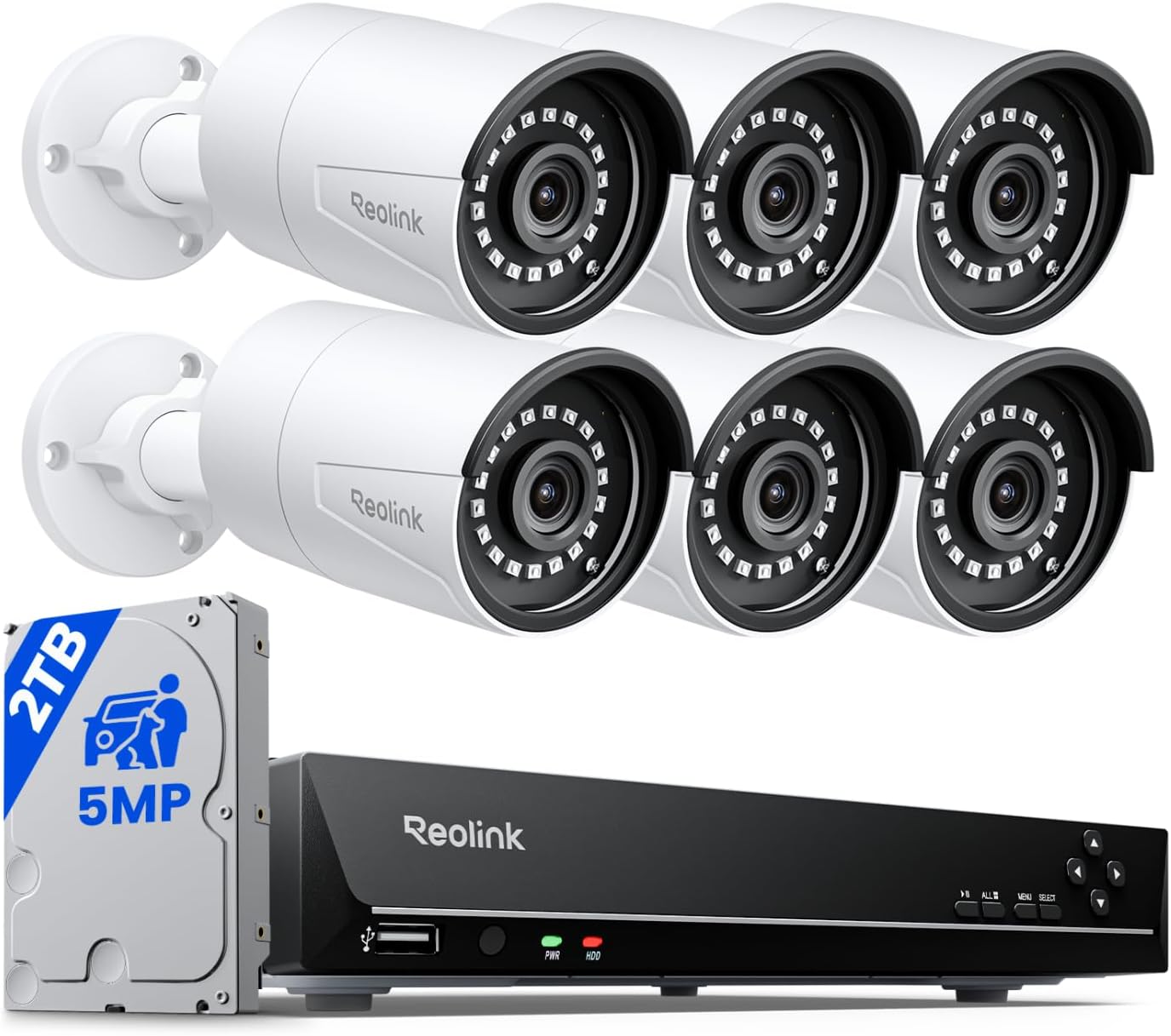
Pros
- 6 cameras record simultaneously with 18 IR LEDs each for night vision up to 100 feet
- AI-based person, vehicle, and pet detection cuts down on false alerts from shadows or small animals
- 2TB HDD ships pre-installed, expandable up to 16TB total across SATA and eSATA
- PoE design runs power and video over a single cable per camera, no separate power adapters needed
- 2-year warranty with lifetime tech support included
Cons
- Cameras only work with the included NVR and other compatible hardware; third-party cameras aren't supported
- Smart Home functions are not available on this NVR-based kit, unlike standalone Wi-Fi camera models
- Remote access via the companion app requires an internet connection; without it, the system only works locally
Each of the 6 cameras connects to the 8-channel NVR over a single PoE (Power over Ethernet) cable, supplying both power and video without a separate power adapter at each camera location. Cameras use a 5MP CMOS sensor with an f=4.0mm fixed lens and 18 infrared LEDs delivering night vision up to 100 feet.
- PoE installation simplifies wiring for DIY setups since only one cable run is needed per camera
- Cameras are wired, not wireless, so cable runs need to be planned to each mounting location
- An IEEE 802.3 af/at PoE-compatible NVR port powers each connected camera
Homes wanting a fixed, wired multi-camera install benefit from not needing outlets near each camera.
The system ships with a 2TB HDD pre-installed for 24/7 continuous recording, with the NVR expandable up to 16TB total across SATA and eSATA connections depending on the hardware version. Video compresses using H.264 for efficient storage use over time.
- 2TB provides a starting buffer before older footage needs to overwrite or be archived
- Expansion beyond the pre-installed drive requires purchasing and installing additional HDDs separately
- Built-in microphones on each camera add ambient audio alongside the video recording
Continuous 24/7 recording across 6 cameras will fill 2TB faster than motion-only recording would.
Onboard AI distinguishes people, vehicles, and pets from other motion, reducing false alerts triggered by shadows or small animals passing by. The system can be configured to send alerts only for specific detection types, and it also works fully offline for local recording.
- Remote viewing and alerts through the companion app require an internet connection; without one, the system still records locally
- Detection alerts can be filtered per camera to reduce notification volume
- Cameras from other brands are not supported on this system, only additional compatible PoE or Wi-Fi cameras
Households wanting fewer nuisance alerts from wildlife or passing shadows benefit from the AI-based filtering.

Pros
- 4 GB of RAM and 32 GB of onboard eMMC storage handle years of automation history plus several add-ons running together
- Fanless design draws only a couple of watts, so it runs continuously without a spinning fan or added heat
- Wired gigabit Ethernet port keeps the connection to your devices stable instead of leaning on a shared Wi-Fi band
- USB ports accept separate Zigbee, Z-Wave, and Thread adapters, so radio support expands as your device list grows
- Ships with Home Assistant OS already installed, so setup is limited to plugging in the power and Ethernet cables
Cons
- No built-in Wi-Fi radio, so it needs a cable run to a router or switch rather than a wireless-only setup
- Checking in from outside your home network needs a Home Assistant Cloud subscription or a separate remote-access setup
- Zigbee, Z-Wave, and Thread support is not built in and requires buying a USB radio dongle for each protocol
Home Assistant Green runs on a quad-core processor paired with 4 GB of RAM and 32 GB of onboard eMMC storage, enough headroom to log years of sensor history while several add-ons run in parallel. The enclosure is fanless and silent, drawing only a couple of watts of power, so it can sit on a shelf or in a cabinet without heat buildup or fan noise.
- Storage: 32 GB eMMC keeps years of automation logs without an external drive
- Memory: 4 GB of RAM supports multiple add-ons at once
- Power draw: a couple of watts, low enough for always-on use
- Connectivity: wired gigabit Ethernet, no Wi-Fi radio included
Home Assistant OS ships pre-installed, so first setup is limited to connecting the included power supply and an Ethernet cable before the hub appears on your network. Two USB ports let you add Zigbee, Z-Wave, or Thread radios individually as your device collection grows, rather than forcing you to commit to one protocol upfront. Detailed documentation plus an active Home Assistant community of guides and blueprints help with configuration.
- Setup: plug in power and Ethernet, no separate installer needed
- Expansion: USB ports accept Zigbee, Z-Wave, and Thread dongles
- Support: official documentation and community blueprints available
Home Assistant Green suits households that already have a router nearby and want their smart home data stored locally rather than routed through a third-party cloud service. Because the hub controls devices from multiple ecosystems through one interface, it fits users consolidating several single-brand apps into one dashboard. It is less suited to anyone wanting a wireless-only, no-cable installation, since it depends on a wired Ethernet connection and no Wi-Fi radio is built in.
- Good for: consolidating multiple smart home apps into one hub
- Good for: keeping automation data stored on local hardware
- Less suited to: wireless-only setups without a nearby Ethernet run

Pros
- Installs in about 30 minutes using large terminal blocks and a universal sub-base
- White backlit LCD display stays readable in dim hallways or basements
- Separate heating and cooling swing settings let you fine-tune how long each cycle runs
- Compatible with single-stage gas, oil, and electric furnace systems as well as boiler radiant heat
Cons
- Only handles wiring with 2 to 5 wires; systems needing 6 to 8 wires are not supported
- Not compatible with heat pumps, dual-fuel systems, mini-splits, or multistage heating and cooling
- No app or Wi-Fi control, all adjustments are made directly on the unit
This thermostat is built for single-stage systems only, covering 1 heat/1 cool setups such as gas, oil, or electric furnaces (heat only), boiler radiant heat, forced-air furnaces, 24V gas fireplaces, and cooling-only systems. It is not built for more complex HVAC setups.
- Incompatible with multistage heating and cooling systems
- Not for heat pumps, with or without auxiliary heat, or dual-fuel/hybrid multistage systems
- Also excludes 3-wire hydronic (hot water), mini-split systems, RV thermostats, and electric baseboard heat (120-240V)
Checking existing wiring and system type against this list before ordering avoids a mismatch that wastes an install attempt.
The base accepts a maximum of 2 to 5 wires; systems wired with 6 to 8 wires are not supported by this unit. Large terminal blocks and a universal sub-base are designed to make connecting those wires straightforward, with an estimated install time of around 30 minutes for someone comfortable working with low-voltage thermostat wiring.
- Clear, backlit LCD display helps confirm settings are correct right after installation
- Separate heating and cooling swing (cycle rate) settings let you shorten or lengthen how long each cycle runs before switching off
- Manufacturer recommends checking wiring instructions and photos carefully before starting, especially for anyone without prior thermostat experience
Because incorrect wiring can cause malfunction, double-checking wire counts against the compatible systems list first is worth the extra few minutes.
Once installed, this thermostat runs on straightforward physical controls rather than an app or smart-home connection, keeping temperature adjustment as simple as pressing buttons on the unit. The white backlit LCD stays legible in low light, useful in basements or hallways with limited ambient lighting.
- No Wi-Fi or app control, so remote adjustment away from the thermostat isn't possible
- Digital display simplifies reading the current setting compared to older dial thermostats
- Separate swing settings for heating and cooling give more precise control over cycle length than basic single-setting models
Fits households that want dependable manual control without the complexity or setup of a connected smart thermostat.

Pros
- 166 degree fixed wide-angle lens built from 7 lens elements, wider than the 100-110 degree field common on bullet and dome cameras
- Rated for 240 days of standby on a single charge under a 40-events-per-day test load
- 32GB of built-in local storage holds roughly 240-360 days of loop footage with no card to buy
- Supports both 2.4GHz and 5GHz WiFi bands through the aosuBase hub for a more stable connection
- Spotlight and siren trigger together on motion detection to scare off anyone approaching the property
Cons
- Requires the aosuBase hub wired to the router by ethernet cable, so it is not a standalone camera
- Only records on motion detection rather than continuously, so gaps exist between events
- One aosuBase supports up to 4 cameras, so larger properties need a second hub
This aosu camera pairs a 166-degree fixed wide-angle lens, built from 7 individual lens elements, with True 2K HD capture for a wider field of view than the 100-110 degree range typical of standard bullet and dome cameras. Battery life is rated at 240 days on a single charge, based on lab testing at 40 detection events per day with 10-second clips; actual runtime shifts with how often motion triggers recording and how long you spend on live view. The camera connects over 2.4GHz or 5GHz WiFi through the included aosuBase hub, which is wired to your router by ethernet for a steadier signal than a phone-to-camera direct link. Dimensions run 10 x 6 x 4 inches, sized for eave or wall mounting outdoors.
Setup centers on the aosuBase hub, which plugs into your router by ethernet cable and then relays signal out to each camera, extending range beyond what a direct WiFi connection to the router alone would give. Inside the hub is 32GB of built-in storage, enough for roughly 240 to 360 days of looped event recording depending on how many cameras share it, so there is no memory card to buy or swap. Footage stays local and encrypted on the aosuBase rather than defaulting to a cloud account, though optional cloud storage can be added later if you want an off-site copy. One aosuBase can support up to 4 cameras total, which is worth checking against your property size before adding a second or third unit to the same kit.
Motion detection is tuned to flag people, vehicles, or animals passing, staying, or approaching, then pushes a quick preview image to your phone so you can judge the situation before it escalates. When something lingers, the built-in spotlight and siren fire together to draw attention and discourage anyone testing a door, gate, or driveway. This setup suits homeowners covering entry points, driveways, or side yards who want an outdoor camera that does not depend on a nearby outlet, since the battery and wide lens cut down on both cabling and blind spots. It is less suited to anyone wanting true 24/7 continuous recording, since capture is event-triggered rather than constant, or households that need more than 4 cameras on a single hub.

Pros
- Base Station includes a built-in cellular connection and up to 24 hours of battery backup during power outages
- 95dB siren is loud enough to be heard through most interior doors and walls
- Includes 4 entry sensors to cover multiple doors and windows out of the box
- The included indoor camera has a physical stainless steel shutter for closing off the lens without unplugging it
- No-wiring, no-drilling setup lets sensors be placed with adhesive rather than screws
Cons
- Professional monitoring is optional and separate from the hardware, so live police dispatch requires an added monitoring plan
- The indoor camera is wired, not a battery or outdoor unit, so it needs a nearby power outlet
- 4 included entry sensors may not cover every door and window in larger homes without buying more
The system is designed for plug-and-place installation: the Base Station and camera connect to power, entry sensors attach with adhesive backing rather than screws, and the companion app walks through placement for each piece. No wiring or drilling is required for a standard setup, which keeps installation to roughly the time it takes to place each sensor.
- Base Station: built-in cellular connection, 24-hour battery backup
- Entry sensors included: 4
- Mounting: adhesive, no drilling required
Because the Base Station has its own cellular link, alarm signals can still reach the monitoring center during an internet or Wi-Fi outage, which is a meaningful backup for anyone relying on the system as their primary home protection rather than a secondary layer.
The included indoor camera has a built-in stainless steel physical shutter, letting the lens be closed off completely rather than just software-disabled, which is a stronger privacy control than a digital toggle alone. Video verification, when enabled, allows a monitoring agent to visually confirm a break-in before dispatching help.
- Camera type: wired indoor, physical shutter
- Privacy control: manual shutter close
- Verification: video-based, tied to the applicable monitoring plan
Because the camera is wired rather than battery powered, it needs to stay within reach of an outlet, which limits placement compared with a fully wireless outdoor camera. Storage and monitoring plan details depend on which service tier is active on the account.
This 9-piece bundle covers a Base Station, keypad, camera, and 4 entry sensors, which suits a starter setup for a small home but larger houses with more doors, windows, or floors will likely need additional sensors sold separately to close every entry point. The system also works with Alexa and Google Assistant for voice arm and disarm commands.
- Bundle includes: Base Station, keypad, camera, 4 entry sensors
- Voice control: Alexa and Google Assistant compatible
- Contract: none required for hardware
Additional sensors, extra cameras, and hazard detectors such as smoke or flood sensors are sold as separate add-ons rather than bundled here, so a full walkthrough of doors and windows before purchase helps identify what else to add for complete coverage.

Pros
- Built-in Swiss-made sensor reads temperature and humidity to within approximately plus or minus 1.8% RH and 0.36F, tighter than typical smart hub sensors
- Learns and imitates an existing infrared remote in about 5 seconds, covering a claimed 80,000+ infrared appliances
- Works with Alexa, Google Assistant, Apple Home, and SmartThings, so it slots into an existing smart speaker setup instead of requiring a new one
- Still controls IR appliances locally through the app even when the home Wi-Fi connection drops
- Includes 2 physical smart buttons for triggering scenes without opening the app
Cons
- Wi-Fi connectivity is 2.4GHz only, so it will not join a 5GHz-only or 5GHz-preferred network band
- Remote push notifications and voice control through a smart speaker both require a working internet connection, unlike the local IR control
- ABS plastic housing and light sensor are fixed in one small unit, so it needs a central, unobstructed spot rather than being tucked inside a cabinet
Hub 2 uses a built-in industrial sensor chip to track temperature and humidity, accurate to within about plus or minus 1.8% relative humidity and 0.36F, then graphs the readings over time in the app. A light sensor also adjusts the panel's screen brightness to match the room automatically.
- Temperature and humidity accuracy of roughly plus or minus 1.8% RH / 0.36F
- Ambient light sensor for automatic screen brightness adjustment
- Historical graphs for temperature, humidity, and light readings in the app
- Readings can trigger automated scenes, such as switching on an air conditioner past a set temperature
These readings are taken from a single fixed point in the room, so placement affects accuracy more than it would with a sensor moved between rooms.
Smart Learning lets the hub copy an existing infrared remote in about 5 seconds, after which appliances like TVs and air conditioners can be controlled through the app, a smart speaker, or the two included physical buttons. Infrared control keeps working locally through the app even if the home internet connection goes down.
- Learns an existing IR remote signal in roughly 5 seconds
- Claimed compatibility with over 80,000 infrared appliances
- 2 physical smart buttons included for one-tap scene control
- Local IR control continues to work without an active internet connection
Devices without an infrared remote, such as most smart plugs or locks, are not controlled through this IR-learning feature and instead need their own SwitchBot accessory.
Hub 2 links SwitchBot's ecosystem to Alexa, Google Assistant, Apple Home, and SmartThings, so voice commands and existing smart-home routines can include it without adding a separate speaker or bridge for those platforms. It connects over 2.4GHz Wi-Fi only.
- Works with Alexa, Google Assistant, Apple Home, and SmartThings
- 2.4GHz Wi-Fi only, no 5GHz band support
- ABS plastic build in a compact 3.15 x 2.76 x 0.91 inch footprint
Households running a 5GHz-only guest network, or wanting a hub that also supports Zigbee or Z-Wave devices from other brands, should confirm compatibility first since this hub is built around SwitchBot's own accessory line and 2.4GHz Wi-Fi.

Pros
- Bridges Zigbee, Z-Wave, and cloud-to-cloud protocols under one hub, cutting the need for separate hubs per device type
- Single smartphone app controls and monitors every compatible device from one place
- Automations trigger routines from real events, like a door opening or someone arriving home
- Works alongside both Amazon Alexa and Google Home for voice control
- White finish (model GP-U999SJVLGDA) blends into shelving or an entry table without standing out
Cons
- Works only with SmartThings-compatible products, so devices outside that ecosystem need a separate bridge
- No local processing details are published, so more advanced automations may depend on a cloud connection
- Listing does not specify a wired Ethernet port, so a wireless-only setup should be confirmed before buying
This hub bridges Zigbee, Z-Wave, and cloud-to-cloud protocols under a single controller, so devices built on different wireless standards can be managed from one place instead of running separate brand-specific hubs side by side. It is designed to work with a wide range of smartphone-compatible smart home products.
Because coverage depends on which protocols a given device supports, anything built entirely outside Zigbee, Z-Wave, or cloud-to-cloud integration will not connect through this hub and would need its own separate bridge or app instead. Checking a device's supported protocol list against these three before buying avoids compatibility surprises after setup.
A single smartphone app handles monitoring and control for every compatible device connected to the hub, rather than needing a separate app per brand. That same app is where automations get built and edited once the hub and its devices are paired.
Voice control works alongside both Amazon Alexa and Google Home, so existing smart speakers can trigger the same automations set up in the app. The listing does not specify a wired Ethernet port as part of the hub, so a wireless-only setup should be confirmed against current packaging before assuming a wired network connection is available as a fallback.
Automations can trigger from real events, such as a door opening, someone arriving home, or a connected sensor detecting motion, turning connected devices on or off without manual input each time. That event-based structure covers everyday routines like lights turning on at dusk or locks engaging once everyone has left.
Because the hub relies on cloud-to-cloud connections for some integrations, more advanced routines may depend on an active internet connection rather than running entirely offline on the local network. The white finish keeps the hub understated enough to sit on a shelf or entry table without drawing attention.
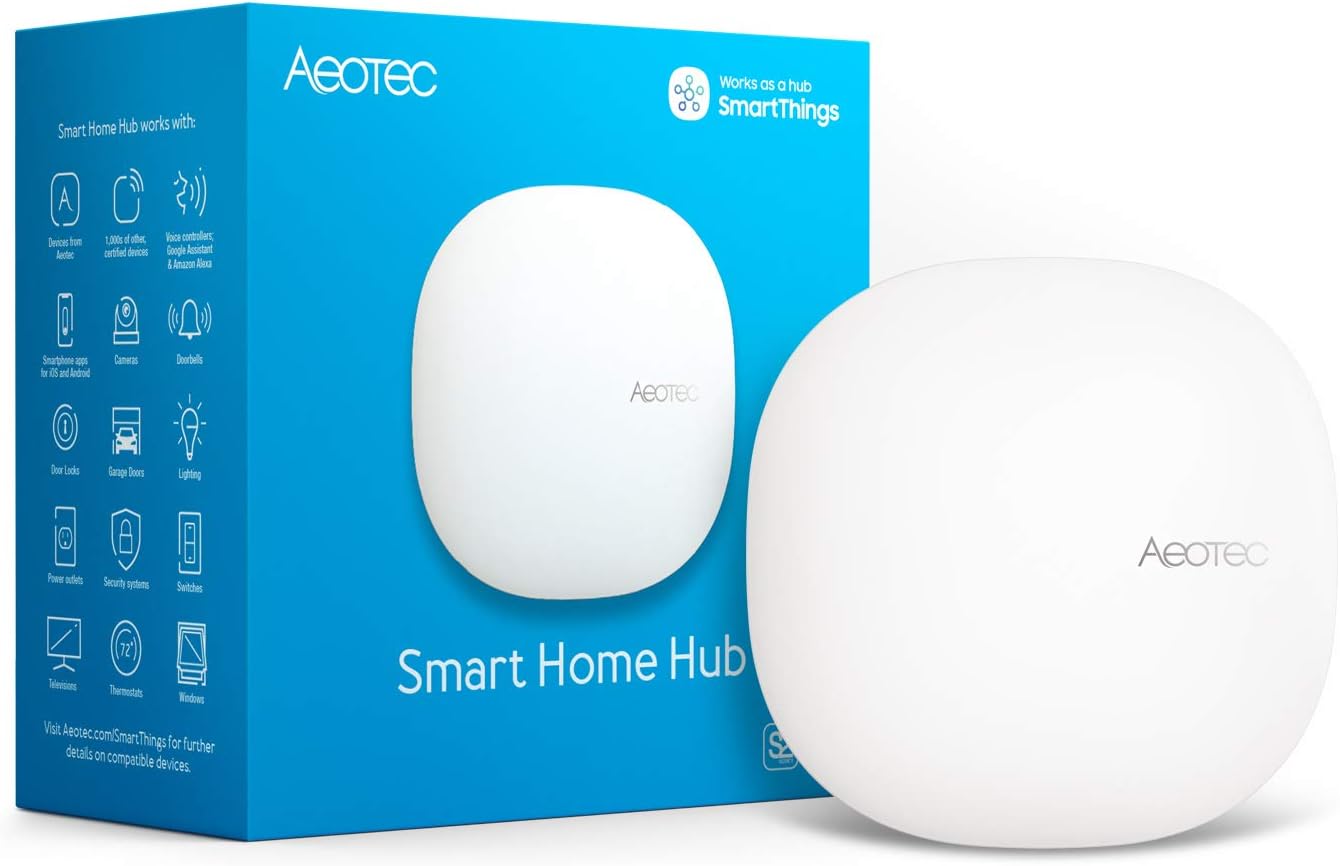
Pros
- Supports Z-Wave Plus, Zigbee, Matter, and WiFi protocols in a single hub
- Works with both Amazon Alexa and Google Assistant for voice control
- Setup completes through the SmartThings app in a few guided steps
- Supports both wired Ethernet and WiFi connectivity for the initial connection
- Many automations run locally, reducing dependence on cloud connectivity for day-to-day routines
Cons
- Z-Wave Plus support is limited to the V3 hub model specifically, not every version
- Designed for use in North America, which may limit protocol compatibility elsewhere
- Full functionality depends on the SmartThings app and account rather than working fully standalone
This hub bridges Z-Wave Plus, Zigbee, Matter, and WiFi-connected devices into a single system managed through the SmartThings app, aiming to unify smart home brands that would otherwise need separate hubs or apps. Matter support connects it to the newer cross-brand standard, while Z-Wave Plus compatibility is specific to the V3 hub model.
- Z-Wave Plus, Zigbee, Matter, and WiFi support
- Works with Alexa and Google Assistant
- Managed through the SmartThings app
- Z-Wave Plus limited to the V3 model
Before buying devices for a specific protocol, checking each device's listed compatibility against the SmartThings device list helps avoid pairing issues after setup.
Setup runs through the SmartThings app on Android, iOS, or iPadOS, with step-by-step install instructions guiding the initial connection. The hub supports both wired Ethernet and WiFi, and the manufacturer recommends starting with the included Ethernet cable before switching to WiFi if preferred, for a more stable initial pairing process.
- SmartThings app for Android, iOS, iPadOS
- Wired Ethernet and WiFi supported
- Ethernet-first setup recommended
- Exclusion tool for removing old Z-Wave devices
Because setup and ongoing management run through the SmartThings app and a Samsung account, anyone wanting a fully local, app-free smart home system will find this hub still leans on cloud-connected software for configuration.
Custom automations can be built in the SmartThings app to coordinate lights, sensors, switches, and other compatible devices throughout the day, and many of these automations are designed to run locally on the hub itself rather than routing every action through the cloud. That local processing is intended to improve speed and reliability compared to cloud-only automation systems.
- Custom automation builder in the app
- Many automations run locally
- Coordinates lights, sensors, and switches
- Designed for use in North America
Local automation improves reliability during internet outages for supported routines, though initial setup, firmware updates, and some advanced features still require an active internet connection.

Pros
- 8MP 4K resolution with color night vision via a built-in spotlight
- 355° pan and 140° tilt for full-yard coverage from one mounting point
- Dual-band 2.4/5GHz Wi-Fi 6 for a more stable connection than single-band cameras
- Bundled 3W solar panel keeps the battery topped up with as little as 20 minutes of direct sun a day
- Local recording to a microSD card up to 512GB with no subscription required
Cons
- No continuous recording, since battery-powered operation limits it to motion-triggered clips
- Solar charging depends on consistent daily sunlight, so shaded mounting spots need the 5V/2A DC charger instead
- microSD card is sold separately and is required for any local video storage
The Argus PT Ultra pairs a wireless 4K camera with a 3W solar panel, so once mounted it runs without a nearby outlet. Roughly 20 minutes of direct sunlight per day is enough to maintain continuous power, though a full 5-hour charge from a 5V/2A DC adapter is available for shaded locations, lasting up to 4 months per charge.
- Dual-band 2.4/5GHz Wi-Fi 6 connects through the Reolink app in minutes
- 355° pan and 140° tilt let one unit cover a wide area instead of needing two fixed cameras
- Should be fully charged before first installation for reliable startup
The camera measures 3.86 x 3.86 x 4.8 inches, small enough for eaves, fence posts or wall mounts.
Recordings save locally to a microSD card of up to 512GB, avoiding any monthly subscription fee for cloud storage. Continuous recording is not supported on this battery-powered model, since it is designed to trigger on motion events rather than record around the clock, which is the trade-off for going wire-free.
- Smart detection zones and sensitivity settings help cut down on false alerts from person, vehicle or pet motion
- Event playback with smart filters makes it easier to jump to relevant clips
- For always-on recording, Reolink's wired PoE or DC models are the better fit
Email and push notifications arrive in real time whenever motion is detected within the configured zones.
Out of the box the camera includes the solar panel and mount, but a microSD card must be purchased separately for any local video storage. A stable 2.4GHz or 5GHz Wi-Fi network within range of the mounting location is required, since the camera has no wired ethernet fallback.
- The free Reolink app handles setup, live viewing and two-way talk with visitors or delivery drivers
- A Reolink Home Hub can extend compatibility for users building a wider camera network
- Mounting hardware for the solar panel should be positioned to actually catch direct sun for reliable charging
Planning the mounting angle for both camera coverage and solar exposure makes the biggest difference in long-term reliability.

Pros
- 8-inch touch display works alongside voice control, so devices can be adjusted by tapping or asking Alexa
- Compatible with thousands of Alexa-enabled devices across WiFi, Bluetooth, Zigbee, Matter, Sidewalk, and Thread
- Built-in smart home hub means Zigbee, Matter, and Thread devices pair directly without a separate hub purchase
- Customizable dashboard widgets put camera feeds, routines, and frequently used devices on one screen
- Made from 27% recycled materials in its construction, per the stated sustainability figure
Cons
- Wall mounting requires an outlet nearby, plus in-wall cable pass-throughs or a power-over-ethernet adapter, both sold separately, for hidden cabling
- A table-top stand is sold separately, so a countertop setup isn't included in the base package
- Playing music through an external speaker requires connecting one, since there's no dedicated high-fidelity speaker built in
The Echo Hub is built to sit at the center of a smart home setup, controlling thousands of Alexa-compatible devices including connected locks, thermostats, speakers, lights, and plugs. It supports WiFi, Bluetooth, Zigbee, Matter, Sidewalk, and Thread devices through a built-in smart home hub, so many device types pair directly without a separate hub or bridge.
- Compatible with thousands of Alexa-enabled devices
- Built-in hub for WiFi, Bluetooth, Zigbee, Matter, Sidewalk, and Thread
- Customizable dashboard widgets for quick device access
Because the hub covers several wireless standards at once, it can replace multiple single-protocol hubs that would otherwise be needed to bridge devices from different brands into one Alexa app.
The 8-inch display is designed to be wall-mounted near an outlet, using either exposed cabling, an in-wall cable pass-through kit, or a power-over-ethernet adapter to hide the cord, with both accessories sold separately. A table-top stand is also available separately for anyone who prefers a countertop setup over a wall mount.
- Wall-mountable design, requires a nearby outlet
- In-wall cable pass-through or PoE adapter for hidden cabling (sold separately)
- Table-top stand available separately for countertop placement
Because the cable-hiding accessories and stand aren't included in the box, planning the mounting method before ordering avoids a second purchase to finish the installation the way it's shown in marketing photos.
Privacy controls include a physical microphone-off button and layered software privacy settings, addressing the always-listening concern that comes with a voice-controlled panel mounted in a shared space. The Hub also arms and disarms compatible security systems and can display live feeds from compatible cameras directly on the dashboard.
- Physical mic-off button for hardware-level privacy
- Arms and disarms compatible security systems from the panel
- Displays live camera feeds from compatible security cameras
Playing music through the Hub itself means connecting an external speaker for the best sound, since the panel is built around home control and video first rather than as a standalone high-fidelity speaker.
What Counts as a Smart House System?
A true smart house system is more than a single speaker or a lone video doorbell. It is a coordinated platform, usually built around a central hub, that lets your devices share information and trigger one another automatically. When a door unlocks, the entryway lights come on. When the last person leaves, the thermostat drops back and the cameras arm themselves. That orchestration is what separates a system from a pile of individual smart products.
Most of the best smart house systems fall into one of three buckets. The first is the open automation hub, which prioritizes local control, privacy, and near-universal device support. The second is the mainstream ecosystem hub, which balances broad compatibility with an easy app. The third is the appliance-led system built around security or voice, where a camera kit or a control panel becomes the anchor of the whole home. Knowing which bucket fits your household is the first real decision.
The Features That Actually Matter
Before you compare price tags, decide which of the following features are non-negotiable for your household. Getting these priorities straight up front saves the most money and regret.
Ecosystem and Voice Compatibility
The single biggest decision is which voice assistant and standard you build around. Look for a hub that speaks Matter and Thread, the newer interoperability standards, alongside the older Zigbee and Z-Wave radios. A system that supports Alexa, Google Home, and Apple Home gives you room to change your mind later. A control panel is designed to sit at the center of an Alexa-based home, while a multi-sensor bridge can pull older infrared devices into the fold and work across all three major assistants.
Local vs. Cloud Control
Cloud-dependent systems are simple to set up but stop working when your internet drops or a manufacturer shuts down a server. Hubs that process automations locally keep your routines running during outages and keep more of your data inside your walls. If privacy and reliability rank high for you, weigh local control heavily.
Security and Monitoring
For many buyers, security is the reason to go smart in the first place. Decide whether you want a self-monitored setup or optional professional monitoring. A kit like the SimpliSafe 9-Piece System offers contract-free professional monitoring you can switch on or off, while wireless camera systems such as the aosu Wireless Cameras deliver subscription-free recording for those who want to avoid monthly fees. For continuous, high-resolution coverage of a larger property, a wired kit like the REOLINK 8CH PoE System records around the clock to a local drive.
Expandability
Your first purchase should not lock you in. The best smart house systems let you add sensors, plugs, bulbs, locks, and cameras over time without swapping the hub. Check how many devices a hub supports and whether it uses open standards so third-party accessories will keep working years from now.
Top Smart House System Picks for 2026
Below are the categories most homeowners shop within, with a standout option in each. Use them as a starting point, then match the specifics to your home size and budget.
Best Open Automation Hub
The Home Assistant Green is the pick for anyone who wants maximum control and privacy. It runs automations locally, supports thousands of device integrations, and does not depend on a single manufacturer’s cloud. There is a learning curve, but it rewards tinkerers with the most flexible smart house system available. If you like the idea of a central brain that ties every brand together, this is the foundation to build on.
Best Mainstream Hub
For a friendlier experience, the SmartThings Hub and the Aeotec Smart Home Hub both combine Zigbee, Z-Wave, and Matter support with a polished app and strong Alexa and Google Home integration. They strike the best balance of power and simplicity for typical households, and their wide device compatibility means most accessories on the shelf will just work.
Best Control Panel
If you prefer a wall-mounted dashboard over your phone, the Amazon Echo Hub turns Alexa into a touch-friendly control center for lights, locks, cameras, and routines. It is ideal for families who want a shared, always-on interface by the front door rather than fumbling for an app.
Best Multi-Sensor Bridge
The SwitchBot Hub 2 is a clever, affordable way to make an existing home smarter. It combines a temperature and humidity sensor, an infrared blaster for legacy TVs and air conditioners, and a bridge that links SwitchBot gadgets to Wi-Fi and the major voice assistants. It is a low-cost entry point that plays nicely with the bigger systems above.
Best Security and Budget Add-Ons
When protection is the priority, a solar camera such as the REOLINK Argus PT Ultra adds 360-degree tracking for spots without wiring, and the security kits covered above handle the rest. Not every upgrade needs to be expensive, either: a simple accessory like a digital energy-saving thermostat shows how a small, well-chosen device can lower bills and slot neatly into a broader system as you expand.
How to Choose the Right System for Your Home
With the categories in mind, work through these questions in order.
- How big is your home? Apartments and condos do well with a single mainstream hub and a few sensors. Larger houses benefit from a robust hub plus wired cameras for reliable, continuous coverage.
- Which assistant do you already use? If your household lives in Alexa, lean toward Alexa-native gear. If you use Apple Home, prioritize Matter and HomeKit compatibility so everything appears in one place.
- Do you want monthly fees? Subscription-free systems cost more upfront but nothing after. Monitored systems trade a monthly bill for professional response.
- How hands-on do you want to be? Tinkerers thrive with open platforms; everyone else should choose the simplest hub that covers their needs.
Building a Complete Smart Home Step by Step
The most successful smart homes are built in layers, not all at once. Start with the hub or ecosystem that will anchor everything, then add one category at a time. Lighting and plugs are the easiest first upgrade and give an immediate payoff. Climate control through a smart thermostat comes next, followed by security cameras and sensors, and finally locks and doorbells. Because you chose an expandable foundation, each new device simply joins the system you already trust.
If you are still comparing platforms, it helps to read a broader overview of the best smart home systems and to study the individual best hubs for smart homes before committing. For inspiration on what to connect once your hub is in place, browse the best devices for smart homes, and if automation routines are your main goal, dig into the best smart hubs for home automation to see how far the rabbit hole goes.
Common Mistakes to Avoid
Two errors trip up first-time buyers. The first is buying devices before choosing a hub, which leads to incompatibility and wasted returns. Always pick your platform first. The second is over-buying on day one; a sprawling system installed all at once is harder to configure and troubleshoot than one you grow deliberately. Start small, confirm each layer works the way you expect, then expand.
Frequently Asked Questions
Do I need a hub for a smart house system?
Not always, but a hub makes a real difference once you own more than a handful of devices. Wi-Fi-only gadgets can work independently, yet they tend to clog your network and cannot easily trigger one another. A dedicated hub speaks Zigbee, Z-Wave, Thread, and Matter, keeps automations fast and local, and gives you one app to manage everything. For a home you plan to grow, starting with a capable hub is almost always the smarter choice.
Are subscription-free systems worth it?
For most households, yes. Subscription-free cameras and security kits cost a little more at checkout but save hundreds of dollars a year in avoided fees, and modern models store footage locally or on a microSD card without sacrificing resolution. Professional monitoring still makes sense if you want a live team to dispatch help when an alarm trips, and the good news is that many systems let you toggle monitoring on and off month to month.
Can I mix brands in one smart house system?
You can, and thanks to Matter it is easier than ever. The key is to anchor your setup on a hub or platform that supports the standards your devices use. Once that foundation is in place, bulbs, plugs, sensors, and locks from different manufacturers can live under a single app and respond to the same routines. This is exactly why choosing an open, well-supported hub first pays off for years.
Final Thoughts
The best smart house systems in 2026 are the ones that fit how you actually live, not the ones with the longest spec sheet. Choose a hub built on open standards like Matter and Thread, decide early on local versus cloud control and whether you want professional monitoring, and make sure your foundation can grow. Whether you land on an open platform, a mainstream hub, or a security-led kit, a little planning now delivers a home that is safer, more efficient, and genuinely easier to live in for years to come.