 Ryan Delgado
 If you spend hours waiting on renders, the best headsets for 3D rendering do more than sound good — they keep you comfortable through long sessions and clear on calls while your workstation grinds away in the background. Whether you’re previewing a render pass, chatting with collaborators, or just tuning out fan noise, comfort and audio clarity matter as much as price. This guide breaks down what actually matters when picking a rendering headset and points you toward options that fit different budgets and setups.
Quick answer: For most people in 2026, the best headsets for 3D rendering is the beyerdynamic DT 990 PRO — our #1 rated choice thanks to its open-back clarity and all-day comfort during long render previews. See the full ranked comparison, alternatives, and buying advice below.

Pros
- 250 Ohm impedance is tuned for dedicated headphone amps and studio interfaces rather than phone or laptop headphone jacks alone
- Frequency response spans 5 Hz to 35,000 Hz, wider than the roughly 20Hz-20kHz range of typical consumer headphones
- 3m coiled cable with both a 3.5mm plug and a 1/4 inch adapter covers studio and portable amp setups
- Circumaural ear pads are replaceable, so worn padding can be swapped without buying a new headphone
- Open-back design is built for a wide, natural soundstage suited to critical listening and mixing
Cons
- Open-back construction leaks sound both in and out, so it is a poor choice for noisy environments or shared spaces
- 250 Ohm impedance needs a dedicated headphone amp to reach full volume and detail; phones and most laptops alone will underdrive it
- Wired-only 3m coiled cable means no Bluetooth or portable low-power use without an amp
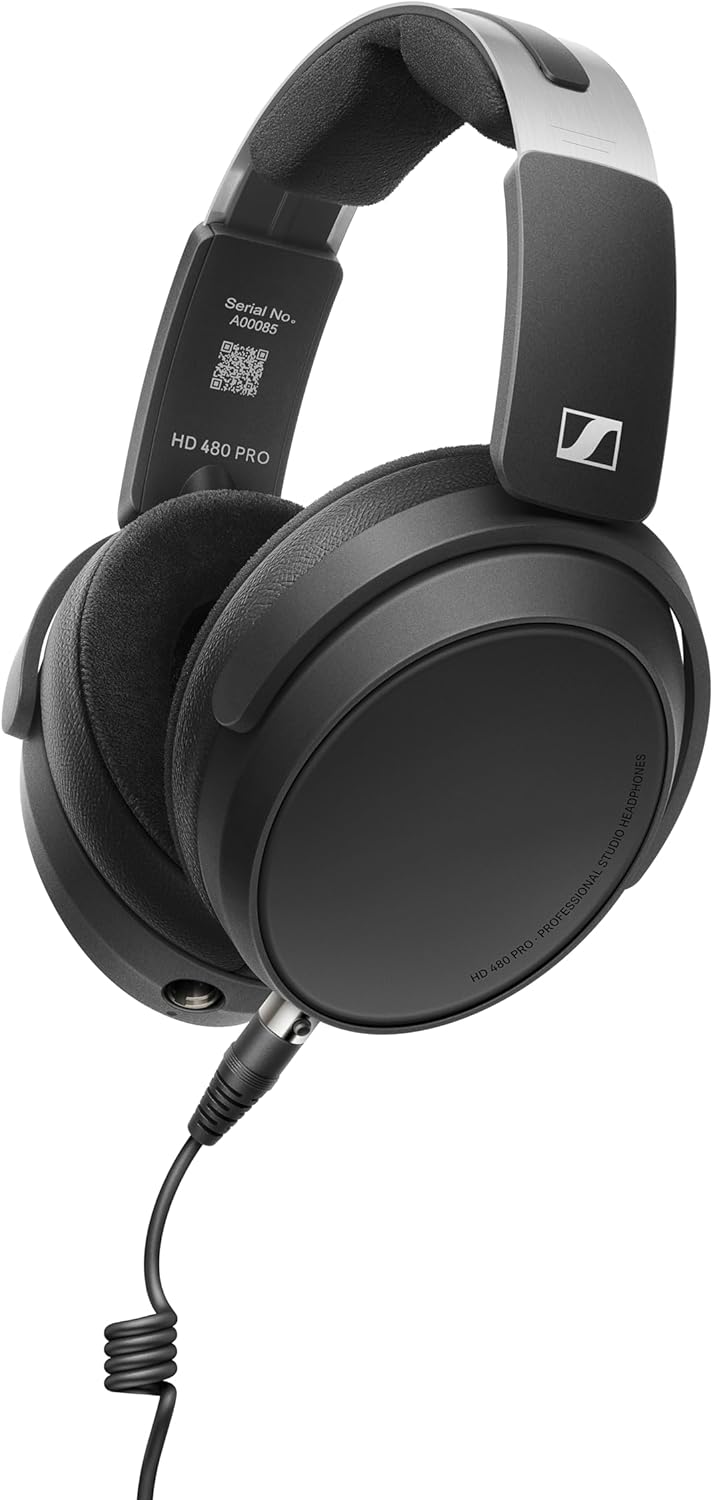
The DT 990 PRO runs at 250 Ohm impedance with a frequency response spanning 5 Hz to 35,000 Hz, positioning it as an open-back studio headphone for critical listening and mixing rather than casual portable use. The open-back design creates a wide, three-dimensional soundstage with a mild bass and treble boost that stays controlled rather than harsh.
- Impedance: 250 Ohm
- Frequency response: 5-35,000 Hz
- Design: Open-back, circumaural
Because of the 250 Ohm load, these headphones are built to pair with a dedicated headphone amp or studio interface rather than running directly from a phone or basic laptop output.
The headband uses a spring steel design for a secure, evenly distributed fit during long sessions, and the ear pads are soft, circumaural velour that can be replaced individually as they wear rather than requiring a full headphone replacement. A single-sided cable connection reduces tangling when putting the headphones on and taking them off repeatedly.
- Headband: spring steel for secure long-session fit
- Ear pads: replaceable velour, circumaural
- Cable connection: single-sided to reduce tangling
Each unit is handmade in Germany, continuing a build process for the DT series that has been in production for decades.
A 3m coiled cable comes terminated with a 3.5mm plug and includes a 1/4 inch adapter, covering both portable devices and full-size studio equipment without needing a separate cable purchase. Being fully wired, there is no Bluetooth pairing or battery to manage, trading portability for a stable, lag-free connection to amps and interfaces.
- Cable: 3m coiled, 3.5mm plug plus 1/4 inch adapter included
- Connection: wired only, no Bluetooth
- Best paired with: headphone amps, studio interfaces, home hi-fi systems
Listeners wanting a grab-and-go pair for a phone on the move should note the 250 Ohm impedance and 3m coiled cable are built around desk and studio use, not portable listening.

Pros
- 53 mm drivers with a 15 Hz to 25 kHz frequency response
- Aluminium frame arms resist twisting under one-handed handling
- Memory foam pads plus a spare set of velour cups in the box
- Detachable microphone is TeamSpeak and Discord certified
- Inline USB control box adds independent audio and mic volume wheels
Cons
- Virtual 7.1 works on PC, Mac and PlayStation only, everything else falls back to stereo
- Xbox One needs a Microsoft controller adapter, and Xbox 360 and PS3 are unsupported
- Wired only, with the control box hanging partway down the cable
Sound comes from 53 mm dynamic drivers covering a 15 Hz to 25 kHz range, wider at both ends than the 20 Hz to 20 kHz normally quoted for gaming headsets. The closed cups seal passively, so keyboard clatter and room noise stay outside without any active circuitry drawing power.
- Virtual 7.1 is generated in the USB control box, not in driver software
- A single button toggles surround on and off mid-game
- Separate wheels trim headphone and microphone levels
Positional cues are convincing enough for footstep tracking in shooters, though the effect is a simulation across two drivers rather than eight physical speakers. In plain stereo the tuning leans warm, with lifted bass that suits games and films more than critical music listening.
The headset itself ends in a 3.5 mm plug, and the USB control box is an inline adapter you add when you want surround. That split decides what works where.
- PC and Mac: full virtual 7.1 through the USB box
- PlayStation: the USB box works, later consoles fall back to stereo
- Xbox One: needs a Microsoft controller adapter, sold separately
- Nintendo Switch and phones: stereo over the 3.5 mm jack
- Xbox 360 and PS3 are not supported at all
There is no wireless mode and no battery, so the headset is always tethered, but it also never needs charging before a session starts. The control box clips to a shirt or sits on the desk, and adds noticeable weight partway along the cable run.
Padding is 100 percent memory foam in both the ear cushions and the leatherette headband, and a second set of velour cups ships in the box for anyone who finds leatherette warm. Swapping cups changes the seal slightly, trimming a little bass and adding breathability.
- Aluminium frame arms hold their shape when the headset is grabbed one-handed
- Over-ear cups fully enclose average adult ears
- Detachable microphone leaves a clean profile for music or travel
Clamping force is firm out of the box, which keeps the seal tight but presses on glasses arms during multi-hour sessions. Stretching the band over a box overnight softens it. Noise cancellation and echo suppression on the mic are active only while the USB box is in the chain.
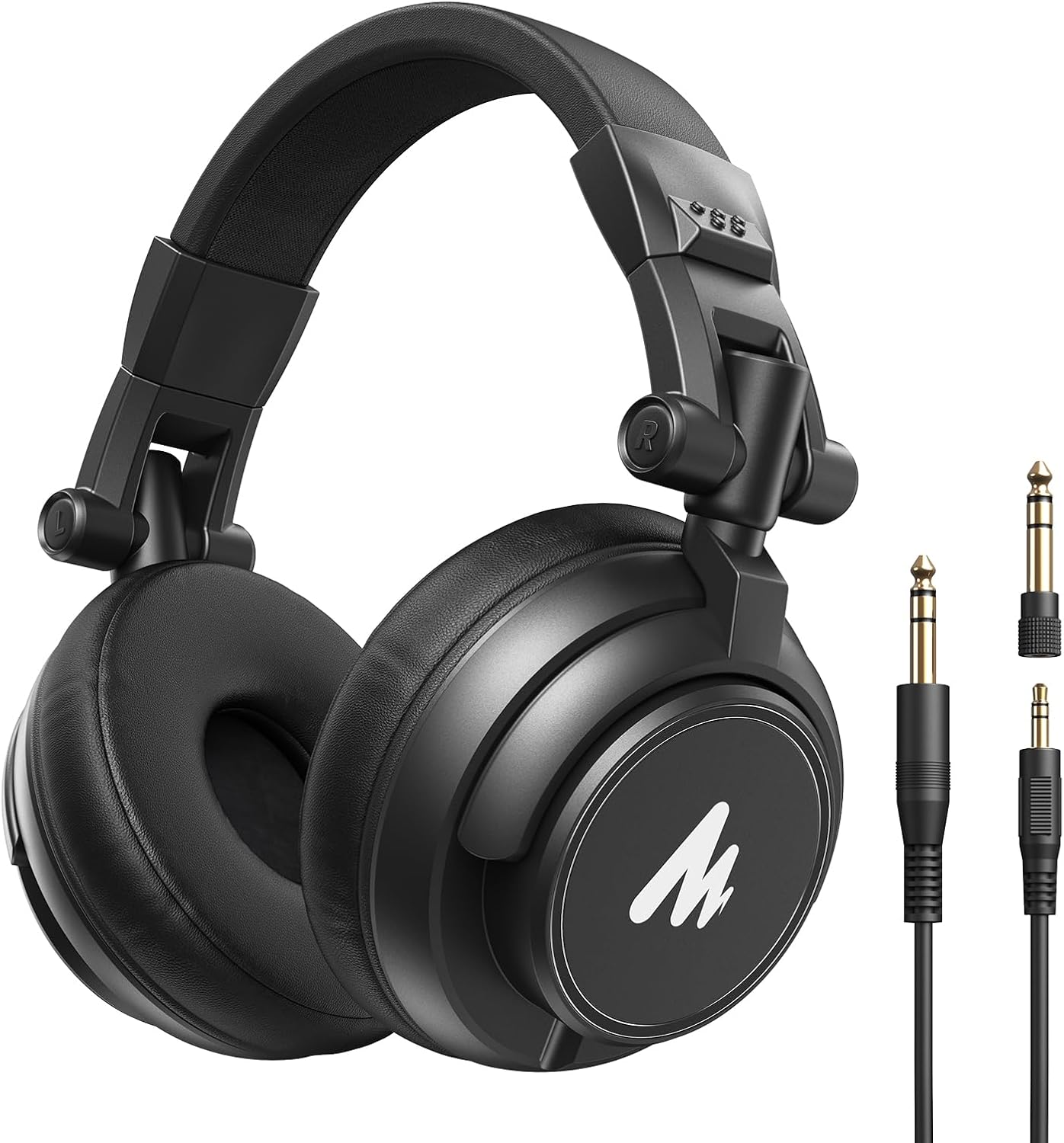
Pros
- 50mm drivers deliver an extended frequency range for detailed monitoring during mixing or tracking
- Detachable 9.8ft spring-loaded cable with a 3.5mm connector and interchangeable 6.35mm jack for different equipment
- 90° swiveling earcups allow quick single-ear monitoring while tracking vocals
- Wired connection avoids the latency that wireless headphones introduce during sample-accurate editing
- Protein memory foam cushions on the headband and earcups are designed for extended wear during long sessions
Cons
- Wired only, so there is no Bluetooth mode for casual or mobile listening
- Closed-back design reduces outside noise but also traps heat around the ears during long sessions
- 9.8ft cable length is built for a stationary desk setup, less practical for anyone moving around while using it
Each earcup houses a 50mm driver aimed at delivering an extended frequency range with accurate bass response for mixing and monitoring work. The closed-back design reduces how much outside noise reaches the ears, which helps isolate the mix or the vocal being tracked from room sound.
- 50mm large-aperture drivers per earcup
- Closed-back construction for outside noise reduction
- Extended frequency response aimed at mixing and monitoring accuracy
Because the closed-back cups also trap heat, comfort during multi-hour sessions depends more on ventilation breaks than on the driver design itself.
A detachable, spring-loaded 9.8ft cable connects using a 3.5mm plug, with an interchangeable 6.35mm adapter for gear that expects a larger jack, such as mixers or amps. That combination covers smartphones, computers, audio interfaces, guitar amps and keyboards without needing a separate adapter cable.
- Cable length: 9.8ft, detachable and spring-loaded
- 3.5mm connector with a swappable 6.35mm jack
- Compatible with PCs, mixers, amps and MAONO microphone bundles
Because the connection is entirely wired, there is no wireless pairing option for phones or tablets that expect Bluetooth headphones.
An ergonomic headband with protein memory foam cushions is shaped to mold to the head over time, and the same foam padding wraps the earcups. The 90° swiveling earcup hinge lets one side be lifted away from the ear for quick single-ear monitoring without removing the whole headset.
- Protein memory foam on headband and earcups
- 90° swivel hinge for single-ear monitoring
- Built for stationary use at a desk or studio station
The swivel hinge is a mechanical feature worth checking periodically, since hinges on over-ear headphones are typically the first part to loosen with heavy daily use.

Pros
- STELLAR.45 driver covers a 5-40,000 Hz frequency range at 48 ohm impedance for accurate response across DACs and headphone amps
- Detachable cable terminates in a locking mini-XLR connector with a 3.5mm jack and included 6.35mm adapter
- Open-back circumaural design with soft, replaceable velour ear pads for long sessions
- 48 ohm impedance is low enough to drive from many interface or amp outputs without extra gain stages
- Designed and manufactured in Germany with parts built for individual replacement
Cons
- Open-back design leaks sound outward, so it is not suited to shared offices or noisy commutes
- 48 ohm impedance is tuned for interfaces and DACs rather than maximum loudness on low-power mobile devices without amplification
- No inline microphone or call controls, since this is a studio monitoring headset rather than a communications headset
The DT 990 Pro X is built around beyerdynamic's STELLAR.45 driver, engineered for a 5 Hz to 40,000 Hz frequency range at 48 ohm impedance. The open-back enclosure lets air move freely behind the diaphragm, which widens the soundstage and lets spatial detail, panning, and mix artifacts come through clearly.
- STELLAR.45 driver spans 5-40,000 Hz at 48 ohm impedance
- Open-back construction for a wide, natural soundstage over a sealed alternative
- Designed and manufactured in Germany for consistent unit-to-unit tuning
Because the enclosure is open, ambient room sound stays audible alongside the mix, which is useful for critical listening and editing work where awareness of the surrounding acoustic space matters as much as raw output level.
The DT 990 Pro X uses a detachable cable that locks in with a mini-XLR connector at the earcup, ending in a 3.5mm jack with a screw-on 6.35mm adapter included for full-size headphone outputs. A worn or damaged cable can be swapped without replacing the whole headset.
- Detachable cable with locking mini-XLR connector at the earcup
- 3.5mm jack terminated cable with a bundled 6.35mm adapter
- 48 ohm impedance suits headphone amps, audio interfaces, and hi-fi gear
At 48 ohm, the headphones can be driven by a wider range of sources than beyerdynamic's higher-impedance studio models, though they are still tuned around interface and amp output rather than raw phone or laptop headphone jacks.
The earcups use soft, circumaural velour padding that is replaceable when it wears out, and the headband is designed to spread clamping pressure evenly for long studio sessions. The over-ear circumaural shape fully encloses the ear rather than resting on it.
- Circumaural velour ear pads are replaceable rather than fixed to the earcup
- Steel-reinforced headband construction for a secure, evenly distributed fit
- Open-back design keeps ears cooler over multi-hour sessions than a closed-back pair
This build suits studio engineers and audiophiles doing long mixing or critical-listening sessions at a desk, rather than commuters, since the open back offers no isolation from outside noise and lets sound escape into the room.

Pros
- TriForce 50mm drivers split tuning across highs, mids, and lows instead of one full-range driver handling the whole spectrum
- At 240g, it's light enough for long sessions, with thicker headband padding and memory foam ear cushions
- Bendable HyperClear cardioid mic can be shaped to sit close to the mouth for clearer pickup
- Closed earcups provide passive noise isolation without needing a battery or active noise-cancelling circuitry
- 3.5mm jack works across PC, Mac, PS4, PS5, Switch, and mobile devices without pairing or drivers
Cons
- 7.1 surround sound only activates on Windows 10 64-bit through Razer's software, so consoles and Mac get stereo output instead
- Xbox One requires a separate stereo adapter that isn't included in the box
- Wired-only 3.5mm connection means no standalone Bluetooth mode for phone calls away from a console or PC
The headset is built around TriForce 50mm drivers, a design that splits the driver into three sections tuned separately for highs, mids, and lows, aiming for clearer detail across the frequency range than a single full-range driver typically delivers.
- 50mm TriForce drivers with separated high/mid/low tuning
- 7.1 surround sound available on Windows 10 64-bit only
- Closed-back earcups for passive noise isolation
On platforms outside Windows 10 64-bit, including consoles and Mac, the headset still outputs full stereo audio through the 3.5mm jack; it's specifically the virtual 7.1 surround processing that's tied to the Windows software.
A bendable HyperClear cardioid mic tapers its pickup pattern toward the back and sides, aiming to capture voice clearly while cutting background noise, and its flexible arm lets you position the sweet spot close to your mouth.
- Bendable cardioid mic with directional pickup
- 3.5mm connection works with PC, Mac, PS4, PS5, Switch, and mobile
- Xbox One requires a separate stereo adapter, sold separately
Because the connection is a standard 3.5mm jack rather than USB or Bluetooth, there's no pairing step or driver install needed on most devices - plug in and it's ready, aside from the Xbox One adapter exception.
At 240 grams, the BlackShark V2 X is built to stay comfortable through long sessions, with a padded headband and leatherette-wrapped memory foam ear cushions that spread pressure across the head rather than concentrating it at the top.
- 240g total weight
- Memory foam ear cushions with leatherette covering
- Thicker headband padding versus lighter esports-focused headsets
The closed earcups that provide passive noise isolation also trap more heat during long sessions than open-back designs, which is the usual trade-off for the added sound isolation they deliver.
Pros
- Comfort is King Comfort s in the Cloud III s DNA. Built for gamers who
- Audio Tuned for Your Entertainment Angled 53mm drivers have been tuned
- Upgraded Microphone for Clarity and Accuracy Captures high-quality
- Durability, for the Toughest of Battles The headset is flexible and
- DTS Headphone X Spatial Audio A lifetime activation of DTS Spatial
Cons
- Requires checking placement surface dimensions before setup
- Requires routine care to keep exterior housing dust-free
- Initial setup requires checking operating instructions carefully
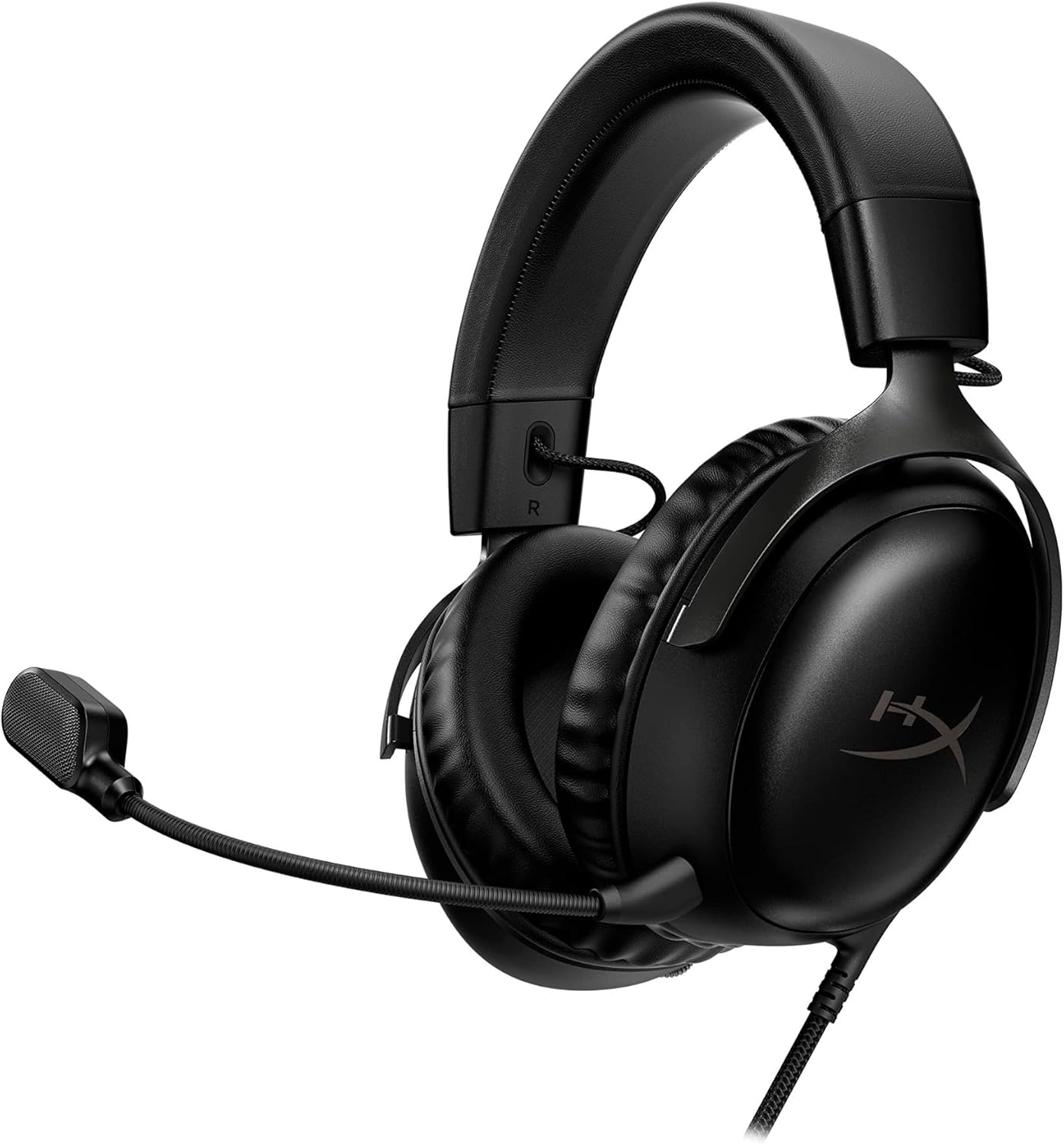
The HyperX Cloud III Wired Gaming Headset PC PS5 Xbox Series offers reliable functional utility tailored for modern home and workplace environments. Designed to enhance daily productivity, this unit integrates Comfort is King Comfort s in the Cloud III s DNA. Built for gamers who alongside Audio Tuned for Your Entertainment Angled 53mm drivers have been tuned. Users will find the intuitive design straightforward to operate across various room configurations and daily routines. The versatile construction adapts easily to personal workspaces, providing consistent practical value and streamlined usability. Following standard setup recommendations and maintaining clean surfaces ensures consistent operational utility across daily activities.
Built using resilient structural components, this unit features a sturdy outer housing engineered to resist operational wear. Precision manufacturing ensures that all joints and surface connections remain firmly aligned during regular daily activity. Upgraded Microphone for Clarity and Accuracy Captures high-quality reinforces overall physical stability over extended service periods. Structural integrity remains firm throughout regular usage, giving owners peace of mind. Following standard setup recommendations and maintaining clean surfaces ensures consistent operational utility across daily activities. This functional equipment provides steady performance and practical convenience when properly integrated into your workspace.
Initial setup requires placing the unit on a flat, stable surface with adequate clearance around all sides for proper operation. Ensure all power or connection cables are routed neatly without sharp bends to prevent wire strain. Regular care involves wiping exterior housing surfaces with a soft cloth to remove dust buildup. Inspecting mechanical connections periodically preserves operational efficiency and maintains cosmetic appearance over time. Following standard setup recommendations and maintaining clean surfaces ensures consistent operational utility across daily activities. This functional equipment provides steady performance and practical convenience when properly integrated into your workspace.
Pros
- 50 mm PRO-G drivers pair with DTS 7.1 surround processing through the included USB DAC
- Detachable boom mic runs Blue VO!CE noise reduction, compression and limiting for cleaner voice comms
- Ships with two ear pad sets, noise-isolating leatherette and breathable velour, plus a carrying bag
- Steel headband and aluminum fork construction target a 35 Ohm impedance for consistent output
- Includes a separate mobile cable with an inline mic for phone or console use without the USB DAC
Cons
- 7.1 surround and Blue VO!CE tuning require the bundled USB DAC plus Logitech G HUB software running on a Windows PC, so Mac and console users lose those features
- Wired-only design with no Bluetooth or 2.4GHz wireless mode
- Cable-tethered use means the length of the included USB or 3.5mm cable dictates how far you can sit from the source device
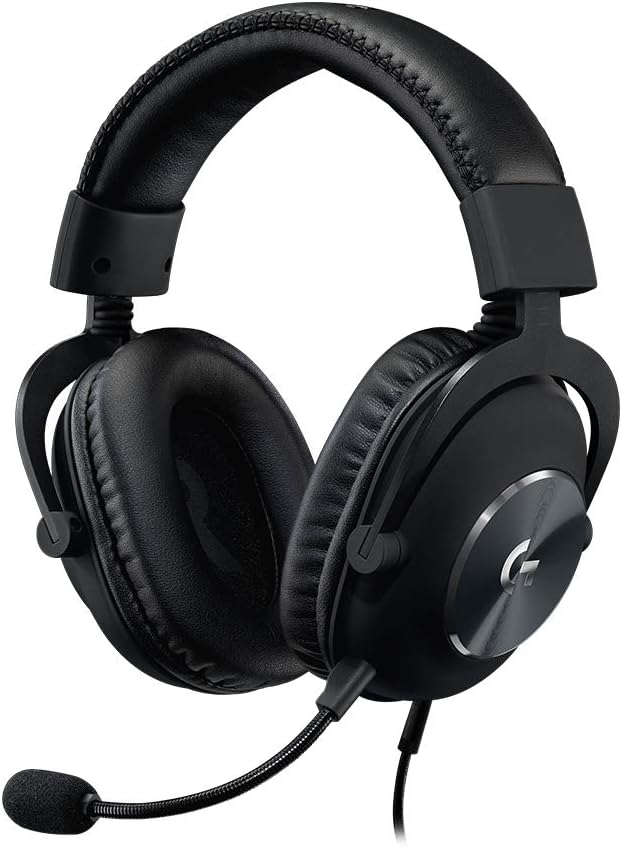
The PRO X uses 50 mm PRO-G drivers tuned for clear sound imaging and improved bass response, paired with DTS Headphone:X 2.0 7.1 channel and object-based surround processing for positional awareness in games. The headset carries a 35 Ohm impedance spec.
Voice input runs through a detachable 6mm boom microphone equipped with Blue VO!CE technology, which applies real-time noise reduction, compression, a de-esser and other processing to clean up voice comms. Five-band EQ profiles can be saved to the onboard memory of the included USB sound card for use on systems without the G HUB software installed, such as tournament machines.
- 50 mm PRO-G drivers, 35 Ohm impedance
- DTS 7.1 surround via USB DAC
- Detachable Blue VO!CE boom mic
This headset connects over USB, using the included external sound card, or over a standard 3.5mm analog cable for direct device connections. The 7.1 surround processing and Blue VO!CE microphone tuning both require the bundled USB DAC connected to a Windows PC running Logitech G HUB software; without that combination, the headset still functions but loses the surround and voice-processing features.
A separate mobile cable with an inline microphone is included for connecting directly to a phone or console over 3.5mm, bypassing the USB DAC entirely. There is no Bluetooth or 2.4GHz wireless mode on this model, so it remains a wired-only headset regardless of which cable is in use.
Construction combines a durable aluminum fork with a steel headband, aimed at withstanding regular adjustment and travel between setups. Two sets of memory foam ear pads are included: noise-isolating leatherette for more passive sound blocking, and a breathable velour option better suited to longer sessions in warmer rooms.
- Aluminum fork plus steel headband build
- Two swappable memory foam ear pad options
- Included carrying bag for storage and travel
Because the boom mic detaches fully, the headset can also be used as a standard listening headset without the microphone attached. The included bag helps protect the extra ear pads and USB DAC when the headset travels between a home setup and a LAN event or tournament venue.

Pros
- Up to 80 hours of battery life per charge, with a 15-minute quick charge adding about 3 hours
- Dual USB transmitters let the headset switch between console and PC via CrossPlay without swapping hardware
- Simultaneous Bluetooth 5.2 connects to a phone for calls or music alongside game or PC audio
- 60mm Eclipse dual drivers separate woofer and tweeter for distinct low and high frequency detail
Cons
- Two USB transmitters ship in the box, so losing or misplacing one interrupts CrossPlay switching between systems
- Memory foam cushions and steel-reinforced hinges add clamping weight that some may find heavy over long sessions
- Full EQ and mic tuning require installing the companion desktop or mobile app rather than working entirely standalone
Audio comes from 60mm Eclipse dual drivers, built with a distinct woofer and tweeter rather than a single full-range driver, aimed at separating low bass rumble from high-frequency detail like footsteps or dialogue. The companion app adds a 10-band EQ for further tuning by game or genre.
The flip-to-mute microphone uses A.I.-based noise reduction to cut background sound before it reaches teammates, and flipping the mic up physically mutes it without needing a separate button press.
- 60mm dual drivers with separate woofer and tweeter
- 10-band EQ via the companion app
- Flip-to-mute mic with A.I. noise reduction
Battery life runs up to 80 hours per charge, among the longest in its class, and a 15-minute quick charge restores roughly 3 hours of playtime for a fast top-up between sessions. Two included USB wireless transmitters allow the CrossPlay button on the headset to switch between a console and PC without unplugging or repositioning hardware.
Bluetooth 5.2 runs simultaneously alongside the 2.4GHz console/PC connection, so a phone can stay connected for calls or music without dropping game audio.
- Up to 80-hour battery life, quick charge included
- Dual transmitters for CrossPlay console/PC switching
- Simultaneous Bluetooth 5.2 for phone audio
The headset uses a lay-flat, steel-reinforced frame designed to withstand the flexing and folding of daily use better than an all-plastic hinge. Memory foam cushions are shaped with glasses-friendly cutouts to reduce pressure on the temples for anyone wearing glasses during long sessions.
A mappable wheel and mode button on the ear cup allow quick access to volume, chat mix, or EQ presets without opening the app mid-game, though the reinforced design does add some weight over an ultralight headset.
- Steel-reinforced, lay-flat frame
- Glasses-friendly memory foam cushions
- Mappable wheel and mode button on the ear cup

Pros
- 50mm drivers paired with USB-enabled 7.1 surround sound add positional detail for FPS and ARPG titles
- Dual 3.5mm and USB connectors cover PC, PS4, PS5, Xbox controllers and Switch docked mode
- Detachable boom microphone can be removed entirely for non-gaming listening sessions
- USB control box puts volume and mic mute adjustment within reach without touching the PC
- Passive noise isolation from the earmuff cushions helps pick out footsteps over ambient room noise
Cons
- Full 7.1 surround processing requires the USB connection; the 3.5mm jack runs stereo sound only
- Wired-only design means no Bluetooth or 2.4GHz wireless option for cable-free use
- Lightweight earmuff cushions may need breaks during extended sessions depending on head size
The H9 centers on 50mm drivers tuned to reproduce explosions, gunfire and environmental detail with added depth when running through the USB connection.
- 7.1 surround sound processing is available specifically over the USB connector, adding positional detail useful in FPS and ARPG titles
- Connecting via the 3.5mm jack instead delivers standard stereo sound without the surround processing layer
- Passive noise isolation from the ear cushions helps separate footsteps and cues from background room noise
- The USB control box includes an onboard switch dedicated to toggling 7.1 surround mode on or off
Players who want the full surround effect need to use the USB connection rather than the 3.5mm jack.
Dual connectors are built in specifically to cover the mix of ports used across current gaming platforms.
- The USB connector pairs with PS4, PS5, desktops and laptops for plug-and-play use with 7.1 surround enabled
- The 3.5mm jack connects to Xbox controllers, Switch docked mode, other game console controllers, and phones or tablets
- A detachable boom microphone can be unplugged when the headset is used for music or general listening instead of gaming
- Because the design is wired-only, there is no Bluetooth or 2.4GHz wireless mode for cable-free use
That dual-connector setup lets one headset move between a console and a PC without needing separate accessories.
Comfort features are built around long gaming sessions, with lightweight materials used across the earmuffs and headband.
- Soft earmuff cushions and an adjustable headband are intended to reduce pressure points during multi-hour play
- The over-ear cushions also contribute to passive noise cancellation by sealing around the ear
- The USB control box handles volume and mic mute without needing to reach for in-game or system settings
- A detachable microphone means the headset can double as general listening headphones when the mic is not needed
Because the cushions are built light rather than heavily padded, users with larger head sizes may want to take periodic breaks on longer sessions.

Pros
- Up to 300 hours of battery life on a single charge via 2.4GHz wireless connection
- Dual Chamber Drivers at 50mm tune mids and highs independently from the bass-heavy lows
- DTS Headphone:X Spatial Audio adds precise sound localization for a virtual 3D soundstage
- Aluminum frame construction targets long-term durability across repeated daily use
- Detachable noise-cancelling microphone can be removed entirely when not gaming
Cons
- The 300-hour battery figure is measured at 50% volume, so louder listening sessions will drain it faster
- Relies on a 2.4GHz USB wireless dongle rather than Bluetooth, so it will not pair directly with phones or Bluetooth-only devices
- Frequency response tops out at 21 kHz, slightly below some open-back headphones aimed at critical listening
The Cloud Alpha Wireless uses 50mm Dual Chamber Drivers that physically separate the chamber handling bass from the chamber handling mids and highs, aiming for clearer detail instead of one driver reproducing the full range at once.
- Frequency response is rated at 15 Hz to 21 kHz
- DTS Headphone:X Spatial Audio adds virtual 3D sound positioning for locating footsteps or directional cues in games
- Multi-platform compatibility covers PC and other systems accepting a 2.4GHz USB wireless receiver
- HyperX NGENUITY software provides equalizer tuning and further customization on PC
The dual-chamber approach targets gaming clarity across explosions, dialogue, and footstep cues rather than a flat tuning aimed purely at music playback.
Battery life is tested at up to 300 hours on a single charge, measured at 50% headphone volume, meaning louder sessions or heavier microphone use will bring that figure down.
- Wireless connection runs over a dedicated 2.4GHz USB receiver rather than Bluetooth
- Battery status and equalizer settings are checked through HyperX NGENUITY software on a connected PC
- The detachable microphone includes noise cancellation to cut background sound during voice chat
Because the wireless link uses a proprietary 2.4GHz dongle, the headset will not connect directly to phones, tablets, or laptops that only support Bluetooth audio without an adapter.
The headband and ear cushions use signature memory foam wrapped in breathable leatherette, aimed at reducing pressure during long sessions rather than short listening stretches.
- An aluminum frame reinforces the headband and hinge points against repeated folding and adjustment over time
- The detachable microphone can be removed completely for a cleaner look during non-gaming use
- Ear cushions are replaceable individually rather than requiring a full headset swap when foam wears down
The combination of a metal frame with foam padding trades some weight savings for structural durability, so it sits heavier on the head than an all-plastic wireless headset built with a lighter frame.
Why Headset Comfort and Clarity Matter During Long Renders
Render times on complex scenes can stretch from minutes to hours, and most of that time you’re multitasking — checking email, joining a call, or just staying focused while your machine grinds through samples. A cheap headset that pinches after 90 minutes or muddies dialogue on a call makes that downtime worse, not better. A fast GPU from our best graphics cards for 3D rendering guide can shrink that wait, but no card eliminates it entirely, so a comfortable headset still earns its keep.
Good audio also helps you catch problems early. A fan spinning up under load, a Slack notification, or a client’s feedback call all come through clearer with accurate drivers and a fit you can wear for a full shift without wanting to take it off.
Open-Back vs. Closed-Back Drivers
Open-back headphones, like the beyerdynamic DT 990 PRO, deliver a wider, more natural soundstage and stay cooler over long sessions. They’re a strong fit if you work from a private office or home studio. Closed-back designs seal in sound instead, which matters more if you share a desk or office and need to block out chatter.
Comfort for Multi-Hour Sessions
Look at clamping force, ear cup material, and total weight before anything else. Memory foam pads and a well-padded headband make a bigger difference after hour three than a slightly higher driver spec on a spec sheet. If your current setup already leaves your ears sore by midafternoon, that’s usually a fit problem, not a sound-quality one.
What to Look for in the Best Headsets for 3D Rendering
Picking from the best headsets for 3D rendering comes down to a handful of practical factors, not marketing claims. Here’s what actually changes your day-to-day experience with one.
Wired Reliability vs. Wireless Freedom
Wired headsets avoid dropouts, charging gaps, and Bluetooth latency, which is useful when you’re syncing audio to a render preview or screen recording. Wireless models like the Turtle Beach Stealth 700 trade a little reliability for the freedom to step away from your desk while a batch render finishes.
Microphone Quality for Client Calls and Collaboration
If you regularly hop on calls with clients or a remote team, a detachable or noise-gated mic matters as much as the drivers. The Logitech G PRO X includes a detachable boom mic with built-in noise reduction, which keeps fan noise from your workstation out of the conversation. For a deeper comparison focused purely on mic performance, our guide to the best headsets with a microphone covers this in more detail.
Drivers, Frequency Range, and Why They Matter
Driver size (measured in millimeters) and frequency range affect how much detail you hear, but bigger isn’t automatically better. A 50mm driver tuned well for mids and highs, where speech and notification sounds live, is more useful for rendering work than a bass-heavy driver built for music.
Cable Length, Weight, and Everyday Ergonomics
Small details end up mattering more than spec sheets once you’re using a headset every day. A 3-meter coiled cable keeps you from yanking your headset off your desk when you lean back, while a headset under roughly 300 grams is noticeably easier on your neck by the afternoon. If you swap between a desktop and a laptop through the day, check whether the cable uses a standard 3.5mm plug or a proprietary connector, since that affects how easily you can move between devices.
Top Picks by Use Case
Rather than ranking every option the same way, it helps to match a headset to how you actually work. Below are picks for the situations that come up most for people doing rendering-heavy work.
Best Overall for Rendering Work
The beyerdynamic DT 990 PRO earns the top spot for accurate, fatigue-free listening across long sessions. Its open-back design and velour pads make it easy to forget you’re wearing headphones at all, and the detailed midrange makes call audio easy to follow. The tradeoff is that it leaks sound, so it isn’t the right pick if you sit near coworkers.
Best Budget Pick
The HyperX Cloud II remains a dependable choice if you want solid comfort and clear audio without spending much. Memory foam pads and a durable aluminum frame hold up well to daily use, though the mic is fine for calls rather than exceptional. It’s a sensible pick if you’re outfitting a second workstation or just getting started.
Best for Noisy Shared Offices
For closed-back isolation on a budget, the MAONO MH601 Pro blocks out desk chatter while still delivering a balanced sound signature for reviewing render audio or podcasts during breaks. It won’t match a premium open-back model for detail, but it’s a fair trade for the isolation.
Best Wireless Option
The Turtle Beach Stealth 700 pairs active noise cancellation with an 80-hour battery, so you can step away from your desk mid-render without hunting for a charger. It’s heavier than the wired picks here, so factor that in if you already deal with neck or shoulder strain by the end of the day.
Best Lightweight Pick
If clamping pressure bothers you during long sessions, the Razer BlackShark V2 X is noticeably lighter than most closed-back gaming headsets, which helps if you already wear glasses or work in a warm room where extra padding gets uncomfortable fast.
Best for Critical Audio Review
If you review render audio, walkthroughs, or client presentations and need to catch subtle detail, the beyerdynamic DT 990 Pro X is built for exactly that kind of close listening. It shares the same open-back comfort as our top pick with a slightly updated tuning, though it’s a step up in price and still leaks sound the same way its predecessor does.
Rounding Out a Workstation Built for Rendering
A headset is only one piece of a setup built for long render queues. Once your GPU and CPU are handled, a wide-gamut display from our best monitors for 3D rendering picks helps you trust the colors you’re seeing before a render even finishes. And if you’re typing dense scene names or notes for hours at a time, it’s worth checking our best keyboards for 3D rendering guide to round out a desk that keeps pace with your workload.
Common Mistakes to Avoid When Buying a Rendering Headset
A few buying mistakes come up again and again, and they’re easy to avoid once you know what to check.
- Ignoring clamping force. A headset that feels fine in a five-minute store test can hurt after two hours at your desk.
- Choosing open-back for a shared space. Open-back headphones sound great but leak audio, which is a problem in an open office.
- Skipping the mic spec. If you’re on client calls, an integrated mic with no noise gating will pick up every fan and keyboard click.
- Overpaying for gaming features you won’t use. RGB lighting and virtual surround sound add cost without improving how a render preview sounds.
- Forgetting about pad material in warmer rooms. Faux leather traps heat, while mesh or velour pads breathe better if your workstation runs hot during long render jobs.
None of these are dealbreakers on their own, but stacking two or three of them is usually why a headset ends up in a drawer within a month instead of on your desk every day.
Frequently Asked Questions
Do I need an open-back or closed-back headset for rendering work?
Open-back models sound more natural and stay cooler, making them a good fit for a private office. Closed-back headsets isolate outside noise better, which helps in a shared workspace.
Is a wireless headset reliable enough for long render sessions?
Yes, as long as battery life covers your typical workday. Models like the Turtle Beach Stealth 700 offer around 80 hours per charge, which comfortably covers most render-heavy days.
Does a gaming headset work fine for rendering, or do I need studio headphones?
Either can work well. Gaming headsets tend to add a mic and USB controls, while studio-style options like the DT 990 PRO focus on flatter, more accurate audio for critical listening.
How much should I budget for a rendering headset?
Solid options start under $50, and spending more mainly buys better comfort and mic quality rather than dramatically different sound. It’s worth comparing specs and current pricing before deciding how much to spend.
Will a better headset actually speed up my renders?
No — render speed comes down to your CPU and GPU. A better headset improves your experience while you wait, not the render time itself.
The right headset won’t shave time off a render queue, but it changes how those hours feel: clearer calls, less ear fatigue, and audio you can trust when reviewing a scene. Match your pick to where you work and how you use it, and the rest of your desk setup will feel just as dialed in.