 Owen Bradley
Every clothes dryer has to solve the same problem: clothes hold water, heat turns that water into vapour, and the vapour has to go somewhere. A vented machine blows it outside through a duct. A ventless machine captures it inside the cabinet and drains it away as liquid. That single design difference cascades into everything else, from how long a cycle takes to whether you can put a dryer in a hallway cupboard at all. The vented vs ventless dryer decision is therefore rarely about which is objectively better. It is about which one your building will physically allow, and what you are willing to trade for the privilege. Here is the full comparison for anyone choosing in 2026.
How a Vented Dryer Works
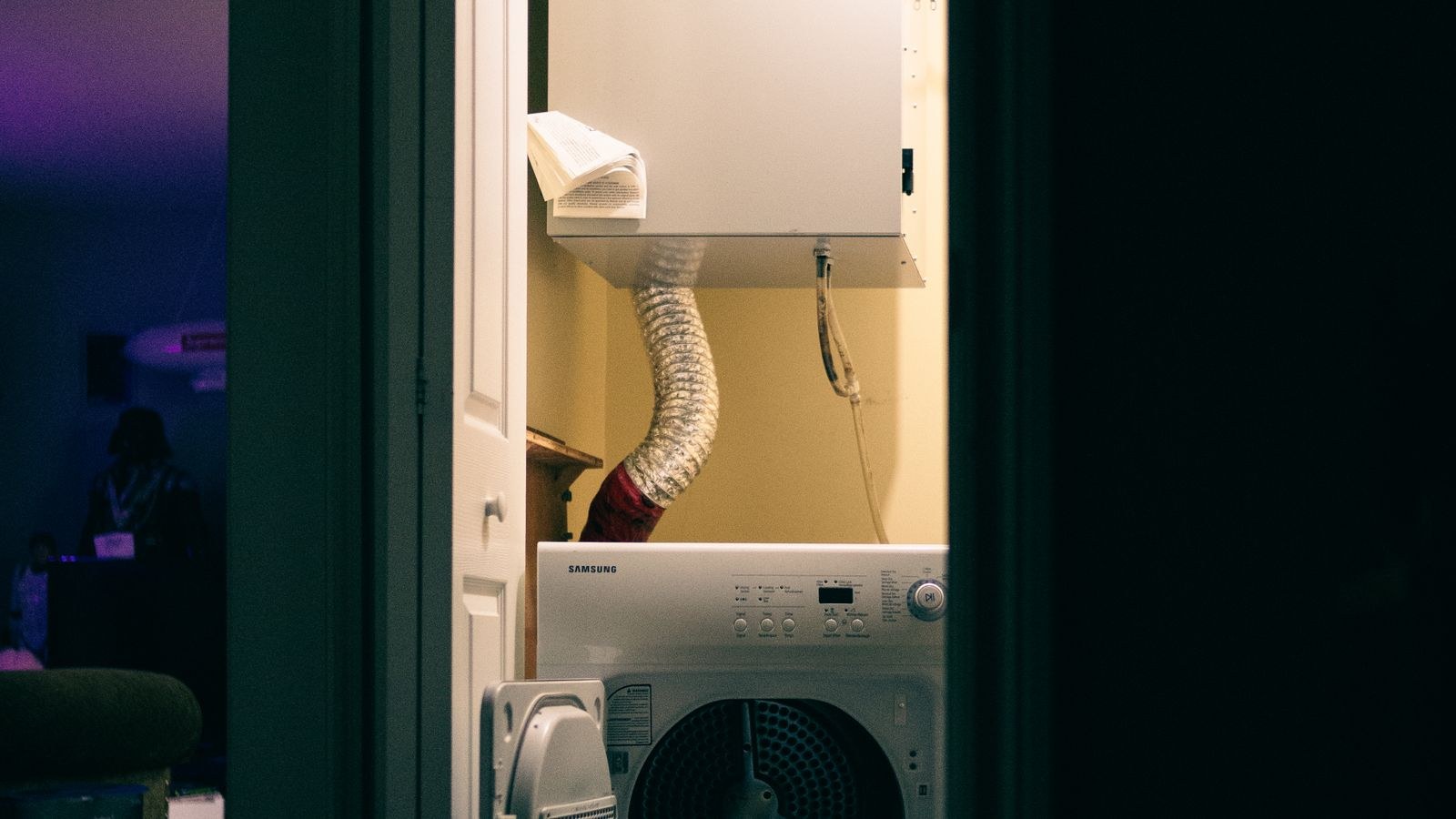
A vented dryer pulls room air in, heats it with an electric element or a gas burner, tumbles it through the drum where it picks up moisture, and then blows that hot humid air outside through a four inch duct. The process is simple, mechanically robust, and has barely changed in decades, which is precisely why these machines are cheap to build and cheap to repair.
The consequences are worth understanding. Because the machine constantly expels warm air, it also constantly pulls replacement air from the room, which in winter means drawing in cold air that your heating system then has to warm. Because the exhaust must reach an exterior wall, the machine’s location is dictated by the duct run. And because that duct accumulates lint, it needs regular cleaning to stay safe and efficient.
How a Ventless Dryer Works
Ventless machines come in two distinct families, and lumping them together causes a lot of confusion.
Condenser dryers heat air, tumble it through the load, then pass the hot humid air across a heat exchanger cooled by room air. The moisture condenses into water, which collects in a removable tank or drains through a hose to a standpipe. The now-dry air is reheated and recirculated. Because that heat exchanger dumps its warmth into the laundry room, a condenser dryer noticeably raises the room temperature.
Heat pump dryers are condenser dryers with a refrigeration circuit instead of a simple heat exchanger. The refrigerant both cools the moist air to condense water and recycles the recovered heat back into the drying air, which cuts energy use dramatically. They also run at much lower drum temperatures, typically well below the scorching heat of a vented machine.
Both types need only a standard outlet and a place to put the water. Neither needs a hole in the wall. Options that combine washing and drying in one ventless cabinet are covered in our roundup of the best washing machine dryers, which is often the only workable answer in a very small flat.
Drying Time: The Honest Comparison
This is where vented machines keep their strongest advantage. A vented dryer running a standard load typically finishes in around 45 to 60 minutes. A condenser dryer usually takes somewhat longer, often 60 to 80 minutes for the same load. A heat pump dryer is slower still, commonly 90 to 130 minutes, because it works at lower temperatures by design.
Whether that matters depends entirely on how you do laundry. If you run one load overnight or across a working day, an extra hour is invisible. If you have a household of five and need to move three loads through a single machine on a Saturday afternoon, the difference is genuinely disruptive. Be honest about your throughput rather than your ideal.
Lower drum temperature is not purely a downside. Gentler heat means less shrinkage, less fibre damage, and fewer items that must be air dried instead. Many people find heat pump machines noticeably kinder to knitwear and technical fabrics, which offsets the wait.
Installation, Location, and What Your Building Allows
A vented dryer needs a duct to the outside, and the quality of that duct matters more than most buyers realise. Rigid or semi-rigid metal ducting is far better than flexible foil, which sags, traps lint, and restricts airflow. Every elbow adds resistance equivalent to several feet of straight run, and manufacturers publish a maximum equivalent length that a long, twisty installation will exceed. Exceeding it means longer cycles, higher bills, and a machine that runs hot.
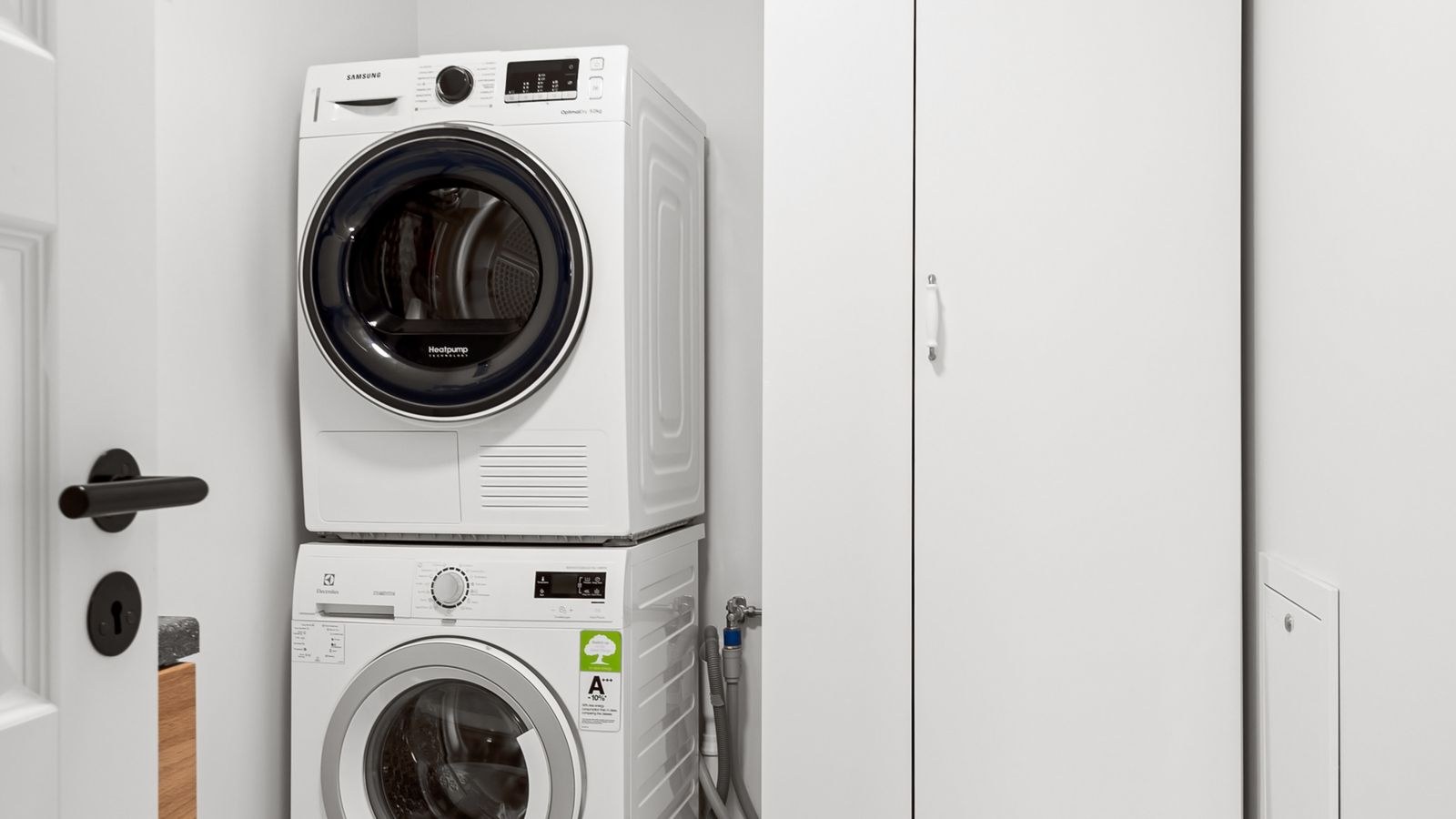
Ventless machines free you from all of that. They can go in an interior closet, a bathroom, a kitchen run, under a counter, or stacked above a washer in a cupboard. For flat owners and renters in buildings that forbid new exterior penetrations, this is not a preference but the only option. Stacked and matched pairs designed for exactly this situation appear throughout our comparison of the best washing machines and dryers.
Water Removal on a Ventless Machine
Every condenser and heat pump dryer produces litres of water per load. You have two choices: empty the collection tank after each cycle, or plumb the drain hose into a standpipe or sink so it empties itself. The second option is far more pleasant to live with and takes ten minutes to set up if a drain is nearby. If you forget to empty a tank, the machine simply stops mid-cycle with a full-tank warning, which is a minor annoyance rather than a fault.
Humidity, Heat, and Room Comfort
A properly ducted vented dryer sends essentially all its moisture outdoors, so it adds little humidity to the room. Its downside is the air it pulls out of the house, which raises heating costs in winter and can, in very tight homes, create enough negative pressure to affect combustion appliances.
Condenser dryers add real heat to the room, since the energy has nowhere else to go, and they release a small amount of humidity from the cabinet. In a tiny unventilated cupboard this can become uncomfortable and, over time, encourage condensation on cold surfaces. Give a condenser machine some air circulation.
Heat pump dryers are the mildest of the three. They consume far less energy in the first place, so there is much less waste heat to release, and their sealed circuit keeps moisture handling tidy. In a small flat this is a meaningful quality-of-life difference.
Running Costs and Purchase Price
Purchase price runs in a predictable order. Vented electric dryers are cheapest, condenser dryers sit in the middle, and heat pump models command the highest prices in the standard size class. Combined washer dryers vary widely depending on capacity and build.
Running costs invert that order. A heat pump dryer typically uses roughly half the electricity of a vented machine for the same load, sometimes better. A condenser dryer without a heat pump is the worst of the three on energy, because it uses resistance heat and then spends more energy running longer. The payback period on a heat pump model therefore depends on how many loads you run: a household drying five loads a week reaches breakeven far sooner than one drying five loads a month.
Do not forget the hidden costs on the vented side. Duct cleaning, replacing degraded flexible ducting, and the heating energy lost to expelled air all count. If you are pricing a full laundry pair rather than a single machine, our washer and dryer set buying guide works through matched sizing and stacking kits.
Maintenance Differences
Vented machines demand lint filter cleaning after every load and duct cleaning at least annually, more often with a long run or a large household. Lint accumulation in ducting is a genuine fire hazard, not a theoretical one, and it is the single most important maintenance task in this whole category.
Ventless machines shift the work inside the cabinet. Alongside the lint filter, they have a condenser unit or heat exchanger that collects fine fibres and must be rinsed or brushed periodically, typically monthly. Neglecting it produces exactly the symptom people complain about most: cycles that take forever and clothes that come out damp. Many owners who conclude their heat pump dryer is faulty simply have a clogged condenser filter.
Which One Should You Buy
- Choose vented if you have an existing short duct run, dry high volumes, and want the lowest purchase price and fastest cycles.
- Choose a condenser if you cannot vent, want a lower upfront price than a heat pump, and do not run laundry often enough for energy costs to dominate.
- Choose a heat pump if you cannot vent, run laundry regularly, and want the lowest running costs and gentlest fabric care.
- Choose a combined washer dryer if space allows exactly one appliance and you accept smaller dry loads than wash loads.
Capacity deserves a note in every case. Ventless machines are frequently sold in compact widths around 24 inches, and drying capacity is usually smaller than the washer that feeds it. Sizing the pair so the dryer can take a full wash load in one go saves considerable frustration, a point our comparison of the best washing machine and dryer sets examines in detail. If the whole laundry area is tight, start from the best compact washing machines and match the dryer to it.
Frequently Asked Questions
Do ventless dryers dry clothes as well as vented ones?
Yes, clothes come out just as dry when the machine is correctly maintained and not overloaded. The difference is time, not outcome. Damp results almost always trace back to a clogged condenser filter or a load that exceeded the drum’s rated capacity.
Does a ventless dryer make the room damp?
A working condenser or heat pump dryer captures the moisture as liquid, so the room stays dry. A small amount of warm humid air escapes the cabinet, which is why some ventilation in a very small closet is worth having, but it is nothing like hanging wet washing indoors.
Can I convert a vented dryer to ventless?
Not really. Indoor lint traps that attach to a vented dryer’s exhaust catch fibres but dump all the moisture and heat straight into the room. They are a poor substitute and can cause serious condensation problems. Buy a machine designed for the job instead.
Are heat pump dryers hard on clothes?
The opposite. Lower drum temperatures mean less shrinkage and less fibre damage over the life of a garment. The trade-off is longer cycles, and some heavily soaked heavy items such as thick towels benefit from a longer or repeated cycle.
Final Thoughts
Start with the constraint rather than the specification. If your home already has a short, well-built duct to an exterior wall and you dry large volumes, a vented machine remains the fastest and cheapest way to get clothes dry. If venting is impossible, unattractive, or forbidden by your building, a ventless machine is not a compromise but a genuinely capable alternative, and a heat pump model in particular will cost far less to run while treating your clothes more gently. Decide how many loads you actually dry each week, check what your walls will allow, and the right answer usually becomes obvious.