 Owen Bradley
Vinyl shopping produces more confused first-time buyers than almost any other audio category, largely because the vocabulary is old and the marketing is loud. Belt drive versus direct drive gets framed as a quality contest when it is really a design trade-off. Cartridges are described in terms that mean nothing until you understand what a stylus is doing in the groove. And built-in preamps quietly decide whether your new turntable will work with the speakers you already own. This turntable buying guide untangles all of it and gives you a realistic sense of what a genuinely good first vinyl setup costs in 2026.
How a Turntable Actually Works
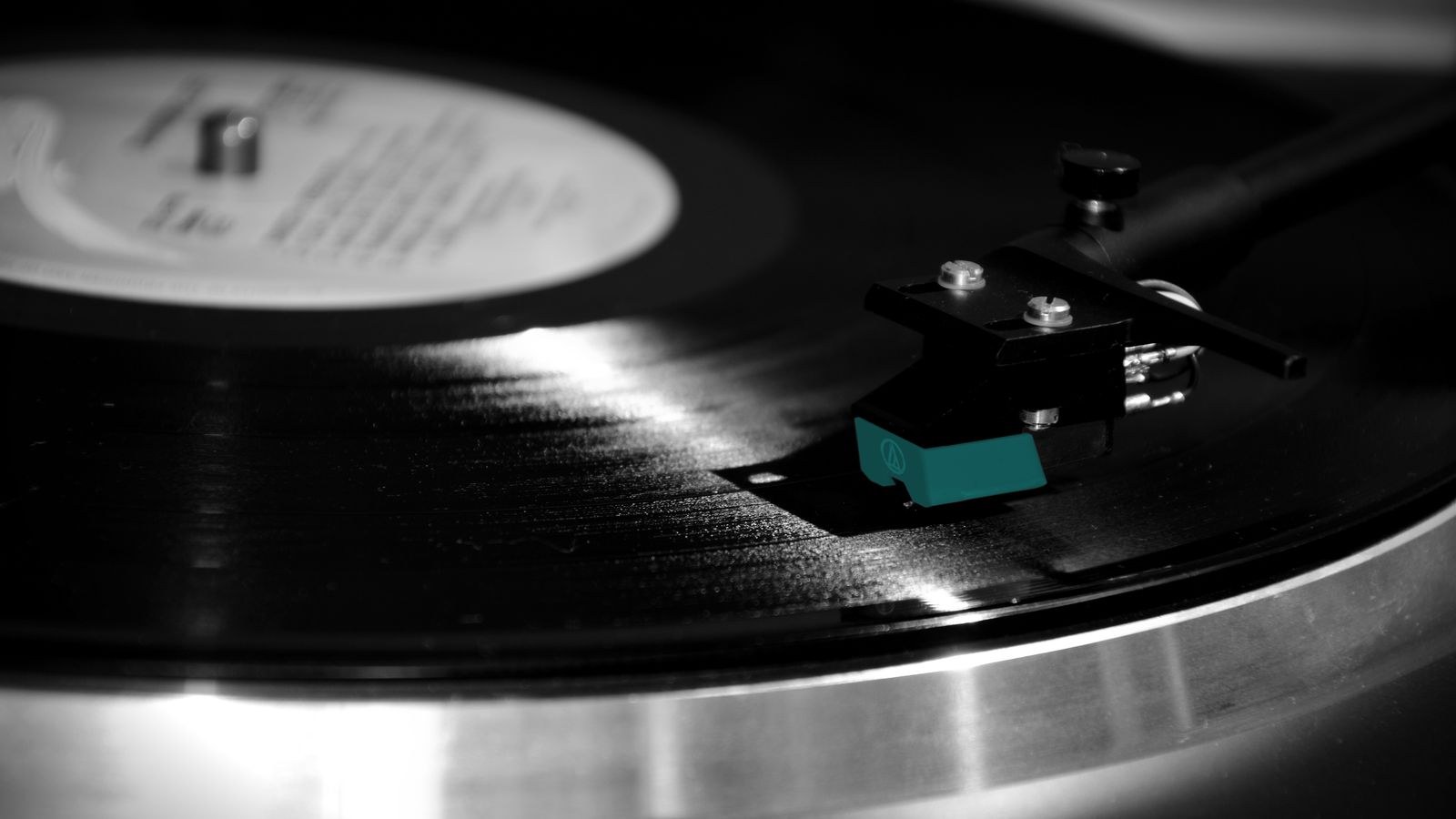
A turntable does three jobs. It spins a record at a precise speed, it holds a stylus in the groove at a controlled angle and pressure, and it converts the resulting vibration into a tiny electrical signal. Everything on a spec sheet serves one of those three functions. The platter and motor handle speed, the tonearm handles tracking, and the cartridge handles conversion. Once you see the machine that way, the jargon becomes far easier to sort.
The signal a cartridge produces is extremely small and heavily equalised, which is why it cannot plug straight into an ordinary line input. It needs a phono stage to boost it and reverse that equalisation. This is the single most common source of confusion for new buyers, and the reason a turntable can appear broken when it is simply missing a preamp somewhere in the chain.
Belt Drive Versus Direct Drive
In a belt drive design, an elastic belt connects the motor to the platter. The belt absorbs motor vibration before it reaches the record, which lowers the rumble that a stylus would otherwise pick up. Belt drive tables tend to be quieter, are usually cheaper to build well at a given price, and dominate the home listening market. The downsides are slower start-up, gradual speed drift as the belt ages, and a belt that needs replacing every few years.
In a direct drive design, the platter sits directly on the motor spindle. There is no belt to stretch, speed is held electronically with high accuracy, start-up is nearly instant, and the platter can be stopped or nudged by hand without damage. That is why DJs use them almost exclusively. The trade-off is that motor vibration has a shorter path to the record, so a budget direct drive table needs good isolation to match a comparable belt drive for quietness.
Which Should You Choose?
For pure home listening at modest budgets, belt drive is generally the safer default because manufacturers can spend more of the budget on the tonearm and cartridge. If you want to scratch, beat-match, or simply value instant start and long-term speed stability with no consumables, direct drive is the better fit. Neither is inherently superior in sound quality; execution at the price point matters far more than the drive type printed on the box.
The Tonearm and Why It Matters
The tonearm is arguably the most neglected part of a budget turntable and the part that most affects both sound and record wear. It must hold the stylus at a consistent vertical angle, apply a precise downward force, and counteract the inward pull that the spinning groove exerts. Cheap tables often fix all of these settings at the factory, which is convenient but leaves no room to correct problems or upgrade the cartridge later.
Look for three adjustments. An adjustable counterweight lets you set tracking force to the cartridge maker’s specification, typically somewhere between 1.5 and 2.5 grams. Anti-skate compensation, usually a dial or a small weight on a thread, balances the inward force so the stylus sits centred in the groove. Adjustable vertical tracking angle, often via a height collar at the arm base, matters mainly once you fit a different cartridge. A table with all three costs a little more and repays it in both sound and record longevity.
Cartridges and Styli Explained
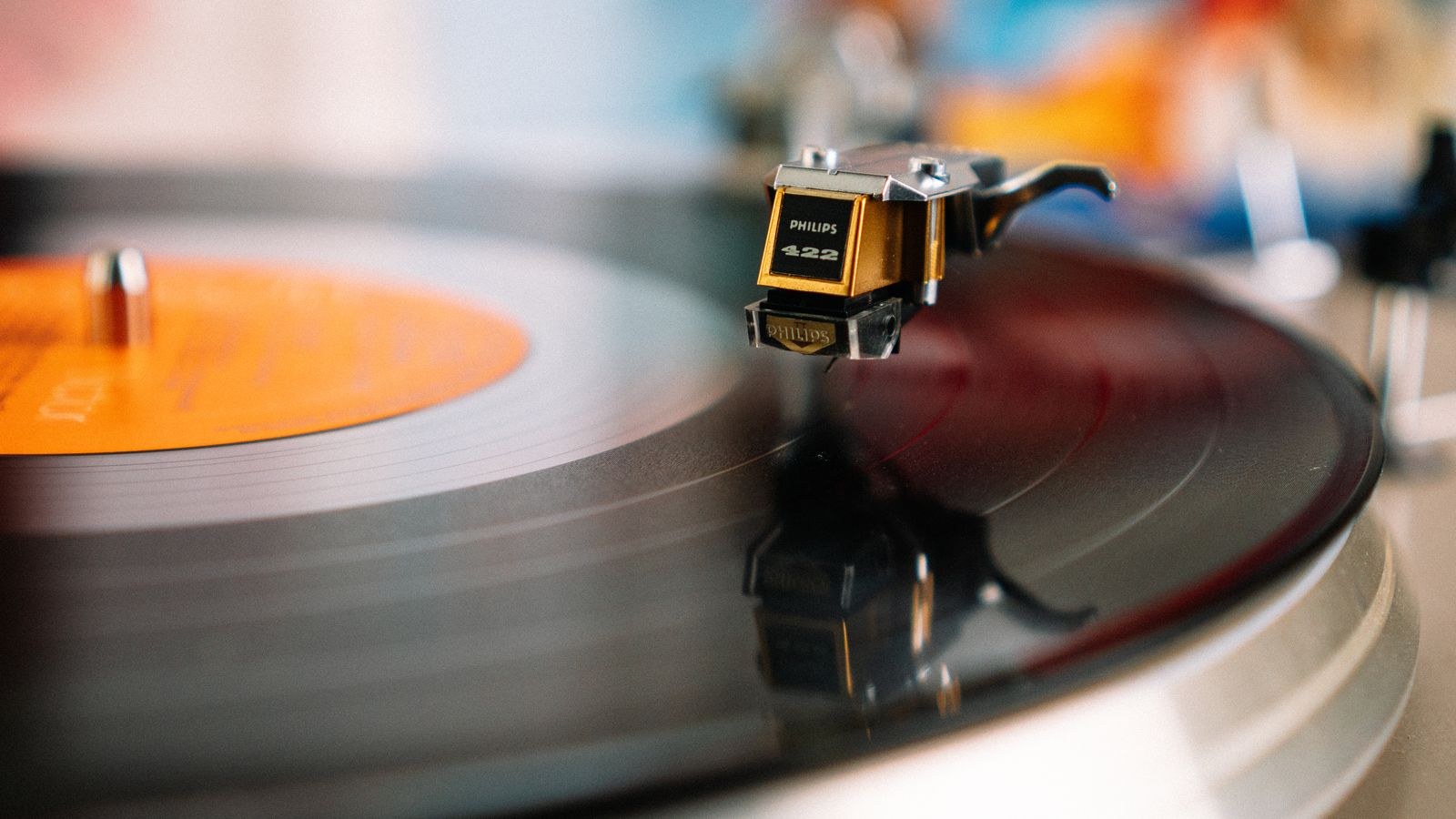
The cartridge is the small body at the end of the tonearm; the stylus is the replaceable tip that rides the groove. Moving magnet cartridges are the standard choice for home use. They produce a relatively strong output that works with any normal phono stage, and the stylus can usually be replaced on its own for a modest sum. Moving coil cartridges produce a much smaller signal, need a specialised or higher-gain phono stage, and generally cannot have the stylus replaced separately, which makes them an enthusiast option rather than a starting point.
Stylus shape affects detail retrieval. A conical tip is inexpensive and forgiving of setup errors. An elliptical tip contacts more of the groove wall and pulls out more detail, especially in the inner grooves where the wave gets tightly compressed. More exotic shapes go further still but demand precise alignment to pay off. For a first setup, a decent elliptical moving magnet cartridge hits the practical sweet spot.
When to Replace a Stylus
Styli wear out. A typical elliptical tip is good for roughly 500 to 1,000 hours of play, after which it begins to sound dull and, more importantly, starts damaging records. Because the wear is gradual, most people never notice until they hear a fresh stylus. Track your rough hours and replace on schedule rather than waiting for obvious distortion, since by then the damage to your collection is already done.
Built-In Preamps and What They Save You
A turntable with a built-in phono stage has a switch marked phono and line. Set to line, it outputs a normal signal that plugs into any powered speaker, soundbar, or amplifier aux input. That single feature removes the biggest compatibility headache for beginners and typically saves the cost of a separate box. The internal stages in budget tables are modest but perfectly listenable, and you can always bypass them later by flipping the switch.
If your turntable has no built-in stage, your amplifier or speakers must provide one, or you buy an external unit. Many powered bookshelf speakers now include a phono input for exactly this reason, which makes for a tidy two-box system. Our comparison of the best speakers for turntable setups sorts models by whether they handle phono duty themselves, and the best bookshelf speakers for vinyl guide covers passive options for anyone adding a separate amplifier.
All-in-One Systems Versus Separates
All-in-one record players with built-in speakers are cheap, tidy, and tempting. The problem is physical: the speakers sit inside the same box as the stylus, so vibration feeds directly back into the groove, and the tonearms are typically fixed with heavy tracking force that wears records quickly. Suitcase-style players in particular have a poor reputation among collectors for exactly this reason.
Better integrated options exist. A proper turntable bundled with separate powered speakers keeps the vibration problem away from the platter while retaining the simplicity of a matched package. If you want that convenience without the compromises, the best turntable with speakers bundles and the best record player with speakers roundup both focus on packages where the speakers are genuinely separate boxes rather than built into the plinth.
Speaker Matching for Vinyl
Vinyl rewards speakers with a smooth midrange and controlled bass more than it rewards extreme extension. Overly bright speakers exaggerate surface noise and stylus mistracking, while excessively boomy ones can feed low-frequency energy back into the turntable through the floor. Placing the turntable on a separate shelf or wall mount, away from the speakers, solves most feedback problems immediately.
Powered speakers simplify the chain by including amplification, which suits a small room and a tight budget. Passive speakers plus an amplifier cost more and take more space but open far more upgrade paths. Either way, size the speakers to the room rather than the record collection, and consider our guide to the best speakers for vinyl for models tuned toward the warmer balance that suits analogue sources.
What a First Setup Really Costs
Below roughly $150, expect fixed tonearms, ceramic or basic cartridges, and heavy tracking forces. These play records but wear them. Between $200 and $400 sits the genuine entry point: an adjustable counterweight, anti-skate, an elliptical moving magnet cartridge, a switchable built-in phono stage, and a plinth with real mass. That tier is where vinyl starts sounding like the format people rave about.
From $400 to $900 you gain better platters, improved isolation feet, superior tonearm bearings, and cartridges that reveal more detail. Beyond that, improvements continue but shrink relative to cost. Budget the whole system, not just the deck: a sensible split puts roughly a third into the turntable, a third into speakers, and the remainder into amplification, cabling, and a decent record cleaning brush.
Common Mistakes to Avoid
- Buying a suitcase player for a real collection. Built-in speakers and heavy fixed arms wear records fast.
- Forgetting the phono stage. Confirm the turntable, amplifier, or speakers provide one before ordering.
- Never setting tracking force. An unbalanced arm either skips or grinds through grooves.
- Placing the deck on the speaker shelf. Vibration feedback causes muddiness and audible howling at volume.
- Running a worn stylus. Past its hours it quietly damages every record you play.
- Spending everything on the deck. Speakers usually make a bigger audible difference than the last upgrade tier.
Frequently Asked Questions
Is direct drive worse for sound quality?
No. Direct drive offers superior speed accuracy and instant start; belt drive offers better isolation from motor vibration at low cost. At any given price the quality of the tonearm, cartridge, and plinth matters far more than which drive system the manufacturer chose.
Do I need a phono preamp?
You need one somewhere in the chain, but not necessarily as a separate box. Many turntables include a switchable stage, and many powered speakers and amplifiers offer a phono input. Check all three components before buying an extra unit you may not need.
Can I plug a turntable into powered speakers directly?
Only if the turntable has a built-in phono stage switched to line output, or the speakers themselves have a phono input. Connecting a bare phono output to a line input produces very quiet, thin, bass-light sound, which is the classic symptom of a missing preamp.
How often should I replace the belt?
Every three to five years for typical use, sooner if the platter takes noticeably longer to reach speed or if pitch sounds unstable. Belts are inexpensive, and a stretched one is one of the easiest problems to fix on an otherwise healthy turntable.
Are USB turntables worth it?
They are useful if digitising a collection is a genuine goal, since the built-in converter removes the need for extra hardware. If you only intend to listen, the same money spent on a better tonearm and cartridge will produce a more noticeable improvement in everyday playback.
Final Thoughts
A good vinyl setup is less about chasing a single premium component and more about avoiding the few decisions that quietly ruin the experience. Choose belt or direct drive based on how you use the deck rather than on which sounds more impressive in a forum argument. Insist on an adjustable counterweight and anti-skate so you can set tracking force properly. Confirm where the phono stage lives before you order anything. Then split your budget sensibly across deck, speakers, and amplification instead of pouring it all into the platter. Get those basics right and even a modest system will sound genuinely engaging, and your records will still sound that way years into 2026 and beyond.