 Owen Bradley
Nobody buys a sofa for its frame. You buy it for the shape, the colour, the way it looks against the wall. Yet the frame is the only component that decides whether the piece is still usable in twelve years, because cushions can be refilled, springs can occasionally be retied, and upholstery can be replaced, but a cracked or racked frame ends the story. Understanding sofa frame materials is the single highest-value thing a furniture buyer can learn, and it takes about ten minutes. This guide covers kiln-dried hardwood, engineered plywood, particle board, and metal, plus the joinery details that separate a frame that lasts from one that quietly fails.
Why Wood Moisture Content Decides Everything
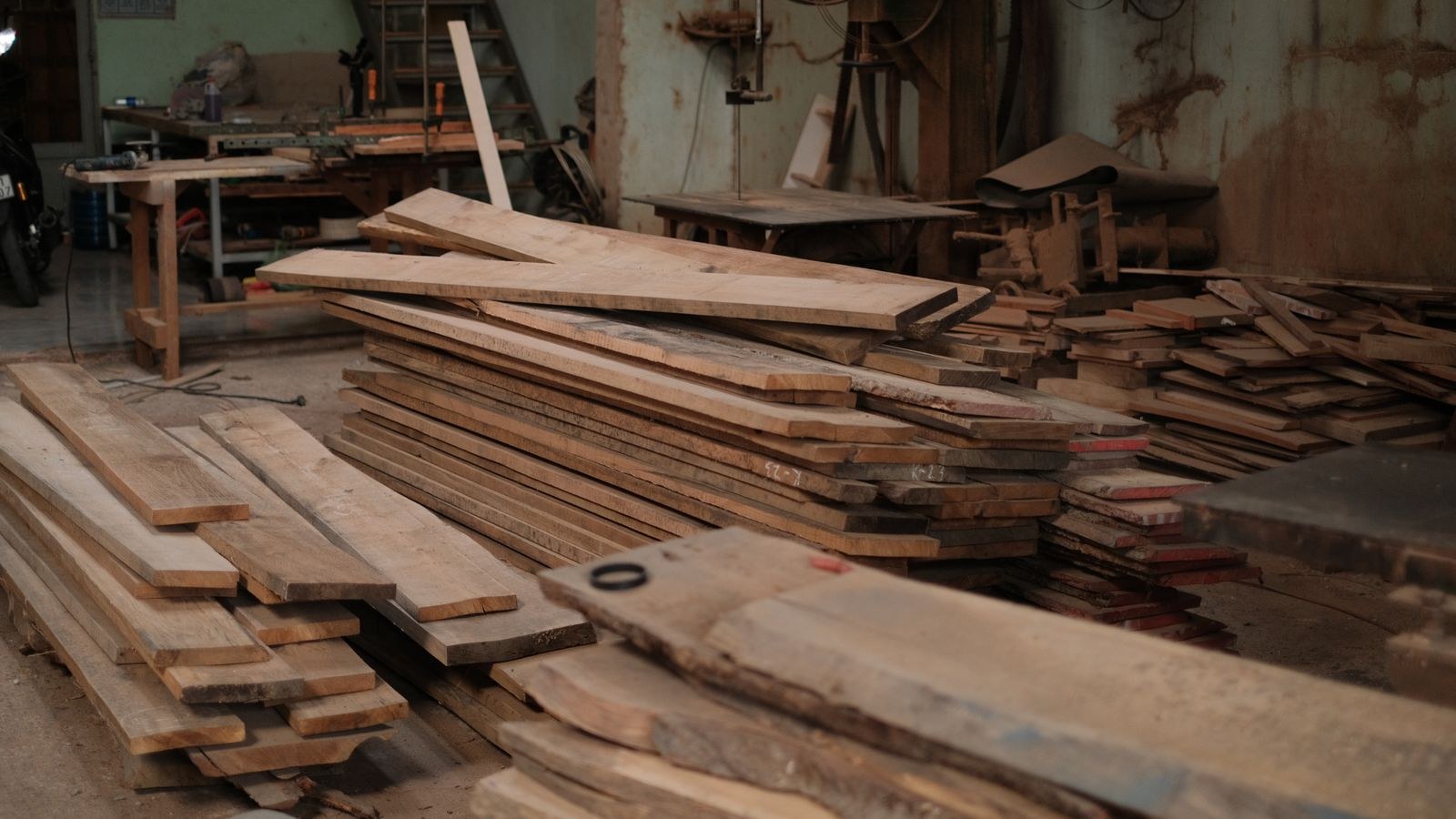
Freshly cut timber holds a great deal of water. As it dries in your living room it shrinks, twists, and can split, and any joint or fastener holding it loosens as the wood moves away from it. That is the entire reason kiln drying exists.
Kiln-dried lumber is heated in a controlled chamber until its moisture content drops to roughly 6 to 8 percent, which is close to the equilibrium moisture level inside a heated home. Once dried to that point, the wood is dimensionally stable and stays where it is put. Air-dried or green lumber, by contrast, sits well above that figure and continues to move for years after the sofa is built.
This is why the phrase to look for is not “solid wood” but specifically “kiln-dried hardwood”. Solid wood tells you nothing about moisture content, and a solid softwood frame that was never properly dried will loosen faster than a good plywood one.
Kiln-Dried Hardwood: The Benchmark
Hardwoods used in quality sofa frames include maple, oak, ash, birch, beech, and alder. They are dense, hold fasteners tightly, and resist the compression that lets joints work loose under repeated loading. Maple and oak are the most common in premium construction because they combine strength with reasonable cost and machine cleanly.
A properly built hardwood frame uses lumber at least 1 inch thick at load-bearing points, with corner blocks that are glued, screwed, and often doweled into place. Frames like this routinely support 20 to 30 years of daily use and are worth reupholstering when the fabric eventually gives out, which changes the long-term economics of the purchase entirely.
The catch is cost and weight. Hardwood frames are heavy, which makes delivery harder and stairs a genuine consideration, and they push the sofa price up meaningfully. You will find them consistently in the best luxury sofas tier and increasingly in well-specified mid-range models.
Softwood: The Common Substitute
Pine, fir, and spruce are cheap, light, and easy to machine, which makes them attractive to manufacturers. They are also soft enough that staples and screws gradually crush the surrounding fibres and work loose under load. A kiln-dried softwood frame with good joinery is acceptable in a lightly used piece, but it will not match hardwood in a family living room. Be alert to listings that say “solid wood frame” without naming the species, since that phrasing usually means pine.
Engineered Plywood: Better Than Its Reputation
Plywood carries a budget stigma it does not entirely deserve. High-grade furniture plywood is built from 11 to 13 thin veneer layers, each rotated 90 degrees against the last and bonded under pressure. That cross-grain construction makes it exceptionally resistant to splitting and warping, and it is genuinely stronger than solid wood in some directions.
The number of plies is the specification that matters. Seven-ply and below is light-duty. Eleven-ply and above, at thicknesses of 3/4 inch or more, performs very well and appears in many respected mid-priced sofas. Plywood is also lighter than hardwood, which reduces shipping damage and makes the sofa easier to move.
Where plywood loses to hardwood is edge fastener retention and long-term resistance to repeated flexing at joints. It is an excellent value choice rather than a compromise, and many pieces in the best affordable sofas range pair multi-ply frames with decent springs to deliver eight to twelve solid years.
Particle Board and MDF: The Materials to Avoid
Particle board is wood chips and sawdust compressed with resin. MDF is finer fibres bound the same way. Both are stable and inexpensive, and both are fundamentally wrong for a structural furniture frame because they have almost no fastener retention and no tensile strength across a span.
The failure sequence is consistent. Screws and staples pull out of the crumbly interior under repeated loading, the joint opens, the frame begins to rack side to side, and eventually a panel snaps at a stress point. Moisture accelerates it dramatically, since both materials swell irreversibly when wet. Neither can be repaired, because a new fastener has nothing solid to bite into.
Particle board is common below the $500 mark and shows up occasionally higher, sometimes disguised in listings as “engineered wood”, a phrase that covers both good plywood and bad chipboard. If a listing uses that term without further detail, ask directly which one it means.
Metal Frames and Hybrids
Steel frames appear mostly in sleeper sofas, futons, and some contemporary designs. Steel is strong and does not warp with humidity, but it can flex at welds, is heavy, and can develop squeaks where components rub. Welded joints are markedly better than bolted ones, which loosen over time and need periodic tightening.
Hybrid construction is increasingly common: a hardwood or plywood core with steel reinforcement at high-stress points, or metal legs on a wooden frame. Done well this is a sensible engineering choice rather than a cost-cutting one. Judge it by where the metal sits — reinforcement at load points is good, metal substituting for the entire structure in a stationary sofa is usually a cost decision.
Joinery: The Detail That Matters as Much as the Wood
A superb material assembled badly still fails. Joinery quality ranks roughly as follows, from best to worst:
- Mortise-and-tenon or dowel joints, glued — the strongest, found in premium frames.
- Glued, screwed, and doweled corner blocks — the quality-market standard and entirely sufficient.
- Screwed and glued corner blocks — good, common in solid mid-range pieces.
- Screwed only — acceptable but will loosen; look for the glue line.
- Stapled and glued — budget construction, expect movement within a few years.
- Stapled only — avoid entirely.
Corner blocks are the small triangular or square pieces fitted into each interior corner where the frame members meet. They distribute load away from the joint itself and are the clearest visual sign of a serious frame. Ask to see a cutaway display or a photograph of the interior; reputable manufacturers publish them, and models in the best quality sofas category almost always do.
Three Tests You Can Run in a Showroom
You do not need tools to assess a frame. First, the corner lift test: raise one front corner about six inches off the floor. On a rigid frame the opposite front leg rises with it almost immediately. If it stays down while the frame twists, the structure is flexing and the joints are weak.
Second, the arm push. Grip the top of one arm and rock it firmly toward the centre. A good frame feels like one solid object. Any creaking, give, or independent movement of the arm relative to the seat signals loose joinery or a soft frame material.
Third, the weight check. Try to lift one end. A hardwood-framed three-seat sofa is genuinely heavy and awkward. A suspiciously light sofa is almost always particle board or thin softwood. Weight is a crude proxy, but it is a reliable one.
Frames and Weight Capacity
Published weight capacities vary widely and are often quoted per seat rather than for the whole piece. Budget sofas frequently list 250 pounds per seat, while heavy-duty constructions reach 350 to 500 pounds per seat. The frame material sets that ceiling more than the springs do, since a spring can flex and recover while a cracked frame member cannot.
If anyone in your household is above average weight, or if the sofa will regularly hold several adults plus children at once, treat kiln-dried hardwood with doweled corner blocks as a requirement rather than an upgrade. Reinforced models such as those in the best sofas for heavy people category specify both frame construction and per-seat capacity clearly, which is the transparency you want. For a wider view of how frame quality distributes across shapes and price points, the general best sofas roundup is a useful reference.
Warranty as a Frame Quality Signal
When a spec sheet is vague, the warranty tells you what the manufacturer actually believes. A lifetime frame warranty is a strong signal of kiln-dried hardwood and proper joinery, because the maker is accepting open-ended liability. Ten to twenty-five years suggests good plywood or hardwood with solid construction. One to three years usually indicates softwood, particle board, or stapled joints. Check whether the coverage transfers to a second owner and whether labour and shipping are included, since a free part you cannot fit is worth little.
Frequently Asked Questions
What does kiln-dried actually mean?
The lumber was dried in a controlled chamber to roughly 6 to 8 percent moisture content, matching indoor conditions. That stops it shrinking, warping, and loosening its joints after the sofa reaches your home.
Is plywood a bad sofa frame material?
No. High-grade furniture plywood with 11 or more plies at 3/4 inch thickness is strong, stable, and resists splitting. It is a legitimate value choice, distinct from particle board despite both being called engineered wood.
How can I tell what my sofa frame is made of?
Look underneath by lifting the dust cover, or remove a seat cushion and inspect the deck edges. Layered edges indicate plywood, visible chips and dust indicate particle board, and continuous grain indicates solid lumber.
Does a heavier sofa mean a better frame?
Usually, yes. Hardwood is dense, so weight correlates well with frame quality in wooden sofas. It is not perfect, since thick upholstery and heavy springs also add mass, but a very light sofa is a warning sign.
Can a broken sofa frame be repaired?
Hardwood and plywood frames can often be re-glued, re-blocked, and reinforced by an upholsterer. Particle board frames generally cannot, because new fasteners have no solid material to grip.
Final Thoughts
Frame material is the least visible and most consequential decision in a sofa purchase. Kiln-dried hardwood with glued, screwed, and doweled corner blocks is the benchmark and the only construction genuinely worth reupholstering later. High-ply engineered plywood is a strong, honest value alternative that suits most households well. Particle board and MDF belong in temporary furniture only, and vague phrases like “solid wood” or “engineered wood” should always prompt a follow-up question. Run the corner lift, push the arm, note the weight, and read the warranty term. Those four checks take two minutes and will tell you more about a sofa’s lifespan in 2026 than any amount of time spent choosing between fabric swatches.