 Owen Bradley
The evening hours you spend under bright white light are quietly working against your sleep. Blue-rich light suppresses melatonin, the hormone that tells your body it is nighttime, and modern homes are full of it — ceiling fixtures, screens, kitchen downlights, bathroom vanities. Red light bulbs are the simplest countermeasure available: they emit almost nothing in the wavelengths that disrupt melatonin, which is why sleep researchers, night-shift workers and parents of small children have quietly adopted them. This guide explains what the science actually supports, what to look for when buying, and how to use red lighting in a way that improves your rest without making your home look like a darkroom.

How Light Affects Sleep
Your body clock is set primarily by light hitting specialized receptors in the retina. These receptors are most sensitive to short-wavelength blue light around 480 nanometers — precisely the range that daylight and most white LEDs are rich in. When those receptors fire in the evening, the brain delays melatonin release and pushes your internal clock later.
Red light sits at the opposite end of the visible spectrum, roughly 620 to 750 nanometers. Those receptors barely respond to it. A red bulb therefore lets you see well enough to move around, read a label or check on a sleeping child without telling your brain that morning has arrived. It is not that red light is magically restorative; it is that it is close to invisible to your circadian system.
What the Evidence Supports and What It Does Not
The strong, well-supported claim is that reducing blue light exposure in the last two to three hours before bed helps melatonin onset and can improve sleep latency. Red light is an effective way to achieve that reduction. Claims that red light itself actively induces sleep, heals tissue at bedside intensities, or replaces good sleep hygiene are considerably weaker. Treat red bulbs as a tool for removing a problem, not as a therapy in themselves.
Types of Red Light Bulbs
True Red LEDs
These use LEDs that emit only in the red band. They produce deeply saturated red light with essentially zero blue content — the most effective option for circadian protection, and the least practical for reading or tasks. Best for hallways, bathrooms, nightlights and bedside lamps used purely for navigation.
Red-Coated or Filtered Bulbs
A standard filament or white LED behind a red glass or coating. Cheaper and widely available, but a coating only blocks some of the spectrum — measurable blue often still gets through. Acceptable for ambience, weaker for genuine melatonin protection.
Amber and Low-Kelvin Bulbs
Not strictly red, but very warm bulbs around 1800K to 2200K cut most blue while remaining usable for reading. Many people find amber the better everyday compromise, using true red only in the final wind-down hour.
Tunable Smart Bulbs
Color-changing smart bulbs can produce red on schedule and shift back to normal white during the day. One fixture handles both jobs. The tradeoff is that the red produced by an RGB bulb is usually less spectrally pure than a dedicated red LED, and the bulb’s own indicator or standby glow can be a nuisance.
If you want products vetted specifically for this use case, our roundup of the best red light bulbs for sleep compares true-red and amber options across brightness and fixture types.
What to Look for When Buying
- Actual wavelength. Better listings state a peak wavelength — 620 to 660 nanometers is the useful range. Vague “red” with no spec usually means a coated white bulb.
- Zero or near-zero blue content. Look for explicit statements about blue light output. This is the entire point of the purchase.
- Low brightness options. Bedtime lighting should be dim. A blindingly bright red bulb defeats the purpose; many good options are deliberately modest in output.
- Dimmability. Being able to drop the level further in the final half hour matters. Confirm dimmer compatibility.
- No flicker. Cheap drivers pulse visibly at low levels, which is genuinely uncomfortable in a dark room and can trigger headaches.
- Base type and fixture fit. Standard E26 covers most lamps; check candelabra and specialty bases separately.
- No standby LED. Some smart bulbs glow faintly when off. In a bedroom that is exactly what you were trying to avoid.
Brightness: Less Than You Think
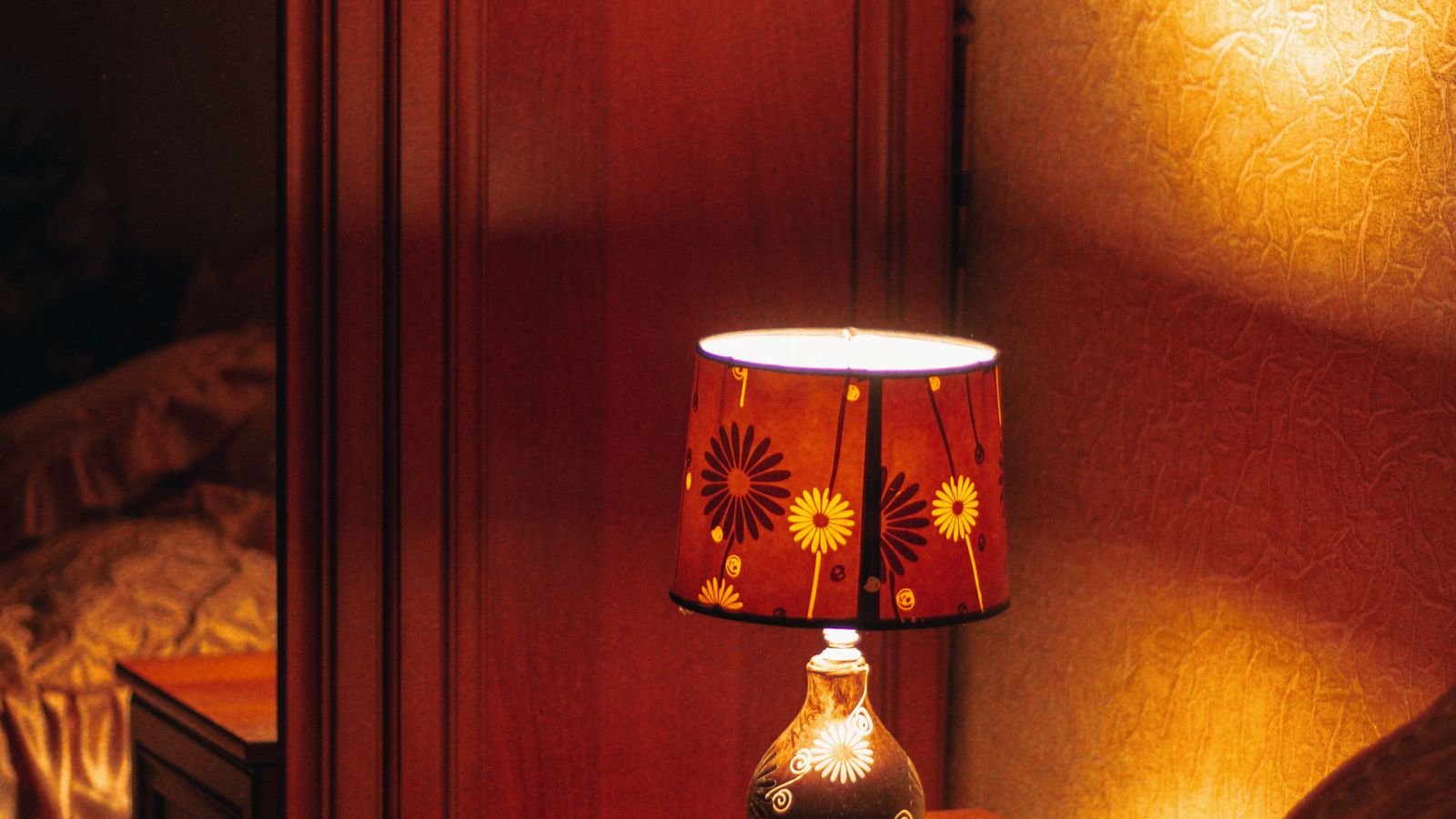
People habitually overbuy brightness. For a bedside lamp used in the hour before sleep, output equivalent to a very low-wattage bulb is plenty — you want just enough to avoid stubbing a toe. A useful rule is that if the light is bright enough to comfortably read fine print for an hour, it is probably brighter than ideal for wind-down.
For hallway and bathroom night use, even less is appropriate. A dim red bulb on a motion sensor or a low-set dimmer means a 3 a.m. trip to the bathroom does not reset your clock and leave you awake for an hour afterward. This is one of the most immediately noticeable benefits of red lighting, and it takes almost no investment to try.
Where to Use Red Light in the Home
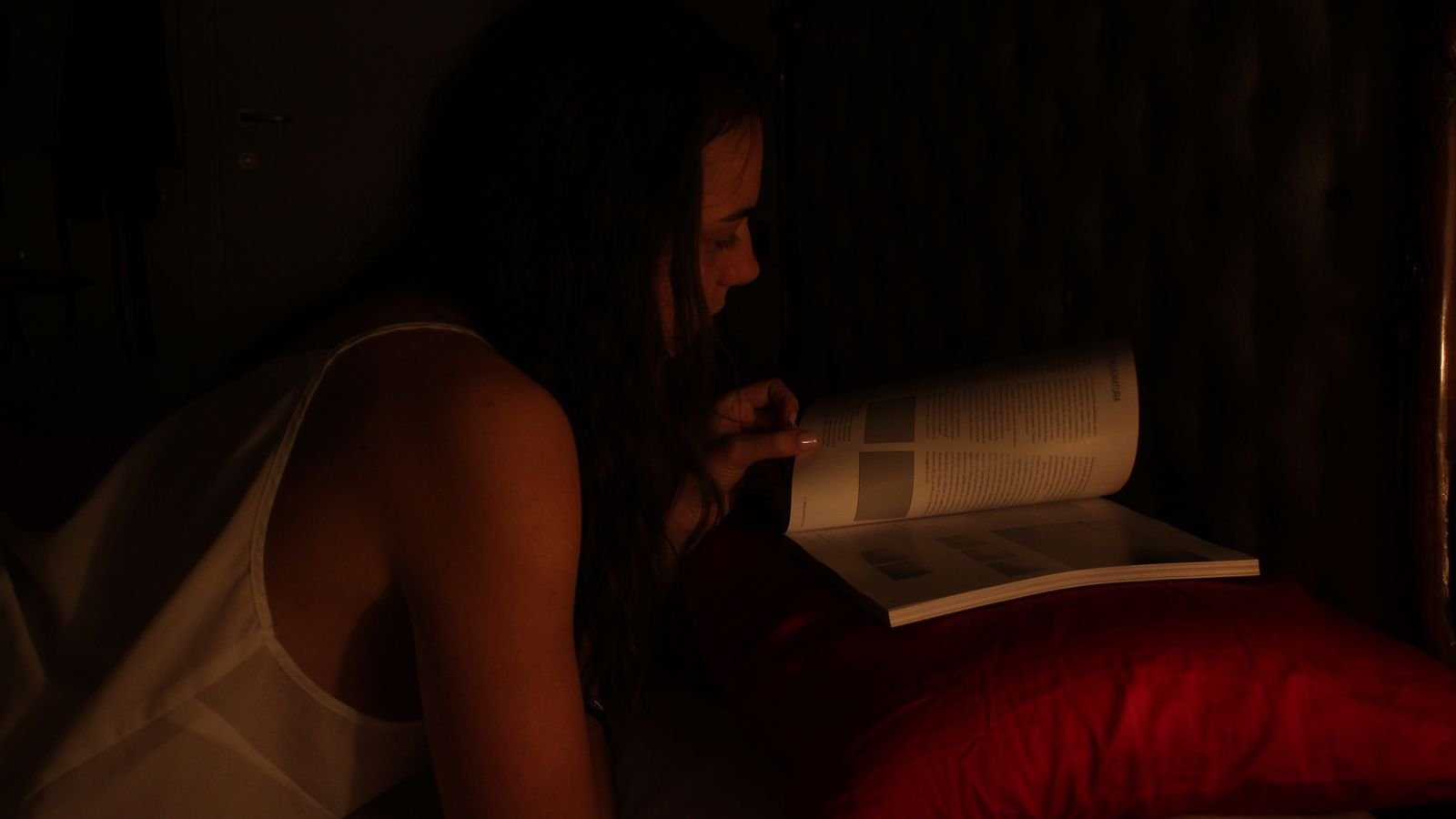
- Bedside lamps. The primary use case. Switch to red for the last hour before sleep.
- Bathroom. Vanity lights are typically the brightest, bluest fixtures in the house and are used immediately before bed. A red or amber secondary light here pays off enormously.
- Hallways and stairs. Low red bulbs for overnight navigation, ideally on motion sensors.
- Nursery. Night feeds and diaper changes under red light disturb both the baby and the parent far less than a white overhead.
- Living room lamps. Swapping table lamps to red or deep amber in the evening lets you keep the overhead off entirely.
The overhead ceiling fixture is usually the worst offender and the hardest to change habits around. If the room has table lamps, the simplest strategy is to make the overhead effectively off-limits after a set time.
Building an Evening Lighting Routine
Bulbs alone will not fix sleep. They work as part of a sequence:
- Three hours before bed: dim all white lighting, shift to warm bulbs and lamps rather than overheads.
- Two hours before bed: switch bedroom and bathroom to red or deep amber. Reduce screen brightness and enable night modes.
- One hour before bed: red only. Keep levels low enough that the room feels genuinely dim.
- Overnight: red nightlights only; nothing white, nothing bright.
- On waking: reverse it deliberately — bright, cool, blue-rich light in the morning is as important as avoiding it at night.
That last point is frequently missed. Circadian rhythm responds to contrast between day and night. A dim, warm-lit home around the clock is not the goal; a bright day and a dark evening is.
Alternatives and Complements
Red bulbs are not the only route. Very warm 2200K bulbs, dimmed incandescent-style filament lamps and blue-blocking eyewear all reduce evening blue exposure. Many households combine approaches: warm dimmable bulbs in living areas, dedicated red in the bedroom and bathroom.
Smart bulbs deserve special mention because scheduling removes the willpower requirement. A bulb that automatically shifts warm at sunset and red at a set hour will be used consistently, whereas a bulb you have to remember to swap will not. Reviewing the smart LED light bulbs available makes sense if automation appeals, and comparing them against the warm light bulbs options helps you decide whether pure red or a warm amber suits your household better. For the rest of the home, choosing light bulbs for the bedroom with low color temperature supports the same goal during the earlier part of the evening.
Common Mistakes to Avoid
- Buying too bright. Intensity matters as much as color. A very bright red bulb still stimulates.
- Assuming a red-tinted bulb is blue-free. Coated bulbs often leak substantial blue. Check the spec.
- Using red light all day. Daytime needs bright, cool light. Red around the clock flattens the very rhythm you are trying to strengthen.
- Ignoring the bathroom. Brushing your teeth under 5000K vanity lights undoes an hour of careful dimming.
- Overlooking screens. Bulbs help, but a bright phone six inches from your face is a large light source in its own right.
- Tolerating flicker. A cheap bulb that pulses at low dim levels will give you headaches, not sleep.
Frequently Asked Questions
Do red light bulbs actually help you sleep?
Indirectly, yes. They do not sedate you, but they avoid suppressing melatonin the way white and blue-rich light does, which helps your natural sleep signal arrive on time. The benefit is real but modest, and works best alongside consistent bedtimes and screen management.
Is red light better than just dimming normal bulbs?
Usually. Dimming a white LED reduces intensity but does not change its spectrum much, so blue content remains proportionally the same. Red removes the problematic wavelengths entirely. Dimming a red bulb gives you both benefits at once.
Can I read under a red bulb?
With difficulty. Red light gives poor contrast on printed text. Deep amber around 1800K to 2200K is the better compromise if you read in bed, reserving true red for the final wind-down and overnight use.
Are red bulbs safe to leave on all night?
Low-output red nightlights are generally fine and are far preferable to white nightlights. Keep the level genuinely dim and place them low, out of direct sightline from the bed.
What wavelength should I look for?
A peak in the 620 to 660 nanometer range with minimal output below 500 nanometers. Products that publish a spectral chart are worth favoring over those that simply describe the bulb as red.
Final Thoughts
Red light bulbs are one of the rare sleep interventions that are cheap, immediate and require no discipline once installed. Put a low-output red bulb beside the bed, another in the bathroom, and a dim one in the hallway, and you have removed the three most common sources of late-night blue light exposure in a typical home. Pair that with genuinely bright light in the morning and the contrast between your day and your night sharpens considerably. Buy for low output and verified spectrum rather than for novelty color, avoid flickering budget drivers, and the small change you make in 2026 will show up as an easier time falling asleep within a couple of weeks.